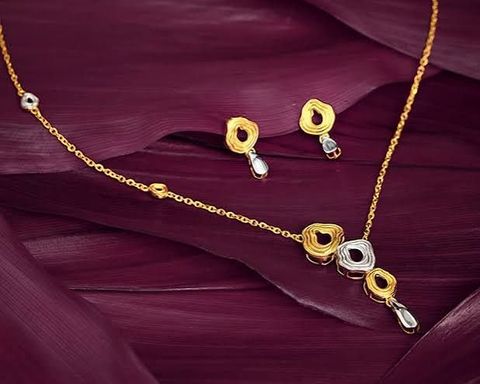
Temple Jewellery Designs: Explore Styles, Trends, Insights, Suggestions, and Useful Resources
Temple jewellery is a traditional Indian jewellery style inspired by religious sculptures, temple architecture, and cultural art. It is particularly associated with South India, where ornaments featuring deities, flowers, birds, coins, and other traditional motifs have been part of ceremonial clothing and classical dance traditions.
Historically, some ornaments were created for decorating temple idols and were later adapted into jewellery worn by dancers, brides, and families during religious and cultural occasions. Today, temple jewellery designs are recognized for their detailed craftsmanship, traditional appearance, and symbolic motifs.
Common characteristics include:
Goddess Lakshmi and other deity motifs
Peacock, lotus, mango, and floral patterns
Coin-shaped pendants
Red and green decorative stones
Intricate sculpted details
Matte or antique-style gold finishes
Layered necklaces and traditional earrings
Traditional temple jewellery designs can be made in different materials and finishes. Some pieces are crafted in solid gold, while others use silver, copper alloys, gold plating, or imitation materials. Understanding the material is important because appearance alone does not establish metal purity or authenticity.
Why Temple Jewellery Remains Important
Temple jewellery represents more than an ornamental style. It connects jewellery-making with regional identity, traditional craftsmanship, religious symbolism, and family customs.
It is commonly associated with:
South Indian weddings
Classical dance performances
Religious ceremonies
Traditional festivals
Cultural celebrations
Family heirlooms
Heritage-inspired fashion
For many families, jewellery is also connected with personal memories and generational traditions. Older ornaments may be preserved, redesigned, or passed down within families.
The style is also relevant to artisans and jewellery designers because traditional motifs require detailed knowledge of sculpting, stone setting, metalwork, and finishing techniques.
Popular Traditional Temple Jewellery Styles
Different ornaments serve different purposes and are often combined to create a coordinated appearance.
| Jewellery Type | Main Features | Common Use |
|---|---|---|
| Lakshmi necklace | Goddess Lakshmi motifs | Weddings and ceremonies |
| Kasu mala | Coin-shaped decorative elements | Traditional occasions |
| Haram | Long necklace design | Bridal and festive wear |
| Temple choker | Short necklace with detailed motifs | Wedding ceremonies |
| Jhumka | Bell-shaped earrings | Bridal and cultural wear |
| Vanki | V-shaped upper-arm ornament | South Indian bridal attire |
| Oddiyanam | Decorative waist belt | Traditional saree styling |
| Maang tikka | Forehead ornament | Bridal and classical attire |
| Temple bangles | Sculpted or engraved patterns | Festive and ceremonial wear |
| Nethi chutti | Traditional forehead jewellery | South Indian bridal styling |
The exact names, forms, and combinations can vary across Tamil Nadu, Kerala, Karnataka, Andhra Pradesh, and Telangana.
South Indian Temple Jewellery
South Indian temple jewellery includes several regional traditions rather than one fixed design category.
Tamil Nadu is known for elaborate deity motifs, coin necklaces, and detailed sculptural work. Kerala jewellery traditions include distinctive necklace forms and combinations of gold with green or red decorative elements. Andhra Pradesh and Telangana also have recognizable traditional ornaments, including vanki designs and elaborate necklaces.
Some widely recognized design elements include:
Lakshmi motifs: Images of Goddess Lakshmi are frequently used in pendants, necklaces, earrings, and waist ornaments.
Peacock patterns: Peacock designs represent traditional decorative artistry and are commonly seen in earrings and necklace pendants.
Kasu mala: This necklace uses coin-like elements arranged in a chain. Some versions feature deity images or traditional symbols.
Kemp stones: Red and green stones are commonly used to create contrast against gold-coloured settings.
Mango motifs: Mango-shaped elements appear in necklaces, earrings, and other traditional ornaments.
These features make South Indian temple jewellery recognizable while allowing regional artisans to develop their own variations.
Gold Temple Jewellery and Craftsmanship
Gold temple jewellery can involve several traditional metalworking techniques.
Important techniques include:
Repoussé work, where designs are raised by shaping metal from the reverse side
Engraving, which creates detailed patterns on metal surfaces
Granulation, involving small decorative metal elements
Stone setting, used for decorative stones
Casting, used to create shaped components
Polishing and finishing, which influence the final appearance
Solid-gold ornaments and gold-plated ornaments should not be treated as equivalent. A gold-coloured finish does not establish the amount or purity of gold present.
For solid-gold jewellery, the karat marking and applicable hallmark information are important. For plated or imitation pieces, the base material and surface treatment should be identified separately.
Antique Temple Jewellery
Antique temple jewellery generally refers to pieces with an aged or heritage-inspired appearance. The term may describe genuinely old ornaments or newly made pieces designed to resemble traditional jewellery.
Common visual features include:
Matte gold finishes
Darkened recesses
Sculpted deity figures
Traditional stone arrangements
Detailed floral patterns
Textured surfaces
Vintage-inspired motifs
An antique finish does not automatically mean that an ornament is historically old. Similarly, a newly manufactured piece may reproduce an older design without having the same age, provenance, or craftsmanship history.
When examining an heirloom, documentation, family records, metal testing, and an assessment by a qualified jewellery professional can help establish its characteristics.
Bridal Temple Jewellery Set: Main Components
A bridal temple jewellery set may contain several coordinated ornaments. The combination depends on regional customs, the wedding outfit, personal preferences, and the type of ceremony.
A traditional set may include:
Short necklace or choker
Long haram
Matching jhumka earrings
Maang tikka or nethi chutti
Vanki or upper-arm ornament
Bangles
Oddiyanam or waist belt
Hair ornaments
Decorative rings
A coordinated set does not need to contain every ornament. Some brides prefer a prominent necklace with simpler earrings, while others choose several layered pieces.
Comfort is also important. Heavy ornaments may require suitable fastening, balanced weight distribution, and secure closures, particularly during long ceremonies.
Recent Temple Jewellery Trends in 2026
Temple jewellery has received renewed attention in Indian bridal fashion during 2026.
A March 2026 fashion report by Hindustan Times described renewed interest in traditional Lakshmi motifs, antique matte finishes, Kemp stones, and layered necklace combinations. The report associated this attention with the wider visibility of traditional jewellery in celebrity wedding styling. <Cite refs={["turn601463search3","turn601463search4"]}/>
In June 2026, Vogue India published an editorial on antique temple jewellery, discussing traditional ornaments such as oddiyanam, forehead decorations, and sculpted deity-inspired designs. <Cite refs={["turn601463search6"]}/>
A June 29, 2026 jewellery-industry trend article also highlighted layered temple harams, Kasu Mala necklaces, statement jhumkas, Palakka-inspired designs, and antique gold finishes. These are examples of reported fashion directions rather than universal preferences. <Cite refs={["turn601463search0"]}/>
Some visible design directions include:
Layering short chokers with long harams
Combining traditional motifs with contemporary outfits
Using antique or matte finishes
Choosing statement earrings
Incorporating pearls and coloured stones
Wearing individual temple-inspired ornaments rather than complete sets
Adapting traditional designs into lighter, more versatile forms
These developments show how traditional jewellery can be interpreted in different ways while retaining recognizable cultural elements.
Temple Jewellery of Nagercoil and Cultural Heritage
The Temple Jewellery of Nagercoil is a recognized regional handicraft associated with Tamil Nadu.
The official Geographical Indications Registry records Temple Jewellery of Nagercoil under application number 65, with registration dating to July 2007. A separate logo registration is also recorded under application number 515. <Cite refs={["turn601463search1","turn601463search2"]}/>
The craft is associated with the Nagercoil region, particularly the traditional jewellery-making practices of local artisans. Its designs include elaborate ornaments and sculpted decorative elements influenced by temple art.
A geographical indication identifies goods associated with a particular geographical origin and recognized characteristics. It should not be interpreted as proof that every ornament described generally as temple jewellery comes from Nagercoil.
Laws and Policies Affecting Gold Jewellery in India
Gold jewellery in India is subject to standards and consumer-protection requirements administered by the Bureau of Indian Standards (BIS).
The BIS hallmarking framework helps identify the purity or fineness of precious-metal articles. For applicable hallmarked gold jewellery, the hallmark includes:
BIS Standard Mark
Purity marking in carat and fineness
Six-character alphanumeric Hallmark Unique Identification Number (HUID)
Consumers can use the BIS Care App and its Verify HUID feature to check details associated with a hallmarked gold ornament. <Cite refs={["turn823424search0","turn823424search2"]}/>
In March 2026, the government announced the sixth phase of mandatory hallmarking, adding seven districts from March 2, 2026. The BIS announcement also identified six mandatory gold caratages: 14K, 18K, 20K, 22K, 23K, and 24K. Nine-karat hallmarking is available as a voluntary grade under the relevant Indian Standard. <Cite refs={["turn823424search8"]}/>
The mandatory hallmarking framework was updated again through amendments listed by BIS in August 2026. Consumers and jewellery businesses should check the latest district coverage and applicable requirements on the official BIS website. <Cite refs={["turn823424search6"]}/>
It is also useful to distinguish hallmarking from design authentication. A hallmark provides information about the precious-metal purity; it does not independently establish the age, regional origin, artistic quality, or historical authenticity of a design.
Tools and Useful Resources
The following resources can help with jewellery research and verification.
BIS website: Provides information about hallmarking, Indian Standards, registered jewellers, and recognized assaying and hallmarking centres. <Cite refs={["turn823424search3"]}/>
BIS Care App: Includes the Verify HUID feature for checking details of applicable hallmarked gold jewellery. <Cite refs={["turn823424search0","turn823424search2"]}/>
Geographical Indications Registry: Provides official records relating to registered geographical indications, including Temple Jewellery of Nagercoil. <Cite refs={["turn601463search1"]}/>
Jewellery design reference catalogue: A digital or printed catalogue can help organize necklace shapes, motifs, earring patterns, stone arrangements, and regional variations.
Jewellery inventory spreadsheet: Useful for recording ornament names, metal details, hallmark information, weight, photographs, and family provenance.
Care and storage checklist: Helps document cleaning instructions, storage conditions, repairs, and inspection dates for delicate ornaments.
Best Practices for Understanding and Caring for Temple Jewellery
A little planning can help preserve traditional ornaments and make design comparisons more accurate.
Identify whether the ornament is solid gold, gold-plated, or imitation jewellery.
Check hallmark details on applicable gold pieces.
Verify the HUID using the BIS Care App where relevant.
Record the weight and identifying features of each ornament.
Keep antique pieces separate from everyday jewellery.
Avoid harsh chemicals and abrasive cleaning materials.
Store ornaments in dry, separate compartments.
Protect decorative stones from impact.
Check clasps, chains, and stone settings periodically.
Preserve documents and family records for heirloom pieces.
For older ornaments, avoid aggressive polishing because it may affect fine surface details and aged finishes.
Frequently Asked Questions
What are temple jewellery designs?
Temple jewellery designs are traditional Indian ornament styles inspired by temple sculptures, religious imagery, and regional decorative art. They commonly feature deity motifs, flowers, coins, birds, and intricate metalwork.
What is the difference between traditional and antique temple jewellery?
Traditional temple jewellery refers broadly to established design styles and motifs. Antique temple jewellery may refer to genuinely old ornaments or newly created pieces with an aged, vintage-inspired finish.
What is included in a bridal temple jewellery set?
A set may include a necklace, long haram, earrings, forehead ornament, bangles, vanki, waist belt, and hair accessories. The combination varies by regional tradition and personal preference.
Is all South Indian temple jewellery made from solid gold?
No. Some ornaments are made from solid gold, while others use silver, copper alloys, gold plating, or imitation materials. The material and purity should be verified separately.
How can the purity of gold temple jewellery be checked?
For applicable hallmarked ornaments, check the BIS mark, purity marking, and six-character HUID. The HUID can be verified through the BIS Care App.
Conclusion
Temple jewellery designs represent an important part of India's traditional jewellery heritage. Their distinctive motifs, detailed metalwork, and regional variations connect jewellery craftsmanship with cultural practices, weddings, classical dance, and family traditions.
Traditional temple jewellery designs continue to appear in contemporary fashion through layered necklaces, antique finishes, deity-inspired pendants, statement earrings, and modern interpretations of established motifs.
For anyone exploring designer temple jewellery, gold temple jewellery, antique temple jewellery, or a bridal temple jewellery set, understanding materials, craftsmanship, regional origin, and hallmark information is important. These details help distinguish traditional design characteristics from verified metal purity and geographical authenticity.
Disclaimer: This article is intended solely for general informational and educational purposes. It does not claim to provide professional jewellery valuation, investment, legal, or authenticity advice. No particular product, brand, jeweller, or business is being sold, endorsed, or promoted. Readers should independently verify material details, hallmark information, geographical origin, and applicable regulations through official sources or qualified professionals.

Related Post...
Anti Tarnish Jewellery: Explore Styles, Types, Insights, Suggestions, and Useful Resources
Updated: November 03, 2026
Read More
Lac Bangles Designs: Explore Styles, Trends, Insights, Suggestions, and Useful Resources
Updated: November 03, 2026
Read More
Silver Chains for Women: Explore Styles, Trends, Insights, Suggestions, and Useful Resources
Updated: November 03, 2026
Read More