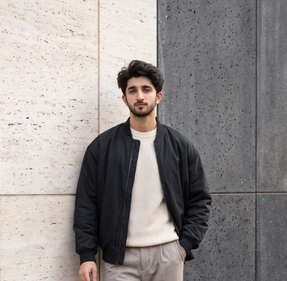
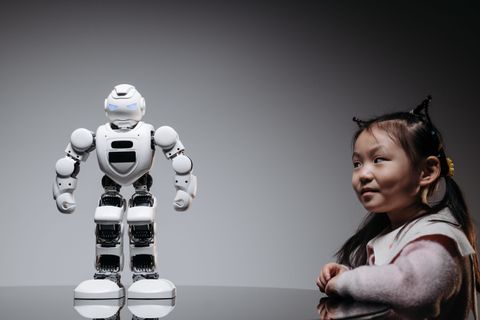
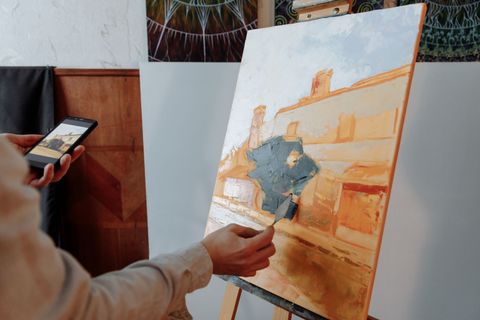
An AI photo generator can produce visual content from a written description, while text to image AI systems transform prompts into images. Other platforms focus on editing, layout creation, illustration, branding concepts, or automated design workflows.
These technologies have developed from relatively simple image-generation experiments into broader AI creative tools that can support photography, graphic design, marketing, education, entertainment, publishing, and personal creative projects.
Common categories include:
AI image generator systems for creating images from prompts
AI image editing tools for modifying existing visual material
AI graphic design tools for layouts and visual communication
AI logo generator tools for creating initial branding concepts
AI design software that combines generation with traditional editing
AI creative software for broader multimedia workflows
The appropriate tool depends on the desired result, level of human involvement, editing requirements, and intended use of the final image.
Why AI Art Tools Matter Today
AI-generated visual content has become relevant to artists, designers, educators, publishers, businesses, researchers, and individual users. The technology can help people explore ideas quickly and create visual drafts without beginning every project from a blank canvas.
For businesses, an AI image generator for business can be used for concept development, internal presentations, visual brainstorming, mockups, and other creative tasks, subject to applicable platform rules and intellectual-property considerations.
These tools can address several practical challenges:
Creating early visual concepts
Exploring different artistic directions
Modifying existing images
Generating illustrations from descriptions
Developing design variations
Producing visual prototypes
Simplifying repetitive editing tasks
Supporting people with limited traditional design experience
However, AI-generated images can also contain errors. Text may appear incorrectly, objects may have unusual shapes, hands and faces can sometimes contain visual inconsistencies, and generated content may not accurately represent real events or people.
Human review therefore remains important, especially when images are intended for factual communication, public information, professional publications, or sensitive subjects.
How AI Image Generation Works
Most modern image-generation systems use machine-learning models trained to identify patterns between visual information and other data. A user generally provides a prompt describing the desired image, and the system produces an output based on patterns learned during development.
A simplified workflow looks like this:
| Stage | Activity | Example |
|---|---|---|
| Prompt | Describe the desired image | “Mountain landscape at sunrise” |
| Interpretation | AI analyzes the instructions | Identifies subject, setting, style |
| Generation | Model creates visual content | Produces an image |
| Review | User checks the result | Looks for errors or inconsistencies |
| Editing | Adjustments are made | Change composition or background |
| Finalization | Output is prepared | Resize, crop, or export |
Some systems also allow image-to-image generation, masking, inpainting, background replacement, upscaling, or style transformation.
The quality of a result can depend on prompt clarity, model capabilities, image references, editing instructions, and the complexity of the requested scene.
Main Types of AI Creative Tools
Text-to-image systems create visual content from written descriptions. They are useful for brainstorming concepts, illustrations, environments, characters, and abstract artwork.
AI image editing tools modify existing images. Typical capabilities include object removal, background replacement, image expansion, restoration, enhancement, and localized editing.
AI graphic design tools combine automated generation with layouts, typography, templates, and visual elements. They can help users develop presentations, social graphics, posters, and other design concepts.
AI logo generators can create preliminary logo ideas based on descriptions of an organization's identity, industry, preferred visual style, or other design characteristics. Generated concepts should be reviewed carefully before being used as formal branding.
AI creative software increasingly combines several capabilities in one environment. A user may generate an image, edit it, add text, adjust its composition, and prepare it for a particular format within the same workflow.
The phrase best AI image generator should therefore be treated as context-dependent. A tool that is appropriate for photorealistic images may not be the most suitable option for vector-style graphics, detailed editing, or typography.
Recent Developments in AI-Generated Art
The past year has brought increased attention to transparency, labeling, provenance, and the legal status of AI-generated content.
In the European Union, Article 50 transparency obligations under the AI Act began applying on 2 August 2026. The rules cover certain AI systems and require measures intended to help people recognize AI interaction and certain AI-generated or manipulated content. The European Commission published detailed transparency guidelines on 20 July 2026.
The European Commission also published its final Code of Practice on marking and labelling AI-generated content on 10 June 2026. The code provides practical guidance concerning the marking and labeling of AI-generated content.
The rules are particularly relevant to images and other synthetic media because AI-generated or manipulated material can sometimes be difficult to distinguish from authentic content. The EU framework therefore places increasing emphasis on transparency and traceability.
In the United States, the U.S. Copyright Office published Part 2 of its Copyright and Artificial Intelligence report on 29 January 2025. It examined the copyrightability of generative-AI outputs and concluded that copyright protection can apply where sufficient human creativity determines expressive elements, while prompts alone generally do not establish the necessary human authorship.
The Copyright Office also released a pre-publication version of Part 3 on generative-AI training on 9 May 2025, continuing its examination of copyright issues surrounding AI systems and training materials.
Laws, Policies, and Responsible Use in India
In India, AI-generated artwork can intersect with existing legal areas including copyright, privacy, consumer protection, intellectual property, and rules concerning deceptive or misleading digital content.
There is not one single law that automatically determines the legal status of every AI-generated image. The circumstances matter, including the source material, degree of human creative contribution, intended use, representations made about the image, and rights associated with people or protected works depicted in it.
Creators should be particularly careful when an AI system is used to reproduce recognizable people, existing artworks, trademarks, or other protected material. A generated image that resembles a real person or copyrighted work can raise legal and ethical questions even when the image itself was produced by an AI system.
For professional or public-facing use, useful precautions include:
Keep records of significant human creative contributions.
Review the terms governing the AI tool being used.
Check whether uploaded reference images may be processed or retained.
Avoid presenting fictional AI-generated scenes as real events.
Obtain appropriate permissions when using identifiable individuals or protected material.
Review images for misleading or inaccurate details.
Consider disclosure when transparency is important to the audience.
International users may also need to follow rules outside India. For example, organizations operating in the European Union may need to consider the AI Act's transparency requirements when using covered AI systems.
Tools and Resources for AI Art and Design
Several categories of tools can support responsible experimentation with AI-generated visual content.
AI image generators: These tools create images from natural-language prompts and can be useful for concept development, illustration, and visual exploration.
AI image editing tools: Editing platforms can assist with background removal, object replacement, image expansion, restoration, and other modifications.
Graphic design applications: Modern design platforms increasingly combine templates, editing features, and generative AI capabilities. These can be useful when an image needs to be incorporated into a larger layout.
Image metadata and provenance tools: Content credentials and related provenance technologies can help communicate information about how digital media was created or modified. They are particularly relevant as synthetic content becomes harder to distinguish visually.
Copyright resources: The U.S. Copyright Office's AI initiative provides reports and policy information concerning copyrightability, digital replicas, and AI training.
European Commission AI resources: The European Commission provides guidance on AI transparency, labeling, and machine-readable marking of certain AI-generated content.
Prompt documentation: Maintaining a record of important prompts, reference images, edits, and human modifications can help explain how a final image was developed.
Practical Tips for Better AI-Generated Images
Clear instructions generally make image generation easier to control. A useful prompt can identify the subject, setting, composition, lighting, visual characteristics, and intended format.
For example, instead of providing only a broad description, users can specify:
Main subject
Location or environment
Camera perspective
Lighting conditions
Composition
Desired visual style
Aspect ratio
Important objects
Elements to avoid
Generated images should then be reviewed rather than accepted automatically.
This is especially important for an AI image generator for business applications. A professional image may need correct text, accurate product characteristics, appropriate branding, and consistency across multiple materials.
AI tools are also better viewed as creative assistants than automatic replacements for every design decision. Human judgment remains useful for selecting concepts, checking factual details, refining compositions, and determining whether the final result communicates the intended message.
Frequently Asked Questions
What is an AI-generated art tool?
An AI-generated art tool is software that uses artificial intelligence to create or modify visual content. Depending on the application, it can generate images from text, edit photographs, create illustrations, or assist with graphic design.
What is text to image AI?
Text to image AI converts written instructions into visual content. The user describes the desired subject or scene, and the AI system generates an image based on its learned visual patterns and the supplied instructions.
What is the best AI image generator?
There is no universally best AI image generator. The appropriate choice depends on the intended task, such as photorealistic generation, illustration, image editing, typography, graphic design, or professional workflow integration.
Can AI-generated images be copyrighted?
Copyright treatment varies by jurisdiction. In the United States, the Copyright Office stated in January 2025 that AI-assisted works can receive protection where sufficient human authorship determines expressive elements, while merely providing prompts is generally insufficient by itself. Laws in other countries can differ.
Should AI-generated images be labeled?
Labeling requirements depend on the jurisdiction, type of content, and context. In the European Union, Article 50 transparency requirements apply from 2 August 2026 to certain AI systems and AI-generated or manipulated content.
Responsible Use of AI Art Tools
AI-generated images can be useful for creativity, communication, education, design exploration, and visual prototyping. Their usefulness increases when users understand both their capabilities and limitations.
A responsible workflow can include:
Define the intended purpose of the image.
Use appropriate source material and references.
Review the AI output carefully.
Check people, objects, text, and visual details for errors.
Avoid misleading representations of real events.
Respect privacy and intellectual-property rights.
Keep appropriate records of human contributions.
Follow relevant platform and jurisdictional requirements.
Use disclosure or labeling when required or appropriate.
For professional applications, it can also be useful to establish an internal review process. This may include checking factual accuracy, brand consistency, accessibility, copyright considerations, and whether the image could reasonably be mistaken for an authentic photograph.
Conclusion
AI-generated art tools have developed into a broad category of AI creative tools, including AI photo generators, AI image editing tools, AI graphic design tools, AI logo generators, and text to image AI systems. They can support creative experimentation while reducing some of the repetitive work involved in visual production.
At the same time, generated images require careful review. Accuracy, copyright, privacy, authenticity, and transparency can all matter depending on how an image is created and used.
Recent developments in the European Union and United States show that AI-generated content is becoming an increasingly important subject of technology and copyright policy. The EU's transparency rules began applying on 2 August 2026, while the U.S. Copyright Office continues to examine copyrightability and AI training questions.
The most practical approach is to treat AI-generated art as part of a broader creative workflow. Users can combine AI generation with human direction, editing, fact-checking, and responsible review to produce visual content that is more useful, understandable, and appropriate for its intended purpose.