AI Voice Generation Tools: Explore Types, Features, Applications, and Useful Resources
AI voice generation tools are software applications that create human-like speech using machine learning and speech synthesis technologies. They process text, recorded speech, or other inputs to produce an audio output.
Traditional text-to-speech systems often relied on predefined voice recordings or rule-based pronunciation methods. Modern systems use neural networks trained on speech and language data to generate more natural-sounding audio.
A typical AI voice generation process includes:
Input processing: The system receives written text or an authorised voice sample.
Language analysis: It identifies words, sentence structure, punctuation, and pronunciation requirements.
Speech modelling: An AI model determines how the text should sound when spoken.
Voice generation: The system creates audio with selected voice characteristics.
Audio processing: The output may be adjusted for clarity, pacing, volume, and other sound properties.
Export: The generated audio is saved in a supported format for playback or further editing.
AI speech generation tools may work through websites, desktop applications, mobile applications, APIs, or integrated content-production platforms.
Importance of AI Voice Generation Tools
AI voice technologies are becoming useful in situations where spoken information needs to be created, adapted, or delivered in different formats.
Content Accessibility
Text-to-speech technology can help people access written material through audio. It can support users who prefer listening, people with reading difficulties, and individuals who use assistive technologies.
Multilingual Communication
Some AI voice systems support multiple languages and regional accents. This can help organisations prepare spoken content for audiences who use different languages.
Digital Learning
Educational platforms can use AI-generated narration for lessons, tutorials, language-learning exercises, and digital learning materials. Audio can also support revision and independent study.
Content Production
AI voiceover generator tools can create narration for presentations, explainers, product demonstrations, and educational videos. They can reduce the need to record every line manually, although editing and quality checks remain important.
Interactive Applications
AI-generated speech can be integrated into virtual assistants, navigation systems, interactive applications, and automated information systems. These applications can provide spoken responses based on user input.
Types of AI Voice Generation Tools
AI voice generation tools can be grouped according to the type of input they process and the audio they produce.
AI Text to Speech Tools
AI text to speech tools convert written content into spoken audio. Users enter text, select a supported voice and language, adjust available speech settings, and generate an audio file.
Common features include:
Multiple languages and regional accents
Adjustable speaking speed and pitch
Different voice styles
Pronunciation dictionaries
Audio export in formats such as MP3 or WAV
These tools are used for reading digital documents, creating narration, preparing learning material, and making written information accessible through audio.
AI Voice Cloning Tools
AI voice cloning tools create a synthetic voice that resembles a particular speaker. Depending on the technology, the system may use a longer voice recording or a short authorised sample to learn characteristics such as pitch, tone, pronunciation, and speaking style.
Voice cloning can support personal voice preservation, authorised narration, and consistent audio production. It must only be used with appropriate permission from the speaker. Cloning someone's voice to impersonate them or mislead listeners can create serious legal and ethical risks.
AI Voice Synthesis Tools
AI voice synthesis tools generate speech waveforms using computational models. They may use neural networks to create natural-sounding speech with variations in rhythm, pronunciation, and intonation.
Some systems provide controls for emphasis, pauses, emotion, and speaking style. Their quality depends on the model, language, training data, and input text.
AI Voiceover Generator Tools
AI voiceover generator tools are designed to create narration for videos, presentations, advertisements, tutorials, and other media. They commonly include text editing, voice selection, timing controls, and audio export.
Some platforms also support subtitle alignment, multiple speakers, and integration with video-editing workflows.
AI Speech Synthesis Software
AI speech synthesis software includes applications and development systems that convert text or other inputs into spoken audio. It may run locally, through a cloud platform, or as part of a larger application.
Developers can use speech synthesis APIs to add spoken responses to websites, mobile applications, digital assistants, and interactive systems.
Key Features of AI Speech Generation Tools
The features available vary across platforms and models. The following capabilities are commonly relevant when evaluating AI voice generation tools.
Feature | Description |
|---|---|
Language support | Generates speech in supported languages |
Voice selection | Provides different synthetic speaker profiles |
Voice cloning | Reproduces authorised voice characteristics |
Speech speed | Adjusts the pace of narration |
Pronunciation control | Helps manage difficult names and technical terms |
Emotion and style | Adjusts delivery, emphasis, and expression |
Audio editing | Supports trimming, pauses, and other adjustments |
API integration | Connects speech generation with applications |
Audio export | Saves generated speech in supported formats |
Natural-sounding output is not guaranteed for every language or sentence. Unusual names, mixed-language text, abbreviations, and technical vocabulary may require manual pronunciation adjustments.
Applications of AI Voice Generation Tools
AI voice technologies are used in different sectors, depending on their language support, audio quality, and integration capabilities.
Education and E-Learning
Educational platforms can use synthetic narration for digital lessons, study material, language exercises, and recorded explanations. Students may listen to written content while following along with the text.
Audiobooks and Digital Publishing
Publishers and content creators can use AI narration to prepare audio versions of written material. Human review is important for checking pronunciation, pacing, and the correct interpretation of names or specialised terminology.
Video and Media Production
AI voiceover generator tools can create narration for tutorials, presentations, explainer videos, and training material. Multiple voice styles may be used for different speakers or sections.
Accessibility Applications
Text-to-speech systems can read webpages, documents, and digital interfaces aloud. They can help people who have difficulty reading on screens or who prefer audio-based access to information.
Business Communication
Organisations can use synthetic speech for internal announcements, training recordings, interactive voice applications, and multilingual information. Content should be reviewed to ensure that generated messages are accurate and clearly identified when appropriate.
Gaming and Interactive Media
Game developers can use generated speech for character dialogue, narration, prototypes, and interactive experiences. Voice consistency and permissions are particularly important when a synthetic voice resembles a real person.
How AI Voice Generation Works
The technical process depends on the type of tool, but a typical text-to-speech system follows several stages:
Text input: The user enters or imports the written content.
Text analysis: The system identifies words, sentence boundaries, punctuation, and language patterns.
Phonetic processing: Text is converted into pronunciation-related representations.
Acoustic modelling: The model determines speech characteristics such as pitch, timing, and intonation.
Waveform generation: A neural vocoder or related component produces the audio signal.
Audio review: The generated speech is checked for clarity, pronunciation, and unwanted distortions.
Export and integration: The audio is saved or connected to another application.
Voice cloning follows a different process because it also uses an authorised voice sample to model speaker characteristics. The resulting system can then generate new speech that resembles the selected voice.
Recent Developments and Industry Trends
AI voice technology continues to develop through improvements in neural speech models, multilingual generation, voice control, and synthetic-audio detection.
More Natural Neural Speech
Modern speech synthesis systems use neural networks to generate more expressive speech. Improvements in pronunciation, pauses, rhythm, and intonation help make generated audio sound more natural than many earlier text-to-speech systems.
Multilingual and Regional Voice Generation
AI speech platforms increasingly support multiple languages and regional speech patterns. This is relevant in countries such as India, where digital content may need to reach audiences who speak different languages.
Improved Voice Control
Some newer systems allow users to adjust speaking style, emotional expression, emphasis, and pacing. These controls help adapt narration to educational, informational, and entertainment content.
Greater Attention to Synthetic-Audio Identification
The growth of realistic voice cloning has increased the importance of identifying AI-generated audio. Detection methods, disclosure labels, and audio provenance information are becoming important parts of responsible synthetic-media development.
India's Synthetic-Content Rules — February 2026
On 10 February 2026, the Ministry of Electronics and Information Technology notified amendments to the Information Technology (Intermediary Guidelines and Digital Media Ethics Code) Rules, 2021. The amendments address synthetically generated information, including realistic AI-generated audio and impersonation. They introduce requirements for intermediaries concerning prohibited content, disclosure, and traceability.
MeitY's explanatory material also describes an audio disclosure at the beginning of applicable synthetic audio, along with embedded metadata or a provenance mechanism. This is particularly relevant to AI-generated voice announcements and narration distributed through covered platforms.
Indian Laws and Policies Relevant to AI Voice Generation
AI voice generation and voice cloning may involve personal data, identity, impersonation, and digital content. Developers and users in India should consider the following legal frameworks.
Information Technology Act, 2000
The Information Technology Act, 2000 contains provisions relevant to certain forms of online impersonation, identity theft, privacy violations, and unlawful digital content.
For example, Sections 66C and 66D address identity theft and cheating by personation using computer resources. These provisions may become relevant when a synthetic voice is used to impersonate another person or deceive listeners.
Information Technology Rules, 2021, as Amended in 2026
The 2026 amendments address synthetically generated information, including realistic synthetic audio. They place due-diligence responsibilities on covered intermediaries and establish requirements related to identifying and handling certain categories of synthetic content.
Where applicable, developers and platform operators should review the rules concerning labelling, metadata, prohibited content, and complaint handling.
Digital Personal Data Protection Act, 2023
Voice recordings can contain personal information when they identify or relate to an individual. Organisations collecting or processing such recordings should assess their obligations under the Digital Personal Data Protection Act, 2023.
Important considerations include:
Appropriate notice and consent where required
Using personal data for defined purposes
Limiting access to voice recordings
Protecting stored recordings and related information
Following applicable data-retention and deletion requirements
Digital Personal Data Protection Rules, 2025
The Government of India notified the Digital Personal Data Protection Rules, 2025 on 14 November 2025. The rules provide implementation details for the DPDP Act, including requirements related to data protection and organisational responsibilities. Their provisions have different commencement timelines, so organisations should check which requirements are applicable at the time of processing.
Copyright and Voice Permissions
Voice recordings, scripts, music, and other audio material may involve copyright or other legal rights. Developers should check whether they have the necessary permissions to use training recordings and other source material. Permission to use a recording should not automatically be treated as permission to impersonate the speaker in every context.
Best Practices for Using AI Voice Generation Tools
Responsible use helps protect speakers, audiences, and organisations.
Obtain permission: Use voice recordings for cloning only when the speaker has given appropriate permission.
Avoid impersonation: Do not create synthetic audio intended to mislead listeners about who is speaking.
Disclose synthetic audio: Clearly identify generated speech when required or when disclosure is important for audience understanding.
Protect recordings: Restrict access to voice samples and store them securely.
Review generated speech: Check pronunciation, names, numbers, and factual statements before publication.
Check language quality: Review regional pronunciation and mixed-language speech with knowledgeable speakers.
Use approved source material: Confirm the rights and permissions associated with recordings and scripts.
Maintain records: Document permissions, model settings, and relevant production information.
Check platform policies: Review the applicable rules of the platform used to generate or distribute audio.
For sensitive announcements, financial information, public communications, and identity-related applications, additional human review and verification are important.
Tools and Resources for AI Voice Generation
Different categories of tools support speech creation, editing, integration, and evaluation.
Tool or resource | Main purpose |
|---|---|
Text-to-speech platforms | Convert written text into spoken audio |
Voice cloning systems | Generate speech resembling an authorised speaker |
Speech synthesis APIs | Add generated speech to digital applications |
Audio editing software | Adjust volume, timing, pauses, and sound quality |
Speech recognition tools | Convert recorded speech into text |
Pronunciation dictionaries | Improve the pronunciation of specialised words |
Audio analysis tools | Examine sound quality and recording characteristics |
Synthetic-audio detection systems | Help assess whether audio may be AI-generated |
When evaluating an AI speech synthesis platform, consider language coverage, pronunciation accuracy, voice permissions, audio quality, data protection, export formats, and integration requirements.
Frequently Asked Questions
1. What are AI voice generation tools?
AI voice generation tools are software systems that create spoken audio using artificial intelligence. They can convert text into speech, generate narration, or reproduce authorised voice characteristics.
2. What is the difference between text-to-speech and voice cloning?
Text-to-speech converts written content into spoken audio using a selected synthetic voice. Voice cloning uses an authorised voice recording to reproduce characteristics of a particular speaker in newly generated speech.
3. Can AI voice generation tools support Indian languages?
Yes. Some platforms support Indian languages and regional accents, although language coverage and pronunciation quality vary. Generated audio should be reviewed by knowledgeable speakers, especially when regional pronunciation is important.
4. Where are AI voiceover generator tools used?
They are used in educational recordings, digital presentations, video narration, audiobooks, interactive applications, accessibility tools, and multilingual content production.
5. Is permission required for AI voice cloning?
Using another person's voice for cloning requires appropriate permission and consideration of applicable legal rights. Voice cloning without permission, particularly for impersonation or deception, can create serious legal and ethical problems.
Conclusion
AI voice generation tools are changing how spoken content is created and used across education, media, accessibility, communication, and digital applications. AI text to speech tools convert written material into audio, while AI voice cloning tools reproduce authorised speaker characteristics. AI voice synthesis software and voiceover generator tools provide additional capabilities for narration and interactive applications.
As the technology develops, language support, natural speech quality, voice control, and application integration will remain important areas of progress. At the same time, consent, privacy, transparency, and synthetic-audio identification are essential considerations.
Selecting an appropriate tool requires evaluating its technical features, language capabilities, security practices, and suitability for the intended application.
Disclaimer: This article is intended for general informational and educational purposes only. It does not provide legal or professional advice, make performance claims, or promote any particular product or platform. Always obtain appropriate permissions and review applicable laws before generating or distributing synthetic voice recordings.

Related Post...

AI Chip Technology: Complete Guide to Basics, Technologies, Processes, Facts, and Best Practices
Updated: November 13, 2026
Read More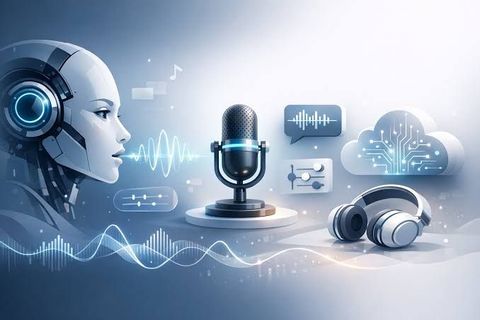
AI Voice Generation Tools: Explore Types, Features, Applications, and Useful Resources
Updated: November 13, 2026
Read More