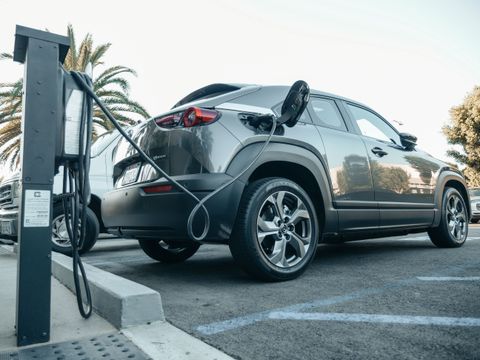
Electric Vehicle Charging Stations: Discover Information, Facts, Tips, Resources, and Expert Advice
Electric vehicle charging stations are facilities that provide electrical energy to rechargeable batteries used in electric vehicles. They can be installed at homes, offices, apartment buildings, shopping areas, parking facilities, highways, fleet depots, and other locations.
An electric vehicle charging station generally consists of electrical supply equipment, connectors, protective systems, communication equipment, and control mechanisms. Some modern charging stations can also communicate with vehicles and digital platforms to monitor charging activity.
The broader concept of EV charging infrastructure includes much more than the visible charging unit. It can involve:
Electricity connections
Distribution equipment
Transformers
Chargers
Charging connectors
Communication networks
Payment or authentication systems
Parking spaces
Safety equipment
Load-management systems
Monitoring platforms
Charging infrastructure can therefore range from a single residential charging point to a large commercial installation containing multiple chargers.
Why EV Charging Infrastructure Matters
The availability of charging infrastructure is an important part of electric-mobility development. Drivers need convenient access to electricity, while fleet operators need predictable charging arrangements for vehicles that operate on fixed schedules.
A well-planned charging network can support:
Electric passenger cars
Electric two-wheelers
Electric three-wheelers
Electric buses
Electric commercial vehicles
Fleet vehicles
Workplace vehicles
Residential EVs
Charging requirements vary considerably between these categories.
For example, a private vehicle that remains parked overnight may work well with slower AC charging, while a highway vehicle making a long journey may require significantly faster charging.
The challenge is therefore not simply to install more chargers. The infrastructure must be appropriately located, electrically supported, safe, accessible, and compatible with the vehicles using it.
Main Types of EV Charging Stations
Charging stations can be categorized by charging technology, electrical configuration, power level, and intended application.
| Charging Type | General Characteristics | Typical Application |
|---|---|---|
| AC slow charging | Lower-power AC charging | Homes and long parking periods |
| Level 2 EV charging station | Higher-power AC charging | Homes, offices, parking areas |
| DC fast charging station | Direct-current high-power charging | Highways and public locations |
| Fast EV charging station | Designed for substantially shorter charging periods | Travel corridors and fleet use |
| Fleet charging | Multiple charging points | Depots and commercial fleets |
| Destination charging | Charging where vehicles remain parked | Hotels, offices, malls |
| Public charging | Accessible charging infrastructure | Urban and highway networks |
In Indian government guidance, BEE lists Type-2 AC charging at a minimum 22 kW among specified charging infrastructure and identifies CCS and CHAdeMO configurations at minimum 50 kW within the fast-charging category. Actual charging performance depends on the vehicle, charger, battery, temperature, and other technical conditions.
Understanding Level 2 EV Charging Stations
A Level 2 EV charging station generally refers to AC charging equipment operating at a higher power level than basic household charging.
These installations can be useful when a vehicle remains parked for several hours, such as:
Residential parking
Apartment complexes
Offices
Hotels
Educational institutions
Commercial parking areas
The practical charging time depends on the vehicle's onboard charger, battery capacity, state of charge, electrical supply, and charging configuration.
For residential installations, India's 2024 charging guidelines allow residential owners to use existing electricity connections for EV charging or seek a separate metered connection with a dedicated EV charging tariff.
Understanding Fast EV Charging Stations
A fast EV charging station generally provides substantially greater charging power than conventional AC charging.
A DC fast charging station supplies direct current to the vehicle through dedicated charging equipment. This can reduce the time required to add energy compared with lower-power AC charging.
However, "fast" does not mean every EV will charge at the same rate.
Charging performance can be limited by:
Vehicle battery architecture
Maximum vehicle charging power
Battery temperature
Battery state of charge
Charger output
Electrical supply
Connector compatibility
Charging-system communication
Charging rates can also decrease as the battery approaches a high state of charge. Therefore, published charger power should not automatically be interpreted as the charging speed experienced by every vehicle.
Commercial EV Charging Station Applications
A commercial EV charging station may be installed in locations where multiple vehicles need access to charging.
Examples include:
Shopping centers
Office complexes
Hotels
Highway facilities
Parking structures
Fleet depots
Transport terminals
Public parking areas
Educational campuses
Hospitals
Commercial installations often require additional planning because several vehicles may charge simultaneously.
Electrical demand management becomes particularly important where many high-power chargers operate together.
A site assessment may examine:
Available electrical load
Transformer capacity
Parking layout
Cable routing
Charger placement
Vehicle access
Emergency arrangements
Communication connectivity
Future expansion requirements
Recent Developments in India
India's EV charging network has continued to expand, while government programs have increasingly focused on broader public charging infrastructure.
In a Lok Sabha answer dated 10 February 2026, the Ministry of Heavy Industries stated that 29,151 public EV charging stations had been installed in the country based on inputs from BHEL. The Ministry also stated that ₹2,000 crore had been allocated under PM E-DRIVE for public EV charging infrastructure and that the operational guidelines for EV Public Charging Stations were issued on 26 September 2025.
The government has also recognized that charging availability can vary between locations. The February 2026 parliamentary response noted the objective of supporting public charging infrastructure across India, including Tier-2 cities and rural areas.
PM E-DRIVE has undergone further changes during 2026. Its official portal states that the scheme's total outlay was increased by ₹1,000 crore to ₹11,900 crore, and the scheme period was extended to 31 March 2028 for the applicable segments.
The Ministry's scheme documents also show that the operational guidelines for deployment of EV Public Charging Stations were released on 26 September 2025, followed by additional FAQs and policy updates during 2025–2026.
Charging Infrastructure and Grid Planning
The expansion of EV charging stations has a direct relationship with electricity distribution infrastructure.
High-power charging sites can place significant demand on local electrical networks. Consequently, charging guidelines address electricity connections, distribution-system preparedness, and connection timelines.
The 2024 Ministry of Power guidelines specify that charging-station owners may opt for a Low Tension connection for loads up to 150 kW, subject to the applicable requirements. The guidelines also establish connection-related timelines and encourage online single-window processes.
The guidelines further state that State Nodal Agencies and municipal authorities should assess potential EV charging demand to support strategic placement of charging stations.
This illustrates why charging infrastructure planning involves both transportation and electricity-system considerations.
Important Factors When Evaluating a Charging Station
A charger should be evaluated according to the vehicle and location rather than simply its advertised power.
| Factor | What to Check |
|---|---|
| Connector | Is it compatible with the vehicle? |
| Power | What output can the charger provide? |
| Vehicle limit | What maximum charging power does the EV accept? |
| Electrical supply | Can the site support the charger? |
| Location | Is the charger accessible and appropriately positioned? |
| Communication | Does it support required monitoring or authentication? |
| Safety | Are electrical protection systems compliant? |
| Expansion | Can additional charging points be added later? |
| Weather protection | Is the equipment suitable for its installation environment? |
Laws and Policies in India
India's EV charging ecosystem is governed by electricity regulations, technical standards, safety requirements, building considerations, and government schemes.
The Ministry of Power issued the Guidelines for Installation and Operation of Electric Vehicle Charging Infrastructure-2024 on 17 September 2024. The guidelines apply to charging infrastructure in locations including offices, educational institutions, hospitals, group housing societies, commercial complexes, railway stations, airports, metro stations, municipal parking areas, highways, and expressways.
Setting up EV charging stations has been notified as an unlicensed activity, allowing private entities to install charging stations in accordance with the Ministry of Power's applicable guidelines. A February 2026 parliamentary response reaffirmed this position.
Safety is also important. The 2024 guidelines require EV Supply Equipment to comply with applicable BIS standards and reference Central Electricity Authority safety requirements.
The Bureau of Energy Efficiency maintains a dedicated electric-mobility resource section containing Ministry of Power guidelines, EV charging information, and related government resources.
Practical Considerations for Home Charging
Home charging is often simpler than a large public installation, but electrical safety remains important.
Before installing a home charger, homeowners should consider:
Existing electrical-load capacity
Dedicated wiring requirements
Earthing
Protective devices
Cable routing
Parking location
Charger compatibility
Metering arrangements
Building or housing-society rules
Future EV requirements
The 2024 national guidelines specifically recognize residential charging through an existing connection or a separate metered connection, subject to the applicable electricity-distribution arrangements.
Residents of apartment buildings should also coordinate with building management where common parking areas or shared electrical infrastructure are involved.
Tools and Useful Resources
Several resources can help users understand EV charging infrastructure.
Bureau of Energy Efficiency: BEE provides charging specifications, EV FAQs, policy information, and access to the EV Yatra platform.
EV Yatra: The government-backed platform is designed to help EV users locate charging infrastructure and improve awareness of electric mobility.
Ministry of Power: Useful for current charging-infrastructure guidelines and electricity-related requirements.
PM E-DRIVE portal: Provides current information about the national electric-mobility scheme, policy documents, and charging-infrastructure guidelines.
Charging-time calculator: A simple calculation can provide an approximate charging duration by comparing battery energy required with charging power, while recognizing that real charging is not perfectly linear.
Site-planning worksheet: Useful for recording electrical load, parking spaces, charger types, connector standards, cable lengths, and future expansion requirements.
Practical Tips for EV Charging Infrastructure
When evaluating or planning charging infrastructure, a structured approach can reduce technical uncertainty.
Identify the EV models expected to use the charger.
Check compatible connectors.
Determine the vehicle's maximum charging power.
Assess the site's electrical capacity.
Consider simultaneous charging demand.
Review applicable BIS and CEA safety requirements.
Plan cable routing carefully.
Maintain adequate vehicle maneuvering space.
Consider weather protection where appropriate.
Provide clear operating instructions.
Plan for future charging demand.
Keep technical documentation available.
Check current central and state requirements before installation.
For public and commercial installations, accessibility and location can be just as important as charger power.
Frequently Asked Questions
What are electric vehicle charging stations?
They are facilities containing electrical equipment that supplies energy to rechargeable EV batteries. They can range from residential charging points to large public charging networks.
What is the difference between Level 2 and DC fast charging?
Level 2 generally refers to higher-power AC charging, while DC fast charging supplies direct current through dedicated equipment and can provide substantially higher charging power. The actual charging rate depends on both the charger and vehicle.
How many public EV charging stations are there in India?
In a February 2026 parliamentary response, the Ministry of Heavy Industries reported 29,151 public EV charging stations based on inputs received from BHEL.
Can private entities establish EV charging stations in India?
Yes. The activity has been notified as unlicensed, and private entities can establish charging stations subject to the applicable Ministry of Power guidelines and technical and safety requirements.
Does a higher-power charger always charge an EV faster?
No. The vehicle's battery system, onboard charging capability, battery temperature, state of charge, connector, and charger output all influence the actual charging rate.
Conclusion
Electric vehicle charging stations are an essential component of India's transition toward electric mobility. The infrastructure includes much more than chargers themselves, incorporating electrical connections, distribution equipment, connectors, safety systems, communication technologies, parking arrangements, and network management.
India's charging ecosystem has continued to develop through 2025 and 2026. Government data reported 29,151 public charging stations in February 2026, while PM E-DRIVE provides a national framework for expanding public EV charging infrastructure.
The 2024 Ministry of Power guidelines also establish important requirements concerning connections, interoperability, safety, charging locations, and electrical-system preparedness.
For anyone researching EV charging stations, a fast EV charging station, DC fast charging station, commercial EV charging station, or Level 2 EV charging station, the most useful approach is to consider vehicle compatibility, electrical capacity, safety, location, charging requirements, and applicable regulations together.
Disclaimer: This article is provided for general informational and educational purposes only. It does not constitute technical, legal, financial, electrical, or regulatory advice. Information, government schemes, standards, policies, and charging infrastructure requirements may change over time and can vary by state or local authority. Readers should verify current requirements with the relevant government department, electricity distribution company, regulatory authority, or qualified professional before making decisions. We do not claim that any particular product, provider, technology, installation, or organization is suitable for a specific situation. The purpose of this article is solely to provide information and education; it does not sell, promote, endorse, or recommend any product or service.

Related Post...
SUV Car Models: Explore Overview, Basics, Explanation, Knowledge, and Key Details
Updated: November 02, 2026
Read More
Luxury Electric Cars: Explore Guide, Tips, Insights, Advice, and Expert Suggestions
Updated: November 02, 2026
Read More
Hybrid Car Technology: Explore Types, Features, Insights, Suggestions, and Useful Resources
Updated: November 02, 2026
Read More