Fruit Sorting Machines: Complete Guide to Basics, Techniques, Facts, Knowledge, and Best Practices
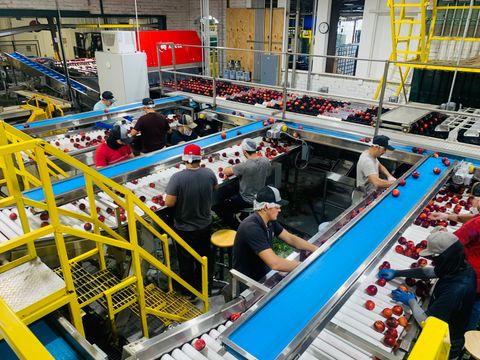
Fruit sorting machines are agricultural and food-processing systems designed to examine, classify, and separate fruits according to characteristics such as size, weight, color, shape, surface condition, and visible defects.
Traditional fruit sorting often relies heavily on manual inspection. Workers examine harvested produce and separate fruits into different categories. While manual sorting can be useful for smaller quantities, it becomes more challenging when large volumes need to be processed consistently.
An automatic fruit sorting machine uses mechanical handling systems, sensors, cameras, weighing mechanisms, or combinations of these technologies to classify produce.
The broader category of fruit sorting machines can range from relatively simple roller or conveyor-based graders to advanced computer-vision systems.
A typical automated process can be represented as:
Fruit receiving → Cleaning or preparation → Singulation → Imaging or measurement → Classification → Separation → Packing
The exact process depends on the fruit, processing environment, and grading criteria.
Why Fruit Sorting and Grading Matter
Fruit quality can vary considerably within the same harvest. Individual fruits may differ in size, maturity, color, shape, surface appearance, or physical damage.
A fruit grading machine helps organize this variation into more consistent groups.
Sorting can support:
More consistent product categories
Faster post-harvest handling
Reduced repetitive manual inspection
Better separation of damaged produce
More organized packing
Improved inventory classification
Consistent grading criteria
Better traceability of processing batches
The technology can be useful to farmers, packhouses, cooperatives, exporters, food processors, wholesalers, and agricultural research organizations.
It is important to understand that sorting equipment generally evaluates measurable characteristics. It does not automatically determine every aspect of fruit quality. Internal defects, flavor, nutritional composition, and some maturity characteristics may require additional testing.
How Automatic Fruit Sorting Works
A modern sorting line can combine several technologies.
Feeding and singulation: Fruits are introduced onto a conveyor or roller system and separated so that individual pieces can be examined.
Image acquisition: Cameras capture images of the fruit from one or more angles.
Measurement: Sensors can assess dimensions, weight, color, or other measurable characteristics.
Classification: Software compares measurements against predefined grading criteria.
Mechanical separation: Belts, rollers, cups, air systems, gates, or other mechanisms direct fruit into different categories.
A simplified example is:
| Stage | Function |
|---|---|
| Feeding | Introduces harvested fruit |
| Singulation | Separates individual fruits |
| Imaging | Captures surface information |
| Measurement | Determines size, weight, or color |
| Software analysis | Classifies fruit |
| Sorting mechanism | Directs fruit to selected outlet |
| Collection | Groups classified fruit |
Main Types of Fruit Sorting Machines
Different fruits require different sorting approaches.
| Machine Type | Main Criterion | Example Applications |
|---|---|---|
| Size grader | Diameter or dimensions | Apples, citrus, mangoes |
| Weight grader | Individual fruit weight | Mangoes, citrus, guava |
| Color sorter | Surface color | Citrus, tomatoes, apples |
| Vision sorter | Appearance and defects | Pomegranate, citrus, apples |
| Roller grader | Physical dimensions | Mangoes, citrus, vegetables |
| Optical sorter | Color and visual characteristics | Selected fruits and processed products |
| Multi-parameter grader | Several characteristics | Commercial packhouses |
A fruit size sorting machine is primarily designed to separate fruits according to dimensions or weight-related categories.
A fruit color sorting machine uses optical information to classify fruits according to color characteristics. This can be useful when color provides an indication of maturity or visual quality.
Industrial Fruit Sorting Machines
An industrial fruit sorting machine is generally designed for higher-throughput environments such as large packhouses, processing centers, and integrated horticultural facilities.
Such systems may incorporate:
Continuous conveyors
Multiple cameras
Automated weighing
Computer vision
Programmable controls
Multiple sorting outlets
Data recording
Integration with washing equipment
Packing-line integration
Capacity should not be evaluated independently from accuracy. A high-throughput system may not be appropriate if the product requires careful handling or highly detailed inspection.
The characteristics of the fruit also matter. Fragile produce may require gentler handling mechanisms than firm fruits.
Orange Sorting Machine Applications
An orange sorting machine can classify citrus fruits using criteria such as size, weight, color, and visible surface defects.
Citrus sorting is a particularly useful application for machine vision because external appearance can provide measurable information about the fruit.
ICAR has reported the development of an AI-enabled automatic fruit grader for citrus that combines washing, image-based sorting, and weight-based grading. The reported prototype had an approximate capacity of 200 kg per hour and used a CNN-based model for classification.
This illustrates how artificial intelligence can be combined with conventional mechanical grading.
However, research prototypes and commercial production equipment should not automatically be treated as equivalent. Actual performance depends on fruit variety, operating conditions, calibration, lighting, machine configuration, and processing speed.
Mango Sorting Machine Applications
A mango sorting machine may classify fruit according to weight, size, color, shape, or visible defects.
Mangoes can present additional challenges because different varieties have different shapes, colors, skin characteristics, and maturity patterns.
An appropriate sorting system therefore needs to be calibrated for the specific fruit variety and grading requirements.
ICAR's horticultural research programs include post-harvest technologies for mango and other fruits, including grading and processing equipment.
Computer Vision and AI in Fruit Sorting
Computer vision is becoming an important technology in automated grading.
Cameras can capture information that conventional mechanical graders cannot easily measure. Software can then analyze characteristics such as:
Surface color
Shape
Diameter
Visible blemishes
Bruising
Size
Presence or absence of fruit
Surface defects
ICAR has documented an automatic vision-based sorting and grading system for tomato and pomegranate using a conveyor, imaging system, and diversion mechanism. The reported system could classify characteristics such as size and surface defects and had a reported capacity of approximately 45–50 objects per minute.
These developments demonstrate the direction of agricultural automation: combining mechanical handling with image analysis and software-based classification.
Recent Developments in Fruit Sorting Technology
Post-harvest automation has received continued attention in Indian agricultural research.
ICAR's horticultural division identifies mechanization for harvesting and processing efficiency as an important area and lists fruit harvesters, grading and cutting machines, dryers, and sorters among developed technologies.
Recent research has also focused on combining sorting with other post-harvest operations. For example, the ICAR automatic citrus grader combines washing, image-based sorting, and weight-based grading in one system.
Another important development is greater integration across the horticulture value chain.
The National Horticulture Board's 2025 engineering guidelines identify sorting, grading, washing, waxing, packing, cold storage, and related material-handling equipment as components that can be integrated into horticultural infrastructure.
The NHB's Cluster Development Programme also follows an end-to-end approach covering production, post-harvest management, value addition, logistics, and market integration.
Important Machine Features
When evaluating fruit sorting technology, the following characteristics are particularly relevant:
Fruit compatibility
Sorting criteria
Throughput
Grading accuracy
Number of categories
Camera resolution
Lighting consistency
Weight-measurement accuracy
Conveyor configuration
Fruit handling method
Cleaning requirements
Software controls
Data-recording capabilities
Integration with packing equipment
The machine should be matched to the specific fruit rather than selected only on the basis of advertised capacity.
For example, equipment intended for oranges may require different handling and grading configurations from equipment intended for mangoes.
Laws, Food-Safety Rules, and Government Programs in India
Fruit sorting equipment operates within a broader food-processing and agricultural environment.
FSSAI establishes science-based food standards and regulates food businesses to help ensure food safety. Its Food-O-Copoeia provides category-wise references covering quality, food safety, labeling, packaging, testing methods, and other regulatory provisions.
FSSAI also provides sector-specific Food Safety Management System guidance for fruits and vegetables. These documents include guidance related to hygiene, hazard control, and food-business operations.
For food businesses involved in manufacturing, processing, packaging, storage, or distribution, FSSAI's Schedule 4 framework includes Good Manufacturing Practices and Good Hygiene Practices.
FSSAI's regulatory framework has continued to be updated. Its licensing and registration regulations page lists amendments dated 10 March 2026 and 23 June 2026.
This means food-processing facilities should check the latest regulatory notifications rather than relying exclusively on older compliance documents.
Government infrastructure programs are also relevant. The National Horticulture Board's 2025 engineering guidelines discuss integrated horticultural infrastructure containing sorting, grading, washing, packing, cold storage, and related equipment.
Practical Selection Checklist
Before selecting a sorting system, operators can review the following:
Identify the fruit variety.
Define the required grading criteria.
Determine the expected processing volume.
Check acceptable fruit-handling methods.
Decide whether size, weight, color, or defects need to be measured.
Review camera and lighting requirements.
Check cleaning and sanitation procedures.
Examine the number of sorting categories.
Evaluate integration with washing and packing equipment.
Review power and space requirements.
Examine data and control features.
Plan calibration and routine maintenance.
A controlled testing process using representative fruit samples can provide more useful information than relying only on general machine specifications.
Tools and Useful Resources
ICAR: Useful for agricultural research, post-harvest technologies, fruit grading developments, and horticultural mechanization.
National Horticulture Board: Provides information and technical guidelines related to horticultural infrastructure, post-harvest handling, cold chains, and integrated facilities.
FSSAI: Provides food-safety regulations, guidance documents, inspection resources, and fruit-and-vegetable-related standards.
Fruit grading worksheet: A spreadsheet can record fruit variety, size range, weight range, color category, defect category, and sorting results.
Machine-capacity calculator: A basic calculation can estimate required throughput from the number of fruits processed per hour and the available operating time.
Quality inspection checklist: Useful for recording rejected fruit, surface defects, bruising, calibration results, and sorting accuracy.
Best Practices for Fruit Sorting
Good results depend on more than the sorting machine itself.
Recommended practices include:
Keep incoming fruit reasonably clean and suitable for the machine.
Avoid excessive mechanical impact during feeding.
Maintain consistent lighting for optical systems.
Calibrate weight and imaging systems regularly.
Use representative samples during calibration.
Keep sensors and cameras clean.
Check conveyor alignment.
Monitor rejected fruit for recurring patterns.
Separate severely damaged or decayed produce appropriately.
Maintain records of grading results.
Train operators in safe machine operation.
Follow applicable food-hygiene procedures.
NHB guidance also emphasizes careful post-harvest handling, shaded pre-sorting areas, and removal of damaged, bruised, decayed, or otherwise unsuitable produce to reduce quality and food-safety problems.
Frequently Asked Questions
What is an automatic fruit sorting machine?
An automatic fruit sorting machine uses mechanical systems, sensors, cameras, weighing equipment, or software to classify and separate fruits according to predefined characteristics such as size, weight, color, or visible defects.
What is the difference between a fruit sorter and a fruit grader?
The terms are often used together. Sorting generally refers to separating produce into categories, while grading commonly refers to classification according to defined quality, size, weight, or appearance criteria.
Can a machine sort mangoes and oranges?
Some systems can be configured for multiple fruit types, but mangoes and oranges have different shapes, surface characteristics, sizes, and handling requirements. Equipment and software generally need to be configured or calibrated for the intended fruit.
How does a fruit color sorting machine work?
It generally uses cameras or optical sensors to capture surface color information and software to classify fruits according to predefined color ranges or patterns.
Can fruit sorting machines detect internal defects?
Not necessarily. Conventional cameras mainly evaluate external characteristics. Detecting internal defects may require technologies such as specialized imaging or additional testing methods.
Conclusion
Fruit sorting machines are an important part of modern post-harvest handling. They can organize harvested produce according to size, weight, color, shape, and visible surface characteristics while reducing dependence on repetitive manual classification.
The technology ranges from mechanical roller graders to sophisticated computer-vision systems using cameras, sensors, artificial intelligence, and automated separation mechanisms.
Recent Indian research demonstrates this progression. ICAR has reported AI-enabled citrus grading and vision-based sorting systems, while the National Horticulture Board's 2025 engineering guidance recognizes sorting and grading as important components of integrated horticultural infrastructure.
For farmers, packhouses, processors, and other agricultural organizations, the appropriate equipment depends on the fruit variety, processing volume, grading criteria, handling requirements, and integration with other post-harvest operations.
Disclaimer: This article is provided for general informational and educational purposes only. It does not claim that any particular fruit sorting machine, manufacturer, technology, performance level, or result is suitable for a specific operation. The article does not sell, promote, endorse, or recommend any particular product or provider. Technical specifications, regulatory requirements, agricultural practices, and government programs can change, so readers should verify current information with relevant manufacturers, agricultural institutions, government authorities, and qualified professionals before making operational decisions.

Related Post...
Tile Making Machines: Discover Information, Facts, Tips, Resources, and Expert Advice
Updated: October 24, 2026
Read More
Fruit Sorting Machines: Complete Guide to Basics, Techniques, Facts, Knowledge, and Best Practices
Updated: October 26, 2026
Read More