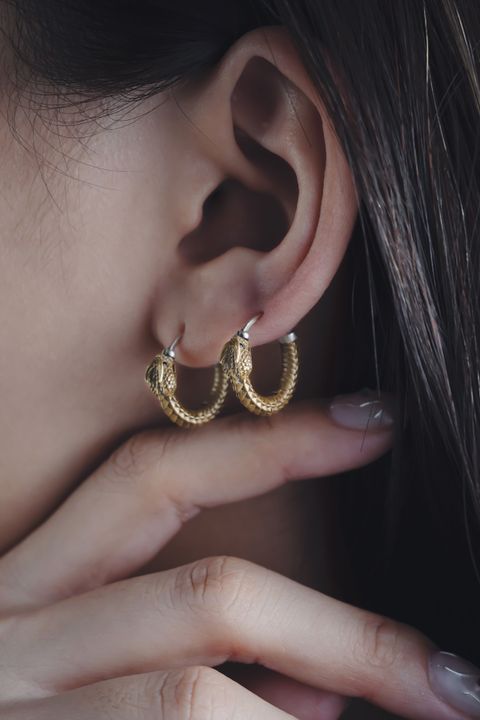
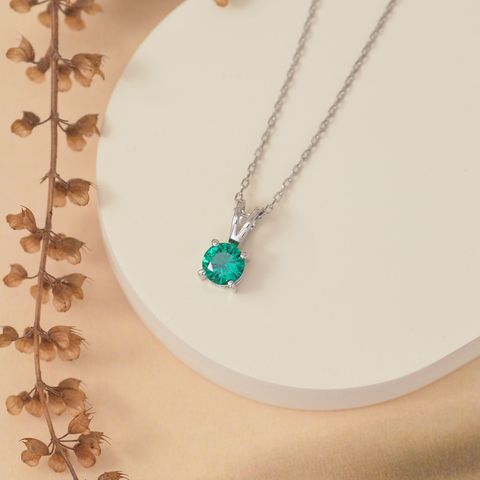
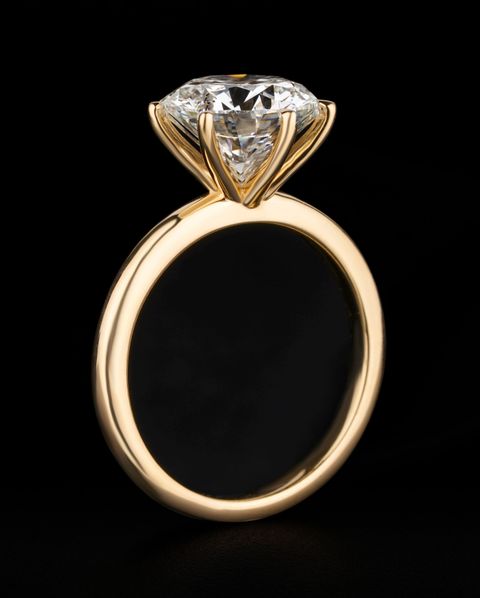
Gold earrings designs vary according to gold purity, construction technique, shape, gemstone use, surface finish, and regional traditions.
The term designer gold earrings generally refers to pieces where greater attention is given to distinctive styling, proportions, detailing, or a particular design concept. Meanwhile, modern gold earrings often use cleaner shapes, geometric patterns, lightweight structures, and simplified ornamentation.
Gold purity is another important consideration. 18k gold earrings contain 75% gold, while 24K gold represents a much higher level of gold purity. BIS recognizes several gold fineness grades for hallmarking, including 14K (585), 18K (750), 20K (833), 22K (916), 23K (958), and 24KS (995).
Why Gold Earrings Remain Important
Earrings can serve different purposes depending on age, lifestyle, clothing, cultural background, and occasion.
For everyday wear, smaller studs, hoops, and lightweight drop earrings are common choices. For formal events, larger designs can complement traditional or contemporary clothing.
Gold earrings for wedding occasions often have more elaborate detailing. Traditional Indian wedding jewellery may include jhumkas, chandbalis, danglers, floral motifs, temple-inspired patterns, and designs incorporating gemstones.
Bridal gold earrings can also form part of a coordinated jewellery set containing necklaces, bangles, rings, and other ornaments.
The subject matters because selecting earrings involves more than visual appearance. The wearer may need to consider:
Gold purity
Overall weight
Earring dimensions
Closure mechanism
Comfort
Hallmarking
Design complexity
Maintenance requirements
Compatibility with other jewellery
A simple design may be appropriate for frequent use, while a more elaborate design may be reserved for ceremonies.
Common Gold Earring Styles
There is no single standard category for gold earrings. Designs can be grouped according to their shape and construction.
| Style | Main characteristic | Common use |
|---|---|---|
| Studs | Compact design attached close to the earlobe | Everyday wear |
| Hoops | Circular or curved form | Casual and contemporary outfits |
| Drops | Decorative element hangs below the lobe | Formal occasions |
| Danglers | Longer movement-oriented design | Weddings and celebrations |
| Jhumkas | Bell-shaped traditional form | Indian festive wear |
| Chandbalis | Crescent-inspired shape | Traditional and bridal settings |
| Huggies | Small hoops close to the ear | Contemporary everyday styling |
| Ear tops | Decorative upper-ear or lobe design | Traditional and modern combinations |
Luxury gold earrings may combine intricate workmanship with gemstones, textured surfaces, layered forms, or sculptural elements.
Premium gold earrings is not a standardized purity classification, so the term should not be interpreted as a specific gold grade. Purity should instead be checked through the actual carat and fineness information.
18K Gold, 22K Gold, and 24K Gold
Gold purity has a direct relationship with the composition of an earring.
18k gold earrings contain 75% gold, with the remaining portion consisting of other metals used to create an appropriate alloy.
Higher-purity gold contains more gold but can have different physical characteristics from lower-purity alloys. The appropriate grade depends on the intended design, structural requirements, appearance, and wearing pattern.
The phrase 24k gold earrings requires particular attention. In India, BIS's hallmarking framework recognizes 24KS at 995 fineness. Therefore, descriptions should be checked against the actual hallmark and fineness marking rather than assuming that every item described informally as “24K” has the same composition.
A useful comparison is:
| Gold designation | BIS-listed fineness | General characteristic |
|---|---|---|
| 18K | 750 | 75% gold |
| 20K | 833 | Higher gold content |
| 22K | 916 | High gold content |
| 23K | 958 | Very high gold content |
| 24KS | 995 | Very high fineness |
Choosing Designs for Different Occasions
The appropriate earring design often depends on the event and clothing.
For everyday use, small studs or modest hoops can provide a balanced appearance without excessive weight.
For office or formal environments, medium-sized geometric earrings and understated drops can complement contemporary clothing.
For festivals, traditional motifs such as jhumkas and floral patterns can work well with ethnic outfits.
For weddings, larger designs may be coordinated with necklaces, maang tikka, bangles, and other jewellery.
A simple planning guide is:
Daily wear: studs, small hoops, lightweight drops
Office wear: minimalist geometric designs
Festivals: jhumkas, floral motifs, traditional patterns
Wedding ceremonies: chandbalis, danglers, elaborate drops
Bridal styling: coordinated gold sets with complementary proportions
Recent Gold Earring Design Trends in 2026
Gold jewellery design in 2026 continues to balance traditional craftsmanship with contemporary styling. One noticeable direction is the movement toward jewellery that can work across multiple occasions rather than being restricted to one ceremonial setting.
Contemporary designs increasingly use:
Sculptural curves
Geometric shapes
Minimalist surfaces
Mixed textures
Floral interpretations
Layered forms
Lightweight visual structures
Traditional motifs with simplified detailing
The broader jewellery sector is also becoming more digitally traceable. India's BIS hallmarking system uses a six-digit alphanumeric HUID associated with individual hallmarked articles, and consumers can verify the HUID through the BIS CARE application.
This makes authenticity and identification an increasingly important part of jewellery research.
Gold Earrings Price: What Influences the Figure?
When researching gold earrings price, it is important to understand that there is no single figure applicable to every design.
The final amount associated with an earring can vary according to:
Gold purity
Net gold weight
Design complexity
Gemstones or other materials
Craftsmanship
Brand or maker
Applicable taxes
Hallmarking-related charges
Market gold rates
The gold component is only one part of the calculation.
A practical comparison should therefore record the purity, net gold weight, design characteristics, and other listed charges separately instead of comparing two earrings only by their displayed figure.
This is particularly important when comparing 18k gold earrings, 22K designs, and higher-fineness jewellery.
Design and Comfort Considerations
A visually attractive earring may not necessarily be comfortable for prolonged use.
Weight distribution is important. Long earrings can create greater downward pressure on the earlobe than compact studs.
Useful considerations include:
Earring weight
Length
Balance
Backing type
Post thickness
Contact surfaces
Movement
Skin sensitivity
Frequency of wear
For bridal earrings, these factors can become especially important because wedding ceremonies and celebrations may continue for several hours.
Large bridal gold earrings can be visually prominent, but proportionality with the hairstyle, neckline, necklace, and face shape should also be considered.
Understanding Hallmarking in India
Hallmarking is particularly important when researching gold jewellery in India.
The Bureau of Indian Standards explains that hallmarking records the proportionate content of precious metal and provides an official indication of purity or fineness. Gold and silver currently fall under India's hallmarking framework.
Since July 1, 2021, the hallmark on gold jewellery consists of three principal marks:
BIS Standard Mark
Purity in carat and fineness
Six-digit alphanumeric HUID
Each article in a pair of earrings should have its own hallmark and HUID. BIS also states that detachable jewellery parts should be appropriately hallmarked.
This is particularly relevant for earrings because they are commonly purchased and worn as pairs.
Recent Regulatory Updates in India
India's hallmarking framework has continued to develop during 2026.
The BIS mandatory-hallmarking page records amendments dated March 2, April 28, and August 3, 2026, showing that the coverage and administrative framework have continued to evolve.
BIS also recorded an additional seven districts being brought under the mandatory hallmarking framework through an amendment dated March 2, 2026.
BIS's regulations page further lists the BIS (Hallmarking) Amendment Regulations, 2026, alongside other 2026 conformity-assessment amendments.
The exact applicability can depend on the location, article category, exemptions, and current notifications. Therefore, current BIS information should be checked when the regulatory position is important.
Consumer Verification and Documentation
Consumers can use the BIS CARE application to verify the HUID associated with hallmarked gold jewellery. The application also provides access to information about Indian Standards and BIS-related facilities.
BIS recommends retaining an authentic bill or invoice for hallmarked jewellery. Its consumer guidance states that the document should include relevant information such as the article description, net precious-metal weight, purity in carat and fineness, and hallmarking charges.
For additional verification, BIS-recognized Assaying and Hallmarking Centres can test jewellery and issue assay reports.
Tools and Useful Resources
Several resources can make gold jewellery research more systematic:
BIS CARE App: Verify HUID information for hallmarked jewellery.
BIS Hallmarking Portal: Review current hallmarking information and regulations.
BIS Standards database: Research relevant Indian Standards.
Digital weighing scale: Record jewellery weight accurately.
Jewellery measurement guide: Compare earring length, width, and proportions.
Gold-rate tracking tools: Monitor market movements when evaluating gold-related calculations.
Design comparison spreadsheet: Record purity, weight, dimensions, design type, and specifications.
Photograph references: Compare traditional, contemporary, bridal, and minimalist styles.
When using online jewellery images as references, remember that screen size, lighting, photography angles, and digital rendering can make earrings appear larger or more detailed than they are physically.
A Practical Gold Earring Evaluation Checklist
Before finalizing a design, consider the following:
What is the stated gold purity?
Is the fineness clearly marked?
Is the BIS hallmark visible where applicable?
Does each earring in the pair have the appropriate identification?
Can the HUID be verified?
What is the net gold weight?
Is the earring comfortable for the intended duration?
Does the closure mechanism feel secure?
Are gemstones or other materials clearly identified?
Does the design complement the intended clothing?
Is the documentation complete?
These questions are useful for both designer gold earrings and simpler everyday designs.
Frequently Asked Questions
What are the most common gold earrings designs?
Common categories include studs, hoops, drops, danglers, jhumkas, chandbalis, and huggies. The choice usually depends on occasion, outfit, comfort, and personal style.
Are 18k gold earrings different from 24k gold earrings?
Yes. 18K represents 75% gold, while BIS recognizes 24KS at 995 fineness. The two grades therefore have different gold content and alloy composition.
What should I check on gold earrings in India?
Check the BIS Standard Mark, purity or fineness marking, and six-digit HUID where the hallmarking framework applies. The HUID can be verified using the BIS CARE application.
Are bridal gold earrings always heavy?
No. Bridal designs range from lightweight studs and drops to larger traditional ornaments. Weight, length, construction, and balance can vary considerably.
What does luxury gold earrings mean?
It is primarily a descriptive design term rather than a specific BIS purity category. Actual gold purity should be determined from the stated carat, fineness, and applicable hallmark information.
Conclusion
Gold earrings combine material characteristics, craftsmanship, cultural traditions, and personal style. From simple studs to elaborate gold earrings for wedding occasions, the range of designs allows jewellery to serve different practical and aesthetic purposes.
Understanding the distinction between 18k gold earrings, 22K jewellery, and higher-fineness gold helps create a more informed comparison. Hallmarking and HUID verification provide additional information about purity and identification in India's regulated jewellery framework.
Whether researching modern gold earrings, luxury gold earrings, designer gold earrings, or bridal gold earrings, the most useful approach is to evaluate design, purity, weight, comfort, documentation, and applicable standards together.
This makes gold jewellery research clearer while avoiding assumptions based only on appearance or descriptive labels.