Industrial Dairy Processing Machines: Explore Overview, Basics, Explanation, Knowledge, and Key Details
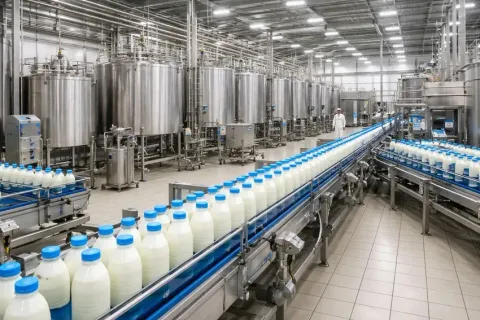
Industrial dairy processing machines are equipment and systems used to receive, test, cool, process, store, package, and handle milk and dairy products at organized processing facilities.
Dairy processing involves several stages because fresh milk is highly perishable and requires controlled handling. Depending on the product, milk may undergo filtration, clarification, separation, standardization, pasteurization, homogenization, fermentation, cooling, filling, and packaging.
An industrial dairy processing machine can perform one specific operation or become part of a larger automated production line.
Typical dairy processing can be represented as:
Milk collection → Testing → Filtration → Cooling → Separation → Standardization → Pasteurization → Homogenization → Processing → Filling → Cold storage
The exact sequence depends on whether the final product is liquid milk, curd, yogurt, butter, cheese, paneer, milk powder, flavored milk, or another dairy product.
Why Dairy Processing Equipment Matters
India has a large dairy sector involving farmers, cooperatives, milk producer organizations, processing plants, distributors, and consumers.
Raw milk must be handled carefully from collection through final processing. Temperature control and hygienic handling are particularly important because microorganisms can multiply rapidly when milk is kept under unsuitable conditions.
Milk processing equipment helps processing facilities manage these operations in a controlled and repeatable manner.
Important functions include:
Receiving and measuring milk
Removing physical impurities
Cooling incoming milk
Separating cream
Standardizing milk composition
Heat treatment
Homogenization
Fermentation
Product mixing
Storage
Filling and packaging
Cleaning and sanitation
Automation can also help monitor temperatures, flow rates, pressures, tank levels, and other process variables.
Main Types of Dairy Processing Machines
Different dairy products require different equipment combinations.
| Equipment | Primary Function | Common Application |
|---|---|---|
| Milk reception system | Receives and measures incoming milk | Dairy plants |
| Milk cooling machine | Rapidly reduces milk temperature | Collection and processing centers |
| Milk filtration system | Removes physical impurities | Milk reception |
| Cream separator | Separates cream from milk | Butter and standardized milk |
| Pasteurizer | Applies controlled heat treatment | Liquid milk and dairy products |
| Homogenizer | Reduces fat globule size | Milk and flavored dairy products |
| Fermentation tank | Controls cultured-product processing | Yogurt and curd |
| Cheese vat | Supports cheese-making stages | Cheese production |
| Paneer processing equipment | Supports coagulation and separation | Paneer |
| Butter churn | Converts cream into butter | Butter production |
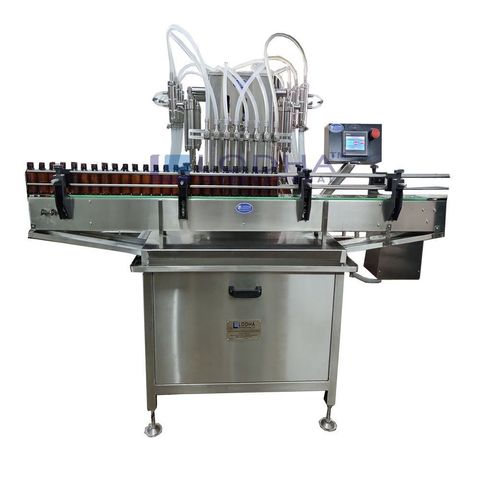
| Filling machine | Places products into containers | Dairy packaging |
| Cold-storage system | Maintains controlled temperatures | Finished products |
The correct equipment depends on the intended product and production process.
Automatic Dairy Processing Machines
An automatic dairy processing machine uses sensors, programmable controls, valves, pumps, and other components to coordinate processing operations with limited manual intervention.
Automation may be applied to:
Temperature monitoring
Flow control
Tank filling
Product transfer
Valve operation
Cleaning cycles
Batch recording
Alarm systems
Filling operations
Refrigeration monitoring
A programmable logic controller, commonly called a PLC, can coordinate different components according to predefined process parameters.
Human operators remain important. They may monitor equipment, verify product quality, manage sanitation, respond to alarms, perform inspections, and make process adjustments where required.
Commercial Dairy Processing Machine Applications
A commercial dairy processing machine can be used in facilities handling different volumes and product categories.
Small and medium processing facilities may use relatively compact systems for products such as pasteurized milk, curd, paneer, or flavored milk.
Large plants may integrate multiple processing stages into continuous or semi-continuous production systems.
The main product categories include:
Pasteurized milk
UHT milk
Curd and yogurt
Paneer
Cheese
Butter
Ghee
Flavored milk
Milk-based beverages
Milk powder
Ice cream and frozen dairy products
Each product has different processing requirements, so equipment should be evaluated as part of the complete production process rather than as an isolated machine.
Understanding High-Speed Dairy Processing Machines
The term high speed dairy processing machine generally refers to equipment designed for relatively high throughput.
However, speed alone does not determine processing efficiency.
A dairy plant also needs to consider:
Product quality
Heat-treatment accuracy
Filling accuracy
Equipment sanitation
Product-contact materials
Temperature control
Energy consumption
Changeover requirements
Cleaning procedures
Product losses
Equipment integration
For example, increasing the throughput of a filling system may have little practical benefit if upstream pasteurization or downstream refrigeration cannot handle the same volume.
A balanced production line is therefore more important than focusing on one machine's maximum operating rate.
Milk Processing Machine Workflow
A milk processing machine can be part of a larger sequence rather than a standalone unit.
A simplified liquid-milk workflow is:
| Stage | Main Activity | Important Parameter |
|---|---|---|
| Reception | Milk collection | Quality and temperature |
| Filtration | Removal of physical matter | Filter condition |
| Cooling | Rapid temperature reduction | Temperature |
| Separation | Cream separation when required | Fat level |
| Standardization | Adjustment of composition | Milk specifications |
| Pasteurization | Controlled heat treatment | Time and temperature |
| Homogenization | Fat globule reduction | Pressure |
| Storage | Controlled holding | Temperature and hygiene |
| Filling | Container filling | Fill accuracy |
| Refrigeration | Product preservation | Cold-chain temperature |
This sequence can vary according to the product and processing technology.
Milk Cooling Machines and Cold-Chain Management
A milk cooling machine is particularly important during milk collection and initial handling.
Cooling slows microbial growth and helps preserve milk quality before further processing.
Milk collection centers may use bulk milk coolers or other refrigeration systems. These systems are designed to reduce and maintain milk temperature under controlled conditions.
Cooling equipment needs to be considered alongside:
Milk collection schedules
Tank capacity
Refrigeration capacity
Ambient temperature
Electricity availability
Cleaning requirements
Insulation
Temperature monitoring
Transportation arrangements
Cold-chain management does not end at the processing plant. Refrigerated transportation and storage can also be important for products that require controlled temperatures.
Recent Developments in India's Dairy Sector
India's dairy-processing infrastructure continues to receive government attention.
The Department of Animal Husbandry and Dairying's National Programme for Dairy Development (NPDD) was continued during 2025–26, with the program scheduled to continue through 2027–28. Its objectives include strengthening organized milk procurement, milk chilling, processing infrastructure, milk testing, and clean-milk production.
The NPDD page also reports targets involving additional chilling and processing capacity, particularly through organized dairy infrastructure.
Another important development is the Animal Husbandry Infrastructure Development Fund (AHIDF). The Department of Animal Husbandry and Dairying states that the fund subsumed the earlier Dairy Processing and Infrastructure Development Fund and supports dairy processing and value-addition infrastructure among eligible categories of organizations.
The Ministry of Food Processing Industries also maintains a scheme focused on creation and expansion of food-processing and preservation capacities, including modernization and expansion of existing processing units.
These programs demonstrate continued policy attention toward dairy processing, chilling, modernization, testing, and value-added dairy production.
Laws and Food-Safety Requirements in India
Dairy processing facilities must comply with applicable food-safety requirements administered by the Food Safety and Standards Authority of India.
FSSAI's hygiene requirements state that food businesses applying for licensing need a documented Food Safety Management System and must follow the relevant requirements of Schedule 4. Part 3 specifically addresses hygienic and sanitary practices for milk and milk products.
This makes equipment hygiene an important part of plant design.
Processing facilities should consider:
Hygienic equipment design
Food-contact materials
Cleaning procedures
Sanitation systems
Temperature monitoring
Prevention of cross-contamination
Proper storage
Employee hygiene
Pest control
Documentation and records
FSSAI's food-product standards also establish requirements for milk and dairy products. Its published regulations include requirements relating to pasteurization and cooling of pasteurized milk.
The regulatory environment continues to change. In September 2026, FSSAI published a draft amendment concerning restrictions relating to paneer made from constituents not derived from milk. It also issued a laboratory and sample-analysis amendment on 18 September 2026.
Dairy processors should therefore check the latest FSSAI notifications rather than relying exclusively on older technical documents.
Equipment Materials and Hygienic Design
Dairy equipment commonly uses stainless steel in product-contact areas because it can be cleaned effectively and is suitable for many food-processing environments.
Important design considerations include:
Smooth product-contact surfaces
Appropriate weld finishing
Accessible cleaning points
Proper drainage
Hygienic valves and fittings
Suitable seals and gaskets
Controlled product transfer
Prevention of stagnant product zones
Many processing plants use Clean-in-Place, or CIP, systems. CIP allows internal equipment surfaces, pipes, tanks, and related components to be cleaned using controlled cycles without completely dismantling the equipment.
The exact cleaning chemicals, temperatures, concentrations, and cycle durations should be determined according to the equipment, food product, cleaning system, and applicable procedures.
Energy and Water Considerations
Dairy plants can consume significant amounts of water and energy because processing involves refrigeration, heating, pumping, cleaning, compressed air, and other operations.
Useful efficiency measures can include:
Heat recovery
Efficient refrigeration
Insulated tanks and pipelines
Variable-speed pumps
Automated process controls
Water-use monitoring
CIP optimization
Preventive maintenance
Wastewater monitoring
Energy and water performance should be evaluated alongside hygiene and product-safety requirements. A change that reduces resource consumption should not compromise sanitation or food safety.
Tools and Useful Resources
Several resources can help researchers and dairy processors understand this field.
FSSAI: Provides food-safety regulations, standards, notifications, hygiene requirements, and licensing information.
Department of Animal Husbandry and Dairying: Provides information about NPDD, AHIDF, dairy infrastructure programs, guidelines, and government initiatives.
Ministry of Food Processing Industries: Provides information about food-processing capacity, modernization, preservation, and infrastructure programs.
Process-flow diagram: A simple diagram can map milk reception, cooling, pasteurization, homogenization, storage, and filling.
Capacity calculation sheet: Useful for comparing milk intake, processing capacity, storage volume, cooling capacity, and packaging throughput.
Temperature log: Can record temperatures at reception, cooling, processing, storage, and dispatch stages.
CIP checklist: Can document cleaning stages, equipment sections, cycle parameters, inspections, and sanitation records.
Practical Checklist for Dairy Processing Equipment
Before evaluating dairy-processing equipment, consider the complete production environment.
Identify the dairy product being produced.
Determine the required processing capacity.
Define milk-reception requirements.
Establish cooling requirements.
Review pasteurization parameters.
Determine whether homogenization is required.
Identify storage-tank requirements.
Review product-contact materials.
Examine cleaning and CIP arrangements.
Check refrigeration requirements.
Assess electrical and utility requirements.
Plan temperature monitoring.
Review food-safety documentation.
Consider integration with filling and packaging equipment.
Verify applicable FSSAI requirements.
A complete process assessment is generally more useful than evaluating a machine based on speed or capacity alone.
Frequently Asked Questions
What are industrial dairy processing machines?
They are machines and integrated systems used for processing milk and dairy products at organized facilities. They can include cooling systems, separators, pasteurizers, homogenizers, fermentation tanks, filling equipment, storage systems, and other processing equipment.
What does a milk processing machine do?
A milk processing machine can perform different operations depending on its design. These may include filtration, separation, pasteurization, homogenization, mixing, cooling, or product transfer.
Why is a milk cooling machine important?
Cooling helps slow microbial growth and supports milk quality during collection and before further processing. It is an important component of cold-chain management.
What is the role of automation in dairy processing?
Automation can monitor and control variables such as temperature, flow, pressure, tank levels, and processing sequences. It can also support data recording and process consistency while operators remain responsible for supervision and quality checks.
What Indian regulations apply to dairy processing plants?
Dairy processing businesses must comply with applicable FSSAI requirements concerning food safety, hygiene, milk and dairy-product standards, licensing, processing, storage, and related activities. Schedule 4 includes specific hygiene requirements for milk and milk products.
Conclusion
Industrial dairy processing machines form an important part of modern milk and dairy-product production. From milk reception and cooling to pasteurization, homogenization, fermentation, storage, and filling, different machines perform specific functions within a larger processing system.
Industrial dairy processing machines, automatic dairy processing machines, commercial dairy processing machines, and specialized milk processing equipment can be configured according to the product, processing capacity, hygiene requirements, and production workflow.
Recent Indian government programs continue to emphasize dairy processing, chilling infrastructure, milk testing, modernization, and value addition. The NPDD has been continued through 2027–28, while AHIDF provides a framework supporting eligible dairy-processing infrastructure.
At the same time, FSSAI requirements make hygiene, food safety, documentation, and controlled processing essential considerations. Recent regulatory updates in 2026 also demonstrate why dairy processors should monitor official notifications for changes affecting milk and dairy products.
Disclaimer: This article is provided for general informational and educational purposes only. It does not make any claim, guarantee, endorsement, or representation about any particular machine, manufacturer, product, technology, organization, or government program. The article is not intended to promote, advertise, or recommend any specific product or organization. Regulations, technical requirements, specifications, and government programs may change over time. Readers should verify current requirements through the relevant official authorities, qualified technical professionals, and applicable regulations before making operational or regulatory decisions.

Related Post...
Automatic Cookie Making Machines: Explore Overview, Basics, Explanation, Knowledge, and Key Details
Updated: October 28, 2026
Read More
Industrial Flour Packing Machines: Explore Guide, Tips, Insights, Advice, and Expert Suggestions
Updated: October 27, 2026
Read More