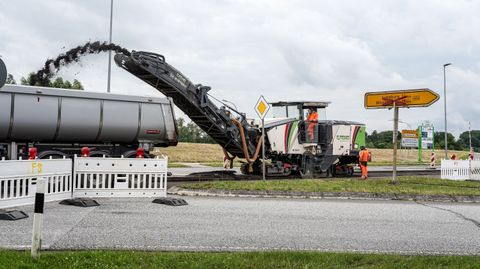
Road Milling Machines: Explore Overview, Basics, Explanation, Knowledge, and Key Details
Road milling machines are important equipment used in road construction, rehabilitation and maintenance. They remove selected layers of asphalt or other pavement materials to prepare a road surface for resurfacing or reconstruction. The process is commonly called cold milling or pavement milling.
An asphalt milling machine can remove worn, damaged or uneven pavement while preserving the underlying layers when the operation is properly planned and controlled. The removed material, known as reclaimed asphalt pavement (RAP), can often be transported for processing and reuse in suitable asphalt mixtures.
Road milling equipment is available in different sizes and configurations. Common categories include cold milling machines, highway milling machines, small road milling machines, road planer machines and road surface milling machines. Understanding their working principles, components and applications helps construction teams select suitable equipment for different pavement conditions.
1. What Is a Road Milling Machine?
A road milling machine is a specialised construction machine designed to remove a controlled depth of pavement material from an existing road surface. It uses a rotating milling drum fitted with cutting tools to break and remove asphalt or other specified pavement layers.
The machine can remove a complete pavement layer or mill only selected areas, depending on the project requirements.
Its main objectives include:
Removing deteriorated asphalt layers.
Correcting uneven pavement surfaces and local irregularities.
Preparing existing roads for resurfacing.
Adjusting road levels near bridges, junctions and drainage structures.
Removing road markings or surface layers where specified.
Recovering reclaimed asphalt material for further processing.
Unlike conventional excavation equipment, a road milling machine is designed for controlled surface removal. Its cutting depth, drum width and operating speed can be adjusted according to the pavement and project requirements.
2. Basic Working Principle of a Road Milling Machine
A road milling machine operates through a rotating cylindrical drum fitted with replaceable cutting tools, commonly called milling teeth or picks. The drum rotates against the pavement and removes material in a controlled manner.
The basic working process includes:
Machine positioning: The operator positions the machine according to the required milling width and starting point.
Depth adjustment: Hydraulic controls and levelling systems set the required cutting depth.
Drum rotation: The engine and hydraulic drive system rotate the milling drum.
Pavement cutting: The cutting teeth break the asphalt or concrete surface into smaller pieces.
Material collection: A scraper directs the milled material towards the collection system.
Conveying: A conveyor transfers the reclaimed material into a waiting truck.
Surface preparation: The exposed pavement is inspected, cleaned and prepared for the next construction operation.
Water spraying is commonly used near the milling drum to reduce heat and airborne dust. The milled material can be transported for screening, processing and possible reuse.
The Indian Roads Congress describes cold milling as controlled pavement removal using replaceable tungsten-carbide cutting teeth mounted on a powered rotor drum.
3. Main Components of a Road Milling Machine
A typical road surface milling machine contains several mechanical, hydraulic and electronic systems.
Component | Main function |
|---|---|
Milling drum | Cuts and removes pavement material |
Cutting teeth | Break asphalt or concrete into smaller pieces |
Tool holders | Secure cutting teeth to the drum |
Drum housing | Encloses the cutting assembly |
Engine | Supplies power to machine systems |
Hydraulic system | Controls movement, steering and drum operation |
Conveyor belt | Transfers milled material to transport vehicles |
Water spray system | Helps control dust and cutting temperature |
Levelling sensors | Monitor milling depth and surface profile |
Operator controls | Manage machine movement and working functions |
Tracks or wheels | Support machine movement and traction |
Scraper plate | Directs removed material towards the conveyor |
The size and arrangement of these components depend on whether the machine is designed for small-area milling, road rehabilitation or large highway projects.
4. Types of Road Milling Machines
Road milling machines are available in different configurations to suit pavement dimensions, removal depth and project requirements.
A. Cold Milling Machine
A cold milling machine removes asphalt or concrete pavement without first heating the surface. Its rotating drum cuts the existing layer and produces reclaimed material.
Common applications include:
Removing worn asphalt layers.
Correcting road surface irregularities.
Preparing pavement for resurfacing.
Removing selected pavement layers.
Recovering reclaimed asphalt pavement.
Cold milling is widely used in road rehabilitation because it allows controlled removal while helping preserve underlying pavement layers when the work is correctly designed.
B. Asphalt Milling Machine
An asphalt milling machine is specifically configured to remove bituminous pavement. It uses cutting teeth to break the asphalt into smaller pieces, which are collected and transported for further processing.
It is commonly used for resurfacing highways, repairing damaged road sections and correcting pavement profiles.
C. Highway Milling Machine
A highway milling machine is designed for large-scale pavement removal over wide road sections. These machines generally have larger milling drums, higher engine power and conveyor arrangements suitable for continuous material removal.
Typical applications include national highways, expressways, airport pavements and major road rehabilitation projects.
D. Small Road Milling Machine
A small road milling machine is a compact and manoeuvrable unit used for restricted areas and precise pavement removal.
It is useful for:
Road intersections and junctions.
Narrow streets and access roads.
Drainage and utility repairs.
Pavement edges and tie-in areas.
Parking areas and industrial floors.
Small milling machines commonly use wheeled chassis and rear-mounted milling drums, allowing operation in confined spaces.
E. Road Planer Machine
A road planer machine is another commonly used term for pavement milling equipment. It removes an existing surface layer and produces a controlled profile for subsequent pavement work.
Depending on the machine design, it may be used for full-width removal, localised correction or fine surface milling.
F. Fine Milling Machine
A fine milling machine uses a specialised drum arrangement with closely spaced cutting tools to produce a more refined surface texture.
It may be used for:
Improving pavement surface texture.
Correcting minor profile irregularities.
Preparing surfaces for selected overlay systems.
Reducing unevenness before resurfacing.
The appropriate milling drum depends on the required surface finish and the pavement rehabilitation method.
5. Features and Technologies
Modern road milling machines use mechanical cutting systems alongside electronic controls and monitoring technologies.
Automatic depth control: Sensors help maintain the required milling depth.
Grade and slope control: Levelling systems monitor surface height and cross-slope.
Interchangeable milling drums: Different drum configurations support standard and fine milling operations.
Wear-resistant cutting teeth: Replaceable carbide picks are designed to withstand repeated contact with pavement materials.
Hydraulic conveyor control: Helps position the discharge conveyor for material loading.
Dust suppression: Water spray systems reduce dust and help control heat around the cutting drum.
Camera and display systems: Improve operator visibility around the machine and conveyor.
Telematics: Compatible systems can record operating hours, machine status and maintenance information.
Engine management: Modern control systems help monitor engine performance and fuel use.
Some advanced systems also provide automated levelling functions, milling-depth measurement and machine-control displays.
6. Applications of Road Milling Machines
Road milling equipment is used in various infrastructure and pavement maintenance projects.
Application | Purpose |
|---|---|
Highway rehabilitation | Removes deteriorated asphalt layers |
Urban road resurfacing | Prepares existing roads for new pavement |
Airport pavement maintenance | Removes selected pavement layers |
Bridge approaches | Adjusts pavement levels near structures |
Road junctions | Corrects uneven transitions |
Drainage improvement | Helps adjust surface levels near drainage structures |
Industrial roads | Removes damaged pavement sections |
Parking areas | Prepares surfaces for resurfacing |
Pavement recycling | Recovers material for suitable recycling processes |
The machine can also be used for partial-depth milling, full-width removal and profile correction, depending on the project design.
7. Selection Factors for a Road Milling Machine
Choosing suitable equipment requires evaluating the pavement condition, required removal depth and working environment.
Milling width: Match the drum width with the road section and required production arrangement.
Cutting depth: Confirm the machine's ability to remove the specified pavement thickness.
Machine size: Choose compact or large equipment according to site access and project scale.
Drum configuration: Select standard or fine milling tools according to the required surface texture.
Undercarriage: Evaluate tracked or wheeled arrangements for traction, stability and manoeuvrability.
Engine power: Check that the machine can handle the pavement material and intended cutting depth.
Conveyor capacity: Ensure removed material can be transferred efficiently into transport vehicles.
Levelling system: Review automatic depth and slope control capabilities.
Water and dust control: Check the water system and dust-suppression arrangements.
Maintenance access: Examine cutting teeth, tool holders, belts, hydraulic lines and filters.
The selection should also consider pavement thickness, underlying layers, nearby utilities, traffic management and the intended recycling process.
8. Recent Developments and Industry Trends
Road milling technology is increasingly focused on precision, material recovery, operator visibility and efficient machine operation.
Key developments include:
Automated milling-depth measurement: Electronic sensors help monitor the cutting depth and reduce dependence on repeated manual checks.
Advanced levelling systems: Integrated sensors help maintain the specified road profile and cross-slope.
Quick-change milling tools: Improved tool-holder arrangements can simplify cutting-tooth replacement and drum maintenance.
Improved dust extraction: Some machines use extraction systems alongside water suppression to manage dust.
Digital machine monitoring: Operator displays and telematics help record machine performance and maintenance information.
Material recovery: Better milling and material-handling arrangements support the collection and processing of reclaimed asphalt pavement.
The use of reclaimed asphalt pavement is particularly important in pavement rehabilitation. It allows suitable recovered material to be processed and incorporated into new pavement mixtures when it meets the applicable technical requirements.
9. Indian Standards, Road Specifications and Safety Requirements
Road milling work in India is guided by Ministry of Road Transport and Highways (MoRTH) specifications, Indian Roads Congress publications and project-specific requirements.
Important Indian technical references
Reference | Relevance |
|---|---|
MoRTH Section 516 | Cold milling of existing bituminous pavement layers |
IRC:120-2015 | Guidelines for recycling of bituminous pavement |
IRC:SP:100-2014 | Guidelines related to cold mix technology and pavement recycling |
MoRTH Section 519 | Reclaiming old pavement materials |
AIS 160 | Safety-related requirements for applicable construction equipment vehicles |
MoRTH's updated Section 516 describes cold milling as a method for improving rideability and cross-slope, lowering finished road levels near kerbs or shoulders, and removing existing asphalt pavement layers. It also addresses the handling and reuse of reclaimed material.
IRC:120-2015 discusses pavement reclamation and milling, including cutting depth, selection of milling tools, dust control, collection and transportation of reclaimed material.
Construction equipment safety
The Ministry of Road Transport and Highways issued G.S.R. 673(E) on 27 October 2020, addressing safety requirements for construction equipment vehicles. The related requirements cover areas such as operator stations, guards, access systems, audible alarms, seat belts and protective structures, subject to the applicable vehicle classification and provisions.
Important operating precautions include:
Establish barricades and traffic diversions around the milling area.
Inspect cutting teeth, drum housing and conveyor belts before operation.
Keep workers away from rotating components and discharge conveyors.
Use suitable respiratory, hearing, eye and protective equipment.
Maintain adequate water supply for dust suppression.
Check underground utilities before milling.
Use trained operators and a designated ground crew.
Isolate the machine before clearing blockages or replacing cutting tools.
10. Best Practices for Road Milling Operations
Proper preparation and controlled operation help achieve the required pavement profile and material quality.
Before milling
Inspect the existing pavement and identify damaged areas.
Review drawings and confirm the required milling depth.
Locate underground utilities and embedded structures.
Check cutting teeth and tool holders.
Inspect hydraulic systems, tracks, conveyor belts and water lines.
Establish traffic management and safety arrangements.
During milling
Maintain a steady machine movement appropriate to the pavement.
Monitor cutting depth and surface profile.
Use the specified drum and cutting-tool arrangement.
Maintain adequate dust suppression.
Avoid unnecessary contamination of reclaimed material with soil or base-course material.
Coordinate conveyor discharge with transport vehicles.
Inspect the milled surface periodically.
After milling
Remove loose material from the exposed surface.
Inspect the milled profile and pavement condition.
Correct any identified irregularities according to project requirements.
Separate and stockpile reclaimed material as specified.
Clean the milling drum and conveyor system.
Inspect worn cutting tools and record maintenance requirements.
MoRTH and IRC guidance emphasises controlled pavement removal, appropriate handling of reclaimed material and attention to the condition of the exposed pavement before further construction.
11. Tools and Resources for Road Milling Work
The following resources can help construction professionals understand pavement milling and rehabilitation:
Ministry of Road Transport and Highways (MoRTH): Specifications for cold milling and bituminous pavement recycling.
Indian Roads Congress (IRC): Technical guidance on pavement rehabilitation and recycling methods.
National Highways Authority of India (NHAI): Highway construction and maintenance documents.
Equipment operation manuals: Instructions for milling-depth settings, cutting tools, conveyor operation and maintenance.
Pavement condition assessment tools: Instruments used to evaluate surface irregularities, rutting and pavement condition.
Survey and levelling instruments: Equipment used to establish milling depth, grade and cross-slope.
Material testing facilities: Used to assess reclaimed asphalt material and its suitability for reuse.
12. Frequently Asked Questions (FAQs)
1. What is a road milling machine used for?
A road milling machine removes selected layers of existing asphalt or concrete pavement. It is commonly used for road resurfacing, pavement rehabilitation, profile correction and material recovery.
2. What is the difference between cold milling and hot milling?
Cold milling removes pavement using a rotating cutting drum without first heating the surface. Hot milling involves heating the existing bituminous layer before removal using specialised equipment.
3. What is a small road milling machine used for?
A small road milling machine is used for narrow roads, junctions, pavement edges, utility repairs and other restricted areas where larger equipment may be difficult to position.
4. Can reclaimed asphalt from a milling machine be reused?
Yes. Reclaimed asphalt pavement can be processed and reused in suitable pavement mixtures, provided it meets the relevant material specifications and project requirements.
5. What factors determine the milling depth?
Milling depth depends on pavement condition, layer thickness, required surface correction, road design and the planned resurfacing or recycling method.
Conclusion
Road milling machines are essential equipment for maintaining and rehabilitating asphalt and concrete pavements. They remove selected pavement layers, correct surface irregularities and prepare roads for subsequent construction. Cold milling machines, asphalt milling machines, highway milling machines, small road milling machines and road planer machines are designed for different working conditions.
Selecting suitable equipment requires consideration of milling width, cutting depth, drum configuration, machine capacity, dust control and reclaimed-material handling. Proper site preparation, accurate depth control, trained operators and regular equipment inspections help achieve consistent milling results.
Disclaimer: This article is intended for general educational and informational purposes only. Machine specifications, operating procedures and regulatory requirements may vary according to equipment models, project conditions and location. Consult qualified road engineers, manufacturer manuals and relevant authorities before making technical or operational decisions. No guarantees are made regarding equipment performance or project outcomes. This content is not intended to sell or promote any product, brand or organisation.

Related Post...
Drilling Jumbo Machines: Complete Guide to Basics, Technologies, Processes, Facts, and Best Practices
Updated: November 20, 2026
Read More
Asphalt Paver Machines: Explore Overview, Basics, Explanation, Knowledge, and Key Details
Updated: November 20, 2026
Read More
Tea Leaf Plucking Machines: Explore Overview, Basics, Explanation, Knowledge, and Key Details
Updated: November 20, 2026
Read More