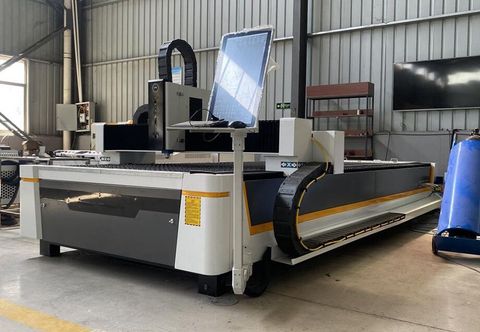
Sheet Metal Laser Cutting Machines: Explore Overview, Basics, Explanation, Knowledge, and Key Details
Sheet metal laser cutting machines are widely used in metal fabrication and industrial manufacturing. They use a concentrated laser beam to cut metal sheets into specific shapes, sizes and designs. Computer numerical control (CNC) systems guide the cutting head along programmed paths, allowing manufacturers to produce components with consistent dimensions and detailed profiles.
An industrial sheet metal laser cutting machine can process materials such as mild steel, stainless steel, aluminium, copper and brass, depending on its laser source, power rating and configuration. These machines are used to manufacture electrical enclosures, automotive components, metal panels, machinery parts, furniture frames and construction components.
A fiber laser sheet metal cutting machine is a common choice for modern metalworking because fiber laser technology is well suited to many metal-cutting applications. Other laser technologies, including CO₂ systems, may still be appropriate for particular materials and production requirements.
This guide explains the machine's basic operation, components, types, cutting technologies, applications, selection factors and operating practices.
1. What Is a Sheet Metal Laser Cutting Machine?
A sheet metal laser cutting machine is an industrial system that uses a focused laser beam to cut flat metal sheets according to a digital design. The laser heats the material in a small area until it melts or vaporises. Assist gas then helps remove molten material from the cutting path.
The narrow opening created by the laser is called the kerf. Its width depends on factors such as beam characteristics, material thickness, nozzle configuration and cutting parameters.
A laser cutting machine for metal sheets generally includes a laser source, cutting head, focusing optics, CNC controller, motion system, cutting table, gas supply and fume extraction arrangement.
Main characteristics include:
Computer-controlled cutting paths.
High dimensional accuracy when properly configured.
Ability to produce complex shapes and fine details.
Narrow cutting kerf compared with many conventional methods.
Contact-free cutting, with no conventional cutting tool pressing against the sheet.
Compatibility with different metal grades and thicknesses.
The suitability of a machine depends on the material, thickness, required edge quality, component geometry and production volume.
2. How Does a Sheet Metal Laser Cutting Machine Work?
A CNC sheet metal laser cutting machine converts a digital drawing into a physical metal component through a sequence of programmed operations.
Typical working sequence:
Design preparation: A component is designed using computer-aided design (CAD) software.
Nesting: CAM software arranges multiple component shapes on a sheet to plan material utilisation.
Program generation: The cutting paths and operating instructions are prepared for the CNC controller.
Sheet loading: The metal sheet is positioned on the cutting table.
Laser generation: The laser source generates a beam with the required operating parameters.
Beam delivery: Optical components direct the beam towards the cutting head.
Focusing: A lens concentrates the beam onto a small area of the sheet.
Assist gas delivery: Gas flows through the nozzle to help remove molten material.
CNC movement: The cutting head follows the programmed path to form the required profiles.
Part inspection: Finished components are checked for dimensions, edge condition and visible defects.
The cutting result depends on the coordination of laser power, speed, focal position, nozzle alignment, gas pressure and material characteristics.
3. Main Components of a Sheet Metal Laser Cutting Machine
Each component has a specific function in beam generation, movement, cutting, cooling or workplace protection.
Component | Main function |
|---|---|
Laser source | Generates the laser beam |
Optical fibre or beam delivery system | Transmits the beam to the cutting head |
Cutting head | Directs and focuses the beam |
Collimating lens | Prepares the beam for focusing |
Focusing lens | Concentrates the beam onto the sheet |
Cutting nozzle | Directs assist gas towards the cutting area |
CNC controller | Executes the programmed cutting instructions |
Servo motors | Control machine movement |
Motion guide system | Supports accurate movement of the cutting head |
Cutting table | Supports the metal sheet |
Gas supply system | Supplies oxygen, nitrogen or compressed air |
Chiller | Maintains suitable temperatures in designated machine components |
Fume extraction system | Removes smoke and airborne particles |
Control panel | Allows operators to monitor and adjust machine settings |
Some industrial systems also include automatic focus adjustment, protective enclosures, sheet-positioning sensors, pallet exchange tables and automatic loading arrangements.
4. Types of Sheet Metal Laser Cutting Machines
Machines are available in different configurations according to material, sheet dimensions, cutting capacity and production requirements.
4.1 Fiber Laser Sheet Cutting Machine
A fiber laser sheet cutting machine uses laser light generated and amplified through an optical fiber. The beam is delivered to the cutting head and focused onto the metal surface.
Key characteristics:
Widely used for metal sheet processing.
Suitable for several steel and non-ferrous metal grades.
Supports CNC-controlled cutting.
Available in different power ratings and working-table dimensions.
Can be integrated with automated sheet handling.
4.2 CNC Sheet Metal Laser Cutting Machine
A CNC sheet metal laser cutting machine uses computer numerical control to guide the cutting head along a programmed path. It can produce repeated profiles and complex geometries without manually guiding the cutting tool.
Its main functions include program storage, axis movement control, cutting parameter adjustment and production monitoring.
4.3 Industrial Sheet Metal Laser Cutting Machine
An industrial sheet metal laser cutting machine is designed for regular production in fabrication plants and manufacturing facilities. It may include a large working area, enclosed cutting zone, automatic pallet exchange and integrated extraction equipment.
4.4 Stainless Steel Sheet Laser Cutting Machine
A stainless steel sheet laser cutting machine is configured to process stainless steel grades used in industrial equipment, panels, enclosures and fabricated components.
Nitrogen is commonly selected as an assist gas when a clean, low-oxidation cut edge is required. The appropriate settings depend on the stainless steel grade, sheet thickness and required finish.
4.5 High-Power Sheet Metal Laser Cutting Machine
High-power systems are designed for applications that require processing thicker metal sheets or increasing throughput under suitable conditions.
Laser power alone does not determine cutting quality. Material properties, gas selection, optical configuration, machine rigidity and cutting parameters also influence the result.
4.6 CO₂ Laser Cutting Machine
CO₂ laser machines use a gas-based laser source rather than a fiber laser source. They remain relevant for certain applications, particularly where their beam characteristics suit the material being processed.
For many modern metal-sheet applications, fiber laser systems are widely used because of their beam delivery and energy-efficiency characteristics. CO₂ technology remains useful in selected metal and non-metal applications.
5. Laser Cutting Methods and Assist Gases
The cutting method and assist gas influence edge quality, cutting speed, oxidation and the formation of burrs or dross.
Fusion cutting
Fusion cutting melts the metal using laser energy. An inert gas, commonly nitrogen, pushes molten material out of the cutting gap. This method is often selected for stainless steel and aluminium when oxidation on the cut edge needs to be minimised.
Oxygen-assisted cutting
Oxygen reacts with the heated metal and supports the cutting action through an oxidation reaction. It is commonly used for carbon steel and mild steel applications.
Compressed-air cutting
Compressed air can be used for selected sheet-metal applications, particularly thinner materials. Its suitability depends on air quality, material thickness, machine configuration and the required edge finish.
Assist gas comparison
Gas | Common application | Important consideration |
|---|---|---|
Nitrogen | Stainless steel and aluminium | Helps produce low-oxidation edges |
Oxygen | Mild steel and carbon steel | Supports oxidation-assisted cutting |
Compressed air | Selected thin-sheet applications | Results depend on air quality and process settings |
Gas selection should be based on the metal grade, thickness, required finish and approved machine parameters.
6. Materials Processed by Sheet Metal Laser Cutters
A metal sheet laser cutter can process different materials when the machine has the appropriate source, power rating and operating configuration.
Material | Common applications |
|---|---|
Mild steel | Frames, brackets and machine components |
Stainless steel | Kitchen equipment, panels and enclosures |
Aluminium | Automotive parts, housings and covers |
Copper | Electrical components and conductive parts |
Brass | Decorative panels, fittings and precision parts |
Galvanised steel | Electrical cabinets and sheet-metal assemblies |
Alloy steel | Industrial components and fabricated parts |
Stainless steel sheet cutting
Stainless steel laser cutting is widely used for panels, cabinets, equipment covers and precision components. Nitrogen is frequently used when oxidation on the edge is undesirable. Cutting parameters must be adjusted according to the grade and thickness.
Aluminium sheet cutting
Aluminium has high thermal conductivity and different optical characteristics from steel. Suitable laser power, focus position, nozzle design and assist gas settings are important for stable cutting.
Copper and brass cutting
Copper and brass require suitable equipment and approved operating procedures because their reflective and thermal properties can affect beam absorption and heat distribution. Protective enclosures and appropriate laser safety controls are particularly important.
7. Important Technologies Used in Modern Machines
Modern sheet metal laser cutting machines combine optics, software, sensors and automated mechanical systems.
Automatic focus adjustment: Changes the focal position according to the material and cutting requirements.
Servo motion control: Supports accurate movement of the cutting head and machine axes.
Intelligent nesting: Arranges multiple component shapes on a sheet to improve material utilisation.
Automatic nozzle changing: Allows selected machines to change cutting nozzles according to programmed settings.
Height sensing: Helps maintain the required distance between the cutting head and the sheet surface.
Vision-based monitoring: Supports inspection of selected cutting conditions and visible defects.
Automatic pallet exchange: Helps reduce interruptions between sheet-processing cycles.
Digital production monitoring: Records selected machine parameters, production counts and operating events.
These technologies can improve process consistency and production planning, but their effectiveness depends on correct setup and regular maintenance.
8. Applications of Sheet Metal Laser Cutting Machines
Sheet metal laser cutting is used across many manufacturing and fabrication industries.
Industry | Typical applications |
|---|---|
Automotive | Body panels, brackets and structural components |
Electrical manufacturing | Control panels, cabinets and enclosures |
Construction | Metal supports, panels and architectural components |
Furniture | Metal frames, shelves and decorative parts |
Kitchen equipment | Stainless steel counters, panels and cabinets |
Heavy engineering | Machine covers, plates and fabricated parts |
Agriculture | Equipment panels, brackets and frames |
General fabrication | Custom profiles and sheet-metal assemblies |
The technology is particularly useful when components have detailed outlines, multiple cut-outs or repeated dimensions.
9. Factors to Consider When Selecting a Machine
Choosing a sheet metal laser cutting machine requires an assessment of the intended production work rather than focusing on laser power alone.
Material type: Identify the main metals to be processed, including their grades.
Sheet thickness: Determine the usual and maximum thickness requirements.
Laser power: Match the source rating to the required material range and production output.
Working area: Check that the table accommodates the largest sheet dimensions.
Cutting accuracy: Review positioning accuracy and repeatability specifications.
CNC controller: Assess programming features, software compatibility and ease of operation.
Assist gas system: Check gas type, purity, pressure and supply capacity.
Cooling system: Confirm that the chiller meets the laser source and machine requirements.
Fume extraction: Assess extraction capacity and filtration arrangements.
Automation: Consider pallet changers, loading systems and unloading arrangements.
Safety equipment: Check enclosures, interlocks, emergency stops and warning systems.
Maintenance: Review cleaning procedures, optical components, consumables and technical documentation.
Before selecting a configuration, conduct sample cutting trials with the actual material grades and thicknesses. Inspect the resulting components for dimensional accuracy, edge quality, burr formation and repeatability.
10. Quality Control in Sheet Metal Laser Cutting
Quality control helps ensure that finished components meet drawing specifications and production requirements.
Common inspection activities include:
Dimensional inspection: Measure component length, width, hole diameter and profile dimensions.
Edge inspection: Check for excessive dross, roughness, burrs and unwanted oxidation.
Kerf evaluation: Confirm that the cutting width is suitable for the component design.
Surface inspection: Look for heat marks, scratches and other visible defects.
Repeatability checks: Compare dimensions across multiple components.
First-piece approval: Inspect the initial component before continuing a production batch.
Program verification: Confirm that the correct drawing revision and cutting instructions are being used.
Measuring instruments such as vernier callipers, micrometers, height gauges and coordinate measuring machines can be selected according to the required dimensional tolerances.
11. Recent Developments and Industry Trends
Sheet metal laser cutting is increasingly influenced by automation, higher-power sources and connected production systems.
Important trends include:
Higher-power fiber lasers: Industrial systems with higher output ratings are being developed for thicker metal processing and greater throughput in suitable applications.
Improved cutting-head design: Automatic focusing and sensor-based controls help maintain process stability.
Automated material handling: Loading and unloading systems reduce manual movement of heavy sheets.
Advanced nesting software: Improved layout planning helps reduce unused sheet material.
Connected manufacturing: Digital monitoring provides production information and selected machine-status records.
Integrated fabrication systems: Some facilities connect laser cutting with bending, welding and other downstream production operations.
At IMTEX FORMING 2026, industrial equipment demonstrations included high-power fiber laser cutting systems, indicating continued interest in advanced sheet-metal processing in India. The appropriate system still depends on the material range, component design and required production quality.
12. Safety Requirements and Indian Standards
Sheet metal laser cutting machines involve laser radiation, electrical systems, moving mechanical parts, hot metal, compressed gases and airborne fumes. A suitable safety programme should address all these hazards.
Laser radiation protection
Fiber laser beams generally operate in the near-infrared range and may not be visible to the human eye. Direct or reflected exposure can cause serious eye and skin injuries.
Important precautions include:
Use a properly designed laser-protective enclosure.
Maintain functional safety interlocks on access doors.
Restrict access to authorised and trained personnel.
Use wavelength-appropriate protective eyewear when required by the risk assessment.
Never look directly into an active laser beam.
Follow approved procedures for maintenance involving exposed optical systems.
ISO 11553-1:2020 specifies laser radiation safety requirements for laser processing machines. It was reviewed and confirmed as current in 2025.
Machine and workplace safety
Facilities should establish controls for:
Moving machine axes and material-handling equipment.
Electrical hazards and safe isolation during maintenance.
Fume extraction and ventilation.
Fire prevention and housekeeping.
Safe handling of gas cylinders and pressurised pipelines.
Emergency stops, guards and access controls.
Operator training and documented risk assessments.
The Bureau of Indian Standards publishes machinery-safety guidance, including information on general risk assessment under IS 16819:2018 / ISO 12100:2010. IS 18165:2023 / ISO 17916:2016 addresses certain thermal cutting machines, particularly oxy-fuel and plasma systems; it should not be treated as a laser-radiation safety standard.
Indian regulatory position
The Machinery and Electrical Equipment Safety (Omnibus Technical Regulation) Order, 2024 was withdrawn by the Ministry of Heavy Industries through Order S.O. 239(E), dated 14 January 2026 and published on 16 January 2026. Therefore, the earlier proposed mandatory implementation date of 1 September 2026 should not be treated as an active requirement under that withdrawn order.
Manufacturers and facility operators should check current BIS notifications, applicable state factory rules, electrical safety requirements and workplace regulations before making compliance decisions.
13. Best Practices for Operating Sheet Metal Laser Cutting Machines
Following standard operating procedures helps maintain cutting quality, equipment reliability and workplace safety.
Inspect incoming sheets: Verify material grade, thickness, dimensions and surface condition.
Check optical components: Inspect protective windows and lenses according to the manufacturer's instructions.
Inspect the cutting nozzle: Check for contamination, wear and alignment problems.
Use approved cutting parameters: Select suitable laser power, speed, focal position and gas settings.
Verify gas supply: Check gas purity, pressure and pipeline condition.
Maintain the cooling system: Monitor coolant condition, circulation and operating temperature.
Check the CNC program: Verify drawing revisions, nesting layout and cutting paths.
Monitor the cutting operation: Watch for unstable cutting, unusual sparks and excessive dross.
Inspect finished components: Check dimensions, edge finish and surface condition.
Follow maintenance schedules: Clean and inspect the equipment at the intervals recommended by the manufacturer.
Maintain production records: Record machine settings, inspections, maintenance and process interruptions.
Follow safety procedures: Keep protective guards and interlocks operational and isolate equipment before maintenance.
Operators should not bypass safety devices or make unauthorised changes to critical machine settings.
14. Tools and Resources
The following resources can help manufacturers understand machine operation, design preparation and workplace safety.
Resource | Purpose |
|---|---|
Bureau of Indian Standards (BIS) | Indian standards and machinery safety guidance |
International Organization for Standardization (ISO) | Laser processing and machinery safety standards |
International Electrotechnical Commission (IEC) | Laser equipment safety and classification |
CAD software | Preparation of component drawings |
CAM software | Conversion of designs into cutting instructions |
Nesting software | Planning sheet layouts and material utilisation |
CNC controller documentation | Machine programming and operating guidance |
Measuring instruments | Verification of finished component dimensions |
Fume extraction equipment | Removal of airborne cutting contaminants |
15. Frequently Asked Questions
1. What is a sheet metal laser cutting machine used for?
It is used to cut flat metal sheets into specific shapes and dimensions. Common applications include electrical enclosures, automotive components, machine panels, brackets and construction parts.
2. What is the difference between a fiber laser and a CO₂ laser cutting machine?
A fiber laser uses an optical fiber-based laser source and is widely used for industrial metal cutting. A CO₂ laser uses a gas-based source and remains useful for selected metal and non-metal applications.
3. Which gas is used for stainless steel sheet laser cutting?
Nitrogen is commonly used when a clean, low-oxidation edge is required. The suitable gas pressure and cutting parameters depend on the stainless steel grade, thickness and machine configuration.
4. What determines the cutting capacity of a sheet metal laser cutter?
Important factors include laser power, material type, thickness, beam quality, assist gas, cutting-head configuration and machine design. The manufacturer's approved cutting chart should be used to establish operating limits.
5. Is CNC control necessary for sheet metal laser cutting?
CNC control is widely used because it allows the machine to follow digital cutting paths, produce repeated component profiles and manage complex shapes with consistent positioning.
Conclusion
Sheet metal laser cutting machines are important tools in modern metal fabrication. They combine focused laser energy, CNC movement and assist gas technology to cut metal sheets into accurate shapes and profiles.
A fiber laser sheet metal cutting machine is widely used for processing steel, stainless steel, aluminium and other suitable metals. Machine selection should be based on material type, sheet thickness, working area, laser power, cutting accuracy and production requirements.
Proper parameter selection, routine maintenance, quality inspection and laser safety controls are essential for reliable operation. By following documented procedures and checking applicable standards, manufacturers can maintain consistent component quality and safer working conditions.
Disclaimer: This article is intended for general educational and informational purposes only. Machine specifications, cutting parameters, safety requirements and applicable regulations may vary according to equipment, materials and location. Consult qualified technical professionals, equipment manufacturers and relevant authorities before making operational or compliance decisions. The information is not intended to provide guarantees or to sell or promote any product, brand or organisation.

Related Post...
Sachet Packing Machines: Discover Information, Facts, Tips, Resources, and Expert Advice
Updated: November 23, 2026
Read More
Rock Bolting Machines: Explore Overview, Basics, Explanation, Knowledge, and Key Details
Updated: November 21, 2026
Read More