Blister Packaging Machines: Complete Guide to Basics, Technologies, Processes, Facts, and Best Practices
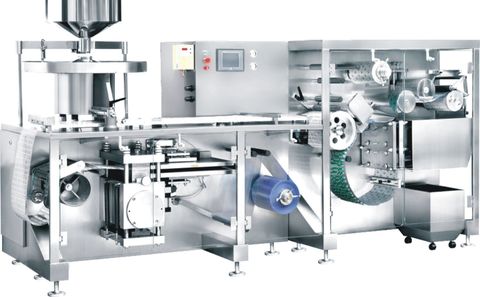
Blister packaging machines are widely used in pharmaceutical manufacturing and other industries that require products to be packed in individual protective compartments. They form cavities in a packaging material, place products inside those cavities and seal them with a suitable lidding material. Tablets, capsules, softgel products and small consumer items are commonly packed using this method.
An industrial blister packaging machine can perform several operations in a continuous sequence, including material feeding, cavity formation, product loading, sealing, printing, perforation and cutting. Depending on the production requirement, equipment may be manually operated, semi-automatic or fully automatic.
Pharmaceutical manufacturers commonly use thermoforming and cold-forming technologies. A thermoforming blister packaging machine shapes heated plastic film, while an Alu-Alu blister packaging machine uses pressure to form aluminium-based packaging material without heating it in the same way.
Understanding the machine's construction, operating principles, packaging materials and quality checks helps manufacturers select suitable equipment and maintain consistent packaging standards.
1. What Is a Blister Packaging Machine?
A blister packaging machine is equipment that creates individual pockets or cavities in a packaging sheet and seals products inside them. Each cavity holds a specific quantity, such as one tablet or capsule.
The finished pack generally consists of two main parts:
Forming material: The lower sheet that creates the cavities.
Lidding material: The upper layer that seals the cavities and protects the contents.
In pharmaceutical packaging, aluminium foil is frequently used as the lidding material. The forming material may be PVC, PVC combined with barrier layers, or aluminium-based laminate, depending on the required protection.
A pharmaceutical blister packaging machine helps protect individual doses from handling and environmental exposure. It can also provide visible information such as product name, batch number, manufacturing date and expiry date.
2. Basic Working Principle
Most automatic blister packaging machines operate through a sequence of connected stations. The exact arrangement depends on the machine design and whether it uses thermoforming or cold forming.
Typical operating sequence:
Material unwinding: Forming material is supplied from a roll.
Cavity formation: The machine creates pockets using heat and forming pressure or mechanical pressure.
Product feeding: Tablets or capsules are placed into the formed cavities.
Inspection: Sensors or vision systems check product placement and detect visible defects.
Lidding material feeding: Aluminium foil or another approved sealing material is positioned over the filled cavities.
Heat sealing: The upper and lower materials are joined under controlled conditions.
Printing and coding: Batch information and other required details are printed or embossed.
Perforation and cutting: The continuous web is divided into individual blister cards or strips.
Collection: Finished packs move to the next packaging or inspection stage.
The four central operations are forming, filling, sealing and finishing. Their parameters must be controlled because variations can affect cavity dimensions, product placement and seal quality.
3. Main Components of a Blister Packaging Machine
The machine contains mechanical, electrical, pneumatic and control components that work together.
Component | Main function |
|---|---|
Forming material holder | Holds and feeds the forming film or laminate |
Heating station | Heats plastic film before cavity formation |
Forming station | Creates cavities in the packaging material |
Forming mould | Determines the cavity shape and dimensions |
Product feeder | Places tablets or capsules into cavities |
Inspection system | Detects missing or incorrectly positioned products |
Aluminium foil holder | Supplies the lidding material |
Sealing station | Joins the forming material and lidding foil |
Coding unit | Prints batch and date information |
Perforation unit | Creates separation lines between packs |
Cutting station | Cuts the continuous material into individual cards |
Control panel | Controls machine settings and operating sequences |
Conveyor system | Transfers material and finished packs between stations |
Modern machines may also include automatic web alignment, reject mechanisms, temperature monitoring and production counters.
4. Types of Blister Packaging Machines
Different machine designs are used according to the packaging material, product shape, production volume and required protection.
4.1 Thermoforming Blister Packaging Machine
Also known as a heat-forming blister machine
A thermoforming blister packaging machine heats a plastic sheet until it becomes flexible. The material is then shaped into cavities using vacuum, compressed air or mechanical assistance.
Common forming materials include PVC and multilayer plastic structures designed to improve barrier properties.
Key characteristics:
Suitable for high-volume tablet and capsule packaging.
Supports different cavity shapes and dimensions.
Can operate with aluminium lidding foil.
Allows continuous forming, filling and sealing.
4.2 Alu-Alu Blister Packaging Machine
An Alu-Alu blister packaging machine uses aluminium-based laminate for both the cavity-forming side and the lidding side. The forming material is shaped through cold forming, which uses mechanical pressure rather than the conventional heating process used for plastic thermoforming.
This packaging arrangement is selected when stronger protection against moisture, light and oxygen is required.
Key characteristics:
Uses cold-forming technology.
Provides a high barrier when suitable materials and seals are used.
Commonly used for pharmaceutical tablets and capsules.
Requires suitable forming tools and material handling settings.
4.3 Automatic Blister Packaging Machine
An automatic blister packaging machine performs multiple packaging stages with limited manual intervention. It can integrate forming, feeding, sealing, coding, cutting and inspection.
These machines are suitable for production environments that require consistent output and repeatable operation.
4.4 Tablet Blister Packaging Machine
A tablet blister packaging machine is designed to handle tablets of different shapes, sizes and thicknesses. Its feeding arrangement must place tablets correctly without damaging them.
Common features include tablet counters, feeding tracks, missing-tablet detection and reject systems.
4.5 Capsule Blister Packaging Machine
A capsule blister packaging machine is designed to handle hard-shell or softgel capsules. Feeding systems must accommodate capsule dimensions and orientation while reducing the risk of splitting, deformation or incorrect placement.
4.6 Other Machine Configurations
Machine configuration | Typical application |
|---|---|
Semi-automatic blister machine | Smaller production batches and specialised packaging |
Flat-plate blister machine | Packaging formats using flat forming and sealing stations |
Roller-type blister machine | Continuous web processing |
High-speed blister machine | Large-scale pharmaceutical production |
Laboratory blister machine | Product development and packaging trials |
The choice between these configurations depends on production capacity, packaging material and the required level of automation.
5. Packaging Materials and Technologies
The selection of forming and lidding materials is an important part of blister packaging design.
Common materials include:
PVC: A commonly used plastic forming material for standard blister packs.
PVDC-coated PVC: Combines a PVC base with a coating that improves moisture-barrier performance.
PVC/PVDC multilayer films: Used when a higher barrier is needed than conventional PVC can provide.
Aluminium foil: Commonly used as a lidding material.
Aluminium-based cold-forming laminate: Used in Alu-Alu packs for stronger environmental protection.
Other barrier laminates: Selected according to product compatibility and packaging requirements.
Thermoforming and cold forming compared
Parameter | Thermoforming | Cold forming |
|---|---|---|
Forming method | Heat and pressure, vacuum or mechanical assistance | Mechanical pressure |
Typical material | Plastic-based films | Aluminium-based laminate |
Cavity appearance | Often transparent | Usually opaque |
Product visibility | Generally possible | Generally not possible |
Barrier performance | Depends on film structure | Typically high with suitable laminate |
Common application | Standard tablet and capsule packs | Products needing stronger barrier protection |
The packaging material must be compatible with the product and sealing process. Manufacturers should assess moisture and oxygen protection, light sensitivity, material integrity and seal performance before approving a packaging configuration.
6. Important Technologies Used
Modern blister packaging equipment combines mechanical systems with electronic controls and inspection technologies.
Servo-driven systems
Servo motors control material movement, forming stations, feeders and cutting mechanisms. They allow accurate positioning and help maintain consistent movement between stations.
PLC and touchscreen controls
Programmable logic controllers coordinate the machine's operating sequence. Touchscreen interfaces allow authorised operators to adjust parameters, select recipes and monitor operating conditions.
Vision inspection systems
Camera-based inspection can identify:
Missing tablets or capsules.
Incorrect product orientation.
Broken or visibly damaged products.
Empty cavities.
Printing and coding defects.
Certain visible packaging defects.
Automatic rejection systems
When an inspection system detects a defined defect, the machine can separate the affected pack from acceptable production. Rejection settings should be tested to confirm that defective packs are reliably removed.
Temperature and pressure monitoring
Sensors monitor critical forming and sealing parameters. Consistent control helps prevent incomplete forming, weak seals and material deformation.
Data recording and traceability
Some machines can record production counts, operating parameters, alarms, batch details and inspection results. These records support investigations and production monitoring.
7. Applications of Blister Packaging Machines
Blister packaging is used in several industries, although pharmaceutical manufacturing is one of its major applications.
Industry | Common products |
|---|---|
Pharmaceuticals | Tablets, capsules and softgel products |
Healthcare products | Small medical components and selected diagnostic items |
Consumer goods | Batteries, stationery and small accessories |
Electronics | Connectors, switches and miniature components |
Hardware | Screws, fasteners and small fittings |
In pharmaceutical production, individual cavities help separate doses and make it easier to identify missing or damaged units. The packaging format also supports printed product information and batch identification.
8. Factors to Consider When Selecting a Machine
Selecting an industrial blister packaging machine requires an assessment of production requirements, packaging materials and quality expectations.
Important considerations include:
Product dimensions: Check tablet or capsule length, width, thickness and shape.
Production capacity: Estimate the required output in packs or blisters per minute.
Packaging material: Confirm whether the machine supports PVC-based films, multilayer films or Alu-Alu laminate.
Forming technology: Choose thermoforming or cold forming according to the required barrier performance.
Tooling flexibility: Check the availability of moulds for different cavity sizes and pack layouts.
Feeding accuracy: Confirm that the feeding system can handle the product without damage or incorrect placement.
Sealing control: Assess temperature, pressure and dwell-time control.
Inspection features: Determine whether missing-product detection, camera inspection and automatic rejection are required.
Cleaning and changeover: Evaluate access to product-contact areas and the time required for format changes.
Documentation: Review operating manuals, maintenance instructions, machine specifications and qualification documents.
A packaging trial using the actual product and proposed material is a useful way to evaluate machine performance before routine production.
9. Quality Control and Packaging Validation
Packaging quality depends on more than the machine's operating speed. The forming material, lidding foil, sealing conditions, product feeding and finished-pack inspection all affect the final result.
Common quality checks include:
Visual inspection: Check for damaged cavities, wrinkles, incomplete cuts and visible defects.
Cavity inspection: Confirm that each pocket has the intended shape and dimensions.
Product presence: Verify that each cavity contains the correct product.
Seal integrity: Check that the lidding material is properly joined to the forming material.
Leak testing: Use a validated method appropriate to the pack design to identify leakage.
Print verification: Confirm the accuracy and legibility of batch details and expiry information.
Material verification: Confirm that the correct approved forming and lidding materials are being used.
Packaging validation should establish that the equipment and process consistently produce packs that meet approved specifications. Changes to packaging materials, machine settings, tooling or process equipment may require an assessment and, where appropriate, revalidation. Industry guidance for pharmaceutical packaging highlights risk assessment and documented validation as important controls.
10. Recent Developments and Industry Trends
Blister packaging technology continues to develop in response to production efficiency, traceability, material performance and quality requirements.
Notable developments include:
Greater automation: Integrated feeding, inspection, rejection and cutting systems reduce the need for repeated manual handling.
Digital process monitoring: Electronic records and machine data help manufacturers review production performance.
Improved inspection: High-resolution cameras and advanced image-processing systems support more detailed checks.
Flexible packaging formats: Interchangeable tooling and programmable controls help accommodate different product and pack dimensions.
Material innovation: Manufacturers continue to assess multilayer films and alternative structures that balance barrier performance with packaging and waste considerations.
Connected production systems: Machine data can be integrated with manufacturing execution and quality systems to improve traceability.
These developments do not remove the need for process validation, operator training or routine quality checks. Each new technology must be assessed against the product, material and manufacturing requirements.
11. Indian Regulations and Standards
Pharmaceutical blister packaging operations in India must follow applicable drug manufacturing requirements, approved product specifications and relevant safety rules.
Revised Schedule M
The Ministry of Health and Family Welfare notified revised Schedule M through G.S.R. 922(E) dated 28 December 2023, under the Drugs Rules, 1945. It sets out Good Manufacturing Practices and requirements for premises, plant and equipment used in pharmaceutical manufacturing.
Its quality-system approach covers equipment, documentation, process control, validation, risk management and production operations. These requirements are relevant to blister packaging lines because packaging is part of the pharmaceutical manufacturing process.
The implementation timeline was extended conditionally for eligible small and medium manufacturers that submitted the required upgradation plan. The extension ran until 31 December 2025; manufacturers should check their current compliance position with the relevant licensing authority.
Packaging line controls
Pharmaceutical manufacturers should maintain documented procedures for:
Line clearance before and after packaging.
Verification of product and packaging material identity.
Control of printed materials and batch coding.
In-process inspections and packaging records.
Reconciliation of issued, used, rejected and returned materials.
Cleaning, maintenance and equipment qualification.
These controls help prevent product mix-ups, incorrect labelling and packaging defects.
Machinery safety requirements
The Machinery and Electrical Equipment Safety (Omnibus Technical Regulation) Order, 2024 was amended in 2025. However, the Ministry of Heavy Industries records that the order was withdrawn on 16 January 2026. Therefore, the earlier proposed implementation date of 1 September 2026 should not be treated as a currently operative requirement under that withdrawn order. Manufacturers should verify the latest applicable BIS notifications and any replacement requirements before making compliance decisions.
12. Best Practices for Operating Blister Packaging Machines
Following consistent operating procedures helps maintain packaging quality and equipment reliability.
Inspect materials before use: Verify material identity, specifications and approved batch status.
Complete line clearance: Remove materials and documents from previous production runs.
Check machine settings: Confirm forming temperature, sealing temperature, pressure and machine speed against approved instructions.
Inspect feeding systems: Ensure tablets and capsules move correctly through the feeding arrangement.
Monitor sealing quality: Conduct checks at defined intervals and after relevant adjustments.
Verify batch coding: Confirm product identification, batch details and expiry information.
Review rejected packs: Investigate recurring defects rather than simply removing affected packs.
Maintain equipment: Follow planned cleaning, inspection and preventive maintenance schedules.
Train operators: Provide training on operating controls, alarms, safety guards and approved procedures.
Maintain records: Document production parameters, inspections, deviations, maintenance and changeovers.
Operators should never bypass guards or safety interlocks to increase production speed. Adjustments and maintenance should follow approved procedures and appropriate isolation practices.
13. Tools and Resources
Manufacturers can use the following resources when evaluating blister packaging equipment and pharmaceutical packaging processes:
Resource | Purpose |
|---|---|
Central Drugs Standard Control Organisation (CDSCO) | Pharmaceutical regulations and notifications |
Bureau of Indian Standards (BIS) | Applicable Indian standards and machinery safety information |
Ministry of Health and Family Welfare | Revised Schedule M and drug manufacturing rules |
World Health Organization (WHO) GMP guidance | Pharmaceutical quality and production practices |
Packaging material specifications | Verification of forming films and lidding materials |
Equipment qualification documents | Installation, operation and performance assessment |
Leak-testing equipment | Evaluation of blister pack integrity |
Vision inspection systems | Detection of missing products and visible defects |
These resources help manufacturers develop documented procedures and evaluate equipment against applicable requirements.
14. Frequently Asked Questions
1. What is the main purpose of a blister packaging machine?
Its main purpose is to create individual cavities, place products inside them and seal the cavities with suitable packaging material. It is commonly used for tablets, capsules and small components.
2. What is the difference between thermoforming and Alu-Alu blister packaging?
Thermoforming uses heat to shape plastic-based films into cavities. Alu-Alu packaging uses mechanical pressure to form aluminium-based laminate. Alu-Alu packs generally provide stronger protection against moisture, light and oxygen when the material and sealing system are properly selected.
3. Which machine is used for tablet and capsule packaging?
A tablet blister packaging machine or capsule blister packaging machine is used according to the product's shape, dimensions and feeding requirements. Some automatic machines can handle both formats after suitable tooling and feeder changes.
4. What factors affect blister pack quality?
Important factors include packaging material quality, cavity formation, product placement, sealing temperature, pressure, dwell time, cutting accuracy and inspection procedures.
5. Why is packaging validation important?
Validation provides documented evidence that the equipment and packaging process can consistently produce packs meeting approved quality specifications. It also helps identify process weaknesses and control changes.
Conclusion
Blister packaging machines play an important role in pharmaceutical manufacturing and other industries that require individual product compartments. Their main operations include forming, filling, sealing, coding, inspection and cutting.
Thermoforming machines are widely used for plastic-based packaging, while Alu-Alu machines provide an alternative for products requiring stronger environmental protection. Automatic systems, digital controls and vision inspection technologies have improved production monitoring and packaging consistency.
For reliable operation, manufacturers should select suitable equipment and materials, control critical process parameters, maintain documented quality checks and follow applicable Indian pharmaceutical regulations. Proper machine qualification, operator training and preventive maintenance also contribute to consistent packaging performance.
Disclaimer: This article is intended for general educational and informational purposes only. Machine specifications, packaging materials, operating conditions and regulatory requirements may vary by product, manufacturer and application. Consult qualified technical professionals and relevant authorities before making operational or compliance decisions. The information is not intended to provide guarantees or to sell or promote any product, brand or organisation.

Related Post...
Shrink Wrapping Machines: Explore Overview, Basics, Explanation, Knowledge, and Key Details
Updated: November 23, 2026
Read More
Pile Driving Machines: Complete Guide to Basics, Technologies, Processes, Facts, and Best Practices
Updated: November 20, 2026
Read More
Concrete Surface Grinding Machines: Explore Overview, Basics, Explanation, Knowledge, and Key Details
Updated: November 21, 2026
Read More