Soap Making Machines: Explore Types, Features, Insights, Suggestions, and Useful Resources
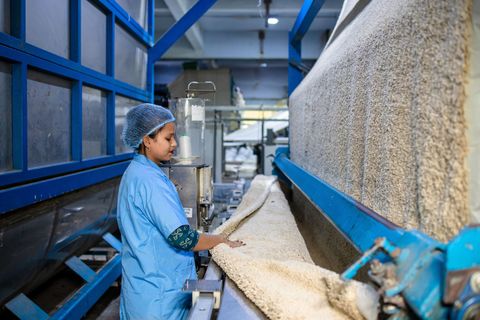
Soap making machines are industrial and small-scale production systems used to transform soap ingredients into finished bars, flakes, noodles, liquid products, or other soap formats.
The equipment used depends on the type of soap, formulation, production volume, packaging format, and desired physical characteristics.
A traditional soap-production process may involve several stages, including raw-material preparation, mixing, refining, extrusion, cutting, stamping, and packaging. Modern machinery can automate some or most of these operations.
A typical bar-soap production sequence can be represented as:
Raw materials → Mixing → Drying or processing → Refining → Plodding/extrusion → Cutting → Stamping → Inspection → Packaging
Not every production line uses every stage. Liquid soap and specialty formulations, for example, can require substantially different equipment from conventional toilet-soap bars.
Why Soap Manufacturing Equipment Matters
Soap production requires consistency in formulation, mixing, moisture management, shape, weight, and surface appearance. Manual processes can make it more difficult to maintain repeatable results when production volumes increase.
Soap manufacturing equipment is designed to make individual production stages more controlled and repeatable.
Automation can assist with:
Consistent mixing
Controlled material movement
Uniform extrusion
Accurate bar cutting
Consistent stamping
Reduced repetitive handling
Production monitoring
Better process organization
Integration with packaging equipment
The appropriate degree of automation depends on the scale and type of operation. A small workshop may use individual machines for selected stages, while a large manufacturing facility can use interconnected equipment controlled through centralized systems.
Main Types of Soap Making Machines
Different machines perform different functions within the production process.
| Machine Type | Main Function | Typical Application |
|---|---|---|
| Soap mixer | Blends ingredients | Soap formulations |
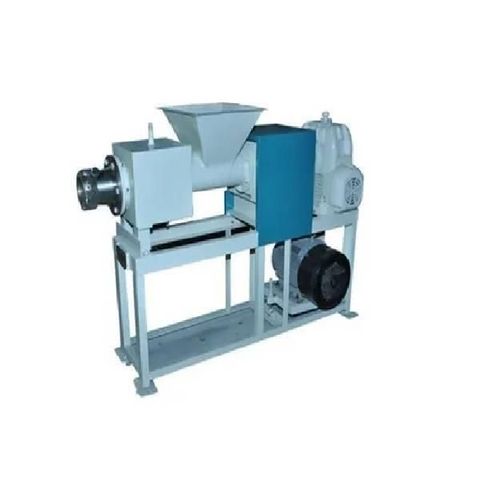
| Soap plodder | Compresses and extrudes soap | Bar soap |
| Soap cutting machine | Cuts continuous soap billets | Bar production |
| Soap stamping machine | Shapes and marks bars | Toilet and laundry soaps |
| Soap refining machine | Improves texture and consistency | Finished soap mass |
| Vacuum plodder | Extrudes under controlled conditions | High-quality bar formation |
| Soap noodle-making equipment | Produces soap noodles | Further formulation |
| Liquid soap mixing system | Blends liquid formulations | Hand and body washes |
| Soap finishing machine | Final shaping and finishing | Bar-soap production |
| Packaging equipment | Wraps or packs finished products | Retail and institutional formats |
A soap making machine may therefore refer to one individual piece of equipment rather than an entire production line.
Automatic Soap Making Machines
An automatic soap making machine can integrate multiple production stages or automate a specific stage with limited manual intervention.
Depending on the design, automated systems can use:
Programmable logic controllers
Sensors
Digital temperature monitoring
Motor controls
Automated feeding
Variable-speed drives
Automatic cutting
Automatic stamping
Production counters
Safety interlocks
Touchscreen control panels
Automation can be particularly useful where consistent production conditions are important.
However, automation does not remove the need for trained operators. Personnel may still be required for machine setup, formulation control, cleaning, inspection, maintenance, and quality monitoring.
Understanding Soap Refining and Finishing
A soap finishing machine is generally associated with the later stages of bar-soap production.
Finishing operations can include refining, extrusion, cutting, shaping, stamping, and surface treatment depending on the production configuration.
The objective is generally to create a consistent finished bar with the required:
Shape
Dimensions
Weight
Texture
Surface appearance
Markings
A refining or finishing stage can also help prepare soap material for extrusion and final shaping.
High-Speed Soap Making Machines
A high speed soap making machine is designed for production environments where equipment throughput is an important consideration.
However, speed should not be considered independently.
A machine operating at a high nominal rate may not achieve the same practical output when the complete production process includes:
Material loading
Product changes
Cleaning
Maintenance
Quality inspection
Packaging
Machine adjustments
Production interruptions
For this reason, production capacity should be evaluated across the complete manufacturing line rather than relying only on a machine's maximum stated speed.
Commercial Soap Making Machines
Commercial soap making machines can range from individual processing units to complete integrated production lines.
The appropriate configuration depends on factors such as:
Soap formulation
Product type
Batch size
Production schedule
Bar dimensions
Packaging format
Available floor space
Utility requirements
Automation level
Cleaning procedures
A facility producing several soap varieties may also need equipment capable of efficient changeovers between formulations or bar shapes.
Important Machine Features
When studying soap production equipment, specifications should be compared systematically.
Important features can include:
Processing capacity
Motor power
Material-contact construction
Operating temperature range
Adjustable speed
Control system
Safety mechanisms
Machine dimensions
Cleaning accessibility
Maintenance requirements
Replacement-part availability
Integration capabilities
Material selection is particularly important for components that come into contact with soap ingredients. Corrosion resistance, mechanical strength, sanitation requirements, and compatibility with the formulation should be considered.
Comparing Production Configurations
A simple comparison can help explain how different equipment arrangements work.
| Configuration | Automation | Typical Characteristics |
|---|---|---|
| Individual machines | Low to moderate | Separate operators and processes |
| Semi-automatic line | Moderate | Some automated movement and controls |
| Automatic line | High | Multiple coordinated operations |
| Integrated production line | Very high | Processing, finishing and packaging can be connected |
The correct configuration depends on production requirements rather than the automation label alone.
Recent Developments in Soap and Chemical Standards
Indian standards for soap-related products and raw materials continue to be reviewed and updated.
BIS records show that IS 10813:2022, covering soap jelly for laundry purposes, was reaffirmed in August 2026. The standard is classified under soaps, detergents, and cleaning fluids.
BIS also maintains standards concerning methods for testing soaps and related surface-active materials. One relevant standard was reaffirmed in 2026, demonstrating continued attention to testing methods within this product category.
Another development occurred in cosmetic raw-material standards. IS 4707 (Part 2):2025 was adopted as a fifth revision and addresses classification of cosmetic raw materials, including substances with safety restrictions.
These developments matter to manufacturers because machinery selection should support consistent processing and quality-control procedures appropriate to the formulation being produced.
Soap Manufacturing and Indian Regulations
The regulatory requirements depend heavily on the type of soap.
Products intended for use on the human body can fall within India's cosmetics regulatory framework. CDSCO explains that cosmetics manufacturing is regulated through inspection and licensing by State Licensing Authorities, while imported cosmetics are regulated through the Central Licensing Authority.
The Cosmetics Rules, 2020 are the principal current rules governing cosmetics in India. CDSCO maintains the official rules and related regulatory information on its website.
The regulatory framework also requires cosmetic products to comply with applicable quality and safety standards. CDSCO's regulations identify toilet soap, liquid toilet soap, baby toilet soap, shaving soap, and transparent toilet soap among cosmetic categories covered by applicable standards.
Manufacturers should therefore identify the legal classification of their particular soap before determining licensing, labeling, testing, manufacturing, and quality-control requirements.
BIS Standards Relevant to Soap Production
BIS maintains numerous Indian Standards related to soaps, detergents, cleaning fluids, and raw materials.
For example, BIS records show that IS 7532:2018, concerning soft soap, received an amendment whose implementation was addressed in 2025. BIS documentation identifies the product under voluntary certification.
BIS also lists IS 12795:2020, covering linear alkyl benzene, as a mandatory-certification standard for the specified raw material.
These standards illustrate an important point: requirements can apply differently depending on the specific finished product or raw material. A manufacturer should therefore check the current BIS status for each relevant material and product rather than assuming that one certification rule applies to every soap.
Safety Considerations for Soap Manufacturing Equipment
Soap production can involve hot materials, rotating machinery, pressure, chemicals, electrical systems, and mechanical cutting or stamping.
Important safety practices include:
Use appropriate machine guarding.
Provide emergency-stop mechanisms.
Follow equipment operating instructions.
Keep rotating components protected.
Use suitable personal protective equipment.
Control exposure to chemicals and hot materials.
Maintain electrical systems properly.
Keep work areas clean and dry where appropriate.
Establish lockout and maintenance procedures.
Train operators before independent machine use.
The exact safety controls should be determined by the machinery, formulation, plant layout, and applicable occupational-safety requirements.
Tools and Useful Resources
Several resources can help when researching soap production equipment.
BIS Standards Database: Useful for checking current Indian Standards, revisions, amendments, certification status, and technical classifications.
CDSCO Cosmetics Portal: Provides information about India's cosmetics regulatory framework, licensing, registration, and applicable rules.
Cosmetics Rules, 2020: Useful for understanding regulatory requirements applicable to cosmetic products.
Production-flow worksheet: A spreadsheet can map raw-material preparation, mixing, refining, extrusion, cutting, stamping, inspection, and packaging.
Machine comparison table: Record machine capacity, dimensions, motor power, controls, material-contact surfaces, safety features, and maintenance requirements.
Quality-control checklist: Track product weight, dimensions, appearance, formulation parameters, batch identification, and relevant laboratory tests.
Practical Selection Checklist
Before studying a particular machine configuration, define the manufacturing requirements first.
Identify the type of soap.
Determine the formulation characteristics.
Establish the required batch or production quantity.
Define the desired bar dimensions.
Determine whether liquid or bar processing is required.
Identify required refining and finishing stages.
Review material-contact requirements.
Check electrical and utility requirements.
Examine safety features.
Consider cleaning and maintenance access.
Review compatibility with other production equipment.
Check applicable BIS and regulatory requirements.
Establish quality-control procedures.
This approach helps prevent equipment specifications from being evaluated without considering the wider manufacturing process.
Frequently Asked Questions
What are soap making machines?
Soap making machines are mechanical or automated systems used for different stages of soap production, such as mixing, refining, extrusion, cutting, stamping, finishing, or packaging.
What does an automatic soap making machine do?
Depending on its configuration, it can automate one or multiple production stages. Automated systems may use sensors, programmable controls, automatic feeding, cutting, stamping, and other mechanisms.
What is a soap finishing machine?
A soap finishing machine is equipment used during the later stages of bar-soap production. Depending on the system, finishing can include refining, extrusion, cutting, shaping, or stamping.
Are soap products regulated in India?
Yes, depending on the product category. Cosmetic soaps are regulated under India's cosmetics framework, while other soap and cleaning products can be subject to different standards and requirements. CDSCO states that cosmetic manufacturing is regulated through the applicable licensing system.
Why are BIS standards important for soap manufacturing?
BIS standards provide specifications or testing methods for particular products and raw materials. Their applicability and certification status vary by standard, so manufacturers should verify the current requirements for the specific product being produced.
Conclusion
Soap making machines form an important part of modern soap manufacturing, providing controlled methods for mixing, refining, extrusion, cutting, stamping, finishing, and other production activities.
The equipment required depends on the type of soap, formulation, production scale, bar dimensions, desired automation, and quality-control requirements. An automatic soap making machine may automate one particular operation or form part of a larger integrated production line.
Recent Indian standards developments also demonstrate the importance of keeping technical and regulatory information current. BIS records show continued review and reaffirmation of standards related to soaps and cleaning products during 2025 and 2026, while CDSCO's Cosmetics Rules, 2020 remain central to the regulation of cosmetic products.
For anyone researching soap manufacturing equipment, the most useful approach is to evaluate the complete production process rather than focusing only on individual machine specifications. Product classification, formulation, safety, testing, material compatibility, and applicable standards should all be considered together.
Disclaimer
This article is provided for general informational and educational purposes only. It does not constitute technical, legal, regulatory, engineering, financial, or manufacturing advice. The information presented is not a claim, guarantee, endorsement, or representation that any particular machine, equipment, manufacturer, process, or standard is suitable for a specific application.
We are not selling, promoting, or endorsing any of the machines, equipment, products, manufacturers, or organizations mentioned or discussed in this article. Readers should independently verify current specifications, applicable laws, standards, certifications, safety requirements, and regulatory conditions with the relevant authorities and qualified professionals before making any manufacturing or equipment-related decision.

Related Post...
Aluminum Can Making Machines: Explore Overview, Basics, Explanation, Knowledge, and Key Details
Updated: October 26, 2026
Read More