Aluminium Extrusion Machines: Explore Overview, Basics, Explanation, Knowledge, and Key Details
An aluminium extrusion machine is industrial equipment used to shape aluminium into long profiles with a consistent cross-section. The process involves heating an aluminium billet and forcing it through a specially designed die using a hydraulic press.
The shape of the die determines the cross-sectional design of the finished profile. This makes aluminium extrusion suitable for producing simple bars and channels as well as complex sections with multiple cavities.
Aluminium extrusion machines are used in construction, transportation, electrical equipment, renewable energy, furniture, and industrial manufacturing. Common products include window frames, structural rails, heat sinks, tubes, and machine components.
Overview of Aluminium Extrusion Machines
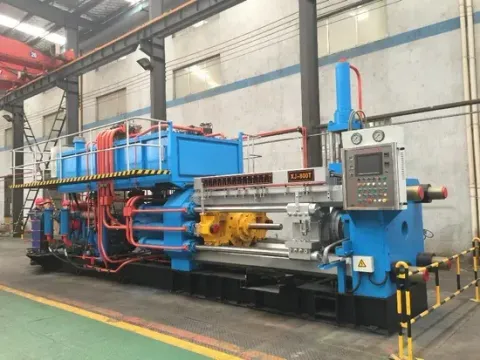
An aluminium extrusion press is generally a horizontal hydraulic press. It applies high force to a heated billet, pushing the material through a die opening to create the required profile.
A complete aluminium extrusion production line includes more than the press itself. It may contain billet heating equipment, billet loading systems, the extrusion press, profile pullers, cooling tables, stretchers, cutting saws, and ageing furnaces.
The main objectives of an aluminium extrusion machine are to:
Produce profiles with the required cross-sectional shape
Maintain dimensional accuracy
Process different aluminium alloys
Support consistent production quality
Reduce material waste through controlled processing
Basics of Aluminium Extrusion
What Is Aluminium Extrusion?
Aluminium extrusion is a metal-forming process in which heated aluminium is forced through a shaped opening in a die.
The process is similar to pushing a soft material through a mould. However, aluminium extrusion requires high pressure, controlled temperatures, specialised tooling, and precise handling equipment.
The finished profile has a cross-section that corresponds to the die opening. Its length can be cut according to the required product dimensions.
Direct and Indirect Extrusion
Direct extrusion is the most common method used for aluminium profiles. The billet and container remain in position while the ram pushes the billet toward the die. The aluminium flows through the die and emerges as a profile.
Indirect extrusion uses a die attached to a hollow ram that moves into the billet. The aluminium flows through the die into the hollow ram. This method reduces some friction between the billet and container, but it requires a different press arrangement and is used for specific applications.
Direct extrusion is widely used for general aluminium profile manufacturing. <Cite refs={["turn598776search37","turn598776search2","turn598776search40"]}/>
Types of Aluminium Extrusion Machines
Aluminium Extrusion Press Machine
An aluminium extrusion press machine is the central equipment in a conventional extrusion line.
It includes a main hydraulic cylinder, ram, stem, container, die assembly, and supporting frame. The press applies the force required to push the heated billet through the die.
Press capacity is commonly described in tonnes of force. The required capacity depends on billet diameter, alloy, profile design, extrusion ratio, and operating conditions.
Aluminium Profile Extrusion Machine
An aluminium profile extrusion machine is designed to produce profiles with specific cross-sectional shapes.
Examples include:
Window and door profiles
T-slot industrial framing
Aluminium channels
Heat-sink profiles
Structural sections
Tubes and hollow profiles
The die design is especially important when producing hollow or complex profiles. Hollow sections commonly require specialised dies containing mandrels or related tooling to form the internal cavities.
Industrial Aluminium Extrusion Machine
An industrial aluminium extrusion machine is intended for production environments that require repeated processing, high force, and integration with auxiliary equipment.
Industrial systems may include automated billet handling, die changing arrangements, profile pullers, cooling systems, and computer-controlled production settings.
The configuration depends on the required profile dimensions, alloy range, output rate, and factory layout.
Hydraulic Aluminium Extrusion Press
A hydraulic aluminium extrusion press uses hydraulic fluid to generate the force required for extrusion.
The hydraulic system typically includes pumps, cylinders, valves, accumulators, filters, cooling equipment, and control components.
Hydraulic technology allows the press to control force and ram movement across the extrusion cycle. Modern systems may use variable-speed pumps, servo-hydraulic controls, or electronic monitoring to improve process control.
Main Components of Aluminium Extrusion Equipment
Main Hydraulic Cylinder
The main cylinder generates the force that moves the ram. Its design and operating pressure influence the press’s nominal capacity.
Ram, Stem, and Dummy Block
The ram moves the stem forward. The dummy block transfers force from the stem to the billet and helps prevent aluminium from flowing backward around the ram.
Billet Container
The container holds the heated billet during extrusion. It is designed to withstand high pressure and maintain suitable temperature conditions.
Extrusion Die
The extrusion die contains the opening that determines the profile’s cross-sectional shape.
Die design affects metal flow, dimensional accuracy, surface finish, and the balance of material movement through different parts of the profile.
Die Holder and Supporting Tooling
The die holder, backer, bolster, and related tooling support the die assembly and transfer the press force through the machine structure.
Billet Heating Furnace
The billet furnace heats aluminium to the temperature required for extrusion. Heating may use gas-fired, electric, or induction-based systems.
Puller and Run-Out Table
After leaving the die, the hot profile is guided along the run-out table. A puller may hold and move the profile to maintain alignment during cooling.
Cutting and Stretching Equipment
A stretcher removes some residual distortion after cooling. A saw cuts the profile into the required lengths.
These components work together as an integrated production line. <Cite refs={["turn598776search4","turn598776search6","turn598776search37"]}/>
Working Process of an Aluminium Extrusion Machine
1. Billet Preparation
Aluminium logs are cut into billets of suitable length. The billet dimensions depend on the press container and the production requirements.
2. Billet Heating
The billet is heated to make the aluminium sufficiently plastic for extrusion. A typical billet temperature for many aluminium alloys is approximately 450–500°C, but the exact range depends on the alloy, billet size, and process design.
The die and container are also brought to suitable operating temperatures.
3. Billet Loading
The heated billet is transferred into the press container. The billet loader positions it correctly before the extrusion cycle begins.
4. Extrusion
The hydraulic ram pushes the billet through the die. Aluminium flows through the die opening and emerges as a continuous profile.
The press force and ram speed must be controlled to suit the alloy and profile geometry.
5. Cooling and Quenching
The hot profile travels along the run-out table. Depending on the alloy and required temper, it may be cooled using air or water-based quenching.
Cooling conditions affect the final mechanical properties of heat-treatable aluminium alloys.
6. Stretching and Cutting
After cooling, the profile may be stretched to remove minor bends or residual stresses. It is then cut into specified lengths.
7. Ageing
Some aluminium alloys undergo artificial ageing in a controlled furnace to achieve the required mechanical properties.
The completed profiles are inspected before they proceed to finishing or further manufacturing operations. <Cite refs={["turn598776search39","turn598776search37","turn598776search1"]}/>
Technologies Used in Aluminium Extrusion
Hydraulic Control Technology
Hydraulic controls regulate press force, ram movement, and extrusion speed. Accurate control helps maintain stable metal flow through the die.
Billet Temperature Control
Temperature monitoring helps maintain consistent billet conditions. Uneven heating can affect extrusion force, surface quality, and profile dimensions.
Die Design and Flow Balancing
Computer-aided design and simulation can help engineers study how aluminium flows through the die. Balanced metal flow is particularly important for complex profiles.
Automation and Production Monitoring
Automated systems can manage billet loading, press cycles, profile handling, cutting, and production data.
Monitoring systems may record temperature, pressure, ram speed, and other process variables to support quality control.
Applications of Aluminium Extrusion Machines
Aluminium extrusion equipment supports manufacturing across several sectors.
Construction
Profiles are used for windows, doors, curtain-wall systems, partitions, handrails, and structural framing.
Transportation
Extruded aluminium sections are used in railway components, vehicle structures, trailers, and selected automotive parts.
Electrical and Electronics
Heat sinks, cable-management sections, equipment housings, and electrical enclosures are commonly produced through extrusion.
Renewable Energy
Aluminium profiles are used in solar-panel mounting structures and supporting frames.
Industrial Manufacturing
T-slot framing, machine guards, conveyor structures, and modular equipment frames are typical industrial applications.
Quality Control and Best Practices
Reliable aluminium extrusion requires control of material, tooling, temperature, and handling.
Select the correct alloy and temper for the intended application.
Match billet diameter and length to the press container.
Maintain suitable billet, die, and container temperatures.
Inspect dies for wear, cracks, and flow-related defects.
Control ram speed and press force.
Maintain alignment of the press and run-out equipment.
Use appropriate cooling conditions for the alloy.
Check profile dimensions, straightness, and surface finish.
Inspect for defects such as cracking, tearing, die lines, and distortion.
Keep production and inspection records.
The extrusion ratio, which compares the billet’s initial cross-sectional area with the profile’s total cross-sectional area, is one important process parameter. Higher ratios generally require more deformation and can increase the force and heat generated during extrusion. <Cite refs={["turn598776search8","turn598776search37"]}/>
India: Standards and Material Specifications
In India, IS 733:2025 covers wrought aluminium and aluminium alloy bars, rods, sections, extruded tubes, hollow sections, and profiles for general engineering purposes.
The standard supersedes earlier versions of IS 733 and IS 1285:2023. Manufacturers should verify the current standard, applicable amendments, alloy designation, temper, dimensional requirements, and testing criteria before specifying or supplying extruded products. <Cite refs={["turn598776search9","turn598776search3","turn598776search35"]}/>
For machine safety, the press installation should include suitable guarding, interlocked access points, emergency stops, hydraulic safety provisions, and safe procedures for die changes and maintenance. Horizontal extrusion press systems are also addressed by machinery safety standards such as ANSI B11.17. <Cite refs={["turn159094search2","turn159094search1","turn159094search4"]}/>
Useful Resources
Readers can refer to the following resources for further technical information:
Bureau of Indian Standards (BIS) for aluminium product standards
Aluminium Extrusion Manual from the Australian Aluminium Council
UNIDO technical publications on light aluminium extrusions
Equipment manuals for hydraulic extrusion presses
Technical documents on extrusion die design and process control
Frequently Asked Questions
1. What is an aluminium extrusion machine?
It is industrial equipment that forces heated aluminium through a shaped die to produce profiles with a consistent cross-section.
2. What is an aluminium extrusion press machine?
It is the main press in an extrusion line. It uses a hydraulic ram to push a heated billet through a die.
3. What temperature is used for aluminium extrusion?
Many aluminium alloys are extruded with billet temperatures around 450–500°C, but the correct temperature depends on alloy, profile, and process conditions.
4. What products can an aluminium profile extrusion machine make?
It can produce window frames, channels, tubes, heat sinks, structural rails, T-slot profiles, and many other custom sections.
5. What determines the capacity of an aluminium extrusion press?
Important factors include press force, billet diameter, alloy, extrusion ratio, profile geometry, and the required production conditions.
Conclusion
Aluminium extrusion machines are essential equipment for producing long aluminium profiles with consistent cross-sectional shapes. A typical production line combines a hydraulic press, billet heating furnace, extrusion die, profile handling system, cooling equipment, stretcher, and cutting machinery.
Understanding the working process, press components, alloy requirements, die design, temperature control, and quality inspection helps explain how aluminium extrusion equipment produces profiles for construction, transportation, electrical systems, and industrial applications.
Disclaimer: This article is intended for general informational purposes only. Machine configurations, operating parameters, material standards, and production requirements may vary. Always follow the equipment manufacturer’s instructions, applicable standards, and qualified engineering guidance before operating industrial machinery. This content is not intended to promote or sell any product, brand, or organisation.

Related Post...
Reach Stacker Machines: Complete Guide to Basics, Technologies, Processes, Facts, and Best Practices
Updated: November 24, 2026
Read More
Crawler Crane Machines: Complete Guide to Basics, Technologies, Processes, Facts, and Best Practices
Updated: November 24, 2026
Read More