Automatic Glass Cutting Machines: Complete Guide to Basics, Technologies, Processes, Facts, and Best Practices
An automatic glass cutting machine is industrial equipment used to cut flat glass sheets into specified dimensions and shapes. It uses a cutting wheel, controlled movement, and computerised positioning to create accurate score lines on the glass surface.
Unlike a saw that cuts through solid material, most conventional flat glass cutting machines create a controlled surface score. The glass is then separated along the score using a breaking table or another suitable method.
Automatic glass cutting systems are used in architectural glazing, furniture, mirrors, appliances, and other glass-processing applications. They help improve cutting consistency, sheet utilisation, production planning, and handling efficiency.
Overview of Automatic Glass Cutting Machines
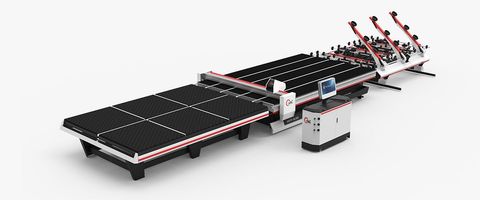
An automatic glass cutting machine generally consists of a cutting table, movable cutting bridge, cutting head, glass positioning system, and CNC control unit.
Some systems also include automatic glass loading, sheet scanning, cutting optimisation software, transfer belts, and integrated breaking tables.
The machine is designed to:
Cut glass according to programmed dimensions
Produce straight and shaped score lines
Reduce manual measuring and marking
Improve material utilisation
Support repeatable production
Process multiple cutting patterns from large glass sheets
The complete glass cutting line may include separate loading, cutting, breaking, sorting, and unloading stations.
Basics of Glass Cutting
What Is Glass Cutting?
Glass cutting is a controlled process that creates a narrow score line on the glass surface. A cutting wheel applies pressure while moving along a programmed path.
The score creates a localised fracture that guides the glass when it is separated. The process must be controlled carefully because excessive pressure or poor cutting conditions can cause unwanted cracks, chips, or breakage.
Difference Between Manual and Automatic Glass Cutting
| Feature | Manual Glass Cutting | Automatic Glass Cutting |
|---|---|---|
| Positioning | Manual measurement | CNC-controlled positioning |
| Cutting path | Guided by operator | Programmed path |
| Repeated patterns | More manual effort | Stored cutting programs |
| Material planning | Often manual | Can use optimisation software |
| Production scale | Small or specialised work | Medium to high-volume processing |
Automatic equipment does not eliminate the need for skilled operators. Operators still prepare cutting plans, inspect glass, monitor machine operation, and manage safe separation of the cut pieces.
Types of Automatic Glass Cutting Machines
CNC Glass Cutting Machine
A CNC glass cutting machine uses computer numerical control to coordinate the movement of the cutting head.
The cutting program specifies the shape, dimensions, and sequence of the score lines. The machine follows the programmed path using controlled axes and a specialised glass cutting wheel.
CNC systems can process rectangles, circles, curves, and other shapes supported by the machine’s software and cutting configuration.
Flat Glass Cutting Machine
A flat glass cutting machine is designed to process sheets of flat glass, including float glass and suitable coated glass.
The machine may be configured for straight cutting, shape cutting, or both. Its table surface is usually designed to support the glass while allowing the cutting head to move across the sheet.
Flat glass cutting machines are commonly used in architectural glass and general glass-processing facilities.
Industrial Glass Cutting Machine
An industrial glass cutting machine is designed for regular production and integration with other factory equipment.
It may include:
Large-format cutting table
Automatic sheet alignment
CNC cutting bridge
Glass transfer belts
Automatic loading system
Cutting optimisation software
Integrated or separate breaking table
The configuration depends on the glass dimensions, thickness range, production volume, and required cutting patterns.
Automatic Glass Cutting Table
An automatic glass cutting table provides a supported surface for glass sheets and a controlled cutting mechanism.
Some tables use air flotation to reduce friction while moving glass. Others use transfer belts or rollers to move sheets between stations.
An automatic glass cutting table may operate as a standalone machine or as part of a complete glass processing line.
Automatic Glass Panel Cutting Machine
An automatic glass panel cutting machine is used to produce panels for furniture, appliances, interior partitions, and other products.
Depending on its configuration, it may cut standard rectangular panels or more complex shapes. The machine’s software can store repeated panel dimensions and cutting programs.
Main Components of a Glass Cutting Machine
Cutting Table
The cutting table supports the glass sheet. Its surface must be level and suitable for the glass type being processed.
Air-float systems may use air pressure to help move large sheets with reduced friction.
Cutting Bridge
The cutting bridge moves across the table and carries the cutting head. Its mechanical structure must maintain alignment and stability during movement.
Cutting Head and Wheel
The cutting head holds a small cutting wheel that creates the score line.
The cutting wheel material, angle, diameter, and condition influence the quality of the score. The wheel must be selected according to the glass thickness and cutting requirements.
CNC Controller
The CNC controller manages the movement of the cutting head and other machine functions.
It may control axis movement, cutting pressure, lubrication, tool orientation, and the sequence of cutting operations.
Glass Positioning System
Positioning systems use reference stops, sensors, optical readers, or scanning equipment to determine the location of the glass sheet.
Accurate positioning helps ensure that the programmed cutting plan matches the actual sheet position.
Cutting Oil or Lubrication System
Some glass cutting systems apply a small quantity of cutting fluid to the cutting wheel or score line.
The fluid helps support the scoring process and may improve score consistency. The type and amount must follow the machine and glass-processing recommendations.
Working Process of an Automatic Glass Cutting Machine
1. Glass Sheet Selection
The operator selects a glass sheet with the required thickness, dimensions, and quality.
The sheet should be inspected for cracks, surface damage, contamination, and other defects before processing.
2. Loading and Positioning
The glass is placed on the cutting table manually or through an automatic vacuum loading system.
The machine positions the sheet using reference stops, sensors, or optical alignment.
3. Cutting Plan Preparation
The cutting plan is created using glass cutting software.
The software arranges the required shapes on the sheet to reduce unused material. This process is commonly called cutting optimisation or nesting.
4. CNC Scoring
The cutting head moves along the programmed path and creates score lines.
The controller manages cutting pressure, wheel movement, speed, and other process settings according to the machine configuration.
5. Breaking and Separation
After scoring, the glass is transferred to a breaking table or separated using a suitable breaking system.
The glass is supported and pressure is applied along the score line to produce the intended separation.
6. Inspection and Sorting
The cut pieces are inspected for dimensions, edge quality, chips, cracks, and other defects.
The pieces are then sorted for further processing, such as edge grinding, drilling, washing, or tempering.
Technologies Used in Automatic Glass Cutting
CNC Motion Control
CNC motion control coordinates the movement of the cutting bridge and cutting head.
It supports repeatable cutting paths and can manage different shapes within the machine’s operating range.
Cutting Optimisation Software
Optimisation software arranges multiple shapes on a glass sheet to improve material utilisation.
The software may consider sheet dimensions, shape requirements, cutting sequence, edge allowances, and break-line planning.
Optical Scanning and Alignment
Optical systems can detect sheet edges, orientation, or certain surface features.
This information helps the controller adjust the cutting plan to the actual glass position.
Automatic Pressure Control
Some machines adjust cutting pressure according to glass thickness or programmed settings.
Correct pressure is important because a score that is too shallow may not separate reliably, while excessive pressure can cause unwanted cracks or edge damage.
Low-E Coating Edge Deletion
Certain cutting tables can be equipped with an edge-deletion system for suitable coated glass.
The system removes a narrow strip of coating near the edge where required by the subsequent glass-processing or insulating-glass assembly process.
The correct edge-deletion width and method depend on the coating, product design, and processing requirements.
Applications of Automatic Glass Cutting Machines
Architectural Glass
Automatic glass cutting machines produce panels for windows, doors, façades, partitions, and building interiors.
Furniture and Interior Design
They are used to cut glass for tabletops, shelves, cabinet doors, mirrors, and decorative panels.
Appliance Manufacturing
Glass panels for ovens, refrigerators, washing machines, and other appliances may be cut using automated systems.
Automotive Glass Processing
Glass cutting equipment can be used in certain automotive glass manufacturing and processing operations. Automotive glazing requires specialised product designs and applicable safety standards.
Industrial Glass Products
Automatic cutting systems can produce glass panels for equipment covers, display cases, and other industrial applications.
Quality Control and Best Practices
Good cutting quality depends on glass condition, machine alignment, cutting settings, and handling.
Inspect glass sheets before loading.
Keep the cutting table clean and level.
Use the correct cutting wheel for the glass.
Maintain suitable cutting pressure and speed.
Check the condition of the cutting wheel regularly.
Verify the alignment of the cutting bridge.
Use suitable cutting fluid where required.
Confirm the cutting plan before starting the cycle.
Inspect score lines and separated edges.
Record dimensional and quality checks.
Common defects include chipped edges, irregular score lines, unwanted cracks, inaccurate dimensions, and breakage outside the intended cutting path.
India: Standards and Safety Considerations
Glass cutting is an intermediate processing operation. The final product may need to comply with standards based on its intended use.
In India, IS 2553 (Part 1): 2018 covers safety glass for architectural, building, and general uses. IS 2553 (Part 2): 2019 covers safety glass for road transport. IS 17004:2018 provides testing methods for processed glass.
These standards concern glass products and testing, rather than defining every specification for a cutting machine. Manufacturers should verify the current standards, amendments, and applicable certification requirements with the Bureau of Indian Standards.
Industrial glass cutting machines should also be equipped with suitable guarding, emergency stops, safe operating zones, and appropriate controls for moving bridges and glass-handling equipment.
How to Evaluate a Glass Cutting Machine Manufacturer
When reviewing technical information from a glass cutting machine manufacturer, compare the machine’s specifications with the actual production requirements.
Important points include:
Maximum glass sheet dimensions
Supported glass thickness
Cutting accuracy and repeatability
Maximum cutting speed
Supported shape complexity
Loading and unloading arrangements
Cutting software and file compatibility
Availability of spare parts
Operator training and technical documentation
Safety features and maintenance requirements
Published cutting speed is not the same as total production output. Actual output also depends on sheet loading, optimisation, cutting pattern, breaking, sorting, and downstream processing.
Useful Resources
Readers can use these resources to learn more about glass cutting and processing:
Bureau of Indian Standards (BIS) for Indian glass product standards
Glazing Society of India for glass industry standards and technical information
Glass machinery manuals for operation and maintenance
CNC controller documentation for cutting path and software functions
Glass processing technical guides for score quality and breaking procedures
Frequently Asked Questions
1. What is an automatic glass cutting machine?
It is equipment that uses controlled cutting tools and programmed movement to score flat glass sheets into specified shapes and dimensions.
2. What is a CNC glass cutting machine?
A CNC glass cutting machine uses computer numerical control to guide the cutting head along a programmed path.
3. Does an automatic glass cutting machine cut completely through glass?
Most conventional flat glass cutting machines create a score line rather than cutting completely through the sheet. The glass is then separated using a breaking process.
4. What glass thickness can an automatic glass cutting table process?
The supported thickness depends on the machine model and cutting wheel. Many industrial tables are designed for a range of flat glass thicknesses, but the exact range should be confirmed in the machine specification.
5. What affects glass cutting accuracy?
Important factors include table flatness, glass positioning, cutting wheel condition, cutting pressure, machine alignment, and the quality of the cutting program.
Conclusion
Automatic glass cutting machines are important equipment in modern flat-glass processing. CNC control, cutting optimisation software, automatic alignment, and integrated handling systems help produce glass panels with consistent dimensions and efficient material utilisation.
A complete glass cutting operation requires more than a cutting table. Proper loading, scoring, breaking, inspection, and safe handling are essential for maintaining product quality and reliable production.
Disclaimer: This article is intended for general informational purposes only. Machine configurations, operating settings, product standards, and processing requirements may vary. Always follow the equipment manual, applicable standards, and qualified technical guidance before operating industrial machinery. This content is not intended to promote or sell any product, brand, or organisation.

Related Post...
Crawler Crane Machines: Complete Guide to Basics, Technologies, Processes, Facts, and Best Practices
Updated: November 24, 2026
Read More
Aluminium Extrusion Machines: Explore Overview, Basics, Explanation, Knowledge, and Key Details
Updated: November 25, 2026
Read More