Copper Wire Recycling Machines: Discover Information, Facts, Tips, Resources, and Expert Advice
Copper wire recycling machines are mechanical systems designed to separate copper from insulation and other materials found in discarded electrical wires and cables. The recovered copper can then enter appropriate material-recovery and metal-processing streams.
Copper wires are commonly covered with materials such as PVC, polyethylene, rubber, or other insulating compounds. Before the copper can be recovered efficiently, the insulation needs to be separated from the metal.
Depending on the type and size of wire, recycling operations may use a copper wire stripping machine, granulation equipment, air separation, magnetic separation, screening, or combinations of these technologies.
A typical processing sequence can be represented as:
Wire collection → Sorting → Pre-processing → Stripping or granulation → Separation → Screening → Copper recovery → Material quality assessment
The exact process depends on wire diameter, insulation type, contamination, cable construction, and the desired recovered-material quality.
Why Copper Wire Recycling Matters
Copper is an important industrial metal used extensively in electrical systems, telecommunications, motors, construction, renewable-energy equipment, and electronic products.
Recovering copper from discarded wire can reduce the quantity of material requiring disposal while returning a valuable metal to industrial material streams.
A properly designed recycling process can help address:
Accumulation of discarded cables
Separation of metal from insulation
Material recovery from electrical waste
Reduction of unnecessary disposal
Improved sorting of mixed cable materials
More organized handling of scrap streams
Recovery of copper for subsequent processing
The process also has an environmental dimension. Improper handling of insulated wire can create pollution risks, particularly when materials are burned or processed without suitable emission controls.
CPCB documentation specifically discusses environmentally sound recycling of copper-bearing waste and identifies insulated copper wire scrap and copper-bearing cable materials among relevant waste streams.
Main Types of Copper Wire Recycling Equipment
Different machines perform different parts of the recycling process.
| Equipment Type | Main Function | Typical Material |
|---|---|---|
| Copper wire stripping machine | Removes insulation mechanically | Larger insulated wires |
| Copper wire granulator machine | Cuts wire into smaller particles | Mixed wire and cable |
| Copper wire separator machine | Separates copper from insulation | Granulated wire |
| Cable granulator | Processes cable into smaller pieces | Electrical cables |
| Pre-shredder | Reduces large material size | Heavy or mixed cable |
| Vibratory separator | Separates materials by physical characteristics | Granulated output |
| Air separator | Uses controlled airflow for separation | Copper and lighter insulation |
| Screening equipment | Sorts particles by size | Granulated material |
A copper cable recycling machine may combine several of these functions into one integrated system.
Copper Wire Stripping Machines
A copper wire stripping machine generally removes insulation from wire using a controlled cutting or feeding mechanism.
These systems can be particularly useful for larger cables where the conductor is sufficiently thick to be mechanically separated from the outer insulation.
The basic process involves:
Feeding the wire into the machine.
Guiding the wire through a cutting mechanism.
Separating insulation from the copper conductor.
Collecting the two materials separately.
Stripping technology can be relatively straightforward compared with granulation, but the correct blade, feeding arrangement, and adjustment depend on the wire diameter and insulation characteristics.
Very thin, irregular, or mixed cables may be better suited to granulation and subsequent separation.
Copper Wire Granulator Machines
A copper wire granulator machine processes cables into smaller particles. The resulting mixture generally contains copper pieces and lighter insulation particles.
The granulation process may involve:
Controlled feeding
Cutting or shredding
Particle-size reduction
Air separation
Vibratory separation
Dust collection
Material screening
A copper wire separator machine then uses differences in physical properties to separate the heavier copper fraction from lighter insulating material.
Separation performance depends heavily on particle size. If the material is too coarse, copper and insulation may remain attached. If it is excessively fine, dust and material losses can become more difficult to control.
Industrial Copper Wire Recycling Machines
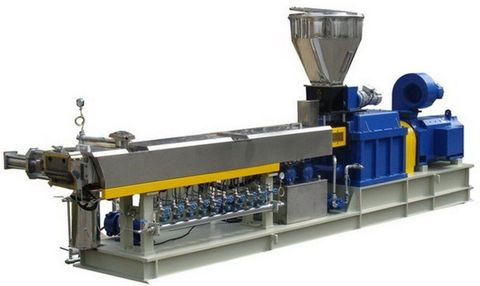
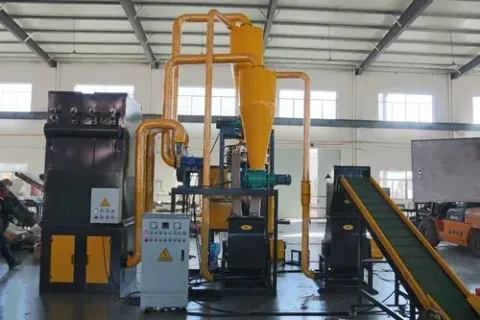
An industrial copper wire recycling machine is normally part of a larger material-processing system rather than an isolated piece of equipment.
Industrial systems may include:
Feeding conveyors
Pre-shredders
Granulators
Air separators
Vibratory tables
Dust-collection systems
Magnetic separators for ferrous contaminants
Control panels
Collection bins
Screening equipment
The correct configuration depends on the input material.
For example, a facility processing relatively uniform electrical wire may require a different arrangement from one handling mixed communication cables, automotive wiring, or heavily contaminated cable scrap.
Comparing Stripping and Granulation
| Characteristic | Stripping | Granulation |
|---|---|---|
| Main process | Removes insulation from wire | Cuts wire into particles |
| Best suited to | Suitable larger wires | Mixed and smaller wires |
| Output | Copper conductor + insulation | Copper granules + insulation particles |
| Material flexibility | More limited | Generally broader |
| Particle processing | Minimal | Required |
| Separation stage | Often simpler | Usually more extensive |
| Dust management | Lower in many applications | More important |
Neither approach is universally better. Material characteristics determine which processing method is more appropriate.
Factors That Affect Recovery Quality
The performance of copper wire recycling equipment depends on several variables.
Important factors include:
Wire diameter
Insulation thickness
Insulation composition
Copper purity
Moisture
Dirt and contamination
Particle size
Feeding consistency
Machine adjustment
Separation technology
Maintenance condition
A simple material-quality assessment can track the incoming material and recovered fractions.
| Measurement | Purpose |
|---|---|
| Input weight | Records material entering the process |
| Copper fraction | Measures recovered copper material |
| Insulation fraction | Measures separated non-metallic material |
| Contamination | Identifies unwanted materials |
| Particle size | Evaluates granulation consistency |
| Recovery ratio | Compares recovered material with input |
These measurements are useful for process monitoring, but actual recovery performance should be determined through controlled testing of the specific feedstock.
Recent Developments in India
India's recycling and resource-recovery framework continues to develop across several waste categories.
The Ministry of Environment, Forest and Climate Change maintains the E-Waste (Management) Rules, 2022, which came into force on 1 April 2023. The rules cover manufacturers, producers, refurbishers, dismantlers, and recyclers involved with specified electrical and electronic equipment and related components.
The Ministry's current rules database also lists amendments associated with the E-Waste Management framework, including amendments from 2023 and 2024 that were uploaded in April 2026.
Copper wire may appear in electrical and electronic waste streams, but not every copper-bearing cable or scrap stream automatically falls under the E-Waste Rules. The applicable category depends on the origin and characteristics of the waste.
CPCB material published in 2025 also examined environmentally sound processing of copper-bearing waste, including copper scrap, copper dross, copper oxide mill scale, waste copper and copper alloys, and insulated copper wires.
Copper Quality and Indian Standards
Recovered copper eventually enters material streams where composition and physical quality can matter.
BIS currently lists several standards for copper products. For example, IS 12444:2020 covers copper wire rods for electrical applications, while IS 4412:1981 addresses copper wires for general engineering purposes.
BIS also lists a 2026 reaffirmation of IS 191:2007, which specifies copper and is classified as a voluntary certification standard.
These standards concern copper products rather than establishing a universal specification for every recycled-copper output. Recyclers should identify the applicable specification according to the intended downstream use.
Laws and Policies Affecting Copper Wire Recycling
Copper wire recycling can be influenced by several Indian environmental and waste-management frameworks.
E-Waste Management Rules: Where discarded wires and cables form part of covered electrical and electronic equipment or components, the E-Waste Management Rules may become relevant. The 2022 rules specifically include components, consumables, parts, and spares associated with listed electrical and electronic equipment.
Hazardous-waste framework: Certain copper-bearing wastes can fall under hazardous-waste controls depending on their characteristics and origin. CPCB material specifically discusses copper-bearing waste under hazardous-waste and environmentally sound processing contexts.
Pollution-control permissions: Recycling and recovery facilities may need approvals from the relevant pollution-control authorities depending on the materials and processes involved.
Machinery safety: BIS currently provides certification guidance for machinery categories covered under its machinery-safety framework. The applicable requirement depends on the specific machine category and regulatory order.
The exact legal requirements should therefore be checked against the source material, facility type, process, capacity, and state-level pollution-control requirements.
Safety Considerations
Copper wire recycling involves cutting, rotating equipment, electrical systems, dust, noise, and potentially contaminated incoming material.
Important safety practices include:
Use machine guards correctly.
Keep hands away from cutting and rotating components.
Provide appropriate emergency-stop controls.
Inspect electrical connections regularly.
Use suitable personal protective equipment.
Control airborne dust where necessary.
Maintain adequate ventilation.
Keep work areas free from loose wire pieces.
Follow lockout and isolation procedures during maintenance.
Train operators before machine operation.
Do not process unknown materials without appropriate assessment.
Burning insulated wire should not be treated as an alternative to controlled mechanical separation. Open burning can release hazardous pollutants and creates significant environmental and health risks.
Tools and Useful Resources
Several resources can help researchers and recycling facilities understand this field.
CPCB: Useful for pollution-control guidance, waste-management information, environmental standards, and recycling-related documents. CPCB publications include technical information on copper-bearing waste.
MoEFCC: Maintains India's central environmental rules, including the E-Waste Management Rules and related amendments.
BIS Know Your Standards: BIS provides a searchable portal where users can search standards by Indian Standard number or keyword and review associated documents, amendments, testing information, and other details.
Material inspection sheet: Record cable type, insulation type, conductor size, contamination, and estimated composition.
Recovery calculation sheet: Track input weight, recovered copper, separated insulation, and residual material.
Maintenance checklist: Record blade condition, screens, bearings, electrical components, dust collectors, and safety devices.
Practical Evaluation Checklist
Before evaluating copper wire recycling machines, it is useful to examine the complete processing requirement.
Identify the incoming wire and cable types.
Separate different material categories where practical.
Determine conductor sizes.
Identify insulation materials.
Check contamination levels.
Determine whether stripping or granulation is more appropriate.
Review separation technology.
Examine dust-control arrangements.
Check machine safety features.
Consider electrical requirements.
Review maintenance procedures.
Establish material-quality testing methods.
Verify applicable environmental permissions.
Confirm applicable Indian Standards and regulatory requirements.
A machine should be evaluated as part of the complete recycling process rather than solely by a stated processing capacity.
Frequently Asked Questions
What is a copper wire recycling machine?
It is equipment designed to separate copper conductors from insulation and other materials found in discarded wires and cables. Different machines can perform stripping, granulation, separation, screening, or combinations of these processes.
What is the difference between a copper wire stripper and a granulator?
A stripper mechanically removes insulation from suitable wires, while a granulator cuts cable into smaller particles and normally uses additional separation equipment to separate copper from insulation.
What materials can a copper wire granulator process?
The appropriate material depends on the particular machine. Many systems are designed for insulated copper wires and cables, but wire diameter, insulation type, contamination, and construction should be checked before processing.
Is burning copper wire an appropriate recycling method?
No. Burning insulated wire can release hazardous pollutants and create environmental and health risks. Controlled mechanical separation is a safer approach where appropriate equipment and regulatory controls are available.
Are copper wire recyclers regulated in India?
Potentially, depending on the origin and classification of the waste, the recycling process, and the facility. E-Waste Management Rules, hazardous-waste requirements, pollution-control permissions, and other regulations can become relevant to particular waste streams.
Conclusion
Copper wire recycling machines provide mechanical methods for recovering copper from insulated electrical wires and cables. The main technologies include stripping, granulation, separation, screening, and material handling.
The appropriate system depends on the type of wire, conductor diameter, insulation, contamination, desired material quality, and scale of processing.
India's regulatory environment is also important. The E-Waste Management Rules, 2022 remain a central framework for covered electrical and electronic waste, while CPCB technical material addresses environmentally sound processing of copper-bearing waste.
BIS also maintains standards relevant to copper products and provides tools for researching applicable Indian Standards.
For anyone researching copper wire recycling machines, copper wire stripping machines, copper wire granulator machines, or copper cable recycling machines, the most important considerations are material compatibility, separation quality, worker safety, environmental controls, maintenance, and regulatory requirements.
Disclaimer: This article is provided for general informational and educational purposes only. It does not constitute legal, environmental, engineering, financial, or regulatory advice. No specific performance, recovery result, compliance status, or financial outcome is claimed or guaranteed. Readers should verify current requirements with the relevant government authorities, qualified professionals, and applicable standards before taking action. This article is not intended to sell, promote, or endorse any machine, equipment, manufacturer, supplier, or commercial activity.

Related Post...