Electric Hypercars: Explore Guide, Tips, Insights, Advice, and Expert Suggestions
Electric hypercars represent one of the most advanced categories of modern automotive engineering. These vehicles combine powerful electric motors, high-capacity battery systems, lightweight materials, advanced aerodynamics, and sophisticated control software to achieve exceptional acceleration and high-speed capability.
Unlike conventional sports cars, electric hypercars often use several electric motors to control each wheel independently. This arrangement can improve traction, handling, and power distribution during demanding driving conditions.
The development of electric hypercars also reflects wider changes in vehicle design. Engineers are exploring new battery layouts, improved cooling systems, carbon-fibre structures, and digital technologies to balance speed, efficiency, and driving stability.
This guide explains electric hypercar models, specifications, technology, performance, design, and important considerations for understanding this rapidly developing automotive category.
Basics of Electric Hypercars
What Is an Electric Hypercar?
An electric hypercar is a high-performance vehicle powered entirely or primarily by electric motors and designed to achieve exceptional acceleration, speed, handling, and engineering capability.
Most fully electric hypercars use rechargeable battery packs instead of petrol engines. Electrical energy stored in the battery is converted into mechanical power by electric motors.
Common characteristics include:
Multiple high-output electric motors
Advanced battery systems
Lightweight carbon-fibre construction
High-performance braking systems
Sophisticated aerodynamic components
Advanced electronic vehicle controls
Limited production numbers in many models
The term “hypercar” does not have one universal legal definition. It is generally used for vehicles that combine unusually high performance with advanced engineering, distinctive design, and limited production.
Electric Hypercars vs. Electric Supercars
Electric supercars and electric hypercars share many characteristics, but hypercars generally occupy the more extreme end of the performance category.
| Feature | Electric Supercars | Electric Hypercars |
|---|---|---|
| Power | High | Extremely high in leading models |
| Acceleration | Very rapid | Often among the quickest |
| Engineering | Advanced | Highly specialized |
| Production | Limited or regular series | Frequently very limited |
| Technology | Modern EV systems | Advanced integrated systems |
| Design | Performance-focused | Extreme aerodynamic design |
These categories can overlap, and the classification of a particular vehicle may vary between automotive publications.
Leading Electric Hypercar Models
Rimac Nevera and Nevera R
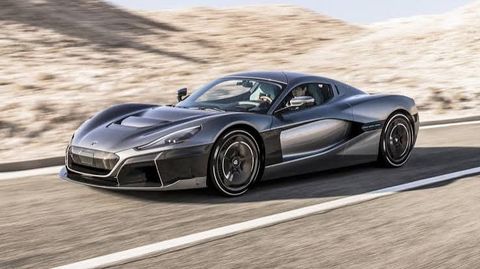
The Rimac Nevera is one of the best-known electric hypercars. It uses four electric motors, one for each wheel, and a large battery pack integrated into its carbon-fibre structure.
The original Nevera has a published output of approximately 1,914 horsepower and a top speed of around 412 km/h.
The Nevera R is a more performance-focused version. Its published specifications include more than 2,100 horsepower, improved aerodynamic elements, and enhanced handling technology. Its reported top speed is approximately 431 km/h.
Yangwang U9 and U9 Xtreme
The Yangwang U9 is an electric hypercar developed under BYD's Yangwang marque. It uses a four-motor arrangement and advanced electronic chassis technology.
The U9 Xtreme is a highly specialized version developed for extreme speed. In September 2025, it recorded a reported speed of 496.22 km/h at the ATP Papenburg track in Germany.
Later reports in November 2026 cited a higher single-direction figure of 503.17 km/h. Such results should be understood according to the testing method, vehicle configuration, and record verification used.
Lotus Evija
The Lotus Evija is a fully electric hypercar with a lightweight carbon-fibre structure and four electric motors.
Its published power output is approximately 2,000 horsepower. The vehicle uses advanced aerodynamic surfaces and a battery system designed for high-performance driving.
The Evija demonstrates how traditional sports-car engineering principles can be adapted to electric propulsion.
Aspark Owl
The Aspark Owl is a limited-production electric hypercar developed with a focus on acceleration and high-speed performance.
Its four-motor arrangement produces a very high combined power output. The vehicle also uses carbon-fibre construction and a low aerodynamic body.
The Owl is frequently included in comparisons of the fastest electric hypercars, although figures can differ by version and testing conditions.
Automobili Pininfarina Battista
The Battista combines high electric power with a grand touring character and Italian design influences.
It uses four electric motors and a large battery pack. Its performance is supported by advanced traction control, aerodynamic design, and a carbon-fibre structure.
The Battista illustrates how electric hypercar engineering can combine extreme acceleration with a refined driving environment.
Electric Hypercar Specifications
Specifications help explain the engineering capability of an electric hypercar. However, figures should always be checked against the exact model, variant, and testing method.
| Specification | What It Means |
|---|---|
| Motor power | Total output produced by the electric motors |
| Battery capacity | Amount of electrical energy stored |
| Torque | Rotational force produced by the motors |
| 0–100 km/h time | Time required to reach 100 km/h from a standstill |
| Top speed | Maximum speed achieved or specified |
| Driving range | Estimated distance on a full battery |
| Charging capability | Maximum supported charging power |
| Vehicle weight | Total mass of the vehicle |
| Drag coefficient | Measurement related to aerodynamic resistance |
Power and Torque
Electric motors can deliver substantial torque at very low rotational speeds. This characteristic allows electric hypercars to accelerate rapidly from a standstill.
Power is usually measured in kilowatts or horsepower, while torque is measured in newton-metres.
A high power figure alone does not determine overall performance. Vehicle weight, tyre grip, battery temperature, road conditions, and electronic controls also influence acceleration.
Battery Capacity and Range
Electric hypercars use high-capacity lithium-ion battery packs. Battery capacity is commonly measured in kilowatt-hours (kWh).
A larger battery can store more energy, but it also adds weight. Engineers must balance battery capacity with vehicle mass, cooling requirements, packaging, and driving range.
Official range figures are usually measured under standardized testing procedures. Actual range can vary significantly during high-speed driving.
Electric Hypercar Technology
Multi-Motor Powertrain
Many electric hypercars use two, three, or four electric motors. A four-motor system can provide independent power control at each wheel.
This arrangement allows the vehicle's control software to adjust torque distribution rapidly. It can improve cornering stability and traction when properly calibrated.
Advanced Battery Systems
Battery technology is central to electric hypercar development. High-performance battery packs must deliver substantial power while maintaining safe operating temperatures.
Important battery features include:
High energy density
High power output
Efficient thermal management
Structural integration
Battery monitoring systems
Protective electronic controls
Some manufacturers use battery structures that contribute to the vehicle's overall chassis strength.
Thermal Management
High-performance driving produces heat in the battery, motors, power electronics, and braking components.
Cooling systems help maintain suitable operating temperatures. Liquid cooling is widely used in advanced electric vehicles because it can transfer heat efficiently.
Thermal management is especially important during repeated acceleration, track driving, and high-speed operation.
Torque Vectoring
Torque vectoring is a system that adjusts the amount of driving force delivered to individual wheels.
In electric hypercars, this function can be controlled electronically through separate motors. It can help the vehicle turn more precisely and maintain stability during acceleration.
The system works alongside steering, suspension, traction control, and braking electronics.
Electric Hypercar Performance
Acceleration
Electric hypercars are known for rapid acceleration because electric motors can deliver strong torque immediately.
Some leading models can accelerate from 0 to 100 km/h in less than two seconds under suitable conditions.
However, acceleration figures may depend on:
Launch-control settings
Tyre condition
Battery charge level
Surface grip
Ambient temperature
Testing method
A quoted acceleration time should not be treated as a guarantee of the same result in every situation.
Top Speed
Top speed depends on motor power, gearing, aerodynamic drag, tyre capability, and electronic speed limits.
A vehicle that accelerates quickly may not necessarily have the highest top speed. Sustained high-speed driving also requires suitable battery cooling and stable aerodynamic behaviour.
For this reason, top-speed records should be compared carefully. A one-direction run, a two-way average, a prototype result, and a production-car specification are not identical measures.
Handling and Braking
Electric hypercars often use a low battery placement to help lower the centre of gravity.
This can support stable handling, although the battery's mass still affects overall vehicle weight.
High-performance braking systems may combine conventional friction brakes with regenerative braking. Regenerative braking converts some of the vehicle's movement into electrical energy that returns to the battery.
Electric Hypercar Design
Aerodynamic Bodywork
Aerodynamics plays a major role in electric hypercar design.
Common features include:
Sculpted front air channels
Rear diffusers
Active aerodynamic wings
Underbody airflow management
Carefully shaped side sections
Cooling air inlets
At high speeds, aerodynamic drag increases significantly. Engineers must balance low drag with sufficient downforce and cooling airflow.
Lightweight Materials
Carbon fibre is widely used in electric hypercar structures because it provides high stiffness with relatively low mass.
Other materials may include aluminium, advanced composites, and specialized alloys.
Reducing weight can improve acceleration, braking, and handling. It can also help offset the mass of a large battery pack.
Interior and Digital Controls
Electric hypercar interiors often combine minimalist design with advanced digital displays.
Drivers may receive information about battery status, motor output, energy use, tyre temperature, and driving modes.
Software-based controls allow different driving characteristics to be selected according to road or track conditions.
Recent Developments and Trends
Electric hypercar development continues to focus on higher power, improved battery performance, and more precise vehicle control.
Higher-Speed Electric Vehicles
The Yangwang U9 Xtreme's reported 2025 speed record brought further attention to electric vehicles capable of exceeding 450 km/h.
Newer reports in 2026 have cited additional speed claims. These should be assessed using clear distinctions between official record results, manufacturer specifications, prototypes, and independently verified tests.
Improved Torque Control
Newer electric hypercars increasingly use advanced software to coordinate multiple motors.
This allows faster adjustment of wheel torque and can improve stability during acceleration and cornering.
Battery and Cooling Improvements
Battery development continues to focus on energy density, power delivery, charging capability, and thermal control.
For hypercars, the ability to deliver repeated high-power output is particularly important because peak power alone does not describe sustained track performance.
Digital Vehicle Systems
Vehicle software is becoming an important part of hypercar engineering.
Digital systems can monitor battery condition, motor temperature, suspension settings, and driving behaviour. These systems help engineers coordinate the vehicle's many performance components.
Laws and Policies in India
Electric hypercars are subject to applicable vehicle registration, road-use, safety, and insurance requirements in India.
Vehicle Registration and Road Use
A vehicle intended for public-road use must meet the applicable homologation and registration requirements.
Imported vehicles may also be subject to customs procedures, import rules, and relevant motor vehicle standards.
Before road use, the vehicle's registration status and legal eligibility should be confirmed with the appropriate transport authority.
Electric Vehicle Policy
India's PM E-DRIVE scheme supports electric mobility, charging infrastructure, and the wider electric vehicle ecosystem. The scheme was notified in September 2024 and has been amended through subsequent government notifications.
Its incentives are directed toward specified vehicle categories and eligible activities. A private electric hypercar should not be assumed to qualify for a purchase incentive under the scheme.
Charging Infrastructure
The Ministry of Power's 2024 charging infrastructure guidelines provide a framework for installation and operation of electric vehicle charging facilities.
Charging equipment must be suitable for the vehicle's connector, voltage, current, and charging requirements.
For a high-performance imported EV, owners should confirm compatibility with local charging equipment and the vehicle manufacturer's approved charging arrangements.
Safety and Insurance
Electric vehicles must follow applicable road safety requirements. High-performance vehicles may also require careful review of insurance coverage, battery protection, and repair arrangements.
Rules can change, so owners should check current central and state requirements before importing or registering a vehicle.
Tools and Resources
The following resources can help readers understand electric hypercar technology and specifications:
Vehicle specification databases: Compare power, acceleration, battery capacity, and top speed.
Automotive engineering publications: Learn about motors, battery systems, chassis design, and aerodynamics.
EV charging calculators: Estimate charging time using battery capacity and charging power.
Range calculators: Explore how speed, temperature, and driving conditions influence estimated range.
Automotive safety information: Understand vehicle testing, braking systems, and road-use requirements.
Government transport portals: Review registration and vehicle compliance information.
Manufacturer technical documents: Check model-specific specifications and operating guidance.
FAQs
What are electric hypercars?
Electric hypercars are high-performance vehicles powered by electric motors and designed for exceptional acceleration, speed, handling, and advanced engineering.
Which electric hypercar is the fastest?
The Yangwang U9 Xtreme recorded a reported 496.22 km/h in September 2025. Higher figures were reported in November 2026, but record comparisons depend on testing and verification methods.
How do electric hypercars achieve rapid acceleration?
They use high-output electric motors that deliver substantial torque at low speeds. Multiple motors, advanced traction control, and suitable tyres help transfer power to the road.
What technology is used in electric hypercars?
Common technologies include multi-motor powertrains, high-capacity battery packs, liquid cooling, torque vectoring, regenerative braking, carbon-fibre structures, and advanced aerodynamic systems.
Can electric hypercars be driven on public roads in India?
Some models may be eligible for public-road use if they meet applicable import, homologation, registration, insurance, and safety requirements. Eligibility should be confirmed for the specific vehicle.
Conclusion
Electric hypercars demonstrate how electric propulsion can support extremely high levels of automotive performance. Their development combines powerful motors, advanced battery systems, lightweight structures, aerodynamic design, and sophisticated electronic controls.
Models such as the Rimac Nevera, Yangwang U9, Lotus Evija, Aspark Owl, and Pininfarina Battista illustrate different approaches to electric hypercar engineering.
As battery technology and vehicle software continue to evolve, electric hypercars will remain an important area for studying the future of high-performance automotive design.
Disclaimer: Specifications, record figures, and regulations may change. Confirm model-specific details and current legal requirements through reliable technical documents and relevant authorities before making vehicle-related decisions.

Related Post...
Hyundai Stargazer: Explore Features, Specifications, Technologies, and Useful Resources
Updated: November 25, 2026
Read More
Electric Supercars: Explore Guide, Tips, Insights, Advice, and Expert Suggestions
Updated: November 27, 2026
Read More
Toyota Land Cruiser FJ: Complete Guide to Design, Technologies, Performance, Facts, and Best Practices
Updated: November 25, 2026
Read More