Heavy Construction Machinery: Explore Types, Features, Insights, Suggestions, and Useful Resources
Heavy construction machinery refers to large mechanical equipment designed to perform demanding tasks such as excavation, earthmoving, lifting, grading, drilling, hauling, compaction, and road development.
Modern construction projects depend on machinery because many activities involve heavy materials, large work areas, and repetitive operations that would be difficult to complete manually.
Common examples of heavy construction equipment include:
Excavators
Bulldozers
Wheel loaders
Motor graders
Cranes
Backhoe loaders
Dump trucks
Compactors
Pavers
Skid steer loaders
Drilling machines
Concrete equipment
The correct machine depends on the work environment, ground conditions, material type, project scale, required reach, operating depth, and available workspace.
A large highway project, for example, may require several categories of equipment operating together. Excavators can prepare the ground, bulldozers can move and spread soil, graders can create accurate profiles, and compactors can prepare surfaces for subsequent road layers.
Main Types of Heavy Construction Equipment
Heavy machinery is generally classified according to its primary function.
| Machinery Type | Main Application | Typical Example |
|---|---|---|
| Excavator | Digging and material handling | Excavator machines |
| Bulldozer | Earthmoving and grading | Crawler bulldozer |
| Wheel loader | Loading and material movement | Front-end loader |
| Motor grader | Surface leveling | Road grader |
| Crane | Vertical lifting | Mobile crane |
| Compactor | Soil and pavement compaction | Vibratory roller |
| Paver | Road surfacing | Asphalt paver |
| Skid steer | Compact-site work | Skid steer loader |
| Dump truck | Material transportation | Articulated hauler |
| Drilling rig | Ground and foundation drilling | Rotary drill |
Different attachments can also expand the functionality of some machines. Excavators, for example, can use buckets, breakers, augers, grapples, and other implements depending on the application.
Excavators and Earthmoving Equipment
Excavator machines are among the most recognizable types of heavy construction machinery.
They generally consist of a boom, arm, bucket, hydraulic system, engine or power unit, and rotating upper structure. Their ability to rotate and reach different positions makes them useful for excavation and material handling.
Typical applications include:
Foundation excavation
Trenching
Drainage work
Land preparation
Demolition
Material loading
Utility installation
Quarry and mining activities
An excavator rental arrangement can be relevant when equipment is required for a particular project period rather than for continuous ownership. Before selecting an excavator, operators should consider digging depth, operating weight, bucket capacity, working radius, terrain, and transportation requirements.
Bulldozers, Graders, and Road Construction Machinery
Bulldozers use a large blade to push, spread, and level soil or other materials. They are frequently used during site preparation and earthmoving.
A bulldozer rental decision may depend on:
Blade configuration
Machine size
Ground conditions
Required pushing distance
Terrain slope
Operating weight
Project duration
Motor graders perform more precise surface-leveling work. They are particularly important for road construction because accurate grading helps establish the required slope and surface profile.
Road construction machinery can include:
Motor graders
Asphalt pavers
Soil compactors
Milling machines
Road rollers
Crushers
Wheel loaders
Excavators
Water tankers
Using the correct sequence of equipment can improve consistency across earthwork, base preparation, paving, and compaction stages.
Cranes and Material Handling
Cranes are designed primarily for lifting and positioning heavy materials.
Crane rental construction requirements vary according to the load, lifting height, radius, terrain, and project environment.
Common crane categories include:
Mobile cranes
Crawler cranes
Tower cranes
Rough-terrain cranes
Truck-mounted cranes
Before operating a crane, project teams should evaluate load charts, ground stability, lifting radius, overhead obstructions, wind conditions, access routes, and operator qualifications.
Lifting equipment requires careful planning because incorrect load estimation or unsuitable ground conditions can create significant safety hazards.
Skid Steers and Compact Machinery
A skid steer is a compact machine that can perform multiple tasks using interchangeable attachments.
Skid steer rental is commonly associated with projects where space is restricted or where several different light-to-medium construction tasks must be completed.
Possible attachments include:
Buckets
Forks
Augers
Sweepers
Breakers
Graders
Grapples
Trenchers
Their compact dimensions make skid steers particularly useful for urban construction, landscaping, utility work, agricultural construction, and indoor or restricted-access projects.
Why Heavy Machinery Matters Today
Heavy machinery is important because infrastructure projects increasingly involve large volumes of earth, aggregate, concrete, asphalt, and other materials.
India's infrastructure expansion continues to support demand for construction equipment. According to IBEF, India's construction equipment industry recorded sales of 136,995 units in FY26, while the sector continues to be supported by roads, railways, urban infrastructure, mining, and industrial development.
The machinery can help address several practical challenges:
Large-scale earthmoving
Faster material handling
Consistent grading
Heavy lifting
Road construction
Foundation preparation
Site clearance
Compaction
Material transportation
Work in difficult terrain
However, mechanization also requires trained operators, planned maintenance, appropriate attachments, safe operating procedures, and suitable environmental controls.
Recent Developments in Heavy Construction Machinery
The Indian construction equipment sector has experienced significant activity during 2025 and 2026.
In May 2026, industry data reported record construction equipment activity during FY26, with domestic equipment sales reaching more than 1.36 lakh units and exports showing strong growth. The expansion was associated with infrastructure development and increasing mechanization.
Another July 2026 industry update reported that mining and construction equipment exports increased by 31.5% year over year, while domestic sales exceeded 1.4 lakh units during FY26. The same report highlighted increasing adoption of automation and next-generation technologies.
Technology trends include:
Telematics
GPS-based fleet monitoring
Machine diagnostics
Automated grade control
Fuel-efficiency monitoring
Operator-assistance systems
Remote equipment monitoring
Electrification of selected machinery
Data-based preventive maintenance
These technologies can help project teams understand machine utilization, operating hours, location, fuel consumption, and maintenance requirements.
Heavy Construction Equipment Prices and Planning
Searches for heavy construction equipment prices can be difficult to compare because machinery specifications differ substantially.
A useful evaluation framework should consider the complete equipment configuration rather than one headline figure.
| Factor | Key Question |
|---|---|
| Machine category | What task must the machine perform? |
| Capacity | What quantity of material must be handled? |
| Operating weight | Is the machine appropriate for the terrain? |
| Engine or power system | Does it meet applicable requirements? |
| Attachments | Are additional implements required? |
| Utilization | How frequently will the equipment operate? |
| Transportation | Can the machine reach the worksite safely? |
| Maintenance | Are inspection and maintenance resources available? |
| Operator | Is a suitably trained operator available? |
| Safety | Are required guards and systems present? |
For heavy machinery rental, comparing equipment specifications, operating hours, included attachments, transportation arrangements, maintenance responsibilities, and documentation provides a more meaningful assessment than looking at a single figure.
Heavy Construction Machinery Suppliers and Equipment Selection
When researching heavy construction machinery suppliers, technical documentation is particularly important.
Useful information to examine includes:
Operating weight
Engine specifications
Rated power
Bucket or blade capacity
Maximum digging depth
Lifting capacity
Hydraulic specifications
Fuel or energy consumption
Dimensions
Noise information
Emission compliance
Safety systems
Maintenance intervals
Attachment compatibility
The best machine is not necessarily the largest one. A machine that is too large for a confined worksite can reduce maneuverability, while an undersized machine may not meet the project's productivity requirements.
Laws, Emission Standards, and Safety in India
Construction equipment in India is affected by environmental and safety requirements.
India introduced Bharat Stage CEV/TREM-V emission requirements for relevant construction equipment vehicles and agricultural tractors from 1 April 2024. The standards are intended to reduce emissions from applicable machinery.
This makes emission compliance an important consideration when evaluating newer machinery.
Construction projects can also be affected by environmental rules relating to dust, noise, waste, and site management. Construction and demolition waste is governed by dedicated regulatory provisions, with CPCB maintaining official information and rules relating to C&D waste management.
The newer Construction and Demolition Waste Management Rules, 2025 establish progressive recycling and utilization targets. For example, the prescribed recycling target for reconstruction and demolition projects rises from 25% in 2025–26 to 50% in 2026–27 and eventually to 100% from 2028–29 onward.
Therefore, equipment planning should consider not only excavation and construction activities but also material recovery, debris handling, dust control, and environmentally responsible site practices.
Government Infrastructure Programs and Market Demand
Government infrastructure investment is an important driver of machinery utilization in India.
According to IBEF's 2026 infrastructure update, the Union Budget 2026–27 increased infrastructure capital investment outlay to approximately ₹12.22 lakh crore. Road and urban infrastructure allocations also remain significant.
Road development is particularly relevant to heavy machinery. India's National Highway network had expanded to more than 146,000 km by December 2025, according to industry data compiled by IBEF.
These developments support continued use of:
Excavators
Bulldozers
Motor graders
Rollers
Asphalt pavers
Crushers
Wheel loaders
Cranes
Hauling equipment
Tools and Useful Resources
Several resources can help with equipment research and project planning.
Equipment specification sheet: Record machine dimensions, capacity, power, operating weight, attachments, and emission category.
Fleet management software: Telematics platforms can monitor equipment location, operating hours, utilization, and diagnostic information.
Earthwork calculator: Useful for estimating excavation, filling, hauling, and compaction requirements.
Load-capacity charts: Important for crane planning and lifting operations.
Equipment comparison spreadsheet: Compare machines using consistent technical criteria instead of relying only on advertised specifications.
CPCB resources: Useful for construction and demolition waste regulations and environmental guidance.
MoRTH resources: Useful for road-development standards, specifications, and transportation-related regulations.
Equipment maintenance checklist: Track inspections, lubrication, filters, hydraulic systems, tires or tracks, safety equipment, and scheduled maintenance.
Practical Equipment Selection Checklist
Before selecting heavy construction machinery, consider:
Define the exact construction task.
Estimate material volume and workload.
Examine site access and terrain.
Select an appropriate machine category.
Check operating dimensions.
Verify capacity and reach.
Review emission compliance.
Confirm attachment compatibility.
Assess transportation requirements.
Check operator qualifications.
Review safety systems.
Establish inspection procedures.
Plan maintenance intervals.
Consider dust, noise, and waste controls.
Compare equipment specifications consistently.
A structured checklist can prevent an unsuitable machine from being selected simply because it has a higher capacity or larger engine.
Frequently Asked Questions
What is heavy construction machinery?
Heavy construction machinery consists of large mechanical equipment used for excavation, earthmoving, lifting, grading, hauling, compaction, drilling, and other demanding construction activities.
Which machines are commonly used for road construction?
Road construction commonly involves excavators, bulldozers, motor graders, compactors, asphalt pavers, milling machines, wheel loaders, and material-hauling equipment.
What should I consider when researching heavy machinery rental?
Consider the required machine capacity, operating weight, attachments, working environment, operating period, transportation, maintenance arrangements, safety documentation, and emission compliance.
What are excavator machines used for?
Excavators are mainly used for digging, trenching, foundation preparation, material handling, demolition, drainage work, and other earthmoving applications.
Why are construction equipment emission standards important?
Emission standards establish requirements intended to reduce pollutants from applicable construction equipment. In India, Bharat Stage CEV/TREM-V requirements apply to relevant construction equipment vehicles from 1 April 2024.
Conclusion
Heavy construction machinery provides the mechanical capability required for modern infrastructure, building, mining, earthmoving, and road-development projects.
Equipment such as excavators, bulldozers, cranes, graders, compactors, loaders, pavers, and skid steers each have specialized functions. Selecting the appropriate machine depends on the task, terrain, capacity, worksite dimensions, attachments, operator requirements, safety considerations, and applicable environmental standards.
India's construction equipment sector continues to evolve alongside infrastructure development. Recent industry data shows strong equipment activity during FY26, rising exports, and increasing adoption of automation and advanced technology.
For anyone researching heavy construction equipment, heavy machinery rental, bulldozer rental, excavator rental, crane rental construction, or road construction machinery, the most useful approach is to compare technical specifications and operational requirements systematically.
Modern telematics, emission-compliant engines, digital monitoring, automated controls, and improved safety systems are also changing how heavy machinery is selected and operated.
As infrastructure projects become larger and more technically demanding, understanding machinery capabilities, regulatory requirements, environmental responsibilities, and proper equipment planning will remain important for efficient and responsible construction activity in India.

Related Post...

CNC Machine Rentals: Complete Guide to Basics, Types, Facts, Knowledge, and Best Practices
Updated: October 21, 2026
Read More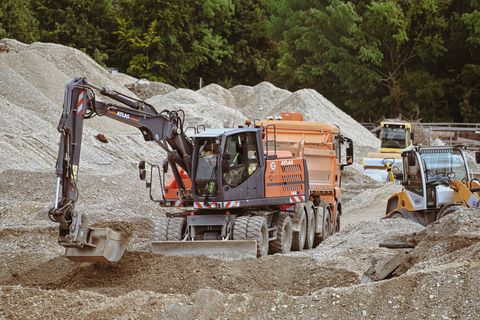
Heavy Construction Machinery: Explore Types, Features, Insights, Suggestions, and Useful Resources
Updated: October 22, 2026
Read More
Solar Panel Cleaning Robots: Explore Overview, Basics, Explanation, Knowledge, and Key Details
Updated: October 21, 2026
Read More