Oil Filling Machines: Explore Types, Features, Applications, and Useful Resources
An oil filling machine is industrial equipment designed to measure and transfer oil into containers such as bottles, cans, jars, pouches, and larger vessels. It is widely used in food processing, edible oil packaging, automotive manufacturing, lubricant production, and industrial chemical operations.
Oil filling equipment is designed to handle liquids with different viscosities, flow characteristics, and temperature requirements. Depending on the application, a machine may use volumetric pistons, flow meters, weighing systems, or gravity-based filling arrangements.
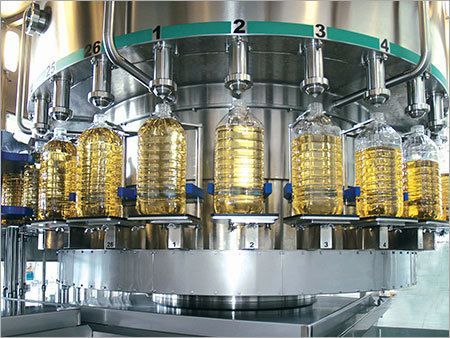
An industrial oil filling machine is generally designed for regular production environments and may include multiple filling heads, automatic container handling, programmable controls, and integrated capping systems.
An edible oil filling machine is designed for products such as sunflower, mustard, groundnut, soybean, and palm oil. A lubricant oil filling machine is configured for products such as engine oil, gear oil, hydraulic oil, and industrial lubricants.
Modern systems range from semi-automatic bottle fillers to fully automated packaging lines that coordinate container feeding, filling, capping, labelling, and inspection.
Importance of Oil Filling Machines
Oil filling machines support organised packaging operations by controlling the quantity transferred into each container.
Important benefits include:
Consistent filling quantities: Measurement systems help maintain repeatable filling levels or quantities.
Reduced spillage: Controlled nozzles and automatic shutoff arrangements help limit product loss.
Improved production capacity: Multiple filling heads can process several containers during each cycle.
Reduced manual handling: Automated transfer and container movement reduce repetitive operator tasks.
Better packaging consistency: Programmable settings support uniform filling across production batches.
Product compatibility: Different configurations can accommodate edible oils and industrial lubricants.
Process monitoring: Electronic controls can record filling quantities, cycle times, and operating conditions.
The appropriate machine depends on oil viscosity, container size, filling accuracy, production volume, product temperature, and packaging requirements.
Types of Oil Filling Machines
Oil filling machines are available in several configurations based on the measurement method, level of automation, oil characteristics, and container format.
Machine type | Main characteristics | Common applications |
|---|---|---|
Manual oil filling machine | Operator controls container positioning and filling | Small-scale packaging |
Semi-automatic oil filling machine | Automated measurement with operator-assisted handling | Medium production |
Automatic oil filling machine | Programmed filling and container movement | Large packaging operations |
Edible oil filling machine | Designed for food-grade oil handling | Cooking and edible oils |
Lubricant oil filling machine | Handles oils with different viscosity ranges | Automotive and industrial lubricants |
Oil bottle filling machine | Configured for bottle-based packaging | Retail and commercial packaging |
20-litre oil filling machine | Designed for cans and containers with a nominal 20-litre capacity | Bulk edible and industrial oil packaging |
Piston filling machine | Uses a piston and cylinder to measure liquid | Oils with suitable viscosity |
Flow-meter filling machine | Measures the volume passing through a filling line | Controlled liquid packaging |
Net-weight filling machine | Uses load cells to measure product mass | Weight-based oil packaging |
Manual and Semi-Automatic Oil Filling Machines
Manual systems require operators to position containers and control several parts of the filling process. Semi-automatic equipment automates the measurement and dispensing stages but may require manual container loading and removal.
These configurations are suitable for smaller production environments or applications with changing container sizes.
Automatic Oil Filling Machines
An automatic oil filling machine coordinates container positioning, filling, and other programmed operations. Depending on its configuration, it may include automatic bottle detection, multiple filling heads, conveyor movement, and electronic quantity controls.
Some systems also connect with capping, labelling, and inspection equipment to form a complete packaging line.
Edible Oil Filling Machines
An edible oil filling machine is designed for food-grade packaging operations. Its product-contact surfaces should use suitable food-contact materials, and the equipment should support hygienic cleaning and handling procedures.
Common applications include filling sunflower oil, mustard oil, groundnut oil, soybean oil, rice bran oil, and other edible oils.
Lubricant Oil Filling Machines
A lubricant oil filling machine handles products such as engine oil, transmission fluid, gear oil, hydraulic oil, and industrial lubricants.
Because lubricant viscosity varies, the pump, nozzle, piping, and filling method must be selected according to the product's flow characteristics and operating temperature.
Oil Bottle Filling Machines
An oil bottle filling machine is designed to fill containers of different shapes and capacities. It may use one or multiple filling heads and can be integrated with bottle feeding, capping, labelling, and inspection units.
20-Litre Oil Filling Machines
A 20 liter oil filling machine is designed for larger containers, including cans and industrial packaging vessels. Depending on the model, it may use a weighing platform, flow meter, or volumetric measurement system.
The machine should accommodate the container dimensions, filling target, product viscosity, and handling arrangement.
Main Features and Components of Oil Filling Machines
An oil filling machine combines liquid-transfer mechanisms, measuring instruments, container-handling equipment, and electronic controls.
Product storage tank: Holds oil before it enters the filling system.
Transfer pump: Moves oil from the supply tank to the filling heads. Pump selection depends on viscosity and flow requirements.
Filling nozzle: Directs oil into the container while controlling splashing and dripping.
Filling heads: Dispense oil into one or more containers during a production cycle.
Flow meter: Measures the volume of oil transferred.
Piston and cylinder assembly: Measures a predetermined liquid quantity in piston-based filling systems.
Load cells: Measure the weight of oil entering a container.
Control panel: Allows operators to select filling quantities, operating modes, and machine settings.
Conveyor system: Moves bottles or cans through the filling station.
Container sensors: Detect container presence and position.
Automatic valves: Control the opening and closing of the oil supply.
Drip collection tray: Collects residual oil from nozzles after filling.
Capping unit: Fits suitable closures onto filled containers in integrated packaging lines.
Safety system: Includes emergency stops, guards, and relevant electrical protections.
Important Features to Consider
Feature | Purpose |
|---|---|
Adjustable filling quantity | Supports different container capacities |
Multiple filling heads | Allows simultaneous filling |
Anti-drip nozzle | Helps reduce oil leakage after dispensing |
Variable-speed pump | Adjusts liquid flow according to product requirements |
Digital control panel | Manages programmed filling settings |
Automatic container detection | Prevents filling when a container is absent or incorrectly positioned |
Easy-clean product pathways | Supports cleaning and product changeovers |
Stainless-steel contact surfaces | Provides suitable corrosion resistance and hygienic design when correctly specified |
Working Principle of Oil Filling Machines
An oil filling machine transfers a controlled quantity of oil from a storage tank into a container. The measurement system determines when the required quantity has been reached and signals the filling valve or pump to stop.
The general process includes:
Oil preparation: The product is checked for suitability, temperature, and required processing conditions.
Container preparation: Bottles, cans, or other containers are inspected and arranged for filling.
Container positioning: The container is placed beneath the filling nozzle or on a weighing platform.
Quantity selection: The operator selects the required filling quantity through the control panel.
Oil transfer: A pump or gravity arrangement moves oil from the supply tank into the filling system.
Measurement: A flow meter, piston mechanism, or load cell measures the transferred quantity.
Flow control: The system adjusts or stops the flow when the target quantity is reached.
Nozzle withdrawal: The filling nozzle moves away from the container.
Capping: A compatible closure is fitted where the packaging line includes a capping unit.
Inspection: Filled containers are checked for quantity, leakage, closure quality, and packaging condition.
The exact sequence varies according to the machine design and whether it uses volumetric, gravimetric, or level-based filling.
Technologies Used in Modern Oil Filling Machines
Volumetric Filling Technology
Volumetric systems dispense a predetermined volume of oil. They may use pistons, flow meters, or other measuring arrangements.
This method is useful when packaging specifications are based on volume. Temperature and product properties should be considered because they can affect measurement accuracy.
Net-Weight Filling Technology
Net-weight systems use load cells to measure the mass of oil entering a container. They are useful when filling quantities are specified by weight.
The weighing system must be installed and calibrated correctly, with suitable arrangements to reduce vibration and other measurement disturbances.
Automatic Filling Controls
Programmable logic controllers (PLCs) manage filling sequences, sensor signals, valve operation, pump controls, and container movement. Stored recipes can help maintain consistent settings across repeated production runs.
Anti-Drip and Nozzle Control
Anti-drip nozzles and controlled valve arrangements help limit residual oil after filling. Some systems use suction-back mechanisms or special nozzle designs to reduce dripping.
Variable-Frequency Drives
Variable-frequency drives (VFDs) regulate motor speed and can adjust pump operation according to the required flow rate. This can support controlled filling, particularly with oils that have higher viscosity.
Automatic Container Handling
Conveyors and container sensors move bottles and cans through the filling station. Integrated systems may also coordinate capping, labelling, and inspection.
Digital Monitoring
Advanced filling systems can record quantities, cycle times, machine alarms, and production information. These records help operators identify filling variations and monitor machine performance.
Applications of Oil Filling Machines
Oil filling equipment is used across food, automotive, manufacturing, and industrial packaging operations.
Edible oil packaging: Filling sunflower, mustard, soybean, groundnut, palm, and rice bran oils.
Automotive lubricants: Packaging engine oils, transmission fluids, and gear oils.
Industrial lubrication: Filling hydraulic oils, compressor oils, turbine oils, and machinery lubricants.
Food processing: Packaging suitable edible oils for household and commercial use.
Agricultural equipment: Filling compatible lubricants used in tractors and agricultural machinery.
Industrial manufacturing: Packaging process oils and specialised industrial liquids.
Bulk packaging: Filling larger cans, drums, and containers for commercial and industrial applications.
Different oil categories require different equipment arrangements. Food-grade applications require suitable hygienic design and materials, while industrial lubricant systems must account for viscosity, chemical compatibility, and operating temperature.
Recent Developments and Industry Trends
Oil filling technology continues to develop through automation, improved measurement systems, digital monitoring, and better packaging-line integration.
Increased Automation
Modern filling lines increasingly use PLC-based controls, automatic container detection, multiple filling heads, and programmed filling quantities. These systems help coordinate production operations and reduce repetitive manual adjustments.
Improved Filling Accuracy
Electronic flow meters, precision piston systems, and load-cell technology help control the quantity entering each container. Automatic gravimetric filling instruments are addressed by OIML Recommendation R 61:2017, which provides technical and metrological requirements for this equipment.
Better Handling of High-Viscosity Oils
Pump and nozzle designs are being adapted for oils with different flow characteristics. Variable-speed control and temperature management can help maintain a suitable filling rate for thicker lubricants.
Integrated Packaging Lines
Filling machines can be connected with bottle unscramblers, conveyors, capping units, labelling equipment, and inspection systems. This creates a coordinated packaging process from empty-container handling to finished packaging.
Digital Production Monitoring
Connected systems can record filling quantities, production counts, operating time, and machine alarms. These records help identify recurring problems and support production planning.
Improved Material and Hygiene Design
Food-grade filling equipment increasingly focuses on cleanable product-contact surfaces, suitable seals, hygienic pipe arrangements, and controlled cleaning procedures. Material selection should follow the relevant food-contact requirements and product characteristics.
Laws, Policies, and Safety Standards in India
Oil filling operations in India may be subject to food safety requirements, legal metrology rules, workplace safety provisions, and environmental regulations. The applicable requirements depend on whether the machine handles edible oil or industrial lubricant.
Food Safety and Standards Act, 2006
The Food Safety and Standards Act, 2006 provides the framework for food safety in India. Edible oil packaging operations must comply with applicable requirements concerning food hygiene, handling, packaging, and product quality.
The Food Safety and Standards (Licensing and Registration of Food Businesses) Regulations, 2011 establish licensing and registration requirements for covered food businesses. Edible oil processing and packaging facilities should identify the appropriate requirements for their activities.
Legal Metrology (Packaged Commodities) Rules, 2011
The Legal Metrology (Packaged Commodities) Rules, 2011 establish declarations and quantity-related requirements for covered pre-packaged commodities. Oil packaging operations should ensure that declared net quantities and other mandatory package information are accurate and comply with applicable provisions.
Occupational Safety, Health and Working Conditions Code, 2020
The Occupational Safety, Health and Working Conditions Code, 2020 came into effect on 21 November 2025. It establishes workplace safety and health requirements for covered establishments. Oil filling facilities should assess risks involving moving machinery, electrical equipment, slippery floors, manual handling, and contact with hot or hazardous materials.
Machinery and Electrical Equipment Safety
Applicable machinery safety requirements should be checked according to the machine category, intended use, and relevant Indian standards. Guards, emergency stops, electrical protection, safe access, and maintenance procedures are important considerations.
Environmental Requirements
Industrial facilities should follow applicable requirements for wastewater, oil residues, used containers, and other process waste. Where required, consent from the relevant State Pollution Control Board or Pollution Control Committee should be obtained.
Practical Safety Measures
Keep filling stations clean and free from oil spills.
Use suitable guards around moving machine parts.
Provide emergency-stop controls at accessible locations.
Ensure electrical connections and earthing are appropriate.
Use compatible hoses, seals, and product-contact materials.
Provide suitable spill collection and containment.
Train operators in machine setup, cleaning, and shutdown.
Follow manufacturer instructions for inspection and maintenance.
Regulatory requirements may differ between edible oil packaging and industrial lubricant filling. Facilities should verify current rules and applicable standards before starting operations.
Best Practices for Operating Oil Filling Machines
Correct setup and routine maintenance help maintain filling accuracy, reduce spills, and support consistent packaging quality.
Before Starting Production
Inspect the storage tank, pipes, hoses, and filling nozzles.
Confirm that the machine materials are compatible with the oil.
Check the filling quantity and selected operating mode.
Verify flow-meter or weighing-system readings.
Inspect containers for damage and cleanliness.
Check pump operation and nozzle alignment.
Confirm that emergency stops and safety guards are functional.
During Filling Operations
Maintain a suitable filling speed for the oil viscosity.
Monitor filling quantities and container positioning.
Avoid splashing, foaming, and nozzle dripping.
Check for leakage around valves and pipe connections.
Keep the conveyor and filling area clear.
Stop the machine if unusual vibration, noise, or measurement errors occur.
After Production
Close the oil supply according to the shutdown procedure.
Remove residual oil from the filling nozzles.
Clean product-contact surfaces using the approved procedure.
Inspect filled containers for leakage and closure quality.
Record production quantities and operating conditions.
Store oils and packaging materials under appropriate conditions.
Routine Maintenance
Component | Maintenance activity |
|---|---|
Transfer pump | Inspect seals, flow, and vibration |
Filling nozzles | Clean and check for dripping |
Flow meter | Verify readings and calibration |
Load cells | Check weighing accuracy |
Valves | Inspect opening, closing, and sealing |
Hoses and pipes | Check for leakage, wear, and damage |
Conveyor | Inspect alignment and movement |
Control panel | Check sensors, alarms, and connections |
Storage tank | Inspect cleanliness and connections |
Safety systems | Test guards and emergency stops |
Maintenance intervals should follow the manufacturer's instructions and actual operating conditions.
Tools and Resources for Oil Filling Operations
Tool or resource | Main purpose |
|---|---|
Digital weighing scale | Checks filled container mass |
Flow meter | Measures oil volume |
Calibration weights | Supports weighing-system verification |
Temperature sensor | Monitors oil temperature |
Viscosity measuring instrument | Evaluates oil flow characteristics |
pH meter | Used for selected liquid quality checks |
Filling machine manual | Provides operating and maintenance instructions |
Food-contact material guidance | Supports edible oil equipment selection |
Legal Metrology resources | Helps understand packaged quantity requirements |
Preventive maintenance checklist | Organises equipment inspections |
Frequently Asked Questions
1. What is an oil filling machine?
An oil filling machine is equipment used to measure and dispense oil into bottles, cans, jars, and larger containers. It can use volumetric, weight-based, or other measurement systems to control the filling quantity.
2. What is the difference between an edible oil filling machine and a lubricant oil filling machine?
An edible oil filling machine is designed for food-grade handling and hygienic packaging. A lubricant oil filling machine is designed for industrial oils with different viscosity and chemical characteristics. Their product-contact materials and cleaning arrangements may differ.
3. How does an automatic oil filling machine work?
An automatic oil filling machine positions containers, measures the required quantity, and controls the flow through filling nozzles. Depending on its configuration, it may also coordinate conveyor movement, capping, and labelling.
4. What is a 20-litre oil filling machine used for?
A 20-litre oil filling machine is used to fill larger cans and containers with edible oils or industrial lubricants. It may use load cells, flow meters, or volumetric systems to control the filling quantity.
5. What factors should be considered when selecting an oil filling machine?
Important factors include oil viscosity, container capacity, filling accuracy, production volume, measurement technology, number of filling heads, product-contact materials, cleaning requirements, and automation features.
Conclusion
Oil filling machines play an important role in edible oil packaging, lubricant production, and industrial liquid handling. Different machine configurations support bottles, cans, and larger containers, while automated controls help maintain repeatable filling quantities.
Modern systems combine pumps, filling nozzles, flow meters, load cells, conveyors, and programmable controls. The right configuration depends on the oil's properties, packaging format, required output, and applicable safety and hygiene conditions.
Understanding machine types, components, working principles, measurement technologies, and maintenance practices helps manufacturers manage filling operations effectively. Appropriate equipment selection and compliance with Indian food safety, legal metrology, and workplace requirements are also essential.
Disclaimer: This article is intended for general educational and informational purposes only. Machine specifications, filling accuracy, product compatibility, food safety requirements, and regulatory obligations may vary according to equipment and application. Consult the machine manufacturer, relevant authorities, and qualified technical professionals before making operational or compliance decisions. This content does not guarantee any particular result and is not intended to sell or promote any product, brand, or organisation.

Related Post...
Oil Filling Machines: Explore Types, Features, Applications, and Useful Resources
Updated: November 17, 2026
Read More
Combine Harvester Machines: Explore Overview, Basics, Explanation, Knowledge, and Key Details
Updated: November 17, 2026
Read More
Sand Washing Machines: Explore Guide, Tips, Insights, Advice, and Expert Suggestions
Updated: November 17, 2026
Read More