Roll Forming Machines: Complete Guide to Basics, Technologies, Processes, Facts, and Best Practices
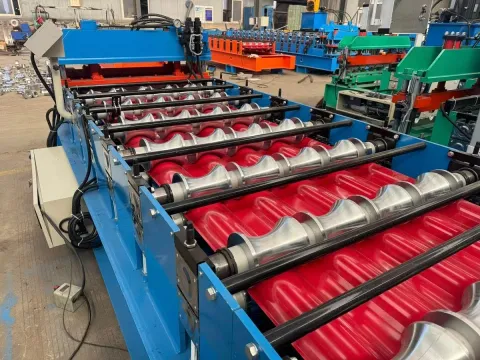
A roll forming machine is industrial equipment used to shape flat metal strips or sheets into specific profiles by passing them through a sequence of rotating rollers. Each roller station gradually bends the material until it reaches the required cross-sectional shape. The process is widely used to manufacture components with consistent dimensions and long, continuous profiles.
An industrial roll forming machine is commonly used in metal fabrication, construction, automotive manufacturing, electrical equipment, storage systems, and infrastructure projects. A sheet metal roll forming machine can produce profiles such as channels, angles, roofing sheets, wall panels, and structural sections.
A steel roll forming machine is designed to process suitable grades of steel, while a cold roll forming machine shapes metal at or near room temperature rather than heating it for forming. An automatic roll forming machine coordinates feeding, forming, cutting, and material handling through automated controls. A CNC roll forming machine uses computer-based control to manage selected machine movements and production parameters.
Roll forming is particularly useful when manufacturers need long components with repeatable cross-sections. The final profile, however, depends on material properties, roller design, forming sequence, machine settings, and process control.
Importance of Roll Forming Machines
Roll forming machines are important because they support continuous production of metal profiles with consistent shapes and dimensions.
Key advantages include:
Consistent profiles: Multiple roller stations gradually shape material into a repeatable cross-section.
Continuous production: Long metal sections can be formed from coils or continuous strips.
Material utilisation: Properly designed tooling can reduce scrap compared with some alternative forming methods.
Complex cross-sections: Machines can produce channels, ribs, bends, and other profile features.
Production automation: Automated feeding and cutting can reduce manual handling.
Dimensional repeatability: Controlled roller arrangements help maintain profile consistency.
Wide material applications: Suitable configurations can process different grades and thicknesses of steel, aluminium, and other formable metals.
The actual production rate, dimensional accuracy, and material utilisation depend on the machine configuration, material properties, profile geometry, and operating conditions.
Types of Roll Forming Machines
Roll forming equipment can be classified by its forming arrangement, material, automation level, and the type of profile being produced.
Machine type | Main characteristics | Common applications |
|---|---|---|
Industrial roll forming machine | Designed for continuous production and heavy-duty operation | Structural sections and industrial profiles |
Automatic roll forming machine | Integrates feeding, forming, cutting, and control functions | High-volume manufacturing |
Sheet metal roll forming machine | Shapes thin or medium-thickness sheet metal | Roofing, cladding, channels, and panels |
Steel roll forming machine | Processes suitable steel grades and coated steel strips | Purlins, studs, frames, and supports |
Cold roll forming machine | Forms metal at or near room temperature | Construction and automotive components |
CNC roll forming machine | Uses computer-based control for selected forming and positioning operations | Precision profiles and programmable production |
Flexible roll forming machine | Adjusts forming positions to create varying profile geometries | Components with changing cross-sections |
Tube and pipe roll forming line | Forms strip into a tubular shape, followed by seam joining | Metal tubes and pipes |
Industrial Roll Forming Machines
An industrial roll forming machine generally includes a coil-handling system, multiple forming stations, a cutting unit, and a discharge arrangement. It is designed around a specific range of material thicknesses, widths, profile shapes, and production requirements.
Some lines also integrate punching, notching, embossing, and other operations before or after the main forming stages.
Sheet Metal and Steel Roll Forming Machines
A sheet metal roll forming machine gradually bends flat metal into a continuous profile. Steel roll forming machines commonly process low-carbon steel, galvanised steel, and other suitable steel grades.
Aluminium, copper, brass, and other ductile metals can also be processed when the tooling and machine configuration are appropriate.
Cold Roll Forming Machines
Cold roll forming shapes metal without heating it to a hot-forming temperature. The material passes through successive roller stations, with each station introducing a controlled amount of bending.
This method is widely used for long components with uniform cross-sections. Material springback and work hardening must be considered during tooling design and machine setup.
CNC and Automatic Roll Forming Machines
A CNC roll forming machine uses programmed control for selected machine functions, such as roller positioning, feed length, cutting sequence, or profile changeover. An automatic roll forming machine may use a programmable logic controller (PLC), sensors, and a human-machine interface (HMI) to coordinate the production line.
Automation levels vary. Not every automatic machine uses CNC-controlled roller positioning, and not every CNC system changes the physical roll tooling automatically.
Main Components of a Roll Forming Machine
A roll forming production line contains several connected sections.
Uncoiler: Holds the metal coil and releases the strip into the production line.
Entry guide: Aligns the strip before it reaches the forming stations.
Straightening unit: Reduces coil curvature and helps prepare flat material for forming.
Feeding system: Controls the movement of the strip through the machine.
Roller stations: Hold the upper and lower rollers that gradually shape the material.
Roll shafts and bearings: Support the rollers and allow controlled rotation.
Drive system: Uses motors, gears, and transmissions to operate the rollers.
Cutting unit: Cuts the formed profile to the required length.
Hydraulic or pneumatic system: Operates selected cutting, clamping, or positioning functions.
Control panel: Allows operators to set parameters and monitor machine operation.
Safety guards: Protect operators from accessible moving and rotating parts.
Run-out table: Supports and guides the finished profiles after cutting.
The number of roller stations depends on profile complexity. Simple shapes may require relatively few stands, while complex profiles can require many more.
Working Principle and Manufacturing Process
Roll forming works through progressive bending. Rather than producing the complete profile in one press operation, the machine distributes the deformation across multiple roller stations.
The typical production sequence is:
Coil loading: A metal coil is placed on the uncoiler and secured according to the equipment instructions.
Strip preparation: The strip passes through guides and, where required, a straightening unit.
Material feeding: The feeding mechanism moves the strip towards the first roller station.
Progressive forming: Each pair of rollers introduces a controlled bend. The cross-section gradually approaches its final shape.
Profile calibration: Later roller stations help achieve the required dimensions and shape.
Additional operations: Punching, embossing, notching, or other specified operations may be integrated into the line.
Cutting: A fixed or flying cutting system separates the profile at the programmed length.
Discharge: Finished sections move onto a run-out table or collection system.
Quality inspection: Operators check dimensions, surface condition, straightness, and other specified characteristics.
The metal thickness generally remains approximately constant because the process primarily involves bending rather than bulk compression. However, local thinning, stretching, or distortion can occur if the tooling or process is poorly designed.
Technologies Used in Modern Roll Forming Machines
Servo-Driven Systems
Servo motors provide controlled movement and positioning. They can be used in feed systems, cutting units, and adjustable tooling arrangements where accurate motion control is required.
PLC and HMI Controls
PLC systems coordinate machine functions, while an HMI allows operators to enter production settings, view machine status, and respond to alarms.
Flying Cut-Off Technology
A flying cut-off system moves with the continuously advancing profile during cutting. This can reduce the need to stop the forming line for each cut.
Flexible Roll Forming
Flexible roll forming uses adjustable tooling or roller positions to produce profiles with changing dimensions or cross-sections. It can support product designs that are difficult to manufacture using fixed tooling alone.
Computer-Aided Design and Simulation
CAD software is used to develop profile geometry and roller designs. Finite element analysis (FEA) can help engineers examine material deformation, stress distribution, springback, and possible forming defects before production trials.
Inline Quality Monitoring
Sensors and measurement systems can monitor strip position, feed length, profile dimensions, and selected machine conditions. Laser-based measurement may be used in some advanced lines to inspect profile geometry during production.
Applications of Roll Forming Machines
Roll forming machines are used across industries that require long metal components with repeatable cross-sections.
Construction: Roofing sheets, wall panels, purlins, ceiling channels, steel studs, and structural supports.
Automotive manufacturing: Reinforcement sections, door beams, seat structures, and selected body components.
Electrical equipment: Cable trays, electrical enclosures, mounting channels, and support rails.
Storage systems: Warehouse racks, shelving uprights, and storage-frame components.
Agricultural equipment: Structural frames, equipment panels, and protective covers.
Transportation: Rail-related sections, vehicle structures, and trailer components.
Appliance manufacturing: Frames, panels, supports, and internal structural parts.
Solar infrastructure: Mounting rails, support channels, and selected structural sections.
The final application determines the required metal grade, thickness, profile dimensions, surface finish, and dimensional tolerances.
Recent Developments and Industry Trends
Roll forming technology is evolving through flexible tooling, digital engineering, improved process monitoring, and advanced automation.
Flexible Roll Forming
Research published in 2025 in the Journal of Mechanical Engineering reviewed developments in flexible roll forming, hot roll forming, intelligent manufacturing, and advanced equipment. Flexible forming is particularly relevant to components whose cross-sections change along their length.
Digital Simulation and Process Design
CAD and FEA tools are increasingly used to study roller geometry, material deformation, springback, and forming defects. These methods can help engineers refine the forming sequence before manufacturing physical tooling.
Advanced Automation
Modern production lines can combine automatic coil feeding, programmable cutting, servo-driven movement, and PLC-based controls. These systems help coordinate production stages and reduce manual adjustments.
Real-Time Quality Monitoring
Sensors, laser measurement systems, and digital monitoring tools can identify dimensional variations and machine abnormalities. Inline inspection is particularly useful when profiles must maintain consistent dimensions over long production runs.
Energy and Material Efficiency
Improved drive systems, suitable roller designs, and accurate process settings can help reduce unnecessary energy use and material waste. The results depend on the machine design, production schedule, and material characteristics.
Laws, Policies, and Standards in India
Roll forming machine operations in India may involve workplace safety requirements, electrical safety, equipment design, and standards for the finished steel components. The applicable requirements depend on the factory, machine configuration, and intended product.
Occupational Safety, Health and Working Conditions Code, 2020
The Occupational Safety, Health and Working Conditions Code, 2020 became effective on 21 November 2025. It establishes workplace safety and health obligations for covered establishments. Roll forming facilities should assess hazards involving rotating rollers, coil movement, cutting equipment, electrical systems, noise, and material handling.
Duties of Employers and Equipment Manufacturers
The Code addresses workplace safety responsibilities and duties relating to articles used in establishments. Machine designers and manufacturers should consider safe construction, appropriate testing, operating information, and foreseeable risks. Employers should maintain suitable safeguards, safe operating procedures, and worker training.
BIS IS 801:1975
IS 801:1975 is the Code of Practice for Use of Cold-Formed Light Gauge Steel Structural Members in General Building Construction. It is relevant to the structural design and use of certain cold-formed steel sections produced through processes such as roll forming. It is not a general machine-safety standard for roll forming equipment.
BIS Structural Steel Standards
BIS standards cover steel materials, structural design, dimensions, and related engineering requirements. IS 800:2007 addresses general construction in steel, while relevant material standards should be selected according to the steel grade and intended application. The finished roll-formed section should meet the requirements applicable to its structural or industrial use.
Factory and Electrical Safety Requirements
Facilities should review applicable central and state rules, electrical safety requirements, fire precautions, and environmental permissions. Particular attention should be given to machine guarding, emergency stops, safe coil loading, isolation during maintenance, and protection against unexpected machine movement.
Regulatory requirements can vary according to the establishment and location. Current notifications and applicable state rules should be checked before commissioning or modifying a production line.
Best Practices for Operating Roll Forming Machines
Before Production
Verify the metal grade, thickness, width, and coil specifications.
Check that the roller tooling matches the intended profile.
Inspect roller surfaces, shafts, bearings, and drive components.
Confirm that guides and straightening equipment are correctly adjusted.
Check cutting tools and measurement systems.
Test safety guards and emergency-stop arrangements.
Review the approved setup and operating instructions.
During Production
Maintain consistent strip alignment and feeding.
Monitor roller movement and machine vibration.
Check for edge wave, twisting, bowing, and surface marks.
Avoid sudden changes to machine settings.
Monitor cut length and profile dimensions.
Keep hands and tools away from moving rollers and feeding areas.
Stop the machine safely if abnormal noise, jamming, or unexpected movement occurs.
Maintenance and Inspection
Component | Recommended maintenance activity |
|---|---|
Rollers | Inspect forming surfaces for wear and damage |
Bearings | Check lubrication, temperature, and movement |
Gearbox | Inspect lubricant condition and unusual noise |
Drive motor | Monitor temperature and vibration |
Uncoiler | Check coil support, brakes, and alignment |
Hydraulic system | Inspect hoses, connections, and fluid condition |
Cutting unit | Check blade condition and cutting accuracy |
Sensors | Verify alignment and signal operation |
Control panel | Inspect connections, alarms, and control functions |
Safety guards | Check condition, positioning, and interlocks |
Maintenance intervals should follow the equipment manual and actual operating conditions. Before cleaning, adjustment, or repair, isolate the machine from its energy sources and follow the facility's lockout and isolation procedures.
Tools and Resources for Roll Forming Operations
Tool or resource | Main purpose |
|---|---|
Vernier caliper | Measures profile dimensions |
Micrometer | Measures sheet and section thickness |
Steel measuring tape | Checks profile length |
Profile gauge | Examines cross-sectional geometry |
CAD software | Develops profile and roller designs |
FEA software | Studies deformation and forming behaviour |
Laser measurement system | Checks selected profile dimensions |
Vibration analyser | Monitors machine vibration |
Electrical testing instruments | Checks selected electrical parameters |
Maintenance checklist | Records inspections and maintenance activities |
Useful technical references include BIS standards, NPTEL manufacturing-process learning material, equipment manuals, engineering drawings, and material test certificates.
Frequently Asked Questions
1. What is a roll forming machine used for?
A roll forming machine is used to convert flat metal strips or sheets into continuous profiles through progressive bending. Common products include roofing sheets, channels, purlins, studs, cable trays, and structural sections.
2. What is the difference between cold roll forming and hot roll forming?
Cold roll forming shapes metal at or near room temperature through successive roller stations. Hot roll forming uses heated material to make certain forming operations easier or to achieve specific material and geometric requirements. The appropriate method depends on the metal, profile, and production process.
3. Which materials can a roll forming machine process?
Suitable materials include low-carbon steel, galvanised steel, aluminium, copper, brass, and other ductile metals. Material selection depends on thickness, mechanical properties, surface condition, and tooling design.
4. What is the role of CNC in a roll forming machine?
CNC provides programmable control over selected machine functions, including feed positioning, cutting length, roller adjustment, and production sequences. The available functions depend on the machine's design and control system.
5. What factors affect roll forming accuracy?
Accuracy is influenced by material thickness, hardness, yield strength, springback, roller geometry, tooling wear, machine alignment, and setup adjustments. Regular measurement and process monitoring help maintain profile consistency.
Conclusion
Roll forming machines are important in modern metal fabrication because they produce long, consistent profiles through progressive bending. Industrial, automatic, sheet metal, steel, cold roll forming, and CNC configurations support different production requirements across construction, automotive, electrical, transportation, and infrastructure applications.
Developments in flexible forming, servo control, digital simulation, and inline inspection are expanding the capabilities of modern equipment. Careful machine selection, accurate tooling design, suitable material preparation, routine maintenance, and workplace safety practices are essential for reliable production.
Disclaimer: This article is intended for general educational and informational purposes only. Machine specifications, operating procedures, material suitability, and regulatory requirements may vary according to equipment design and application. Consult qualified engineering professionals, equipment documentation, and relevant authorities before making technical or compliance decisions. This content does not guarantee any particular result and is not intended to sell or promote any product, brand, or organisation.

Related Post...
Rebar Cutting Machines: Explore Overview, Basics, Explanation, Knowledge, and Key Details
Updated: November 17, 2026
Read More
Sand Washing Machines: Explore Guide, Tips, Insights, Advice, and Expert Suggestions
Updated: November 17, 2026
Read More