CNC Milling Machines: Complete Guide to Basics, Techniques, Facts, Knowledge, and Best Practices
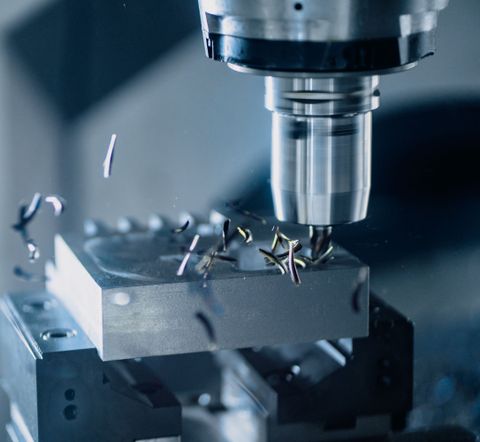
CNC milling machines are computer-controlled machine tools used to remove material from a workpiece and create precise shapes, holes, slots, contours, and surfaces. CNC stands for Computer Numerical Control, meaning programmed instructions control the movement of the machine and cutting tool.
Unlike basic manual milling, CNC systems can coordinate several axes automatically. This makes them suitable for producing repeatable components with complex geometries.
The broader category of CNC milling machines includes vertical mills, horizontal mills, machining centers, and multi-axis systems.
A typical CNC milling process involves:
Digital design → Toolpath creation → Program preparation → Workpiece setup → Tool installation → Machining → Inspection
These machines can process materials such as aluminum, steel, stainless steel, brass, plastics, and certain composite materials, depending on the machine configuration and cutting tools.
Why CNC Milling Matters Today
Modern manufacturing requires components with consistent dimensions and repeatable production characteristics. CNC milling helps manufacturers produce complex parts while controlling tool movement through programmed instructions.
An industrial CNC milling machine can be used in sectors such as:
Automotive manufacturing
Aerospace
Defence
Electronics
Medical-device manufacturing
Railways
Industrial equipment
Tool and die production
General engineering
Research and prototyping
CNC systems can also reduce dependence on repetitive manual machine movements. Operators can instead focus on setup, tooling, programming, inspection, maintenance, and process monitoring.
India's machine-tool industry is becoming increasingly important to the country's manufacturing ecosystem. IBEF reported in September 2026 that domestic machine-tool consumption exceeded ₹35,000 crore in FY26, while machine-tool production turnover reached approximately ₹16,478 crore.
Main Types of CNC Milling Machines
Different machine configurations are designed for different machining requirements.
| Machine Type | Main Characteristic | Typical Applications |
|---|---|---|
| Vertical CNC milling machine | Spindle oriented vertically | General machining and component production |
| Horizontal CNC milling machine | Spindle oriented horizontally | Deep cuts and larger workpieces |
| CNC machining center | Automated machining with multiple functions | Complex and repeatable production |
| 3-axis CNC mill | X, Y and Z movement | General components and simpler geometries |
| 4-axis CNC mill | Adds rotary movement | Components requiring additional angular access |
| 5-axis CNC milling machine | Multiple coordinated axes | Complex aerospace, medical and precision components |
| Gantry mill | Large structural frame | Large workpieces |
| Compact CNC mill | Smaller machine envelope | Prototyping and limited-space applications |
The choice between vertical and horizontal configurations depends on workpiece dimensions, cutting requirements, tool access, chip evacuation, and production workflow.
Vertical and Horizontal CNC Milling
A vertical CNC milling machine has its primary spindle oriented vertically. This configuration is widely used because it provides straightforward access to the workpiece and supports many general-purpose machining operations.
Typical operations include:
Face milling
Slot cutting
Pocketing
Drilling
Threading
Contouring
A horizontal CNC milling machine positions the spindle horizontally. This arrangement can be advantageous when machining certain larger workpieces or when chip evacuation and side cutting are important.
Neither configuration is universally better. The appropriate design depends on the component geometry and production requirements.
What Is a CNC Machining Center?
A CNC machining center is a more integrated type of CNC machine that can perform several machining operations in a coordinated setup.
Many machining centers incorporate:
Automatic tool changers
Programmable spindle speeds
Coolant systems
Enclosed work areas
Automatic workpiece positioning
CNC control systems
Tool monitoring
Multiple machining axes
The ability to perform several operations without repeatedly repositioning the workpiece can improve process consistency.
Some machining centers are designed around vertical spindles, while others use horizontal arrangements. Multi-axis machining centers provide additional movement for complex components.
Understanding the CNC Milling Process
The CNC milling process starts before the machine begins cutting.
The main stages are:
1. CAD design
A digital model defines the geometry of the component.
2. CAM programming
Computer-aided manufacturing software converts the geometry into toolpaths and machine instructions.
3. Tool selection
The appropriate cutter is selected according to material, geometry, surface requirements, and machining conditions.
4. Workholding
The workpiece is secured using a vise, fixture, chuck, clamps, or another suitable system.
5. Machine setup
The operator establishes work coordinates, tool offsets, spindle settings, and other parameters.
6. Machining
The cutting tool removes material according to the programmed path.
7. Inspection
The completed component is measured to determine whether it meets the required dimensional and geometric specifications.
This workflow illustrates why CNC machining involves much more than simply pressing a start button. Programming, tooling, workholding, measurement, and process control all affect the final result.
CNC Metal Cutting and Tool Selection
CNC metal cutting depends on the interaction between the cutting tool, workpiece, spindle, feed movement, and machine structure.
Common cutting-tool materials include:
High-speed steel
Carbide
Ceramic
Cubic boron nitride
Diamond-based cutting materials for suitable applications
Carbide tooling is widely used for many industrial machining applications because of its hardness and ability to operate at relatively high cutting conditions.
Important machining variables include:
Cutting speed
Spindle speed
Feed rate
Depth of cut
Tool diameter
Number of cutting edges
Material hardness
Coolant or lubrication conditions
These parameters must be selected according to the machine, material, tool geometry, and manufacturer's technical recommendations.
Understanding 5-Axis CNC Milling
A 5 axis CNC milling machine can coordinate five axes of movement, allowing the cutting tool to approach a component from multiple directions.
This can be particularly useful for:
Complex aerospace components
Turbine-related components
Medical components
Moulds and dies
Sculpted surfaces
Complex mechanical parts
A major advantage of five-axis machining is improved access to difficult surfaces. In suitable applications, this can reduce the number of separate setups required.
However, five-axis machining also introduces greater programming complexity. Tool orientation, collision avoidance, machine kinematics, workholding, and post-processing become especially important.
Important CNC Machine Tools and Equipment
The wider category of CNC machine tools includes more than milling machines.
| Machine Tool | Main Function |
|---|---|
| CNC mill | Milling and material removal |
| CNC lathe | Turning cylindrical components |
| CNC grinder | Precision surface finishing |
| CNC drilling machine | Hole production |
| CNC machining center | Multiple machining operations |
| CNC EDM | Electrical-discharge machining |
| CNC router | Cutting suitable non-metallic materials |
| CNC turning center | Advanced turning operations |
Supporting CNC milling equipment can include toolholders, fixtures, probes, coolant systems, chip conveyors, measuring equipment, compressors, and automated material-handling systems.
Recent Developments in CNC Manufacturing
The Indian machine-tool sector has been experiencing increased attention toward automation, precision manufacturing, robotics, and Industry 4.0 technologies.
A September 2026 industry analysis reported that Indian machine-tool production reached approximately ₹16,478 crore during FY26 and highlighted the growing use of CNC machines, robotics, automation, and digital manufacturing technologies.
IBEF also reported that India's machine-tools market was valued at approximately ₹164.70 billion in 2025 and is projected to reach ₹315.90 billion by 2034. The organization identified increasing automation and manufacturing quality requirements as important market drivers.
Current CNC development is increasingly connected with:
Automated tool management
Robotic loading and unloading
Digital production monitoring
In-process measurement
Tool-condition monitoring
Machine connectivity
Predictive maintenance
Energy monitoring
Digital twins
Advanced simulation
These technologies are gradually moving CNC machining toward more connected manufacturing environments.
CNC Milling Safety
CNC milling involves rotating tools, high-speed movement, sharp cutting edges, metal chips, coolant, electrical systems, and heavy workpieces. Proper safety procedures are therefore essential.
Important practices include:
Keep machine guards and doors in place.
Follow the machine manufacturer's operating instructions.
Secure the workpiece correctly.
Verify tool and work offsets.
Check the programmed toolpath before machining.
Keep hands away from moving components.
Use appropriate eye and personal protective equipment.
Remove chips using appropriate tools rather than bare hands.
Follow coolant-handling procedures.
Stop the machine before performing maintenance.
Maintain clear access around the machine.
BIS emphasizes that machine tools such as milling machines and CNC systems present inherent hazards and require standardized safety practices.
Laws, Standards, and Policies in India
India has established safety requirements and standards relevant to machine tools.
The Ministry of Heavy Industries' Machinery and Electrical Equipment Safety (Omnibus Technical Regulation) Order, 2024 covers various categories of machinery. The listed metal-cutting machine category includes equipment under HS headings 8456 to 8461 and 846693.
The applicable Indian standards include IS 17253 (Part 1):2019 / ISO 16090-1:2017, covering safety requirements for machining centres, milling machines, and transfer machines.
BIS also provides specific Scheme-X certification guidance for metal-cutting machines. The guidance addresses technical-file requirements, machine grouping, labeling and marking, and certification scope.
BIS's current Scheme-X information, updated in April 2026, continues to list safety certification guidance for metal-cutting machinery.
These requirements are important for manufacturers, importers, industrial users, and organizations involved in machinery compliance.
The exact applicability of a particular standard or certification requirement depends on the machine category, date of manufacture or import, regulatory notification, and other relevant conditions. Businesses should verify the latest official requirements rather than relying on older technical documentation.
Tools and Useful Resources
Several resources can help people understand and manage CNC milling operations.
CAD software: Used to create two-dimensional drawings and three-dimensional component models.
CAM software: Converts digital designs into toolpaths and CNC machine instructions.
CNC simulation software: Helps visualize tool movement and identify potential collisions or machining problems before production.
Tool-selection charts: Useful for matching cutter geometry and material with the workpiece.
Cutting-parameter calculators: Can help estimate spindle speed, feed rate, chip load, and material-removal conditions. Manufacturer recommendations should remain the primary reference.
Coordinate measuring equipment: Used to verify dimensional accuracy after machining.
BIS standards database: Useful for researching Indian machine-tool safety and accuracy standards. BIS also maintains a compendium covering Indian Standards for CNC/NC machine tools, including geometric and positioning accuracy tests.
CMTI resources: The Central Manufacturing Technology Institute supports research, development, and advanced manufacturing capabilities in India.
Best Practices for CNC Milling
Good CNC milling practice combines programming, tooling, workholding, machine setup, inspection, and safety.
Recommended practices include:
Verify the engineering drawing before programming.
Select tools appropriate for the workpiece material.
Check tool condition before machining.
Use rigid and suitable workholding.
Verify work and tool offsets.
Simulate complex toolpaths.
Conduct a controlled first run.
Monitor cutting conditions.
Inspect critical dimensions during production.
Maintain machine cleanliness.
Follow lubrication and maintenance schedules.
Keep CNC programs documented and controlled.
Record recurring machining problems for process improvement.
For five-axis machining, additional attention should be given to machine kinematics, tool orientation, collision avoidance, and post-processor verification.
Frequently Asked Questions
What is a CNC milling machine?
A CNC milling machine is a computer-controlled machine tool that removes material from a workpiece using rotating cutting tools. Programmed movements control the tool and workpiece to produce specified shapes and dimensions.
What is the difference between vertical and horizontal CNC milling machines?
A vertical CNC milling machine has a vertically oriented spindle, while a horizontal CNC milling machine has a horizontally oriented spindle. The appropriate configuration depends on the workpiece, machining operation, tool access, and production requirements.
What is a 5 axis CNC milling machine used for?
Five-axis machines are useful for components with complex surfaces or features that require tool access from multiple directions. They are commonly associated with demanding applications in aerospace, medical manufacturing, mould making, and precision engineering.
What is a CNC machining center?
A CNC machining center is an automated machine capable of performing multiple machining operations, often with an automatic tool changer and programmable control. Machining centers can be configured with vertical, horizontal, or multi-axis arrangements.
Are CNC milling machines subject to safety standards in India?
Yes. Indian regulations and standards address safety requirements for categories of metal-cutting machinery, including machining centres and milling machines. The applicable requirements depend on the machine category and current regulatory framework.
Conclusion
CNC milling machines are an important part of modern manufacturing because they provide computer-controlled material removal with repeatable and programmable movements. They are used across automotive, aerospace, defence, electronics, medical, railway, and general engineering applications.
The technology ranges from three-axis vertical machines to sophisticated 5 axis CNC milling machines and integrated machining centers. Choosing an appropriate configuration requires consideration of component geometry, material, tooling, workholding, production requirements, accuracy, and operator safety.
India's machine-tool sector is also undergoing modernization. Recent industry data points to growing domestic consumption and increasing adoption of CNC, robotics, automation, and digital manufacturing technologies.
Safety and regulatory compliance remain equally important. Indian standards and the machinery-safety framework provide requirements and guidance for metal-cutting equipment, including milling machines and machining centers.
Understanding the CNC milling process, machine configurations, tooling, programming, inspection, and safety practices provides a useful foundation for anyone studying modern machining and industrial manufacturing.
Disclaimer: This article is provided for general informational and educational purposes only. It does not constitute engineering, legal, regulatory, safety, financial, or professional advice. No specific machine, manufacturer, product, or technology is being endorsed, sold, or promoted. Technical specifications, standards, regulations, and compliance requirements can change, so readers should verify current information with the relevant manufacturer, qualified professional, or official government and standards authority before making technical or operational decisions.

Related Post...
CNC Machine Rentals: Complete Guide to Basics, Types, Facts, Knowledge, and Best Practices
Updated: October 21, 2026
Read More
Heavy Construction Machinery: Explore Types, Features, Insights, Suggestions, and Useful Resources
Updated: October 22, 2026
Read More