Disposable Plate Making Machines: Explore Guide, Tips, Insights, Advice, and Expert Suggestions
Disposable plate making machines are industrial and semi-automatic systems designed to shape flat material into plates, bowls, trays, and related disposable tableware.
The machines are commonly associated with paper-based products, although different equipment configurations can work with various materials and coated paper structures.
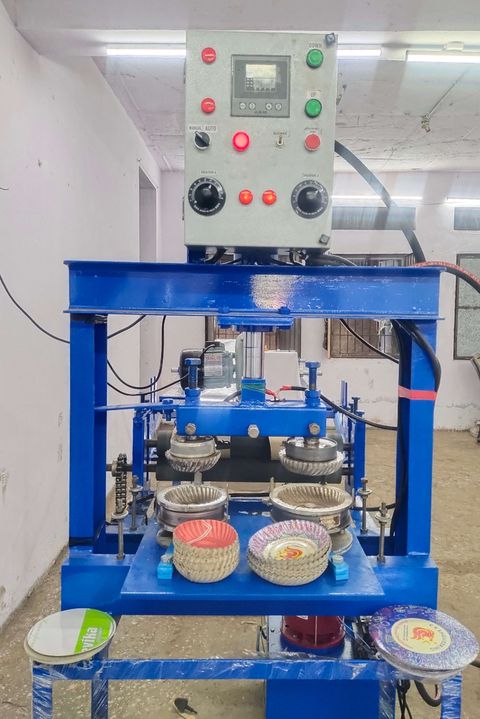
A disposable plate making machine generally uses a forming die and controlled pressure to shape prepared sheets or blanks into a specific plate design. Depending on the equipment, feeding, pressing, heating, counting, and collection can be partially or fully automated.
The broader category of disposable plate manufacturing equipment can include:
Paper sheet or roll preparation equipment
Sheet-cutting equipment
Hydraulic or pneumatic forming systems
Heating units
Forming dies
Automatic feeding mechanisms
Plate counting systems
Collection systems
Packaging equipment
A complete production setup therefore may involve more than one machine.
Why Disposable Plate Manufacturing Equipment Matters
Disposable plates are used in restaurants, food stalls, catering, events, institutions, canteens, festivals, and other situations where reusable tableware may not be practical.
The demand for alternatives to certain single-use plastic products has also influenced the development of paper and other material-based tableware.
In India, the Central Pollution Control Board identifies paper plates among the alternatives to prohibited single-use plastic plates. Its guidance lists paper plates, steel plates, ceramic plates, wooden plates, banana leaves, pattal, and other alternatives.
This does not mean that every disposable plate is automatically environmentally preferable. Material sourcing, coatings, manufacturing processes, contamination, collection, and disposal all influence the overall environmental impact.
Main Types of Disposable Plate Making Machines
Different machines are designed for different production requirements.
| Machine Type | Main Characteristic | Typical Application |
|---|---|---|
| Single die plate machine | Uses one forming die at a time | Smaller production setups |
| Double die plate machine | Uses two forming dies | Higher output requirements |
| High-speed plate machine | Designed for faster forming cycles | Larger production environments |
| Automatic plate machine | Automates multiple operations | Continuous production |
| Hydraulic plate machine | Uses hydraulic pressure | Controlled forming |
| Pneumatic plate machine | Uses compressed air | Certain lightweight forming applications |
| Manual/semi-automatic machine | Requires greater operator involvement | Small-scale operations |
| Industrial plate machine | Designed for larger production environments | Commercial manufacturing |
A single die plate making machine is relatively straightforward because the forming operation uses one die position at a time.
A double die plate making machine can perform forming through two die positions, depending on the machine design. This can increase production throughput, but the actual output depends on cycle time, material feeding, operator involvement, plate size, and machine configuration.
Automatic Disposable Plate Making Machine
An automatic disposable plate making machine can integrate several operations that otherwise require separate manual steps.
Depending on its configuration, automation may include:
Automatic sheet feeding
Material positioning
Die movement
Heating control
Forming
Plate counting
Product collection
Basic fault detection
Production monitoring
Automation can improve process consistency, but it also introduces additional control systems and maintenance requirements.
A machine should therefore be evaluated based on its complete operating process rather than simply its advertised production speed.
Paper Plate Making Machine
A paper plate making machine is designed specifically for forming paper or paper-based blanks into plates.
The material can vary according to the intended application. Some paper plates contain coatings or laminated structures designed to provide resistance to moisture, oils, or food contact.
Important material characteristics include:
Paper thickness
Basis weight
Coating type
Moisture resistance
Oil resistance
Heat resistance
Food-contact suitability
Die compatibility
The correct material must be compatible with the machine's heating, forming pressure, and die configuration.
Important Machine Components
Understanding the main components makes it easier to evaluate different systems.
Forming die: Determines the shape, depth, rim profile, and dimensions of the finished plate.
Pressing mechanism: Applies the force required to shape the material.
Heating system: Some machines use controlled heating to help form coated or laminated paper structures.
Feeding mechanism: Moves sheets or blanks into the forming position.
Control panel: Allows operators to manage machine settings and monitor operating conditions.
Collection system: Receives formed plates after they leave the die.
Safety mechanism: May include emergency stops, guards, sensors, and other protective systems.
Factors That Influence Machine Selection
Selecting a machine involves more than comparing production numbers.
A practical evaluation should consider:
Plate diameter
Plate depth
Material thickness
Die dimensions
Number of dies
Forming pressure
Heating requirements
Feeding method
Electrical requirements
Available floor space
Operator requirements
Cleaning and maintenance
Spare-part availability
Safety features
The intended product range is particularly important. A machine designed around one plate diameter may not automatically accommodate a completely different size without a compatible die and suitable adjustments.
High-Speed Plate Making Machines
A high speed plate making machine is designed around shorter forming cycles and greater production throughput.
However, speed should not be considered independently from quality.
Increasing production speed can affect:
Material positioning
Forming consistency
Edge quality
Die temperature
Material feeding
Product stacking
Operator workload
Machine wear
A useful comparison is therefore based on effective production rather than theoretical cycle speed.
| Performance Factor | Why It Matters |
|---|---|
| Cycle time | Indicates forming frequency |
| Effective output | Accounts for interruptions |
| Plate quality | Shows consistency of finished products |
| Material utilization | Indicates how efficiently material is used |
| Changeover time | Affects different plate sizes |
| Downtime | Influences actual production |
| Maintenance | Affects long-term operation |
| Safety | Protects operators and equipment |
Recent Developments in India's Food-Processing Sector
Disposable tableware is connected to the broader food-processing and food-service ecosystem.
The Ministry of Food Processing Industries continues to operate programs covering food-processing infrastructure, modernization, common infrastructure, capacity building, and micro-enterprise development. Its current website lists PMKSY, PMFME, food-safety and quality-assurance initiatives, and other programs.
The PMFME program includes support for eligible micro food-processing enterprises and common infrastructure, including facilities associated with processing and packaging. Its current portal describes credit-linked capital support subject to scheme eligibility and conditions.
Although a disposable plate manufacturing unit is not automatically a food-processing unit, these broader programs demonstrate the government's continuing focus on formalization, modernization, packaging, and food-sector infrastructure.
The Ministry also published new food-processing-related material during 2026, including guidelines concerning a refinance scheme for food-processing units in August 2026.
Sustainability and Material Trends
Environmental considerations are increasingly important when discussing disposable tableware.
India's single-use plastic restrictions have encouraged greater attention to alternatives. CPCB's guidance specifically lists paper plates and several other materials as alternatives to prohibited plastic plates.
However, material selection should consider the complete lifecycle.
Important questions include:
Is the material renewable or recycled?
Is the product coated?
Can it be separated or recycled?
Is it suitable for food contact?
What happens after use?
Does local waste infrastructure support its disposal?
Does manufacturing require significant energy or water?
The term "eco-friendly" should not be used automatically simply because a plate is made from paper or another non-plastic material.
Laws and Policies in India
The regulatory environment is particularly important because disposable plates can come into contact with food.
The Central Pollution Control Board states that identified single-use plastic plates, cups, glasses, forks, spoons, knives, trays, and similar items have been prohibited since 1 July 2022 under the relevant Plastic Waste Management framework.
This prohibition applies to specified plastic products and should not be interpreted as a blanket prohibition on every type of disposable plate.
For paper-based plates intended for food use, food-contact safety is also relevant. FSSAI maintains the Food Safety and Standards (Packaging) Regulations, 2018, with amendments including one dated 28 March 2025.
FSSAI also provides guidance on the use of safe and suitable food packaging materials for food-service establishments.
During 2026, FSSAI continued updating its food regulatory framework. Its notifications include a 10 August 2026 amendment to the Packaging Regulations concerning specified packaging materials for pan masala, as well as licensing and registration amendments during March and June 2026.
Therefore, anyone manufacturing plates intended for food contact should verify the latest applicable FSSAI requirements for the actual material and intended use.
Food-Contact Material Considerations
The machine itself is only one part of the manufacturing process.
If plates are intended for direct food contact, manufacturers should examine:
Paper or board specifications
Coating composition
Printing inks, if applicable
Adhesives, where used
Migration requirements
Food-contact suitability
Storage conditions
Hygiene during production
Finished-product contamination controls
FSSAI's regulatory framework emphasizes safe and suitable materials for food-contact applications.
This is particularly important when plates are intended for hot, oily, acidic, or liquid foods.
Tools and Useful Resources
Several resources can help when researching disposable plate manufacturing.
CPCB resources: Useful for understanding India's single-use plastic restrictions and alternatives.
FSSAI regulations: Useful for researching food-contact packaging requirements and current food-safety notifications.
MoFPI: Provides information about food-processing schemes, modernization programs, training, and infrastructure initiatives.
Material specification sheet: Record paper thickness, coating, dimensions, moisture resistance, and food-contact information.
Production worksheet: Track cycle time, effective output, rejected plates, material usage, downtime, and maintenance intervals.
Die-sizing chart: Maintain a record of compatible die dimensions for each plate size.
Safety checklist: Review guards, emergency stops, electrical systems, heating elements, moving components, and operator access.
Practical Checklist Before Operating a Machine
Before installing or operating disposable plate manufacturing equipment, consider the complete production environment.
Identify the intended plate sizes.
Select suitable raw material.
Verify food-contact requirements where applicable.
Check electrical specifications.
Confirm available floor space.
Examine die compatibility.
Review heating requirements.
Check operator safety features.
Establish cleaning procedures.
Prepare preventive-maintenance schedules.
Record production and rejection data.
Review applicable environmental rules.
Keep machine documentation accessible.
For an industrial disposable plate making machine, these considerations become more important because production may involve multiple operators, larger material inventories, greater electrical loads, and more complex material-handling systems.
Frequently Asked Questions
What is a disposable plate making machine?
It is equipment used to shape suitable sheet or blank materials into disposable plates, bowls, trays, or similar products using controlled pressure and, in some designs, heat.
What is the difference between a single die and double die machine?
A single die machine forms products using one die position at a time. A double die machine has two forming positions or die arrangements, which can allow greater throughput depending on the machine's design and operating conditions.
What materials can be used with a paper plate making machine?
Materials depend on the machine configuration. Paper and paper-based coated or laminated sheets are commonly used, but the exact material must be compatible with the die, forming process, heating system, and intended food-contact application.
Is a high-speed plate making machine always better?
Not necessarily. Higher theoretical speed does not automatically mean better overall production. Material feeding, product quality, downtime, changeover requirements, safety, and maintenance should also be considered.
Are disposable plastic plates permitted in India?
Specified single-use plastic plates are prohibited under India's single-use plastic restrictions effective from 1 July 2022. CPCB identifies paper plates and several other materials as alternatives.
Conclusion
Disposable plate making machines are specialized forming systems used to manufacture paper and other suitable disposable tableware. Their configurations range from relatively simple systems to automated industrial equipment incorporating feeding, heating, forming, counting, and collection operations.
The choice between a single die plate making machine, double die plate making machine, or automatic disposable plate making machine depends on the intended plate dimensions, material characteristics, production requirements, available space, and desired level of automation.
India's restrictions on specified single-use plastic products have increased attention toward alternative materials, while FSSAI regulations remain relevant when tableware is intended for direct food contact.
Recent government initiatives also continue to focus on food-processing modernization, infrastructure, formalization, and technical development.
For anyone researching disposable plate making machines, the most useful approach is to evaluate machine specifications together with material compatibility, food-contact requirements, safety, maintenance, environmental considerations, and applicable Indian regulations.
Disclaimer: This article is provided for general informational and educational purposes only. It does not constitute legal, financial, technical, regulatory, or professional advice. We do not claim that any particular machine, material, manufacturer, specification, or regulatory interpretation is suitable for a specific situation. This article is not intended to sell, promote, endorse, or recommend any product, machine, manufacturer, or business. Readers should verify current requirements with the relevant government authorities, standards organizations, qualified professionals, and equipment documentation before making decisions.

Related Post...
Paper Recycling Machines: Explore Overview, Basics, Explanation, Knowledge, and Key Details
Updated: October 23, 2026
Read More
Industrial Drying Machines: Explore Overview, Basics, Explanation, Knowledge, and Key Details
Updated: October 24, 2026
Read More