Automatic Labeling Machines: Explore Types, Features, Insights, Suggestions, and Useful Resources
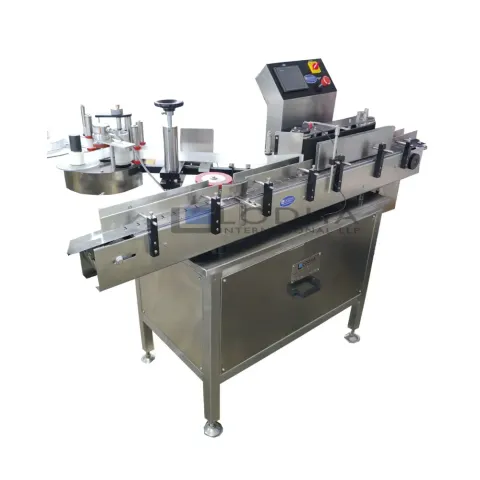
Automatic labeling machines are industrial systems designed to apply labels to products, containers, cartons, bottles, jars, packages, and other items with limited manual intervention.
The technology is used across food processing, beverages, pharmaceuticals, cosmetics, chemicals, logistics, and consumer-product manufacturing.
An industrial labeling machine typically combines mechanical handling, sensors, label dispensing, product positioning, and control software. Depending on the design, a machine can apply pressure-sensitive labels, wraparound labels, front-and-back labels, tamper-evident labels, or other formats.
The basic process can be represented as:
Product feeding → Position detection → Label dispensing → Label application → Verification → Product discharge
Modern automatic labeling machines can be integrated into wider production lines. They may communicate with conveyors, filling machines, packaging equipment, vision systems, printers, scanners, and other production equipment.
Why Automatic Labeling Matters Today
Labeling is more than a visual identification step. Product labels can contain information that is important for consumers, regulators, logistics teams, and manufacturers.
Depending on the product category, labels can communicate:
Product name
Ingredients
Net quantity
Batch or lot identification
Manufacturing information
Expiry or best-before information
Regulatory declarations
Manufacturer details
Barcodes
QR codes
Usage information
Storage instructions
Automation can improve consistency in label placement and reduce repetitive manual handling.
For high-volume manufacturing environments, an automatic labeling machine can also help synchronize labeling with upstream and downstream equipment.
Main Types of Automatic Labeling Machines
Different products require different labeling mechanisms.
| Machine Type | Typical Application | Main Function |
|---|---|---|
| Automatic bottle labeling machine | Bottles and containers | Applies labels to cylindrical or shaped containers |
| Front-back labeling machine | Bottles and containers | Applies separate front and rear labels |
| Wraparound labeling machine | Cylindrical containers | Wraps a label around the product |
| Automatic medical labeling machine | Medical and healthcare packaging | Applies labels to containers or packages |
| Automatic food labeling machine | Food containers and packages | Applies labels to food products |
| Automatic carton labeling machine | Boxes and cartons | Applies labels to cartons |
| Jar labeling machine | Jars and glass containers | Positions labels on jars |
| Top labeling machine | Flat packages and containers | Applies labels to upper surfaces |
| Side labeling machine | Boxes and products | Applies labels to side surfaces |
| Print-and-apply system | Cartons and logistics packages | Prints and applies variable information |
An automatic bottle labeling machine may use wraparound, front-and-back, or partial-wrap configurations depending on the container.
An automatic labeling machine for jars must account for the jar's diameter, surface shape, material, and label dimensions.
Automatic Front-Back Labeling Machines
An automatic front back labeling machine is designed to place two labels on a container, generally on opposite or specified sides.
This arrangement is common where a product requires a primary identification label and an additional information panel.
Important considerations include:
Container shape
Container diameter or width
Label dimensions
Label spacing
Product orientation
Conveyor speed
Sensor positioning
Label material
Container stability
Accurate product positioning is especially important because even a properly dispensed label can appear misaligned if the container is not presented consistently.
Automatic Food Labeling Machines
An automatic food labeling machine is commonly integrated with food packaging lines.
Food products can include:
Bottled beverages
Sauces and condiments
Jars
Dairy products
Packaged snacks
Ready-to-eat foods
Frozen products
Bakery items
Packaged grains and pulses
Food labeling is particularly sensitive to regulatory requirements because labels may contain mandatory consumer information.
FSSAI's Food Safety and Standards (Labelling and Display) Regulations, 2020 have received several amendments. The official FSSAI record lists amendments dated 10 September 2021, 9 September 2022, 11 October 2022, 8 August 2025, and 24 March 2026.
This means an automatic labeling system used in food production should be capable of supporting the label formats and information required for the particular food category.
Automatic Medical Labeling Machines
An automatic medical labeling machine is used for products such as pharmaceutical containers, medical packaging, diagnostic products, and other regulated healthcare items.
Accuracy is especially important because pharmaceutical labels can contain product identity, batch information, manufacturing information, expiry information, storage conditions, and other regulated details.
The Central Drugs Standard Control Organization publishes the Drugs Rules, 1945 and related amendments. The current CDSCO materials specify various labeling requirements for medicines.
The Drugs Rules also contain requirements concerning machine-readable information for certain pharmaceutical products. For example, specified Schedule H2 formulations require a barcode or QR code on primary or, where space is inadequate, secondary packaging to facilitate authentication.
This illustrates why pharmaceutical labeling equipment may need to integrate printing, coding, inspection, and verification systems rather than simply applying a pre-printed label.
Automatic Carton Labeling Machines
An automatic carton labeling machine applies labels to boxes or cartons used in manufacturing, distribution, warehousing, and logistics.
Carton labels can contain:
Product identification
Batch information
Shipping information
Barcodes
QR codes
Destination information
Handling instructions
Traceability information
Some systems use print-and-apply technology, allowing variable information to be generated immediately before application.
This can be useful where every carton contains different information.
Important Features of Automatic Labeling Equipment
Modern automatic labeling equipment can contain several mechanical and electronic components.
Key features include:
Conveyor systems
Label dispensing mechanisms
Product sensors
Encoders
Programmable logic controllers
Touchscreen controls
Label-position adjustment
Speed synchronization
Fault detection
Label-presence sensors
Product-counting systems
Vision inspection
Barcode readers
QR-code verification
The importance of each feature depends on the production environment.
For example, a simple container-labeling application may require only product detection and label dispensing, while a pharmaceutical line may require printing, barcode verification, vision inspection, rejection mechanisms, and detailed production records.
Factors That Affect Labeling Accuracy
Label placement depends on more than the machine itself.
Important variables include:
| Variable | Effect on Labeling |
|---|---|
| Container shape | Influences label positioning |
| Surface material | Affects adhesion |
| Label material | Influences application behavior |
| Adhesive | Determines bonding characteristics |
| Conveyor speed | Affects synchronization |
| Product spacing | Influences timing |
| Temperature | Can affect adhesive performance |
| Humidity | May affect certain materials |
| Label dimensions | Influences application accuracy |
| Product orientation | Determines placement position |
Before selecting equipment, manufacturers should therefore test the actual product and label combination rather than relying only on generic specifications.
Recent Developments in Labeling Technology
Labeling systems are increasingly connected to broader digital manufacturing environments.
Current developments include:
Machine-vision inspection
QR-code integration
Automated rejection systems
Digital production monitoring
Servo-driven label application
Recipe-based changeovers
Remote machine diagnostics
Industrial data connectivity
Automated product tracking
Print-and-apply systems
Another important development is the growing use of machine-readable information.
QR codes and barcodes can support identification, traceability, authentication, inventory management, and product information.
In regulated industries, this can make labeling equipment part of a larger data-management process rather than an isolated packaging machine.
2026 Regulatory Updates Affecting Labeling
India's regulatory environment continued to evolve during 2026.
For food businesses, FSSAI's official notification database lists a First Amendment to the Food Safety and Standards (Labelling and Display) Regulations, 2026 dated 30 March 2026. It also lists a packaging amendment dated 10 August 2026 concerning packaging materials for pan masala.
FSSAI also issued a Licensing and Registration Amendment Regulation on 23 June 2026, following another amendment dated 10 March 2026.
For machinery and technical standards more generally, BIS maintains its standards and conformity-assessment systems. Its "Know Your Standard" platform was updated on 8 May 2026 and allows users to search Indian Standards using standard numbers or keywords.
BIS also explains that certain products can be subject to mandatory certification through Quality Control Orders, although BIS certification is generally voluntary unless made compulsory by government notification.
These developments reinforce the importance of checking the latest regulatory requirements before configuring labeling equipment for a regulated production line.
Laws and Policies Affecting Labeling Machines in India
Labeling machines themselves are mechanical equipment, but the products they label can be governed by sector-specific regulations.
Food products: FSSAI's Labelling and Display Regulations establish requirements for food labeling. Manufacturers should ensure that the label format and information produced by the packaging line match the applicable rules.
Packaged commodities: India's Legal Metrology (Packaged Commodities) Rules, 2011 establish declaration requirements for applicable pre-packaged commodities. Government information identifies declarations such as manufacturer or packer details, commodity name, net quantity, manufacturing information, MRP, relevant dates, and consumer-care information.
Pharmaceutical products: Drugs Rules, 1945 establish labeling requirements for medicines and include provisions relating to barcodes and QR codes for specified products.
BIS standards: The BIS "Know Your Standard" system can be used to determine whether an applicable Indian Standard exists for a product or equipment category.
Because requirements can change, businesses should consult the latest official notification applicable to their product category before finalizing labels or machine configurations.
Tools and Useful Resources
Several resources can help when researching automatic labeling equipment.
FSSAI: Useful for food labeling, packaging, food-business regulations, and current amendments.
Legal Metrology resources: Useful for packaged-commodity declaration requirements and related government notifications.
CDSCO: Relevant for pharmaceutical labeling requirements, Drugs Rules, and regulatory information.
BIS Know Your Standard: Useful for searching Indian Standards, amendments, testing information, and conformity-related documents.
Label specification sheet: Record label width, height, material, adhesive type, core diameter, roll direction, and print information.
Machine compatibility checklist: Compare container dimensions, production speed, label dimensions, conveyor requirements, sensor type, and inspection requirements.
Label verification checklist: Check product name, batch information, dates, quantity, barcode or QR code, regulatory declarations, and label position before production.
Best Practices for Selecting Automatic Labeling Equipment
A structured assessment can reduce compatibility problems.
Before selecting an automatic labeling machine, consider:
Product dimensions
Product shape
Container material
Label dimensions
Label material
Adhesive characteristics
Required application position
Production speed
Product spacing
Required coding information
Barcode or QR requirements
Inspection requirements
Rejection requirements
Cleaning requirements
Integration with existing equipment
Operator-safety requirements
For food and pharmaceutical applications, regulatory review should take place alongside mechanical evaluation.
A machine that physically applies a label correctly may still be unsuitable if the labeling workflow cannot support required variable information, verification, traceability, or product-specific regulatory requirements.
Frequently Asked Questions
What is an automatic labeling machine?
An automatic labeling machine is equipment that applies labels to products or packages with limited manual intervention. It generally uses sensors, conveyors, label dispensers, and control systems to coordinate the application process.
What is an automatic bottle labeling machine used for?
It is commonly used to apply labels to bottles and other containers. Depending on its configuration, it can apply wraparound, front-and-back, or other label formats.
What is the difference between front-back and wraparound labeling?
Front-back labeling normally places separate labels on specified sides of a container. Wraparound labeling uses one label that extends around some or all of a cylindrical container.
Why are automatic medical labeling machines different?
Medical and pharmaceutical products can have strict identification, traceability, and labeling requirements. Equipment may therefore need to work with printing, barcode or QR-code systems, inspection equipment, and rejection mechanisms.
Can one automatic labeling machine handle different products?
Some machines can accommodate multiple products or label formats through adjustments and programmable settings. However, compatibility depends on product dimensions, container shape, label characteristics, and the machine's operating range.
Conclusion
Automatic labeling machines are an important component of modern packaging and manufacturing systems. They can apply labels consistently while integrating with conveyors, printers, scanners, vision systems, filling equipment, and other production technologies.
Different applications require different configurations. An automatic food labeling machine, automatic bottle labeling machine, automatic carton labeling machine, and automatic medical labeling machine may have substantially different technical and regulatory requirements.
India's regulatory environment also makes accurate labeling increasingly important. FSSAI continues to update food labeling and packaging regulations, while Legal Metrology requirements apply to relevant packaged commodities and the Drugs Rules establish specific requirements for pharmaceutical products.
The most reliable approach is to evaluate the complete labeling process: product characteristics, label specifications, application method, coding requirements, inspection, machine integration, safety, and applicable regulations.
Disclaimer
This article is provided for general informational and educational purposes only. It does not constitute technical, legal, regulatory, engineering, or professional advice. We do not claim that any particular machine, manufacturer, specification, regulation, or application is suitable for a specific situation. Regulations and technical requirements may change, so readers should verify current information with the relevant government authority, standards organization, qualified professional, or equipment documentation before making decisions.
This article is not intended to sell, promote, endorse, or recommend any product, manufacturer, supplier, equipment, or service. Its sole purpose is to provide general information and educational knowledge about automatic labeling machines.

Related Post...

Plywood Cutting Machine: Explore Overview, Basics, Explanation, Knowledge, and Key Details
Updated: October 23, 2026
Read More
Paper Recycling Machines: Explore Overview, Basics, Explanation, Knowledge, and Key Details
Updated: October 23, 2026
Read More
Wafer Baking Machines: Discover Information, Facts, Tips, Resources, and Expert Advice
Updated: October 23, 2026
Read More