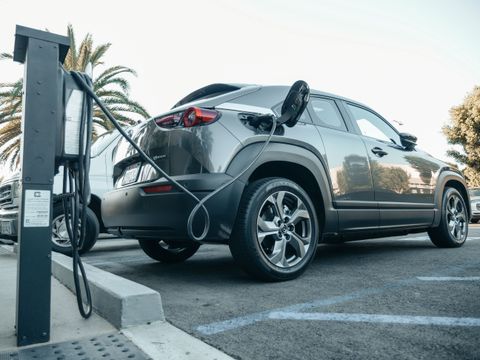
The simplest arrangement may be a dedicated charging point at a home. A larger installation can include several chargers, load-management systems, transformers, networking equipment, payment systems, parking arrangements, and safety controls.
An EV charging setup generally includes:
Electrical supply and distribution
EV charger or Electric Vehicle Supply Equipment (EVSE)
Circuit protection
Earthing and electrical safety equipment
Cables and connectors
Metering
Communication and monitoring systems
Physical protection around charging equipment
Appropriate signage
Different electric vehicles support different charging standards and power levels. Therefore, charger selection should begin with the vehicle manufacturer's specifications rather than assuming that the highest-powered charger is always appropriate.
Why EV Charging Infrastructure Matters Today
Charging availability is closely connected with the practical use of electric vehicles.
A driver who has predictable access to charging can plan daily travel more easily, while businesses and institutions may need charging infrastructure to support employee vehicles, fleet vehicles, visitors, or electric two- and three-wheelers.
A well-planned charging system can help address several practical challenges:
Limited home parking
Long-distance travel
Workplace charging requirements
Fleet charging
Apartment charging
Highway charging
Peak electricity demand
Charger availability and reliability
India's charging infrastructure has expanded considerably. The Ministry of Heavy Industries reported 52,718 public charging stations, including 16,561 stations equipped with fast chargers for cars, as of July 2026.
The growth of an EV charging network therefore involves more than installing individual chargers. It requires appropriate locations, grid capacity, interoperability, monitoring, maintenance, and reliable access.
Types of EV Charging Arrangements
Charging infrastructure can broadly be divided into home, workplace, destination, and public fast-charging applications.
| Charging arrangement | Typical location | Main purpose |
|---|---|---|
| Home charging | House, garage, private parking | Daily vehicle charging |
| Workplace charging | Office or industrial premises | Employee and fleet charging |
| Destination charging | Hotels, malls, institutions | Charging during longer stays |
| Public AC charging | Public parking areas | General charging |
| DC fast charging | Highways and strategic locations | Faster charging during journeys |
| Fleet charging | Depots and commercial premises | Multiple-vehicle charging |
A home EV charger installation generally has simpler infrastructure requirements than a large commercial installation, but electrical capacity still needs to be assessed.
A workplace EV charging station may require load management because multiple vehicles could charge simultaneously.
An EV fast charging station can place considerably greater demand on the electrical system. Transformer capacity, upstream protection, cable sizing, ventilation, parking layout, and grid connection requirements therefore become increasingly important.
EV Charger Installation: Key Considerations
EV charger installation should begin with an electrical assessment.
Important factors include:
Existing sanctioned electrical load
Supply voltage
Single-phase or three-phase availability
Charger power rating
Cable length
Earthing arrangement
Circuit protection
Distribution-board capacity
Parking location
Environmental exposure
Vehicle compatibility
For residential installations, the Ministry of Power's 2024 guidelines specifically allow residential owners to use an existing electricity connection for EV charging or obtain a separate metered connection with a dedicated EV charging tariff.
The physical location also matters. Chargers should be positioned so that cables do not create unnecessary trip hazards or obstruct vehicle movement.
Outdoor equipment should have appropriate protection against weather and environmental conditions.
Electric Vehicle Charging Equipment
Electric vehicle charging equipment can include considerably more than the visible charger.
A complete installation may contain:
AC or DC charger
Connector and charging cable
Distribution board
Circuit breakers
Residual-current protection
Surge protection
Energy meter
Earthing system
Communication equipment
Network gateway
Emergency isolation controls
AC charging normally relies on the vehicle's onboard charger to convert alternating current into the direct current used by the battery.
DC fast charging supplies direct current through the charging equipment, allowing higher charging power when supported by the vehicle and electrical infrastructure.
The actual charging rate depends on several factors, including the vehicle's maximum charging capability, battery state, temperature, charger capacity, and electrical supply.
EV Charging Station Setup for Businesses
An EV charging station setup for a commercial location requires additional planning because several vehicles may use the facility over the same period.
A useful planning process is:
Estimate the number of vehicles.
Determine expected charging duration.
Identify peak arrival and departure periods.
Calculate the electrical load.
Select appropriate AC or DC chargers.
Assess parking and cable routing.
Establish monitoring and access controls.
Create a maintenance and inspection schedule.
Load management can be particularly important where several chargers operate simultaneously.
For example, instead of allowing every charger to operate at maximum output at the same time, a smart system can distribute available electrical capacity between connected vehicles.
This approach can reduce unnecessary peaks and make better use of the site's existing electrical infrastructure.
EV Charger Installation Cost Factors
Although the financial side of an installation is important, EV charger installation cost does not have one universal figure.
The overall amount can vary according to:
Charger power
AC or DC technology
Number of charging points
Electrical connection requirements
Cable length
Civil works
Transformer requirements
Protection equipment
Software and networking
Site preparation
Installation complexity
Maintenance arrangements
For a home installation, the charger itself may represent only part of the overall expenditure. For a public fast-charging site, electrical infrastructure can become a much larger component.
A useful planning formula is:
Total project requirement = Charger equipment + Electrical infrastructure + Civil work + Installation + Monitoring + Ongoing maintenance
Actual figures should be established through a site-specific electrical assessment.
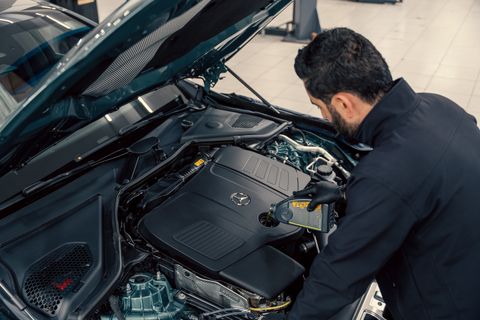
EV Charger Maintenance
EV charger maintenance is important for reliability and electrical safety.
Routine checks may include:
Cable and connector inspection
Connector cleaning
Visual inspection of enclosures
Testing protective devices
Checking earthing
Reviewing error logs
Inspecting ventilation
Verifying communication systems
Checking emergency controls
Monitoring charging performance
DC fast chargers generally contain more electrical and electronic components than basic AC charging points, so their maintenance requirements can be more extensive.
A digital monitoring platform can help identify repeated faults, communication failures, abnormal temperatures, or unusual charging patterns.
Recent Developments in India's EV Charging Sector
India's charging infrastructure has undergone significant development during 2025 and 2026.
On December 16, 2025, the Ministry of Heavy Industries reported 29,151 public EV charging stations, including 8,805 fast-charging stations and 20,346 slow-charging stations. The same update noted that ₹2,000 crore had been allocated under PM E-DRIVE for public charging infrastructure.
By February 10, 2026, government information continued to describe EV charging stations as an unlicensed activity and reported 29,151 public stations based on information from BHEL. The update also confirmed the PM E-DRIVE operational guidelines issued on September 26, 2025.
A later government update dated July 21, 2026 reported 52,718 public charging stations, including 16,561 fast chargers for cars. It also noted allocations under FAME-II and PM E-DRIVE for expanding public charging infrastructure, particularly in cities and along highways.
The rapid difference between reported figures also demonstrates why charging-infrastructure statistics should always be interpreted with their reporting date and data source.
In August 2026, the Ministry of Power reiterated that the 2024 charging guidelines and 2025 battery-swapping and charging guidelines were being used to support development of EV infrastructure across India.
Laws, Policies, and Regulations in India
India's main national framework for EV charging infrastructure is the Ministry of Power's Guidelines for Installation and Operation of Electric Vehicle Charging Infrastructure, 2024.
Issued on September 17, 2024, the guidelines apply to charging infrastructure in private parking spaces, offices, educational institutions, hospitals, group housing societies, public places, highways, and expressways.
The guidelines are intended to support safe, reliable, accessible, connected, and interoperable charging infrastructure.
Several important provisions affect installation planning.
For example, the guidelines provide for LT electricity connections for charging-station loads up to 150 kW, subject to the applicable framework. They also address electricity tariffs, public land, grid preparation, and connection procedures.
The government has also stated that setting up an EV charging station is an unlicensed activity under the applicable national framework, although site-specific permissions, electrical approvals, local requirements, and other applicable rules can still apply.
PM E-DRIVE and Public Charging Infrastructure
The PM E-DRIVE scheme has allocated ₹2,000 crore for deployment of public EV charging infrastructure across India.
Operational guidelines for deployment of Electric Vehicle Public Charging Stations were issued on September 26, 2025. Eligible government ministries, central public-sector entities, states, Union Territories, and their public-sector entities can submit proposals through designated nodal agencies.
The scheme also establishes a framework for capital support toward upstream electrical infrastructure and EV charging equipment in eligible locations.
This policy direction is important because charging infrastructure requires coordination between transport planning, electricity distribution, land availability, and public infrastructure.
Tools and Resources for EV Charging Planning
Several tools can make an EV charging project easier to plan.
EV route and charging maps:
Useful for identifying public charging locations, connector types, charger power, and route requirements.
Electrical load calculators:
These can estimate the approximate demand created by one or multiple chargers. Final electrical design should be performed according to applicable standards and site conditions.
Vehicle charging specifications:
Manufacturer documentation can confirm maximum AC/DC charging power, connector type, battery capacity, and compatible charging standards.
Energy-monitoring platforms:
These can track electricity consumption, charger utilization, charging sessions, and equipment status.
BEE and Ministry of Power resources:
Government publications provide information about charging infrastructure policies, standards, electricity connections, and energy efficiency.
Maintenance templates:
A simple maintenance record can include:
Charger identification number
Installation date
Connector condition
Electrical inspection date
Fault history
Software/firmware status
Protective-device inspection
Corrective actions
Next inspection date
Practical Checklist for an EV Charging Setup
Before installing charging equipment, consider:
Vehicle types and connector standards
Expected daily charging demand
Available electrical load
Number of charging points
AC versus DC charging
Parking arrangement
Cable routing
Earthing and protection
Weather exposure
Network connectivity
Metering
Monitoring requirements
Emergency procedures
Maintenance planning
For apartment buildings and workplaces, discussions with the electricity distribution company and relevant building management authorities may be necessary before implementation.
Frequently Asked Questions
What is an EV charging setup?
It is the complete arrangement of electrical supply, charging equipment, protection systems, cables, controls, and supporting infrastructure used to charge an electric vehicle.
What is required for home EV charger installation?
The installation normally requires a suitable electrical connection, appropriate charger, correctly sized wiring, circuit protection, earthing, and a safe mounting location. The available electrical load should be assessed before installation.
What is the difference between AC and DC charging?
AC charging supplies alternating current to the vehicle, where the onboard charger converts it for battery storage. DC fast charging supplies direct current through the charging equipment and can provide substantially higher power when supported by the vehicle.
How much does EV charger installation cost?
There is no single figure. The financial requirement depends on charger power, electrical infrastructure, wiring distance, civil work, protection equipment, number of chargers, and site conditions.
Does India require a license to set up an EV charging station?
The central framework treats setting up an EV charging station as an unlicensed activity. However, applicable electrical, building, land, fire-safety, local-authority, and distribution-utility requirements may still apply depending on the location and installation.
Conclusion
An effective EV charging setup combines the right charger with appropriate electrical infrastructure, safety protection, monitoring, and a practical understanding of vehicle requirements.
For homes, the focus is usually on electrical capacity, safe installation, and daily charging needs. Workplaces and commercial facilities require additional attention to simultaneous charging, load management, parking arrangements, monitoring, and maintenance.
India's EV infrastructure is expanding rapidly. Government data reported 52,718 public charging stations by July 2026, while the Ministry of Power's 2024 guidelines and PM E-DRIVE provide an evolving national framework for charging infrastructure development.
The most reliable approach is to begin with the vehicles and expected charging demand, assess the site's electrical capacity, select compatible equipment, follow applicable standards, and establish a regular inspection and monitoring plan. This helps create charging infrastructure that is practical, safe, and appropriate for its intended use.