Excavator Machines: Explore Types, Features, Applications, and Useful Resources
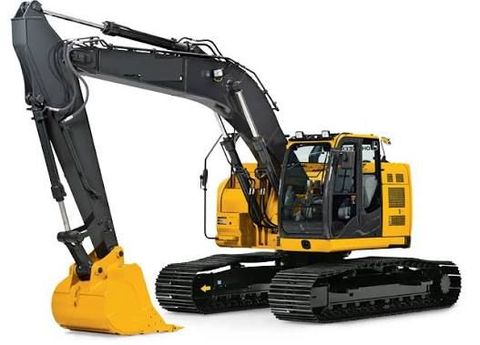
An excavator machine is a heavy earthmoving machine used to dig, lift, move, and handle materials such as soil, sand, gravel, and rock. It is widely used in construction, mining, road development, demolition, agriculture, and infrastructure projects. Its main structure generally includes a boom, arm, bucket, operator cabin, undercarriage, and power system.
Modern excavators use hydraulic systems to control digging and lifting movements. Different designs are available for different site conditions, from compact machines used in narrow spaces to large mining excavators designed for demanding operations.
An industrial excavator machine can be fitted with different attachments, allowing it to perform tasks beyond digging. These include breaking concrete, lifting materials, trenching, grading, and handling scrap. Selecting the right machine depends on the working environment, digging depth, material type, operating weight, reach, and required attachment.
Importance of Excavator Machines
Excavators play an important role in construction and industrial operations because they can perform several earthmoving tasks with controlled movements and suitable attachments.
Key advantages include:
Efficient excavation: Helps remove soil, rock, and other materials from construction areas.
Material handling: Moves excavated materials into trucks or designated locations.
Versatile operation: Supports digging, demolition, trenching, grading, and lifting tasks.
Adaptability: Different sizes and undercarriage designs suit different working environments.
Attachment compatibility: Buckets, breakers, grapples, and other tools expand machine capabilities.
Large-scale operations: Heavy-duty models support demanding construction and mining activities.
Excavators also help reduce manual effort in repetitive earthmoving tasks. However, productivity depends on operator skill, site planning, machine condition, and the suitability of the selected equipment.
Types of Excavator Machines
Excavators are classified according to their size, undercarriage, operating design, and intended application.
1. Mini Excavator Machine
Compact equipment for restricted work areas
A mini excavator machine is a compact model designed for small construction projects and locations where larger equipment cannot operate easily. It usually has a short tail-swing design and a relatively narrow body.
Common applications include:
Garden and landscape excavation
Small foundation work
Utility trenching
Drainage installation
Indoor or restricted-area construction
Mini excavators can use narrow buckets, augers, breakers, and grading attachments depending on their configuration.
2. Hydraulic Excavator Machine
A hydraulic excavator machine uses hydraulic pumps, cylinders, valves, and motors to control the boom, arm, bucket, and machine movement. Hydraulic pressure allows the equipment to perform digging and lifting operations.
These machines are commonly used in road construction, building projects, quarrying, and industrial excavation. Their versatility makes them one of the most widely used excavator designs.
3. Crawler Excavator Machine
A crawler excavator machine moves on continuous tracks rather than conventional wheels. The tracks distribute machine weight over a larger ground area and provide traction on uneven or soft surfaces.
Typical applications include:
Large construction sites
Mining and quarry operations
Embankment development
Earthmoving on uneven terrain
Heavy excavation work
Crawler models are generally suited to sites where traction and stability are important. However, they may require transport arrangements when moved between distant locations.
4. Wheeled Excavator Machine
A wheeled excavator machine uses rubber tyres and is designed for movement across firm surfaces. It is often used in urban construction, road maintenance, drainage work, and municipal projects.
Its main characteristics include:
Better mobility on paved surfaces
Faster movement between nearby work locations
Suitable configurations for road-related operations
Optional stabilisers or dozer blades on selected models
Wheeled excavators may be less suitable than crawler models on very soft or highly uneven ground.
5. Heavy Duty Excavator Machine
A heavy duty excavator machine is designed for demanding excavation tasks involving dense soil, hard rock, large material volumes, and intensive operation.
It generally has a stronger structure, high-capacity hydraulic systems, and reinforced components. These machines are used in large construction projects, quarrying, mining preparation, and major infrastructure development.
6. 100 Ton Mining Excavator
A 100 ton mining excavator belongs to the large-machine category used in demanding mining and bulk earthmoving operations. Its operating weight, bucket capacity, engine output, and digging configuration vary by manufacturer and model.
Typical applications include:
Overburden removal
Open-pit mining
Large-scale material loading
Quarry excavation
Handling high volumes of rock and soil
The selection of a mining excavator depends on the material being excavated, haul-truck capacity, bench height, digging conditions, and the overall mine plan.
Main Components and Features
An excavator contains several interconnected mechanical, hydraulic, electrical, and structural systems.
Component | Main function |
|---|---|
Boom | Provides the main lifting and reaching movement |
Arm or stick | Extends the digging reach and positions the bucket |
Bucket | Digs, collects, and transfers materials |
Hydraulic cylinders | Move the boom, arm, and bucket |
Hydraulic pump | Supplies pressurised fluid to the system |
Swing motor | Rotates the upper structure |
Operator cabin | Contains controls, displays, and safety equipment |
Undercarriage | Supports and moves the machine |
Engine or power unit | Supplies the energy needed for operation |
Control system | Coordinates machine movements and operating functions |
Important Features
Modern excavators may include adjustable operating modes, electronic monitoring, automatic idle control, rear-view cameras, telematics, and improved cabin ergonomics.
Depending on the model, other features may include:
Reinforced boom and arm structures
Variable hydraulic flow
Load-sensing hydraulic systems
Track or tyre configurations for different surfaces
Quick couplers for attachment changes
Fuel and operating-condition monitoring
Not every feature is available on every machine. Specifications should be checked against the manufacturer's technical documentation.
Working Principle of an Excavator
Most modern excavators operate through a combination of engine power, hydraulic pressure, mechanical linkages, and electronic controls.
The basic operating process is:
Power generation: The engine or electric power unit supplies energy to the machine's systems.
Hydraulic pressure: Hydraulic pumps move fluid through the hydraulic circuit.
Control input: The operator uses joysticks, pedals, and other controls to direct the machine.
Arm and bucket movement: Hydraulic cylinders extend or retract to move the boom, arm, and bucket.
Swing operation: A swing motor rotates the upper structure to position the attachment.
Travel movement: Tracks or wheels move the machine to another working position.
Material handling: The bucket collects material, lifts it, and transfers it to a truck or designated location.
The operator coordinates these movements to complete excavation tasks. Smooth operation depends on the ground conditions, machine configuration, hydraulic response, and operator experience.
Technologies Used in Modern Excavators
Excavator technology continues to develop through improvements in hydraulic control, electronic monitoring, connectivity, and power systems.
Advanced Hydraulic Systems
Modern hydraulic systems regulate fluid flow and pressure according to the selected operation. Load-sensing technology can adjust pump output to match hydraulic demand, helping improve operating efficiency.
GPS and Machine Control
Positioning systems and machine-control technology can help operators work according to digital site plans. Depending on the configuration, displays may provide information about excavation depth, bucket position, grade, and work boundaries.
Telematics and Remote Monitoring
Telematics systems collect information such as engine hours, fuel use, machine location, operating conditions, and maintenance alerts. Fleet managers can use these records to monitor equipment and plan inspections.
Cameras and Operator Assistance
Rear-view cameras, side cameras, proximity alerts, and other visibility systems can help operators identify obstacles and nearby workers. These systems support awareness but do not replace direct observation or safe site procedures.
Electric and Hybrid Excavators
Battery-electric and hybrid designs are emerging in selected equipment categories. Compact electric excavators can be useful in indoor or noise-sensitive environments. Larger electric machines face additional requirements related to battery capacity, charging infrastructure, operating duration, and site power availability.
Applications of Excavator Machines
Excavators are used across several industries because their attachments and machine configurations can be adapted to different tasks.
Industry | Common applications |
|---|---|
Construction | Foundation digging, earthmoving, and site preparation |
Mining | Overburden removal, rock excavation, and material loading |
Road development | Drainage trenches, road foundations, and slope preparation |
Demolition | Breaking concrete and removing structural debris |
Agriculture | Pond excavation, land preparation, and drainage work |
Quarrying | Rock handling and excavation |
Utilities | Water pipeline, cable, and sewer trenching |
Waste management | Material handling and site excavation |
The attachment selected for a task is important. A standard digging bucket may be suitable for soil, while a hydraulic breaker is used for suitable hard materials. Grapples, augers, and grading buckets support other specialised activities.
Recent Developments and Industry Trends
Excavator development increasingly focuses on productivity, operator awareness, reduced fuel consumption, and improved equipment monitoring.
Some notable trends include:
Digital machine monitoring: Telematics platforms are making operating data more accessible for maintenance planning and fleet management.
Automation assistance: Grade-control systems and machine guidance help operators follow planned excavation levels more consistently.
Electrification: Compact battery-powered excavators are gaining attention for indoor work and locations with restrictions on noise or local emissions.
Improved hydraulic efficiency: Updated pump and control designs aim to match hydraulic output more closely to operating requirements.
Enhanced safety systems: Cameras, proximity detection, and improved cabin visibility are increasingly incorporated into machine designs.
Attachment flexibility: Quick couplers and specialised tools allow one machine to perform several types of work.
These developments do not apply equally to every excavator category. Availability depends on machine size, manufacturer, model year, and operating requirements.
Laws, Policies, and Standards in India
Excavator use in India is influenced by workplace safety requirements, machinery standards, vehicle regulations, and site-specific environmental rules. The applicable requirements depend on the machine category, its intended use, the worksite, and whether it is operated on public roads.
Occupational Safety, Health and Working Conditions Code, 2020
The Occupational Safety, Health and Working Conditions Code, 2020 came into force on 21 November 2025. It provides a framework for workplace safety and working conditions. Excavator operations should be managed with attention to operator training, equipment condition, site hazards, safe access, and protection of workers around moving machinery.
BIS Standard for Hydraulic Excavator Safety
Bureau of Indian Standards publication IS 17055 (Part 5):2018 covers safety requirements for hydraulic excavators. It addresses risks associated with machine design and operation, including operator safety, stability, controls, and related safeguards.
Operator Protective Structures
IS/ISO 10262 addresses laboratory tests and performance requirements for protective guards on hydraulic excavators. Protective structures are important where machines may be exposed to falling objects or rollover hazards. The appropriate protection depends on the operating environment and machine configuration.
International Safety Standards
ISO 20474-1:2017 provides general safety requirements for earth-moving machinery, while ISO 20474-5:2017 contains requirements specific to hydraulic excavators. ISO records that both editions were reviewed and confirmed in 2022.
Construction Equipment Vehicle Requirements
Where an excavator is classified as a construction equipment vehicle and is used on public roads, relevant provisions of the Central Motor Vehicles Rules and applicable amendments may apply. These can cover matters such as steering, lighting, noise, and emissions. Owners and operators should verify the machine's classification and current requirements before road movement.
The Machinery and Electrical Equipment Safety (Omnibus Technical Regulation) Order, 2024 was amended in August 2025 to set 1 September 2026 as the application date for machinery and equipment listed in its First Schedule. Whether a particular excavator is covered must be checked against the exact tariff classification and current Gazette notifications; the date alone does not mean every excavator is automatically covered.
Best Practices for Safe and Efficient Operation
Safe excavator operation requires preparation, correct machine selection, trained operators, and regular inspection.
Inspect before starting: Check hydraulic hoses, fluid levels, tracks or tyres, bucket pins, lights, alarms, and visible structural damage.
Understand the worksite: Identify underground utilities, overhead power lines, unstable ground, slopes, and nearby workers.
Use the correct attachment: Match the bucket or tool to the material and task. Do not exceed the machine's rated limits.
Maintain safe distances: Keep people away from the swing radius, bucket path, and machine travel route.
Avoid unstable edges: Do not position the machine too close to trenches, excavations, or unsupported ground.
Use seat belts and protective equipment: Follow the machine manual and site-specific safety requirements.
Travel carefully: Keep the attachment in the recommended travel position and follow the manufacturer's guidance for slopes.
Shut down correctly: Lower attachments safely, secure the machine, and follow the prescribed shutdown procedure.
Maintain records: Document inspections, operating hours, repairs, and scheduled maintenance.
Operators should never use an excavator to lift suspended loads unless the machine is configured and approved for that purpose, with the required lifting equipment and procedures.
Tools and Resources for Excavator Operations
Technical resources can help operators, fleet managers, engineers, and project planners understand machine capabilities and operating requirements.
Resource | How it helps |
|---|---|
Manufacturer operation manual | Explains controls, operating limits, and safety instructions |
Maintenance checklist | Supports routine inspection and preventive maintenance |
Excavation planning software | Helps plan digging areas, levels, and site layouts |
GPS and machine-control systems | Supports positioning and grade guidance |
Telematics platforms | Tracks operating hours, machine location, and equipment data |
BIS standards catalogue | Provides access to relevant Indian machinery standards |
ISO standards catalogue | Provides international earth-moving machinery safety standards |
ICEMA resources | Provides information about India's construction equipment industry |
Useful official resources include the Bureau of Indian Standards (BIS) for Indian standards, India Code for legislation, the Ministry of Labour and Employment for workplace safety updates, and the International Organization for Standardization (ISO) for international standards.
Frequently Asked Questions
1. What is an excavator machine used for?
An excavator machine is used for digging, trenching, lifting, demolition, grading, and material handling. It is commonly used in construction, mining, road development, agriculture, and infrastructure projects.
2. What is the difference between a mini excavator and a heavy-duty excavator?
A mini excavator is compact and suited to smaller projects or restricted spaces. A heavy-duty excavator is larger and designed for demanding excavation, quarrying, and major construction activities.
3. What is a hydraulic excavator machine?
A hydraulic excavator machine uses pressurised hydraulic fluid to move its boom, arm, bucket, and upper structure. Hydraulic cylinders and motors control these movements.
4. When should a crawler excavator be selected instead of a wheeled excavator?
A crawler excavator is generally suitable for uneven, soft, or rough terrain where traction and ground contact are important. A wheeled excavator is often preferred for firm surfaces and work locations requiring greater mobility.
5. What factors matter when selecting a 100 ton mining excavator?
Important factors include digging depth, bucket capacity, material characteristics, operating weight, haul-truck compatibility, engine or power-system specifications, ground conditions, and the mine's production plan.
Conclusion
Excavator machines are essential equipment for modern construction, mining, road development, and industrial earthmoving. Their different configurations allow them to handle tasks ranging from small-scale trenching to large mining operations. Mini excavators are suited to restricted spaces, crawler models provide traction on challenging terrain, wheeled models support mobility, and heavy-duty excavators handle demanding workloads.
Understanding machine types, hydraulic systems, attachments, operating limits, and safety requirements helps organisations select and operate equipment appropriately. Advances in digital monitoring, machine guidance, and electric power systems are also shaping the development of excavator technology.
Disclaimer: This article is intended for general informational and educational purposes only. Technical specifications, operating procedures, and regulatory requirements may vary by machine model, location, and application. Always consult the manufacturer's documentation and applicable standards before operating equipment. This content does not provide guarantees and is not intended to sell or promote any product, brand, or organisation.

Related Post...
Textile Dyeing Machines: Discover Information, Facts, Tips, Resources, and Expert Advice
Updated: November 17, 2026
Read More
Drum Filling Machines: Complete Guide to Basics, Technologies, Processes, Facts, and Best Practices
Updated: November 17, 2026
Read More
Roll Forming Machines: Complete Guide to Basics, Technologies, Processes, Facts, and Best Practices
Updated: November 17, 2026
Read More