Food Delivery Robots: Complete Guide to Basics, Applications, Facts, Knowledge, and Best Practices
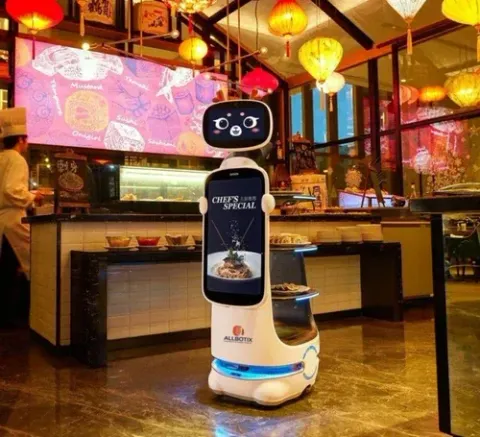
Food delivery robots are autonomous or semi-autonomous mobile robots designed to transport prepared food, beverages, dishes, or other items within a defined environment. Unlike road-based autonomous vehicles, most indoor robots operate in controlled spaces such as restaurants, hotels, hospitals, cafeterias, airports, campuses, and large commercial buildings.
These machines typically use wheels, sensors, cameras, mapping technology, onboard computers, and navigation software. Some models can move between predefined locations, avoid obstacles, stop when people cross their path, and return to a designated area after completing a task.
The basic operating cycle is:
Order or task received → Item loaded → Destination selected → Navigation → Obstacle avoidance → Delivery → Return
A typical robot may contain:
Multiple shelves or compartments
Cameras and depth sensors
LiDAR or similar ranging technology
Touchscreen controls
Wireless connectivity
Battery management systems
Navigation software
Obstacle-detection systems
Automatic charging functions
The technology is particularly suited to repetitive transportation tasks where the route and environment can be mapped.
How Restaurant Delivery Robots Work
Restaurant delivery robots generally operate between areas such as kitchens, dining rooms, counters, pickup points, or designated tables.
The robot first receives a destination through its control software. A worker may place food on its shelves and select the appropriate destination.
The robot then uses its map and sensors to determine a route.
During movement, sensors continuously monitor the surrounding environment. If a person, chair, trolley, or other obstacle appears in the path, the robot can slow down, stop, or calculate an alternative route depending on its capabilities.
A simplified technology stack looks like this:
| Component | Main Function |
|---|---|
| Sensors | Detect people and obstacles |
| Cameras | Visual recognition and navigation |
| LiDAR | Distance measurement and mapping |
| Navigation software | Determines routes |
| Wireless network | Connects robot with control systems |
| Battery system | Provides operating power |
| Control interface | Allows task selection and monitoring |
| Shelves/compartments | Carry food or other items |
The exact configuration differs between manufacturers and applications.
Why Food Delivery Robots Matter
Restaurants and hospitality businesses frequently involve repetitive movement between kitchens, storage areas, dining spaces, elevators, and other locations.
Indoor automation can help organize these movements and reduce unnecessary walking for routine transportation tasks.
Potential applications include:
Carrying meals from kitchens to dining areas
Transporting beverages
Moving dishes and utensils
Delivering room orders within hotels
Carrying items between floors where elevator integration is available
Moving supplies inside large facilities
Supporting cafeteria operations
Transporting prepared meals in institutional environments
The technology can also provide useful operational data. A connected system may record completed trips, battery status, route information, charging activity, and task history.
However, robots do not eliminate the need for human supervision. Staff may still need to load and unload items, handle exceptions, maintain equipment, monitor food safety, and respond when the robot encounters an unusual situation.
Hotel Food Delivery Robots
Hotel food delivery robots are designed for environments where guests may request meals, beverages, amenities, or other items for delivery to designated areas.
A hotel environment can be more complicated than a restaurant because it may include:
Multiple floors
Elevators
Narrow corridors
Variable lighting
Guests moving unpredictably
Housekeeping carts
Doors and access controls
Different room layouts
For this reason, successful deployment requires more than simply placing a robot inside a building.
The building layout, elevator compatibility, wireless connectivity, floor surfaces, corridor width, pedestrian movement, and emergency procedures should all be evaluated.
Some systems can integrate with hotel software or room-number interfaces, while others rely on staff-operated control panels.
AI Food Delivery Robots and Navigation
AI food delivery robots use combinations of artificial intelligence, computer vision, sensor processing, mapping, and navigation algorithms.
Artificial intelligence can assist with recognizing objects and interpreting changing environments. However, not every robot marketed as AI-powered uses the same technology.
Important capabilities can include:
Real-time obstacle detection
Person recognition
Route planning
Localization
Dynamic path adjustment
Voice or touchscreen interaction
Fleet coordination
Automatic charging
Remote monitoring
A robot may use simultaneous localization and mapping, commonly known as SLAM, to understand its position relative to a mapped environment.
The quality of navigation depends on sensors, software, building conditions, network reliability, and how well the robot has been configured for the location.
Robotic Food Delivery System
A robotic food delivery system is broader than an individual robot.
It can include:
Mobile robots
Fleet-management software
Kitchen or hotel integration
Mapping tools
Wireless networking
Charging stations
Control dashboards
User interfaces
Maintenance procedures
Safety protocols
This distinction is important when comparing different technologies.
A robot with advanced navigation may still require additional infrastructure before it can operate effectively in a hotel or restaurant.
For multi-robot environments, fleet-management software can assign tasks and help prevent several robots from attempting to use the same route simultaneously.
Indoor Delivery Robots Versus Outdoor Robots
Most food delivery robots used in restaurants and hotels are indoor delivery robots.
Indoor environments generally provide greater control over navigation conditions.
| Feature | Indoor Robots | Outdoor Robots |
|---|---|---|
| Environment | Buildings | Roads, sidewalks, campuses |
| Navigation | Mapped interiors | Larger variable environments |
| Weather exposure | Limited | Rain, heat, dust, etc. |
| Pedestrian movement | Usually concentrated | More variable |
| Route control | Often predefined | More complex |
| Elevator integration | May be required | Usually not applicable |
| Surface conditions | Relatively predictable | More variable |
Indoor robots therefore represent a practical category for hospitality environments, while outdoor autonomous delivery introduces additional transportation and public-space considerations.
Food Delivery Robot Price and Evaluation Factors
The search term food delivery robot price can refer to very different types of equipment.
The financial amount associated with a robot can vary according to hardware, sensors, navigation capabilities, software, charging equipment, integration requirements, and fleet size.
A useful evaluation framework includes:
| Factor | Questions to Consider |
|---|---|
| Payload | How much food or material can it carry? |
| Battery | How long can it operate between charging cycles? |
| Navigation | What sensors and mapping methods are used? |
| Dimensions | Can it move through existing corridors? |
| Software | What control and monitoring functions are available? |
| Connectivity | Which network technologies are supported? |
| Elevators | Can it interact with building elevator systems? |
| Safety | What obstacle and emergency features are included? |
| Maintenance | What routine inspection is required? |
| Integration | Can it connect with existing systems? |
Comparisons should therefore consider the complete technical configuration rather than a single headline figure.
Food Delivery Robot Manufacturers and Suppliers
People researching a food delivery robot manufacturer or food delivery robot supplier should first define the intended application.
A restaurant with a single dining floor may have very different requirements from a large hotel with multiple floors.
Technical information worth examining includes:
Payload capacity
Robot dimensions
Battery specifications
Charging method
Navigation technology
Sensor configuration
Maximum operating speed
Software architecture
Network requirements
Elevator integration
Emergency controls
Data-management features
Maintenance documentation
A supplier's geographic presence is also relevant because installation, training, technical support, spare components, and software updates can depend on regional infrastructure.
Food Delivery Robot Software
Food delivery robot software is responsible for many of the functions that make autonomous movement possible.
Common software features include:
Digital mapping
Route planning
Task assignment
Fleet management
Robot status monitoring
Battery monitoring
Destination management
Remote diagnostics
Usage records
System notifications
Software integration can become particularly important when robots interact with restaurant ordering platforms, hotel management systems, elevator controls, or building-access systems.
Cybersecurity should also be considered because connected robots may process operational information and communicate through wireless networks.
Access controls, software updates, network segmentation, authentication, and appropriate data-management practices can reduce avoidable security risks.
Recent Developments in India
India has been paying increasing attention to robotics as part of its broader technology and advanced-manufacturing ecosystem.
On 3 February 2026, the Technology Advisory Group of the Empowered Technology Group met under the Office of the Principal Scientific Adviser to discuss the robotics ecosystem and a strategic roadmap for robotics in India. The meeting brought together government representatives, academics, companies, and robotics startups.
The development is relevant to food delivery robots because hospitality automation depends on advances in navigation, sensors, artificial intelligence, connectivity, and domestic robotics capabilities.
India also released a white paper on Strengthening AI Governance Through Techno-Legal Framework in January 2026. It described an approach combining legal safeguards, sector-specific regulation, technical controls, and institutional mechanisms.
These developments indicate that robotics and AI are increasingly being considered within broader technology-governance discussions.
Laws, Safety, and Food-Handling Policies in India
There is currently no single Indian regulation specifically governing every indoor food delivery robot.
Instead, several existing regulatory areas can become relevant depending on how the robot is used.
Food businesses remain subject to the Food Safety and Standards Act, 2006 and associated regulations. FSSAI states that food business operators must be licensed or registered under the applicable framework.
Food safety remains important even when transportation is automated. Robots should therefore be incorporated into established hygiene and food-handling procedures rather than treated as a replacement for them.
FSSAI's hygiene framework requires food businesses to implement appropriate food-safety management practices, including Good Hygiene Practices and Good Manufacturing Practices where applicable.
There were also significant regulatory developments in 2026. The Ministry of Health and Family Welfare announced reforms relating to FSSAI registration and licensing in March 2026, including a proposal for perpetual validity, followed by notified amendments in June 2026 that rationalised certain record-keeping requirements for non-manufacturing food businesses while retaining important food-safety safeguards.
For robot safety, Indian Standards include robotics and machinery-safety references. BIS lists IS/ISO 10218 Part 1:2025 for industrial robot safety and Part 2:2025 for industrial robot applications and robot cells.
Not every indoor food delivery robot falls directly under industrial-robot standards, so the applicable requirements should be determined according to the equipment and its installation.
Tools and Useful Resources
Several resources can help organizations evaluate food delivery robotics.
BIS Know Your Standard: The BIS platform allows users to search Indian Standards by keyword or standard number and review related documents and information.
FSSAI regulations database: Useful for checking current food-safety regulations, licensing requirements, hygiene provisions, and amendments.
Robot route map: A digital building map can identify corridors, elevators, restricted areas, loading points, and charging locations.
Payload calculator: A simple spreadsheet can compare average order weight with the robot's rated payload.
Battery-use worksheet: Track operating hours, charging cycles, and expected daily movement.
Safety checklist: Record emergency-stop functions, obstacle detection, speed limits, warning indicators, and pedestrian interaction procedures.
Pilot-area assessment: Test corridor width, floor surfaces, network coverage, elevator access, and pedestrian traffic before broader deployment.
Best Practices for Deploying Food Delivery Robots
A successful deployment should begin with the operating environment rather than the robot itself.
Recommended practices include:
Map the building before deployment.
Identify narrow corridors and high-traffic areas.
Establish clear loading and unloading procedures.
Keep food containers secure during movement.
Maintain appropriate food hygiene practices.
Test obstacle detection with realistic scenarios.
Establish emergency-stop procedures.
Keep software updated.
Protect robot network access.
Monitor battery condition.
Inspect wheels, sensors, compartments, and charging equipment.
Train staff on normal and abnormal operating conditions.
Maintain a manual fallback process.
A controlled pilot can help identify navigation problems before a robot is introduced across a larger facility.
Frequently Asked Questions
What are food delivery robots?
Food delivery robots are autonomous or semi-autonomous mobile machines designed to transport food and other items within controlled environments such as restaurants, hotels, campuses, and large buildings.
Where are restaurant delivery robots commonly used?
They can be used for movement between kitchens, dining areas, counters, pickup locations, and designated tables. Their usefulness depends on building layout, pedestrian traffic, and the robot's navigation capabilities.
What are hotel food delivery robots used for?
They can transport meals, beverages, amenities, and other permitted items within hotel environments. Multi-floor applications may require integration with elevators and access-control systems.
How does food delivery robot software work?
The software can manage maps, routes, destinations, task assignments, battery information, robot status, and fleet coordination. More advanced systems can also use computer vision and sensor data for dynamic navigation.
Are food delivery robots regulated in India?
There is no single regulation covering every indoor food delivery robot. Food businesses must comply with applicable FSSAI requirements, while robot safety, electrical equipment, building access, data protection, and other requirements may depend on the specific application.
Conclusion
Food delivery robots combine mobile robotics, sensors, navigation software, artificial intelligence, wireless communication, and automated task management to move food and other items through controlled environments.
Restaurant delivery robots, hotel food delivery robots, and indoor delivery robots can be particularly relevant where repetitive transportation occurs across predictable routes.
The most important factors are not simply robot appearance or headline specifications. Payload capacity, navigation accuracy, sensor performance, battery operation, software integration, safety procedures, building layout, food hygiene, and staff training all influence practical performance.
India's robotics ecosystem is receiving increased policy attention, with the February 2026 strategic robotics discussion providing an example of the country's broader focus on robotics development. AI governance discussions are also evolving, while FSSAI continues to update food-business regulations and compliance processes.
For organizations researching a food delivery robot manufacturer, food delivery robot supplier, or robotic food delivery system, a structured evaluation based on the actual operating environment is more useful than relying on generic claims.
When properly planned, indoor food-delivery robotics can become one component of a broader automation strategy while keeping human oversight, food safety, machine safety, and responsible technology management at the center of the process.

Related Post...

AI-Generated Art Tools: Explore Overview, Basics, Explanation, Knowledge, and Key Details
Updated: October 21, 2026
Read More
AI Security Cameras: Complete Guide to Basics, Technologies, Facts, Knowledge, and Best Practices
Updated: October 21, 2026
Read More