Gold Kada Designs: Explore Styles, Trends, Insights, Suggestions, and Useful Resources
A gold kada is a rigid or semi-rigid bracelet traditionally worn around the wrist. It is an established jewellery form in India and is associated with cultural traditions, family occasions, celebrations, and personal style.
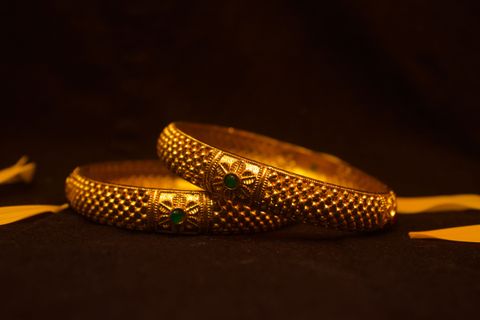
Unlike flexible gold chains or bangles, a kada generally has a broader, more structured shape. Its design can range from a simple polished band to an elaborate ornament featuring engraved patterns, floral details, gemstones, or traditional motifs.
Gold kada designs are available in different widths, weights, finishes, and gold purities. Some are created for everyday wear, while others are intended for weddings, festivals, and formal occasions.
The design of a kada is influenced by regional jewellery traditions, craftsmanship, current fashion preferences, and the intended wearer. Traditional Indian designs often feature detailed ornamentation, while contemporary styles may emphasize clean lines, geometric patterns, and minimal decoration.
Why Gold Kadas Remain Important in Indian Jewellery
Gold jewellery has a long-standing place in Indian cultural and family traditions. Kadas are worn by women and men, although their dimensions, patterns, and styling can vary.
They are commonly associated with:
Weddings and engagement celebrations
Festivals and religious occasions
Family ceremonies
Traditional clothing
Personal jewellery collections
Cultural and regional dressing styles
Heirloom jewellery traditions
A kada can also be selected according to practical preferences. Some people prefer a narrow design that fits comfortably beneath clothing, while others choose a wider decorative piece for special occasions.
Understanding the relationship between design, gold purity, weight, and construction can help readers evaluate different styles more clearly.
Popular Traditional Gold Kada Designs
Traditional gold kada designs often draw inspiration from Indian architecture, nature, religious symbolism, and regional jewellery-making techniques.
Some widely recognized design categories include:
Temple-inspired kada: Features motifs influenced by traditional temple art, floral patterns, and sculptural details.
Floral kada: Uses petal, leaf, and flower patterns arranged around the band.
Engraved kada: Includes decorative lines, traditional symbols, or repeated patterns carved into the surface.
Filigree kada: Uses delicate gold wirework to create intricate decorative structures.
Antique-finish kada: Has a textured or aged appearance that emphasizes traditional craftsmanship.
Plain traditional kada: Uses a simple rounded or flattened gold band with limited decoration.
These designs can vary between regions. South Indian jewellery, for example, often includes temple-inspired details, while other regional styles may emphasize geometric patterns, textured surfaces, or engraved motifs.
Designer Gold Kada Styles
A designer gold kada combines traditional jewellery elements with contemporary design approaches.
Modern designs may use asymmetry, contrasting finishes, openable mechanisms, or combinations of polished and textured surfaces.
Common design approaches include:
Geometric patterns
Minimalist bands
Two-tone gold finishes
Open-ended kada structures
Hinged designs
Diamond or gemstone accents
Interlocking decorative elements
Contemporary floral patterns
Matte and high-polish combinations
Some designs also use a combination of traditional motifs and modern proportions. This allows the jewellery to complement both ethnic and contemporary clothing.
Comparing Gold Purity: 24K and 18K Kada Designs
Gold purity is an important consideration when examining jewellery. Karat indicates the proportion of gold in an alloy, while fineness expresses gold content in parts per thousand.
24k gold kada designs are associated with very high gold purity. Pure gold is relatively soft, so a 24K piece may require careful handling, particularly if it has a delicate structure or is intended for frequent use.
18k gold kada designs contain 75% gold, with the remaining 25% made up of other metals used to create the alloy. This composition generally provides greater hardness than pure gold and can be suitable for designs involving detailed settings or gemstones.
| Gold Purity | Gold Content | Fineness Mark | General Characteristics |
|---|---|---|---|
| 24K fine gold | 99.9% | 999 | Very high purity; relatively soft |
| 24K standard gold | 99.5% | 995 | High-purity standard grade |
| 22K | 91.6% | 916 | Commonly associated with traditional gold jewellery |
| 18K | 75% | 750 | Greater alloy strength; suitable for detailed designs |
| 14K | 58.5% | 585 | Lower gold content and greater alloy proportion |
The Indian Standard IS 1417:2016 specifies grades and marking requirements for gold and gold-alloy jewellery and artefacts. The distinction between fine gold, standard gold, and jewellery grades is important when interpreting purity markings. <Cite refs={["turn781016search30","turn781016search31"]}/>
Gold Kada for Women: Design and Styling Considerations
A gold kada for women can be selected according to wrist size, clothing, occasion, and personal preference.
Some common styles include:
Slim kadas for understated everyday styling
Broad engraved designs for traditional clothing
Gemstone-accented kadas for formal occasions
Floral designs for festive wear
Openable kadas for easier wearing
Lightweight designs for extended use
The overall appearance also depends on the kada's width, surface finish, shape, and decorative details.
For example, a plain polished kada may complement a modern outfit, while a temple-inspired design may coordinate more naturally with traditional attire.
Lightweight Gold Kada Designs
Lightweight gold kada designs are generally created with narrower profiles, simpler patterns, or hollow and partially hollow construction.
They may be considered by people who prefer less weight on the wrist or want jewellery that can be worn for longer periods.
Important features to examine include:
Overall weight
Band thickness
Inner surface smoothness
Locking mechanism
Structural strength
Edge finishing
Comfort during wrist movement
A lightweight structure should still be examined for durability. Very thin sections, delicate joints, and complicated moving parts may require additional care.
Latest Gold Kada Designs and Current Trends
The latest gold kada designs reflect a combination of traditional craftsmanship and changing jewellery preferences.
Recent design directions include:
Minimalist gold bands
Textured and hammered finishes
Geometric patterns
Floral engraving
Two-tone designs
Openable kada structures
Gemstone detailing
Contemporary temple motifs
Lightweight decorative profiles
The wider Indian gold jewellery market has also experienced changing demand patterns in 2026.
According to the World Gold Council's India-focused Q3 2026 report, published on 3 November 2026, Indian jewellery demand increased 33% quarter-on-quarter to 100 tonnes during the July–September period. However, it remained 20% lower year-on-year. The report also noted that higher gold prices influenced jewellery volumes and household spending patterns. <Cite refs={["turn781016search2"]}/>
These market figures describe overall jewellery demand, not kada-specific sales or design popularity. They provide useful context for understanding the broader environment in which gold jewellery preferences are evolving.
Important Factors When Comparing Kada Designs
Different kadas may look similar but have different construction methods and practical characteristics.
| Feature | What to Examine |
|---|---|
| Width | Narrow, medium, or broad profile |
| Weight | Overall gold weight |
| Purity | Karat and fineness marking |
| Finish | Polished, matte, engraved, or antique |
| Structure | Solid, hollow, or partly hollow |
| Closure | Fixed, hinged, or openable |
| Decoration | Plain, floral, geometric, or gemstone |
| Comfort | Inner edges and wrist fit |
| Maintenance | Cleaning and handling requirements |
A clear comparison of these features can help distinguish appearance from practical suitability.
Laws and Hallmarking Rules in India
Gold jewellery in India is covered by the Bureau of Indian Standards (BIS) hallmarking framework.
The hallmark helps identify the declared purity and provides traceability through a unique identification number.
Under the current HUID-based hallmarking system, hallmarked gold jewellery carries three principal components:
BIS logo
Purity in carat and fineness
Six-digit alphanumeric Hallmark Unique Identification (HUID) number
The HUID can be checked through the BIS CARE app using its Verify HUID feature. <Cite refs={["turn781016search0","turn781016search1"]}/>
The mandatory hallmarking framework has also continued to receive amendments. BIS lists amendments dated 2 March 2026, 28 April 2026, and 3 August 2026 on its official Mandatory Hallmarking Order page. <Cite refs={["turn781016search3"]}/>
A Press Information Bureau update dated 2 March 2026 states that mandatory hallmarking covers six caratages: 14K, 18K, 20K, 22K, 23K, and 24KS. It also explains that 9K hallmarking is available as a voluntary grade under the relevant Indian Standard. <Cite refs={["turn781016search4"]}/>
When examining a kada, the hallmark and HUID should be checked where applicable. The markings provide information about purity and identification, but they do not by themselves describe design quality, craftsmanship, or personal suitability.
Useful Tools and Resources
The following resources can help readers understand gold purity, jewellery standards, and design characteristics.
BIS website: Provides information about hallmarking, Indian Standards, recognized hallmarking centres, and regulatory updates.
BIS CARE app: Includes the Verify HUID feature for checking details associated with a hallmarked jewellery article. <Cite refs={["turn781016search0"]}/>
IS 1417:2016: Provides technical information about gold and gold-alloy jewellery fineness and marking. <Cite refs={["turn781016search30"]}/>
Jewellery measurement guide: A wrist-measurement chart can help compare kada inner diameter and circumference.
Design comparison sheet: A simple table can record width, weight, purity, finish, closure type, and decorative features.
Jewellery care checklist: Record cleaning instructions, inspection dates, storage arrangements, and any visible changes in the clasp or surface.
Best Practices for Selecting and Maintaining a Gold Kada
A few practical steps can help when comparing different styles.
Measure the wrist accurately before examining sizes.
Check the inner diameter and opening mechanism.
Understand the difference between karat and fineness.
Examine the BIS hallmark and HUID where applicable.
Check the finish for rough edges or uneven surfaces.
Consider the relationship between weight and comfort.
Follow appropriate cleaning instructions.
Store jewellery separately to reduce scratching.
Avoid exposing delicate designs to unnecessary impact.
Arrange periodic inspection of hinges and clasps.
For gemstone or intricate designs, additional care may be necessary because settings and decorative components can be more delicate than a plain gold band.
Frequently Asked Questions
What are traditional gold kada designs?
Traditional gold kada designs are rigid bracelets featuring motifs such as flowers, leaves, temple-inspired patterns, engravings, filigree, and antique-style textures. Their appearance can vary across Indian regions.
What is the difference between 18K and 24K gold kada designs?
18K gold contains 75% gold and is alloyed with other metals, generally making it harder than pure gold. 24K gold has a much higher gold content but is relatively soft, so the construction and intended use should be considered.
Are lightweight gold kada designs suitable for regular wear?
They may be suitable depending on their construction, thickness, closure, and overall durability. The design should be checked for smooth edges and secure joints.
How can the purity of a gold kada be checked?
Where applicable, examine the BIS hallmark, purity marking, and six-digit HUID. The HUID can be verified through the BIS CARE app.
Which gold kada design is suitable for traditional occasions?
Temple-inspired, floral, engraved, and antique-finish designs are commonly associated with traditional clothing and ceremonial occasions. The appropriate choice depends on personal style and the overall jewellery combination.
Conclusion
Gold kadas remain an important part of Indian jewellery, combining traditional craftsmanship with changing design preferences. From engraved and temple-inspired patterns to minimalist bands and contemporary openable structures, the available styles cover a wide range of aesthetic preferences.
Understanding gold purity, construction, weight, comfort, and hallmarking is important when comparing different designs. The BIS hallmarking framework and HUID verification system also provide useful information about the purity identification of applicable hallmarked jewellery.
Whether exploring traditional gold kada designs, a designer gold kada, 18K gold kada designs, or lightweight gold kada designs, readers can make more informed comparisons by examining both design characteristics and technical details.
Disclaimer: This article is prepared solely for general informational and educational purposes. It does not claim to guarantee the purity, quality, authenticity, value, or performance of any particular jewellery item or design. The information is not intended as financial, investment, or professional jewellery advice. We do not sell, promote, or endorse any product, brand, jeweller, or commercial establishment. Readers should independently verify product specifications, hallmark details, and applicable regulations through official sources and qualified professionals.

Related Post...
Temple Jewellery Designs: Explore Styles, Trends, Insights, Suggestions, and Useful Resources
Updated: November 04, 2026
Read More
Lightweight Gold Jewellery: Explore Styles, Trends, Insights, Suggestions, and Useful Resources
Updated: November 03, 2026
Read More
Ruby Jewellery Collection: Complete Guide to Basics, Designs, Facts, Knowledge, and Best Practices
Updated: November 04, 2026
Read More