HDPE Pipe Extrusion Machines: Complete Guide to Basics, Techniques, Facts, Knowledge, and Best Practices
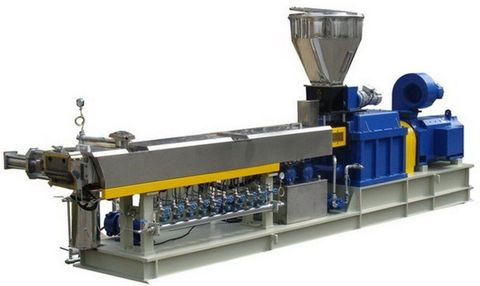
HDPE pipe extrusion machines are industrial systems used to manufacture pipes from high-density polyethylene resin. The extrusion process continuously converts polymer material into a pipe with a controlled diameter, wall thickness, and length.
HDPE pipes are commonly associated with water distribution, irrigation, drainage, industrial applications, gas networks, and other infrastructure projects. Their flexibility, chemical resistance, and relatively low weight make polyethylene an important material for many piping applications.
An HDPE pipe extrusion machine normally works as part of a larger production arrangement rather than operating alone. A complete setup can include a material loading system, extruder, die head, calibration equipment, cooling tanks, haul-off unit, cutting equipment, and pipe stacking or coiling equipment.
A simplified process is:
Polyethylene resin → Feeding → Melting → Extrusion → Sizing → Cooling → Haul-off → Cutting or Coiling → Inspection
The exact configuration depends on pipe diameter, wall thickness, pressure classification, material grade, and intended application.
Why HDPE Pipe Extrusion Matters
Modern water, irrigation, drainage, telecommunications, and industrial infrastructure requires piping that can withstand different environmental and operating conditions.
An HDPE pipe production line provides a continuous method for producing pipes with controlled dimensions. Consistent extrusion parameters can help manufacturers maintain uniformity throughout a production run.
HDPE pipes are used in areas such as:
Potable-water distribution
Irrigation networks
Wastewater systems
Drainage
Industrial fluid transportation
Mining applications
Telecommunications ducting
Gas distribution
Underground infrastructure
The technology is relevant to pipe manufacturers, infrastructure contractors, irrigation projects, municipal utilities, engineers, testing laboratories, and organizations involved in water and industrial infrastructure.
Main Components of HDPE Pipe Extrusion Equipment
An HDPE pipe extrusion equipment setup consists of several coordinated components.
| Component | Main Function |
|---|---|
| Hopper and loader | Transfers polymer material into the extrusion system |
| Extruder | Melts and conveys the polymer |
| Screw and barrel | Controls material movement and melting |
| Die head | Shapes molten polymer into a tubular form |
| Vacuum calibration tank | Controls initial pipe dimensions |
| Cooling tank | Removes heat from the extruded pipe |
| Haul-off unit | Pulls the pipe through the production line |
| Cutting unit | Cuts pipes to predetermined lengths |
| Coiler | Collects suitable smaller-diameter pipes |
| Control system | Monitors and adjusts production parameters |
| Marking system | Applies identification and manufacturing information |
The extruder is the central component. Polymer pellets enter the barrel, where controlled heating and mechanical action transform the material into a homogeneous melt.
The die then shapes the melt into a continuous tubular profile.
How an HDPE Pipe Production Line Works
The first stage involves feeding polyethylene material into the extruder. The resin is heated progressively rather than simply being exposed to one temperature.
Inside the extruder, the screw transports and mixes the material while controlling melt flow.
After the polymer exits the die, it enters the calibration and cooling section. Vacuum calibration can help establish the required external dimensions.
Cooling is important because the pipe must solidify while maintaining its intended geometry.
The haul-off system then moves the pipe at a controlled speed. The relationship between extrusion output and haul-off speed has a direct influence on wall thickness.
Finally, the pipe can be cut into specified lengths or continuously coiled when the diameter and application permit.
Important Technical Parameters
Several parameters influence extrusion quality.
Key factors include:
Resin grade
Melt temperature
Screw speed
Extrusion output
Die dimensions
Vacuum level
Cooling-water temperature
Haul-off speed
Wall thickness
Pipe diameter
Material moisture and contamination
Cooling time
These variables are interconnected. Increasing haul-off speed, for example, can affect the dimensions and wall thickness of the finished pipe if extrusion output is not adjusted accordingly.
A production team therefore needs to monitor the complete process rather than changing individual settings without considering their relationship with other parameters.
Automatic HDPE Pipe Extrusion Machines
An automatic HDPE pipe extrusion machine incorporates automated controls into one or more parts of the extrusion process.
Modern control systems may monitor:
Barrel temperature
Die temperature
Screw speed
Motor load
Vacuum pressure
Cooling conditions
Haul-off speed
Production length
Alarm conditions
Automation can improve process repeatability and make it easier for operators to observe production parameters.
Some systems also store production recipes or operating parameters for different pipe specifications.
However, automation does not remove the importance of material testing, dimensional inspection, preventive maintenance, and operator knowledge.
HDPE Pipe Extrusion System and Quality Control
An HDPE pipe extrusion system should be considered together with testing and inspection procedures.
Common checks can include:
Outside diameter
Wall thickness
Ovality
Appearance
Material identification
Melt flow characteristics
Density
Carbon-black content for applicable products
Carbon-black dispersion
Hydrostatic pressure performance
Elongation
Slow-crack-growth characteristics
For water-supply polyethylene pipes, BIS identifies IS 4984:2016, "Polyethylene Pipes for Water Supply – Specification," as the applicable Indian Standard. BIS states that the standard was reviewed in 2026 and reaffirmed in July 2026. It includes PE 63, PE 80, and PE 100 classifications and has two amendments.
BIS testing information also shows laboratories evaluating characteristics such as melt flow rate, oxidation induction time, carbon black content and dispersion, internal pressure performance, longitudinal reversion, tensile strength, and slow crack growth.
Recent Developments and Updates
HDPE pipe manufacturing continues to develop alongside improvements in polymer materials, extrusion controls, testing systems, and infrastructure requirements.
A notable current development is the continued application and review of IS 4984:2016. BIS's current database records the standard as reviewed in 2026, with its reaffirmation dated July 2026.
The second amendment to IS 4984 introduced several technical changes. BIS documentation notes updated requirements for polyethylene resins and pre-compounded black material, modified base-density and melt-flow requirements, additional pipe sizes, and restrictions concerning the use of in-house rework material.
BIS laboratory information also shows continuing testing capacity for the standard during 2025 and 2026, including facilities covering different pipe diameters and grades.
These developments highlight a broader industry direction toward better material traceability, process control, laboratory verification, and dimensional consistency.
Comparing Production Configurations
Different production requirements can require different machine configurations.
| Requirement | Typical Configuration |
|---|---|
| Small-diameter pipe | Compact extruder and coiling system |
| Medium-diameter pipe | Extruder, calibration, cooling and cutting |
| Large-diameter pipe | Higher-capacity extrusion and extensive cooling |
| Long continuous pipe | Haul-off and coiling arrangement |
| Multiple diameters | Flexible die and tooling configuration |
| High automation | PLC, sensors and centralized control |
| Water-supply pipe | Production and testing aligned with applicable standards |
A machine designed for small irrigation tubing should not automatically be considered suitable for large-diameter pressure pipes.
Tooling, extruder capacity, cooling capability, haul-off strength, and testing requirements all need to match the intended product range.
Environmental and Material Considerations
HDPE is a thermoplastic material, which means production scrap can potentially be reprocessed under controlled conditions when permitted by the applicable product specification and manufacturing process.
However, recycled or reworked material cannot simply be introduced without considering product requirements.
For example, BIS documentation for IS 4984 identifies restrictions concerning the use of a manufacturer's own rework material.
Plastic-waste management is also regulated in India. The Ministry of Environment, Forest and Climate Change maintains the Plastic Waste Management Rules and amendments, including the Plastic Waste Management (Amendment) Rules, 2024, notified on 14 March 2024.
The 2024 amendment strengthened provisions concerning plastic-waste collection, reporting, and Extended Producer Responsibility for specified plastic packaging.
HDPE pipes themselves should not automatically be treated as plastic packaging. Their waste-management treatment depends on the specific material, application, and applicable regulatory category.
Laws, Standards, and Policies in India
For manufacturers producing HDPE pipes for water-supply applications, the relevant Indian Standard is an important technical reference.
IS 4984:2016: BIS identifies this as the specification for polyethylene pipes for water supply. The current BIS record shows a 2026 review and July 2026 reaffirmation.
The standard addresses material requirements, dimensions, performance characteristics, testing, and classifications relevant to polyethylene water-supply pipes.
The standard also distinguishes different polyethylene grades and pressure-related classifications. BIS's technical summary identifies PE 63, PE 80, and PE 100 grades.
Manufacturers should verify the current edition, amendments, certification requirements, and project-specific specifications before producing pipes for regulated or infrastructure applications.
Environmental regulations can also become relevant to polymer processing, particularly regarding plastic waste, emissions, water management, and disposal of production residues. Applicable requirements can vary according to the facility and local regulatory authority.
Tools and Useful Resources
Several resources can help engineers, manufacturers, students, and researchers understand HDPE pipe extrusion.
BIS Standards Database: Useful for checking the current status, amendments, and technical information associated with IS 4984:2016.
BIS Laboratory Information Management System: Provides information about laboratories and testing capabilities associated with IS 4984.
CIPET resources: The Central Institute of Petrochemicals Engineering & Technology is relevant for polymer processing, testing, training, and technical education.
Extrusion calculation spreadsheet: Useful for recording pipe diameter, wall thickness, extrusion output, haul-off speed, and cooling parameters.
Quality-control checklist: Can track dimensional inspection, material identification, appearance, pressure testing, and laboratory results.
Maintenance schedule: A structured log can record screw and barrel inspections, heater checks, cooling-system maintenance, calibration equipment, sensors, and haul-off components.
Best Practices for HDPE Pipe Extrusion
Good extrusion practice requires coordination between material preparation, machine settings, cooling, dimensional control, and testing.
Important practices include:
Verify resin specifications before production.
Keep raw material clean and properly identified.
Monitor barrel and die temperatures.
Maintain stable extrusion output.
Control haul-off speed carefully.
Monitor pipe dimensions continuously.
Maintain suitable cooling conditions.
Inspect the die and calibration components regularly.
Keep vacuum systems properly maintained.
Record production parameters.
Test finished pipes according to the applicable specification.
Separate nonconforming material from approved production.
Maintain traceability for batches and production runs.
Preventive maintenance is particularly important because worn screws, damaged dies, unstable temperature controls, or inaccurate sensors can influence pipe quality.
Frequently Asked Questions
What is an HDPE pipe extrusion machine?
It is industrial equipment that melts and continuously shapes high-density polyethylene resin into pipe. The extruded pipe is then calibrated, cooled, pulled, cut, or coiled according to its intended specification.
What is included in an HDPE pipe production line?
A typical line can include a material loader, extruder, die head, calibration tank, cooling tanks, haul-off unit, cutting or coiling equipment, control system, and marking equipment.
What factors affect HDPE pipe quality?
Material grade, extrusion temperature, screw speed, die design, cooling conditions, haul-off speed, dimensional control, and testing procedures can all influence finished-pipe characteristics.
Which Indian Standard applies to polyethylene water-supply pipes?
BIS identifies IS 4984:2016 as the Indian Standard for polyethylene pipes for water supply. The BIS record shows that it was reviewed in 2026 and reaffirmed in July 2026.
Can recycled HDPE material be used during pipe production?
The answer depends on the applicable product specification and application. Material rework may be subject to specific restrictions. For example, the BIS implementation guidance for IS 4984 includes restrictions on the use of a manufacturer's own rework material.
Conclusion
HDPE pipe extrusion machines form the core of a continuous manufacturing process that converts polyethylene resin into controlled pipe profiles. A complete HDPE pipe extrusion system combines extrusion, sizing, cooling, hauling, cutting or coiling, control, and quality inspection.
Understanding the relationship between resin characteristics, machine settings, tooling, cooling, and haul-off conditions is essential for consistent production.
In India, IS 4984:2016 remains an important reference for polyethylene pipes used for water supply. Its 2026 review and reaffirmation demonstrate the continuing importance of maintaining current technical requirements and testing practices.
At the same time, plastic-waste regulations and broader environmental requirements remain relevant to polymer-processing facilities. The Plastic Waste Management Rules and their amendments provide an important regulatory framework for applicable plastic-waste activities.
For anyone researching HDPE pipe extrusion equipment, an HDPE pipe making machine, or an automatic HDPE pipe extrusion machine, the most useful approach is to evaluate the complete production process rather than focusing on a single machine component. Material compatibility, tooling, dimensional control, testing, safety, maintenance, and applicable standards should all be considered together.
Disclaimer: This article is provided for general informational and educational purposes only. It does not constitute engineering, legal, regulatory, certification, or technical advice. No claims are being made regarding the performance, quality, suitability, or compliance of any particular machine, manufacturer, equipment, or product. This article is not intended to sell, promote, endorse, or recommend any product or organization. Readers should verify current standards, regulations, technical specifications, and project requirements with the relevant authorities, qualified professionals, and applicable documentation before making technical or operational decisions.

Related Post...
Copper Wire Recycling Machines: Discover Information, Facts, Tips, Resources, and Expert Advice
Updated: October 28, 2026
Read More