Laser Cutting Machines: Discover Information, Facts, Tips, Resources, and Expert Advice
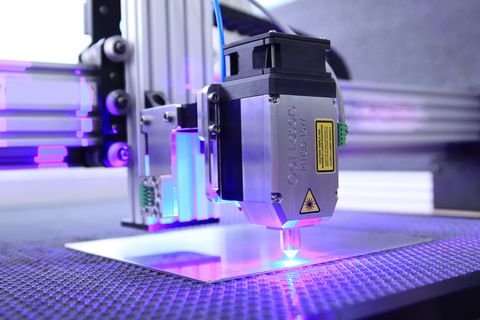
A laser cutting machine uses a concentrated beam of light to cut, engrave, or process materials with controlled precision. The laser generates intense energy in a focused area, causing the material to melt, vaporize, or react depending on the material and cutting process.
Modern laser cutting machines are commonly integrated with computer numerical control (CNC) systems. A digital design is converted into machine instructions that control movement along the cutting path.
Laser technology is used across several industries, including:
Metal fabrication
Automotive manufacturing
Electronics
Aerospace
Sheet-metal processing
Industrial equipment
Sign and display production
Furniture components
Medical-device manufacturing
General engineering
A CNC laser cutting machine combines laser technology with computerized motion control. This allows the machine to follow programmed geometries repeatedly while adjusting parameters such as speed, power, and cutting paths.
Why Laser Cutting Technology Matters
Laser cutting has become an important manufacturing technology because it can produce complex shapes without requiring a conventional mechanical cutting tool to physically contact the material.
A properly configured system can support:
Accurate cutting
Repeatable production
Complex geometries
Narrow cutting widths
Automated material handling
Digital design integration
Reduced mechanical contact
Rapid changes between digital designs
The technology is particularly useful for manufacturers processing sheet materials where multiple components need to be cut from a common sheet.
However, laser cutting is not automatically appropriate for every application. Material type, thickness, reflectivity, thermal characteristics, required tolerance, production volume, and machine configuration all influence the result.
How a Laser Cutting System Works
A typical laser cutting system contains several coordinated components.
| Component | Main Function |
|---|---|
| Laser source | Generates the laser beam |
| Beam delivery system | Directs the beam |
| Focusing optics | Concentrates the beam on the workpiece |
| Cutting head | Controls the interaction between beam and material |
| Motion system | Moves the cutting head or workpiece |
| CNC controller | Coordinates programmed movements |
| Assist-gas system | Helps remove molten material |
| Work table | Supports the material |
| Exhaust system | Removes fumes and particulates |
| Safety enclosure | Helps control hazardous radiation and access |
The cutting process is influenced by laser power, focal position, cutting speed, assist gas, nozzle condition, material properties, and material thickness.
Major Types of Laser Cutting Machines
Different laser configurations are designed for different materials and production requirements.
Fiber laser systems are widely associated with metal processing. They can be used for materials such as mild steel, stainless steel, aluminum, brass, and other suitable metals, depending on the system.
CO₂ laser systems have traditionally been used for a wider range of non-metallic materials and some metal applications.
Sheet metal laser cutting machines are designed around flat sheets and plates. Automated loading and unloading systems can be integrated into larger production lines.
Tube and pipe laser systems use specialized workholding and rotary mechanisms to process cylindrical or structural sections.
5 axis laser cutting machines provide movement across multiple axes, allowing more complex three-dimensional cutting operations. These systems are useful where conventional two-dimensional cutting cannot provide the required geometry.
Laser Cutting for Metal
A metal laser cutting machine uses concentrated optical energy to process metal with controlled heat input.
Different metals behave differently during laser processing.
| Material | Common Considerations |
|---|---|
| Mild steel | Widely processed in industrial fabrication |
| Stainless steel | Requires appropriate power and process settings |
| Aluminum | Reflective and thermally conductive |
| Brass | Reflective characteristics require suitable equipment |
| Copper | High reflectivity and thermal conductivity are important |
| Titanium | Requires controlled processing conditions |
| Galvanized steel | Coating and fume considerations are important |
Material thickness is equally important. A machine capable of cutting thin sheet does not necessarily provide the same performance on thick plate.
Manufacturers should therefore evaluate the machine's actual rated material range instead of relying only on the maximum laser-power specification.
Recent Trends in Laser Cutting and Manufacturing
India's manufacturing sector is increasingly adopting automation, digitalization, and process-driven production. IBEF's current manufacturing overview notes that technology and digital transformation are reshaping industrial production, while government initiatives such as Make in India and the National Mission on Manufacturing are supporting broader manufacturing development.
Invest India reports that India's machine-tool consumption grew at a compound annual growth rate of approximately 15% between FY2020 and FY2024. Its capital-goods overview also places India's machine-tools market at approximately US$1.7 billion in 2024.
These developments provide context for the growing importance of automated cutting equipment.
Recent technology trends include:
Higher levels of CNC automation
Automated loading and unloading
Vision-based inspection
Production monitoring
Digital nesting
Automated nozzle alignment
Predictive maintenance
Remote machine diagnostics
Robotic material handling
Integration with manufacturing software
Another major trend is greater integration between design software and production equipment. Digital files can move from CAD systems to nesting software and then to CNC equipment with fewer manual data conversions.
Understanding Laser Cutting Machine Price
Searches for laser cutting machine price can be difficult to interpret because machines differ substantially in configuration.
Instead of focusing on one figure, compare the technical specifications that influence the overall financial requirement.
Important variables include:
Laser source type
Laser power
Working-area dimensions
Maximum material thickness
CNC controller
Cutting head
Motion-system design
Automation level
Loading system
Gas requirements
Chiller configuration
Exhaust system
Software
Installation requirements
Maintenance requirements
A basic compact system and a fully automated industrial cell are fundamentally different machines.
A useful comparison table is:
| Specification | Questions to Ask |
|---|---|
| Laser source | Fiber, CO₂, or another technology? |
| Power | Is it appropriate for the required materials? |
| Work area | Does it accommodate the largest expected sheet? |
| Accuracy | What tolerance is required for the application? |
| Speed | What is the appropriate production rate? |
| Automation | Is automatic loading or unloading required? |
| Software | Does it support existing CAD/CAM workflows? |
| Safety | What enclosure and interlock systems are included? |
| Maintenance | What routine inspections are required? |
Laser Cutting Machine Maintenance
Laser cutting machine maintenance is important for maintaining consistent cutting performance and reducing avoidable interruptions.
Maintenance requirements differ by machine, but commonly include:
Inspecting optics
Checking protective windows
Cleaning appropriate machine areas
Inspecting nozzles
Checking cooling systems
Monitoring assist-gas systems
Inspecting filters
Checking lubrication systems
Examining rails and motion components
Checking electrical connections
Reviewing error logs
Verifying calibration
Maintenance should follow the equipment manufacturer's technical documentation.
Operators should not open laser sources, high-voltage equipment, or other hazardous components unless they are specifically authorized and trained to perform that work.
Safety Considerations
Laser cutting involves several potential hazards, including optical radiation, hot materials, fumes, moving components, electrical systems, noise, and fire.
BIS guidance on thermal cutting machines identifies mechanical, thermal, noise, radiation, and material-related hazards. It also references IS 16819 / ISO 12100 for machinery risk assessment and risk reduction and IS 18165 / ISO 17916 for protective measures associated with thermal cutting machines.
Important safety practices include:
Use appropriate machine guarding.
Keep safety interlocks operational.
Do not bypass protective systems.
Use appropriate ventilation and extraction.
Follow laser-radiation safety procedures.
Keep combustible materials away from cutting areas.
Maintain suitable fire-safety arrangements.
Train operators before machine use.
Follow lockout and isolation procedures during appropriate maintenance.
Keep emergency-stop systems accessible.
Follow the manufacturer's operating instructions.
The exact controls required depend on the machine design and workplace environment.
Laws, Standards, and Policies in India
India's machinery-safety framework is becoming increasingly structured.
BIS's current Scheme-X information includes safety certification for machinery and specifically provides guidelines for metal cutting machines. The BIS page was updated on 1 April 2026.
BIS also lists machinery and electrical equipment covered by the Omnibus Technical Regulation, including metal-cutting machine tools under headings 8456 to 8461. The framework references machinery-safety standards and amendments issued during 2025 and 2026.
BIS's machine-safety certification process was updated in August 2026, including guidance for Scheme-X certification.
The Know Your Standard platform, updated in May 2026, allows users to search Indian Standards by standard number or keyword and access related documents, amendments, testing information, and other details.
Workplace safety also remains relevant. The Ministry of Labour and Employment identifies occupational safety, health, and welfare requirements as important components of India's factory-safety framework, with state authorities playing an important enforcement role.
Because machinery regulations can change and applicability depends on the specific machine and use case, manufacturers and users should verify the latest BIS notifications and applicable workplace requirements.
Tools and Useful Resources
Several tools can help when researching or operating laser cutting equipment.
CAD software: Used to create or modify digital component drawings.
CAM and nesting software: Arranges parts on sheets and generates machine instructions.
Material-thickness chart: Records recommended processing parameters for different materials.
Maintenance checklist: Tracks optics, nozzles, filters, cooling systems, lubrication, and inspections.
Production log: Records material type, thickness, machine settings, cutting results, and production observations.
BIS Know Your Standard: Useful for locating applicable Indian Standards and related documents.
BIS machinery-safety resources: Useful for researching certification and safety requirements applicable to machinery.
Practical Selection Checklist
Before selecting a laser cutting system, evaluate the complete production requirement.
Identify the materials to be processed.
Record the minimum and maximum material thickness.
Determine the required work-area dimensions.
Establish required dimensional tolerances.
Evaluate expected production volumes.
Compare fiber and CO₂ technologies where relevant.
Check software compatibility.
Examine safety enclosure and interlock arrangements.
Review extraction and ventilation requirements.
Understand cooling requirements.
Evaluate loading and unloading needs.
Review maintenance procedures.
Check availability of technical documentation.
Verify applicable Indian Standards and regulations.
For advanced applications, also determine whether a conventional three-axis system is sufficient or whether a 5 axis laser cutting machine is actually required.
Frequently Asked Questions
What is a CNC laser cutting machine?
A CNC laser cutting machine combines a laser cutting system with computer-controlled motion. Digital instructions determine the cutting path and coordinate machine movements.
What materials can a metal laser cutting machine process?
Depending on the machine configuration, suitable metals can include mild steel, stainless steel, aluminum, brass, copper, and titanium. Material thickness and machine specifications determine the practical processing range.
What affects laser cutting machine price?
Laser source, power, work area, automation, CNC controls, cutting head, cooling system, software, material capacity, and additional equipment can all affect the overall financial requirement.
How often does laser cutting machine maintenance need to be performed?
There is no universal interval. Maintenance schedules depend on the machine design, operating hours, materials processed, environment, and manufacturer's instructions. Routine inspections may be more frequent than major maintenance procedures.
Are laser cutting machines regulated in India?
Certain machinery and machine-tool categories are covered by Indian regulatory and conformity-assessment frameworks. BIS currently provides Scheme-X machinery-safety guidance and lists metal-cutting machines among relevant categories. Applicability should be checked for the specific equipment.
Conclusion
Laser cutting machines are important tools in modern manufacturing because they combine concentrated optical energy with computer-controlled motion. They can process complex shapes in sheet metal and other suitable materials while supporting digitally controlled production.
The technology ranges from compact CNC equipment to sophisticated industrial systems with automated material handling, inspection, and multi-axis movement.
Recent developments in India point toward greater automation and digital manufacturing. Machine-tool consumption has grown significantly in recent years, while government and industry initiatives continue to encourage modernization of manufacturing processes.
Safety is equally important. Laser radiation, heat, fumes, moving machinery, electrical systems, and fire risks require appropriate engineering controls, operator training, maintenance procedures, and workplace safeguards.
For anyone researching a CNC laser cutting machine, sheet metal laser cutting machine, or laser cutting equipment, the most useful approach is to compare material compatibility, work area, accuracy, automation, safety, maintenance, software integration, and applicable standards rather than focusing on a single specification.
Disclaimer: This article is provided for general informational and educational purposes only. It does not claim to provide professional engineering, legal, regulatory, safety, or technical advice. Information, standards, regulations, machine specifications, and industry practices can change, so readers should verify current requirements with the relevant authorities, standards organizations, equipment documentation, and qualified professionals. This article is not intended to sell, promote, endorse, or recommend any particular laser cutting machine, manufacturer, product, or equipment.

Related Post...
Heavy Construction Machinery: Explore Types, Features, Insights, Suggestions, and Useful Resources
Updated: October 22, 2026
Read More
Cement Mixing Machines: Complete Guide to Basics, Techniques, Facts, Knowledge, and Best Practices
Updated: October 23, 2026
Read More
3D Metal Printers: Explore Overview, Basics, Explanation, Knowledge, and Key Details
Updated: October 22, 2026
Read More