Mahindra Vision S Compact SUV: Complete Guide to Design, Technologies, Features, Facts, and Best Practices
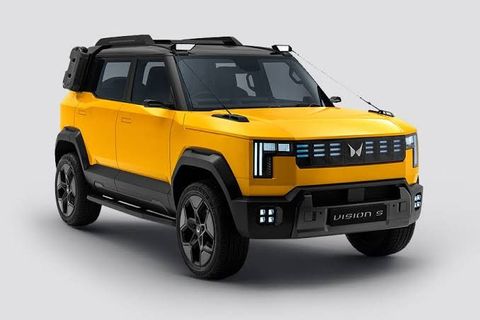
The Mahindra Vision S compact SUV is an upcoming vehicle based on Mahindra's Vision S concept, unveiled on 15 August 2025 as part of the company's Vision 2027 programme. The concept previews a compact, upright SUV with rugged styling, a modern cabin and a modular vehicle platform designed to support different powertrain technologies.
The production version is expected to join Mahindra's SUV range in India. Its development has attracted attention because of its boxy exterior, short body overhangs, tailgate-mounted spare wheel and potential petrol, diesel or other powertrain options.
However, the Vision S is not yet a fully specified production vehicle. Some details come from the original concept, while others have been observed on camouflaged test vehicles or reported by automotive publications. These should be distinguished from features and specifications officially confirmed by Mahindra.
This guide covers the Mahindra Vision S compact SUV's exterior and interior design, platform, expected engine options, safety features, technology, launch timeline, regulations and useful resources.
Mahindra Vision S compact SUV: Overview
The Vision S is part of Mahindra's wider Vision concept family, which was introduced alongside the Vision X, Vision T and Vision SXT. It represents a compact SUV direction under the company's HEARTCORE design philosophy.
The production vehicle is expected to use the NU_IQ modular platform. Mahindra has stated that this architecture can accommodate different vehicle sizes and powertrain types, giving the company flexibility to develop vehicles for different markets.
Key details include:
Vehicle category: Compact SUV
Concept unveiling: 15 August 2025
Platform: Mahindra NU_IQ
Body style: Five-door SUV
Expected seating: Five occupants
Expected length: Under four metres
Reported wheelbase: Approximately 2,665 mm
Powertrain possibilities: Petrol, diesel, hybrid and electric at the platform level
Expected production introduction: By June 2027, according to November 2026 reporting
These details should be treated as concept information and reported expectations until Mahindra publishes the final production specification sheet.
Mahindra Vision S exterior design
The Mahindra Vision S exterior design uses a boxy shape and upright proportions to create a rugged SUV appearance. Unlike many rounded urban compact SUVs, the concept has squared windows, pronounced wheel arches and a relatively flat roofline.
Its exterior design includes several distinctive elements:
Front lighting: The concept features inverted L-shaped LED lighting elements with vertically arranged light details.
Front grille: A prominent grille with vertical styling elements gives the front a strong identity.
Clamshell-style bonnet: The raised bonnet design contributes to the upright appearance.
Wheel arches: Flared arches and body cladding create a robust visual profile.
Short overhangs: Compact front and rear overhangs contribute to the vehicle's proportions.
Flush door handles: These provide a cleaner appearance along the side panels.
Roof rails: The roof design supports the SUV's utility-oriented styling.
Rear-mounted spare wheel: The spare wheel on the tailgate is one of the concept's most recognisable details.
Vertical rear lights: The upright rear lighting arrangement complements the squared-off tailgate.
Later prototype sightings have shown that several concept design elements are being carried into the production development vehicle. Reports have also identified projector-style headlights, a vertical grille arrangement, a roof spoiler and a tailgate-mounted spare wheel. Final exterior equipment may still change.
Mahindra Vision S interior design
The Mahindra Vision S interior design has evolved between the original concept and the production-specification test vehicles. The concept displayed a futuristic dashboard, digital instrumentation and a modern steering wheel. Later spy images suggest that the production cabin may use a more conventional arrangement with practical controls.
Interior details reported or observed include:
Driver information display: Test vehicles have shown an instrument display positioned within a dashboard binnacle.
Central touchscreen: The infotainment unit appears similar in design to screens used in other Mahindra SUVs.
Physical climate controls: Buttons and rotary controls appear to be retained for everyday cabin functions.
Dashboard air vents: Prominent air vents carry forward part of the concept's styling.
Steering wheel: Later test vehicles have shown a two-spoke design similar to that used in other Mahindra models.
Panoramic sunroof: A full-length panoramic glass roof has been seen on test vehicles.
Rear seating: Spy images indicate a split-folding rear seat arrangement.
Cabin storage: Door pockets, cup holders and smaller storage areas have been observed.
September 2026 reports described a touchscreen resembling the 10.25-inch unit used in other Mahindra SUVs, along with revised climate controls and a different steering-wheel design. The screen size and equipment should be considered provisional until confirmed by Mahindra.
Cabin practicality
A compact SUV needs to balance passenger comfort, luggage space and exterior dimensions. The reported 2,665 mm wheelbase could help provide useful cabin space for its size.
When the production model is revealed, important details to examine will include:
Front and rear legroom
Rear-seat headroom
Seat cushioning and adjustment
Rear passenger access
Boot capacity
Rear-seat folding arrangements
Storage compartments and charging points
No official luggage-capacity figure or complete cabin measurement has been published yet.
Mahindra Vision S platform and architecture
The Vision S is expected to be based on Mahindra's NU_IQ modular platform, introduced during the Vision 2027 announcement in August 2025.
Mahindra designed this architecture to support different vehicle dimensions, body styles and powertrain technologies. The company has stated that the platform can accommodate vehicles between approximately 3,990 mm and 4,320 mm in length. It also supports front-wheel-drive and all-wheel-drive configurations at the architecture level.
Important platform characteristics include:
Modular vehicle architecture
Support for internal combustion engines
Compatibility with hybrid powertrains
Potential fully electric configurations
Front-wheel-drive and all-wheel-drive capability
Adaptability for right-hand-drive and left-hand-drive markets
Design flexibility for different SUV sizes
The platform's capabilities do not confirm that every configuration will be offered on the Vision S. The production vehicle's actual drivetrain and powertrain range will depend on Mahindra's final product decisions.
Mahindra Vision S engine options and performance
The Mahindra Vision S engine options have not yet been officially confirmed in a final production specification sheet. The NU_IQ platform supports several powertrain technologies, but the exact engines selected for this SUV remain subject to confirmation.
Automotive reports have discussed petrol and diesel versions, with hybrid technology also possible at the platform level. Test-vehicle observations have suggested an automatic transmission and a possible diesel-powered prototype.
Powertrain | Current information |
|---|---|
Petrol | Expected possibility; exact engine not confirmed |
Diesel | Reported possibility; test-vehicle details suggest diesel development |
Hybrid | Supported by the NU_IQ platform; Vision S availability unconfirmed |
Electric | Platform-compatible, but a production Vision S electric version is not confirmed |
Manual transmission | Reported as a possibility in test-vehicle observations |
Automatic transmission | Seen in test vehicles; final gearbox options not announced |
Possible engine direction
Some reports have discussed the possibility of petrol and diesel engines related to Mahindra's existing compact SUV range. The 1.2-litre turbo-petrol and 1.5-litre diesel engines used in other Mahindra vehicles are among the powertrains mentioned in industry speculation.
These are possibilities rather than confirmed Vision S engine specifications. Exact displacement, power, torque, fuel efficiency and transmission combinations should not be treated as final until Mahindra releases official figures.
Expected driving characteristics
The Vision S's driving experience will depend on its final engine, transmission, suspension and drivetrain configuration. Important areas to assess after its introduction will include:
Low-speed response in city traffic
Highway acceleration
Gearbox smoothness
Steering response
Ride comfort on uneven roads
Braking performance
Fuel efficiency or electric driving range
Traction on loose or slippery surfaces
Its boxy appearance may suggest a rugged character, but exterior styling alone does not establish off-road capability. Ground clearance, approach and departure angles, underbody protection and drivetrain specifications will be important factors.
Mahindra Vision S safety features
Mahindra has not yet released a complete production-specification safety list for the Vision S. Its final safety equipment will depend on the selected variant and the vehicle's homologated configuration.
The following are important safety systems to look for when the production vehicle is officially introduced:
Safety technology | Purpose |
|---|---|
Multiple airbags | Help protect occupants in certain collisions |
Anti-lock Braking System (ABS) | Helps prevent wheel lock during hard braking |
Electronic Stability Control (ESC) | Helps maintain vehicle stability |
Traction control | Helps manage wheel slip |
Hill-start assistance | Helps reduce rollback on inclines |
Rear parking camera | Supports reversing visibility |
Parking sensors | Help identify nearby obstacles |
Electronic parking brake | Controls the parking brake electronically |
Advanced Driver Assistance Systems (ADAS) | May provide selected collision warnings and driving assistance |
Some prototype observations have indicated the presence of a radar-like module area and other equipment that could be associated with driver-assistance technology. These observations do not confirm a particular ADAS package.
Safety information to verify
When Mahindra announces the production model, readers should check:
Number and placement of airbags
Availability of ESC and traction control
Child-seat anchorage provisions
Rear camera and parking sensors
ADAS functions, if provided
Structural safety information
Applicable crash-test results
A Bharat NCAP rating should only be attributed to the Vision S if the production model receives an official assessment.
Mahindra Vision S technology and connectivity
The Vision S concept and production test vehicles indicate a focus on digital displays, modern infotainment and integrated vehicle electronics.
Potential technology areas include:
Digital driver information display
Touchscreen infotainment
Smartphone connectivity
Steering-mounted controls
Connected-car functions
Electronic vehicle settings
Driver-assistance integration
Digital climate and convenience controls
Mahindra's wider NU_IQ development strategy also includes its next-generation electronic architecture, known as NU_UX. The production Vision S's actual software features, connected functions and display specifications have not yet been fully announced.
Mahindra Vision S dimensions and expected specifications
The Vision S concept is designed as a sub-four-metre SUV. Mahindra's concept information and automotive reports identify a wheelbase of approximately 2,665 mm. The final production dimensions and technical figures will need confirmation.
Specification | Available information |
|---|---|
Vehicle category | Compact SUV |
Body style | Five-door SUV |
Platform | NU_IQ |
Overall length | Under 4,000 mm |
Reported wheelbase | Approximately 2,665 mm |
Seating capacity | Expected five seats |
Powertrain | Petrol, diesel and other possibilities |
Transmission | Manual or automatic possibilities |
Drivetrain | FWD/AWD supported by platform |
Production timeline | Expected by June 2027 |
These figures are preliminary and should not be used as a substitute for the final manufacturer's specification sheet.
Mahindra Vision S launch date and production timeline
Mahindra unveiled the Vision S concept on 15 August 2025 as part of its Vision 2027 programme. At the time, the company stated that vehicles based on the NU_IQ architecture would enter production from 2027.
The development programme has progressed through prototype testing and design updates. Interior and exterior details have appeared in automotive reports during 2026.
In November 2026, Mahindra confirmed plans to introduce three new models in India by June 2027. The production-specification SUV based on the Vision S concept is included in this planned product activity. This gives a clearer expected timeframe, although it is not an exact public launch date.
Expected introduction: By June 2027.
Mahindra has not yet confirmed the final production name, exact launch day, variant structure or complete specifications.
Recent developments and updates
The following timeline summarises the major publicly reported developments:
Date | Development |
|---|---|
15 August 2025 | Mahindra unveiled the Vision S concept alongside other Vision series concepts. |
3 February 2026 | Production-specification interior details appeared in spy reports. |
23 July 2026 | A prototype was reported undergoing testing in the Spiti Valley region. |
18 September 2026 | Further interior details were reported, including the revised dashboard and infotainment arrangement. |
October 2026 | Reports indicated that the Vision S design had been patented in India. |
6 November 2026 | Mahindra confirmed plans for three new models by June 2027, including the Vision S-based SUV. |
These developments indicate progress towards production, but prototype sightings and patent documents do not establish the final equipment list or exact launch date.
Expected market positioning and competitors
The production Vision S is expected to sit above the Mahindra XUV 3XO in the company's SUV range, although its final positioning will depend on the production model's dimensions, equipment and pricing.
Its compact proportions could place it in the wider sub-four-metre SUV category. Potential comparison vehicles include:
Tata Nexon
Maruti Suzuki Brezza
Hyundai Venue
Kia Sonet
Skoda Kylaq
The Vision S's boxy styling may also attract comparisons with lifestyle-oriented compact SUVs. Its actual competitive position will depend on its price, drivetrain, cabin space and available features.
Laws, regulations and vehicle standards in India
The production Mahindra Vision S will need to comply with the applicable Indian vehicle regulations before it can be registered and used on public roads.
Motor Vehicles Act, 1988: Provides the principal legal framework for motor vehicle registration, licensing and road use.
Central Motor Vehicles Rules, 1989: Establish requirements covering vehicle construction, safety equipment, emissions and other technical matters.
Bharat Stage emission standards: Applicable emission requirements will depend on the vehicle's powertrain and the regulations in force when it is approved.
Automotive Industry Standards (AIS): Relevant standards address vehicle safety, lighting, braking, occupant protection and other technical requirements.
Bharat NCAP: Provides a framework for assessing vehicle crash safety. Any Vision S safety rating should be checked against an official published result.
Electric vehicle regulations: If an electric version is introduced, its battery and electrical systems will need to meet the applicable Indian safety and technical requirements.
The exact compliance requirements will depend on the final production configuration and approval documents.
Best practices when evaluating the Mahindra Vision S
Because the Vision S is still awaiting its production introduction, readers should distinguish between concept features, prototype observations and confirmed specifications.
Check official announcements: Use Mahindra's latest product information for confirmed launch and variant details.
Verify engine options: Do not assume all powertrains supported by NU_IQ will be offered on this SUV.
Compare dimensions: Review the final length, width, wheelbase, ground clearance and luggage capacity.
Evaluate cabin practicality: Examine passenger space, seat comfort, rear-seat access and storage.
Review safety equipment: Confirm airbags, stability systems, braking technology and any ADAS functions.
Check infotainment compatibility: Verify smartphone connectivity, navigation and connected-car functions.
Assess drivetrain capability: Confirm whether the production version is front-wheel drive or all-wheel drive.
Use certified figures: Refer to official fuel-efficiency, performance and electric-range data rather than estimates.
Review crash-test results: Look for an official Bharat NCAP assessment when available.
Useful resources for Mahindra Vision S information
The following resources can help readers follow the vehicle's development and understand its final specifications:
Mahindra Automotive official website: Manufacturer announcements, vehicle updates and specifications.
Mahindra press releases: Information about the Vision 2027 strategy and NU_IQ platform.
Ministry of Road Transport and Highways: Indian vehicle regulations and road-safety requirements.
Bharat NCAP: Official vehicle crash-test assessment information.
Automotive industry publications: Prototype sightings, production developments and launch updates.
Official Mahindra documentation should be the primary reference for confirmed specifications, equipment and launch information.
Frequently asked questions
1. What is the Mahindra Vision S compact SUV?
The Mahindra Vision S is an upcoming compact SUV based on the concept unveiled on 15 August 2025. It is expected to use the NU_IQ modular platform and feature an upright, boxy exterior design.
2. What is the Mahindra Vision S launch date?
Mahindra has not announced an exact public launch date. The production-specification SUV is expected by June 2027, based on the company's November 2026 product timeline announcement.
3. What engine options will the Mahindra Vision S have?
Petrol and diesel versions have been discussed in automotive reports. The NU_IQ platform also supports hybrid and electric powertrains, but Mahindra has not confirmed the complete Vision S engine range.
4. What are the main Mahindra Vision S features?
The concept and test vehicles indicate a boxy exterior, LED lighting, flared wheel arches, a tailgate-mounted spare wheel, panoramic sunroof, touchscreen infotainment and modern dashboard design. Final equipment may vary.
5. Will the Mahindra Vision S have advanced safety features?
The final safety package has not been announced. Buyers should check the production model's airbags, stability systems, parking assistance and any ADAS functions when Mahindra releases the official specifications.
Conclusion
The Mahindra Vision S compact SUV represents an important part of Mahindra's future SUV development strategy. Its concept design combines a boxy exterior, upright proportions, modern cabin styling and a modular platform intended to support multiple powertrain technologies.
Production-specification test vehicles have provided additional clues about its dashboard, infotainment system, exterior lighting and practical cabin layout. However, the final engine options, safety equipment, performance figures and variant details remain subject to official confirmation.
With the production vehicle expected by June 2027, further announcements should clarify its final name, specifications, features and position in the Indian compact SUV market.
Disclaimer: This article is intended for general informational and educational purposes only. Concept designs, prototype observations and expected specifications may differ from the final production vehicle. Always verify details through official manufacturer announcements and relevant authorities. This content does not provide guarantees and is not intended to sell or promote any product, brand or organisation.

Related Post...
Hyundai Stargazer: Explore Features, Specifications, Technologies, and Useful Resources
Updated: November 19, 2026
Read More
JSW Jetour T2: Explore Features, Specifications, Technologies, and Useful Resources
Updated: November 19, 2026
Read More