Extrusion Machine Brands: Complete Guide to Machinery Types, Technologies, Applications, Facts, and Best Practices
Extrusion machinery plays an important role in modern manufacturing. It is used to produce plastic pipes, profiles, films, sheets, aluminium sections, and many other continuous products. Different extrusion machine brands specialize in particular materials, production methods, and industrial applications. Some manufacturers focus on plastic extrusion systems, while others produce aluminium extrusion presses or specialized compounding equipment.
Understanding industrial extrusion machinery, its technologies, applications, and operating principles helps readers explore the equipment used across manufacturing industries.
Overview of Industrial Extrusion Machinery
Extrusion is a manufacturing process in which material is forced through a shaped opening called a die. The material takes the shape of the die and emerges as a continuous product.
Industrial extrusion machinery is commonly used for:
Plastic pipe and profile production
Film and sheet manufacturing
Aluminium profile production
Polymer compounding
Plastic recycling and pelletizing
Cable coating
Food and feed processing
The machine design depends on the material being processed. Plastic extrusion machines generally use a screw and heated barrel, while aluminium extrusion presses use press force to push a heated metal billet through a die.
Main Types of Extrusion Machinery
Plastic Extrusion Machine
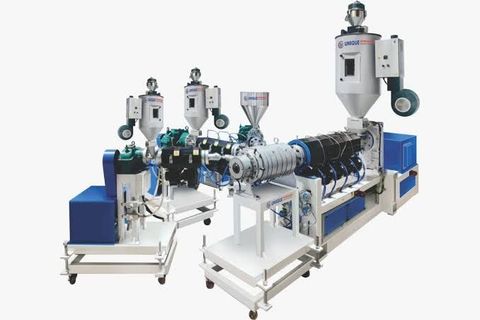
A plastic extrusion machine processes thermoplastic materials into continuous shapes. Plastic granules or powder are fed into the machine, heated, and conveyed through a barrel before passing through a die.
Common applications include:
Plastic pipes
Window and door profiles
Plastic sheets
Packaging films
Cable insulation
Irrigation tubes
Plastic extrusion machinery may be configured for a specific product or designed for several compatible applications.
Pipe Extrusion Machine
A pipe extrusion machine is designed to produce continuous plastic pipes with controlled diameter and wall thickness.
A typical pipe extrusion line includes:
Material feeding system
Extruder
Pipe die
Vacuum sizing or calibration unit
Cooling tank
Haul-off equipment
Cutting system
Pipe extrusion machines are used for manufacturing PVC, HDPE, PP, and other polymer pipes, depending on the machine configuration and material compatibility.
Twin-Screw Extruder
A twin screw extruder uses two screws positioned inside a shared barrel. The screws may rotate in the same direction or in opposite directions.
Twin-screw systems are commonly used for:
Polymer compounding
Additive mixing
Masterbatch production
Material blending
Specialized plastic processing
They are often selected for applications requiring controlled mixing and material distribution.
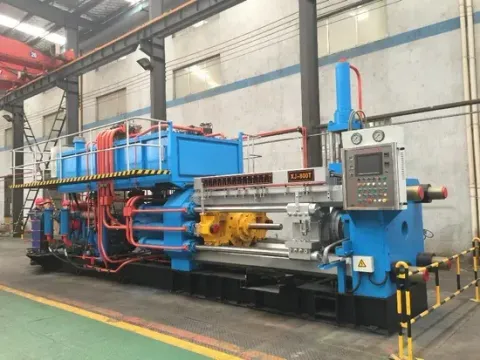
Aluminium Extrusion Press
An aluminium extrusion press shapes heated aluminium billets into profiles by applying force through a die.
Common products include architectural sections, industrial profiles, electrical enclosures, automotive components, and structural sections.
The press capacity, billet dimensions, alloy, die design, and production requirements influence the equipment selection.
Film and Sheet Extrusion Machinery
Film and sheet extrusion systems produce polymer layers used in packaging, construction, and industrial applications.
Common configurations include blown-film lines and flat-die or cast-film systems. Product thickness, width, material type, and output requirements determine the machine design.
Extrusion Machine Brands and Manufacturers
The following manufacturers are examples of established brands in different extrusion machinery segments. This is not a ranking, and individual product ranges may vary by region and model.
Plastic Extrusion Machinery Brands
Kabra ExtrusionTechnik: An Indian manufacturer associated with plastic pipe, film, sheet, and compounding extrusion systems.
Rajoo Engineers: An Indian manufacturer known for film and sheet extrusion technologies.
Windsor Machines: A machinery manufacturer with plastic processing equipment, including extrusion-related systems.
KraussMaffei: A German industrial machinery brand with polymer processing and extrusion technologies.
Davis-Standard: A US-based manufacturer of extrusion systems for film, sheet, tubing, and other applications.
Coperion: A German engineering brand recognized for compounding and twin-screw extrusion technology.
Leistritz: A manufacturer known for twin-screw extrusion systems used in compounding and specialized processing.
Reifenhäuser: A German machinery brand associated with film and polymer extrusion technologies.
Aluminium Extrusion Machinery Brands
Presezzi Extrusion Group: An Italian manufacturer of aluminium extrusion presses and related production systems.
SMS group: A German industrial engineering group supplying metal processing equipment, including extrusion plants.
UBE Machinery: A Japanese machinery manufacturer associated with industrial press technology.
Danieli: An Italian engineering group involved in metal processing equipment and industrial systems.
Manufacturer capabilities should be checked through official product catalogues and technical documentation. Some brands specialize in complete production lines, while others supply presses, components, or supporting systems.
Aluminium Extrusion Machinery: Important Details
Aluminium extrusion machinery is designed to process aluminium billets into profiles with specific cross-sectional shapes.
Direct Extrusion
In direct extrusion, the press ram pushes the billet through a die while the billet moves through the container.
This method is widely used for producing aluminium profiles and industrial sections.
Indirect Extrusion
In indirect extrusion, the die moves toward the billet, reducing relative movement between the billet and container.
The method has different process characteristics and may be selected according to the alloy, profile geometry, and production requirements.
Press Capacity
Press capacity is generally expressed in terms of force, often in tonnes or meganewtons. The required press capacity depends on billet dimensions, alloy, die design, and profile complexity.
Main Components of Extrusion Machinery
Hopper and Feeding System
The hopper stores and feeds raw material into a plastic extruder. Feeding systems may include dosing equipment for controlled material supply.
Screw and Barrel
The screw conveys and processes the material. The barrel provides the processing chamber and may contain heating and cooling zones.
Drive System
The drive system supplies power to rotate the screw in a plastic extruder.
Die
The die shapes the material into the required profile, pipe, film, or other product.
Heating and Cooling System
Heating and cooling systems maintain the required processing conditions. Their configuration depends on the material and machine type.
Control System
Control systems monitor and adjust operating parameters such as temperature, speed, pressure, and production settings.
Downstream Equipment
Downstream equipment may include cooling tanks, calibration units, haul-off systems, cutting machines, winding equipment, or profile handling systems.
Extrusion Machinery Technology
Modern extrusion machinery may use several technologies to improve process control and production consistency.
PLC-Based Controls
Programmable logic controllers can coordinate machine operations and monitor selected process variables.
Temperature Monitoring
Temperature sensors help maintain suitable processing conditions in the barrel, die, and other controlled zones.
Automatic Feeding
Automatic feeding systems can support continuous material supply and controlled blending.
Servo and Variable-Speed Drives
Servo or variable-speed systems can provide adjustable motion and drive control, depending on the machine design.
Process Data Monitoring
Some machines record operating parameters, alarms, and production information. These records can support process analysis and maintenance planning.
The availability of these technologies varies by manufacturer and model. Automation does not eliminate the need for proper material preparation, operator training, and routine maintenance.
Applications of Extrusion Machinery
Extrusion machinery is used in many industries.
| Industry | Typical Products |
|---|---|
| Construction | Plastic pipes, profiles, aluminium sections |
| Packaging | Films, sheets, packaging layers |
| Electrical | Cable coatings, conduits, enclosures |
| Automotive | Plastic trims, aluminium profiles |
| Agriculture | Irrigation pipes, tubes |
| Recycling | Reprocessed polymer pellets |
| Industrial manufacturing | Technical profiles, tubes, rods |
| Food processing | Extruded snacks, cereals, feed products |
The application determines the material, machine configuration, die design, and downstream equipment.
Extrusion Machine Process Guide
The extrusion process generally follows several stages.
1. Material Preparation
Raw materials are prepared according to the product specification.
Plastic materials may require drying, blending, or additive mixing. Aluminium extrusion uses billets of a suitable alloy and dimensions.
2. Feeding
Plastic granules or powder enter the extruder through a hopper or feeding system.
For aluminium extrusion, a heated billet is loaded into the press.
3. Processing
In plastic extrusion, the screw moves and softens the polymer inside the barrel.
In aluminium extrusion, the press ram applies force to push the billet through the die.
4. Shaping
The die determines the product's cross-sectional shape. Tooling design influences dimensions, material distribution, and surface quality.
5. Cooling and Finishing
Plastic products may pass through cooling tanks, sizing units, haul-off equipment, and cutting systems.
Aluminium profiles may undergo cooling, stretching, cutting, and heat treatment according to the alloy and product requirements.
Best Practices for Extrusion Machinery
Select Suitable Material
Confirm that the machine is compatible with the specific polymer, alloy, or material being processed.
Review Machine Specifications
Compare screw diameter, L/D ratio, output capacity, motor power, temperature control, press force, and die configuration as applicable.
Maintain Process Conditions
Follow the machine and material manufacturer's recommended operating conditions. Changes in temperature, speed, or feeding can affect product quality.
Inspect Dies and Tooling
Regularly inspect dies and tooling for wear, damage, or material buildup.
Follow Safety Procedures
Use appropriate guarding, emergency stops, interlocks, and operating procedures. Extrusion machinery may involve hot surfaces, moving components, high pressure, and heavy equipment.
Maintain Equipment
Follow scheduled maintenance for drives, bearings, hydraulic systems, heating elements, sensors, and other machine components.
Useful Resources for Extrusion Machinery Research
Readers researching extrusion machine brands can consult:
Official manufacturer websites
Product catalogues and technical datasheets
Machine operation and maintenance manuals
Polymer and aluminium alloy datasheets
Plastics Machinery Manufacturers Association of India (PMMAI)
Aluminium extrusion equipment directories
Industrial machinery exhibitions
Applicable Indian and international standards
The PMMAI directory can help identify Indian plastic machinery manufacturers and their listed equipment categories. Aluminium extrusion equipment directories provide references for press manufacturers and related suppliers.
Frequently Asked Questions
1. What is industrial extrusion machinery?
Industrial extrusion machinery processes material by forcing it through a shaped die. It is used to manufacture continuous products such as pipes, profiles, films, sheets, and aluminium sections.
2. What is the difference between a plastic extrusion machine and an aluminium extrusion press?
A plastic extrusion machine generally uses a screw and heated barrel to process polymer material. An aluminium extrusion press uses press force to push a heated metal billet through a die.
3. What does a twin-screw extruder do?
A twin-screw extruder processes material using two screws. It is commonly used for compounding, mixing, and applications requiring controlled material distribution.
4. What products are made using a pipe extrusion machine?
Pipe extrusion machines can produce plastic water pipes, drainage pipes, irrigation tubes, conduits, and other continuous pipe products, depending on the material and machine configuration.
5. How should extrusion machine brands be compared?
Compare machine specifications, material compatibility, production capacity, die design, safety features, quality documentation, and available technical support.
Conclusion
Extrusion machine brands support a wide range of manufacturing applications, from plastic pipes and films to aluminium profiles and polymer compounds.
Understanding industrial extrusion machinery, plastic extrusion machines, twin-screw extruders, and aluminium extrusion presses helps readers distinguish between different machine types and technologies.
A careful review of material compatibility, machine specifications, production requirements, safety, and technical documentation provides a practical foundation for researching extrusion machinery.
Disclaimer
This article is intended for general informational and educational purposes. Machine specifications, manufacturer product ranges, and technical capabilities may change. Verify current information through official documentation and qualified professionals. This content does not endorse any particular brand or organisation.

Related Post...
Extrusion Machine Brands: Discover Information, Facts, Tips, Resources, and Expert Advice
Updated: November 26, 2026
Read More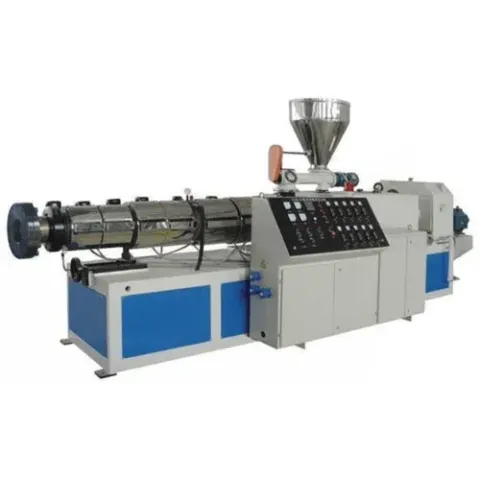
Extrusion Machine Brands: Explore Types, Features, Technologies, and Useful Resources
Updated: November 26, 2026
Read More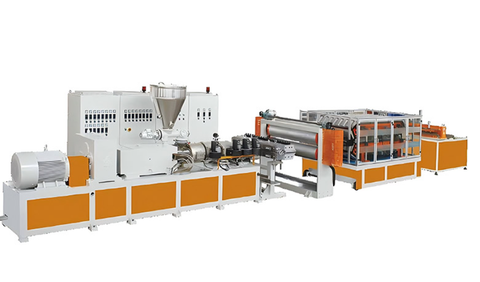
Extrusion Machine Brands: Explore Overview, Basics, Explanation, Knowledge, and Key Details
Updated: November 26, 2026
Read More