Extrusion Machine Brands: Explore Types, Features, Technologies, and Useful Resources
Extrusion machinery is widely used in manufacturing plastic pipes, profiles, films, sheets, aluminium sections, and other industrial products. These machines shape material by forcing it through a specially designed die.
Different extrusion machine brands focus on different materials, production methods, and industrial applications. Some specialize in plastic extrusion, while others manufacture aluminium extrusion presses or twin-screw processing systems.
Understanding extrusion machine types, features, technologies, and specifications helps readers compare equipment and learn how different extrusion processes operate.
Main Types of Extrusion Machines
Extrusion machines can be classified by the material, screw arrangement, product design, and processing method.
Plastic Pipe and Profile Extrusion
Pipe and profile extrusion lines are designed to manufacture continuous products with fixed cross-sectional shapes.
Typical products include:
Water and drainage pipes
Irrigation tubes
Window and door profiles
Plastic channels
Cable conduits
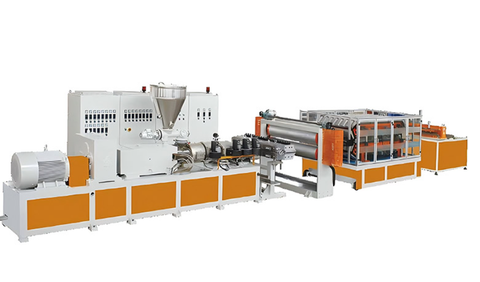
These lines may include a material feeder, extruder, die, calibration unit, cooling system, haul-off, and cutting equipment.
Film and Sheet Extrusion
Film and sheet extrusion equipment produces thin or thick polymer layers used in packaging, construction, and industrial applications.
Common configurations include blown-film lines and flat-die or cast-film lines. The required product thickness, width, polymer type, and production method influence the machine design.
Twin-Screw Extrusion
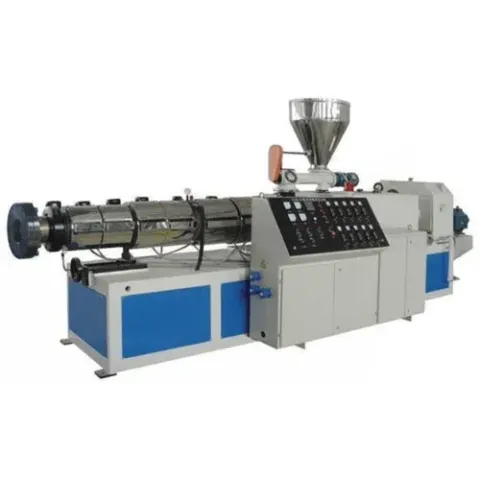
Twin-screw machines use two screws within a shared barrel. Depending on the design, they may provide intensive mixing, material conveying, and controlled compounding.
They are commonly used in polymer compounding, additive blending, masterbatch production, and specialized material processing.
Aluminium Extrusion Presses
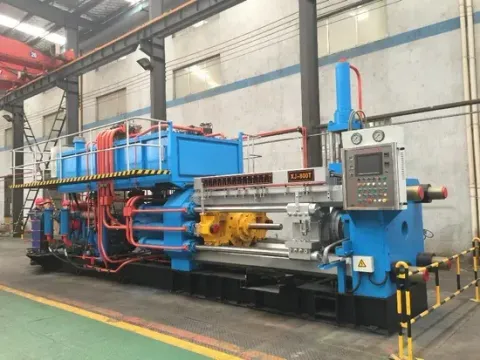
Aluminium extrusion presses are used to shape heated aluminium billets into profiles.
Two common process types are:
Direct extrusion: The billet moves through a stationary container as the press ram pushes it through the die.
Indirect extrusion: The die moves toward the billet, reducing relative movement between the billet and container.
Direct and indirect extrusion have different process characteristics and are selected according to alloy, product geometry, and production requirements.
Features of Modern Extrusion Machines
Extrusion machine features vary by manufacturer and model. The following are common design elements found in modern industrial equipment.
Precision Control
Temperature, screw speed, pressure, and output monitoring help operators maintain stable processing conditions.
Automatic Material Feeding
Automatic feeders and dosing systems can support continuous material supply and controlled blending.
Modular Machine Design
Some extruders use modular screw and barrel sections. This arrangement can allow the processing configuration to be adapted to different materials or mixing requirements.
Energy Management
Drive systems, heating arrangements, insulation, and hydraulic design influence energy use. Energy performance should be assessed using machine-specific data and comparable operating conditions.
Process Monitoring
Modern control systems may record operating parameters and alarms. These records can help identify process changes and support maintenance planning.
Aluminium Extrusion Press Manufacturers
Aluminium extrusion press manufacturers supply equipment for producing profiles used in construction, transportation, electrical applications, and industrial manufacturing.
Examples of established manufacturers include:
Presezzi Extrusion Group: Manufactures direct and indirect extrusion presses for aluminium and other non-ferrous metals.
SMS group: Supplies extrusion plants and press technology for aluminium and other metals.
UBE Machinery: A Japanese machinery manufacturer associated with large industrial press technology.
Danieli: An industrial engineering group involved in metal processing equipment.
Aluminium extrusion equipment directories also list manufacturers and suppliers such as Siddharth Heavy Industries, GIA Clecim Press, Macrodyne Press, and Unterschuetz. These businesses operate in different equipment and supporting-system categories.
Plastic Extrusion Machine Brands
Plastic extrusion machine brands manufacture equipment for different polymer applications.
Examples include:
Kabra ExtrusionTechnik: Pipe, film, sheet, and compounding extrusion equipment.
Rajoo Engineers: Film and sheet extrusion technologies.
J P Extrusiontech: Tape extrusion, extrusion coating, and related production lines.
Windsor Machines: Plastic processing machinery.
Coperion: Twin-screw compounding and extrusion technology.
Leistritz: Twin-screw extrusion systems.
Davis-Standard: Film, sheet, tubing, and other extrusion systems.
Reifenhäuser: Film and polymer extrusion technologies.
India's Plastics Machinery Manufacturers Association of India (PMMAI) member directory includes manufacturers and machinery categories such as pipe extrusion, blown-film lines, sheet extrusion, compounding, tape extrusion, and twin-screw equipment.
Important Extrusion Machine Specifications
Machine specifications should be evaluated according to the intended production process.
| Specification | What It Indicates |
|---|---|
| Screw diameter | Basic size of the plastic extruder screw |
| L/D ratio | Screw length relative to its diameter |
| Output capacity | Material processed per unit of time |
| Motor power | Power available for the drive system |
| Screw speed | Rotational speed of the screw |
| Heating zones | Temperature-control sections along the barrel |
| Die dimensions | Tooling size and product-forming geometry |
| Press force | Force capacity of an aluminium extrusion press |
| Billet dimensions | Size of billet suitable for the press |
Specifications should be compared using the same material, product dimensions, and operating conditions. A machine's maximum rated output may not represent its normal output for every product.
Extrusion Machine Process Guide
The extrusion process varies by material, but most systems follow a series of basic stages.
1. Material Preparation
Raw material is selected and prepared according to the product specification.
Plastic materials may require drying, blending, or additive mixing. Aluminium extrusion uses billets of a suitable alloy and dimensions.
2. Feeding
Plastic granules or powder enter the machine through a hopper or feeding system.
For aluminium extrusion, a heated billet is loaded into the press.
3. Processing
In plastic extrusion, the screw moves and softens the polymer inside the barrel.
In aluminium extrusion, the press ram applies force to push the billet through the die.
4. Die Shaping
The die determines the product's cross-sectional shape. Tooling design influences dimensions, material distribution, and surface quality.
5. Cooling and Finishing
Plastic products may pass through cooling tanks, sizing units, haul-off equipment, and cutting systems.
Aluminium profiles may undergo cooling, stretching, cutting, and heat treatment according to the alloy and product requirements.
Modern Extrusion Machine Technology
Modern extrusion equipment may incorporate several technologies to improve process monitoring and production control.
Common features include:
PLC-based control systems
Touchscreen operator interfaces
Temperature and pressure monitoring
Automatic material feeding
Servo-driven systems
Process data recording
Automated cutting and handling
Energy monitoring systems
The availability of these features varies by machine model. Automation can support consistent production, but it does not replace correct material preparation, operator training, and regular maintenance.
Useful Resources for Extrusion Machine Research
Readers researching extrusion machine brands can use the following resources:
Official manufacturer websites and product catalogues
Machine specification sheets
Operation and maintenance manuals
Polymer and aluminium alloy datasheets
PMMAI member directory
Aluminium extrusion equipment directories
Industrial machinery exhibitions
Applicable Indian and international standards
The PMMAI directory is useful for identifying Indian plastic machinery manufacturers and their listed equipment categories. Aluminium extrusion equipment directories provide references for press manufacturers and related suppliers.
Frequently Asked Questions
1. What are the main extrusion machine types?
Major types include single-screw extruders, twin-screw extruders, pipe and profile lines, film and sheet lines, recycling extruders, and aluminium extrusion presses.
2. What is the difference between a plastic extruder and an aluminium extrusion press?
A plastic extruder usually softens polymer material and conveys it through a die using a screw. An aluminium extrusion press pushes a heated metal billet through a die using press force.
3. What does a twin-screw extruder machine do?
A twin-screw extruder processes material using two screws. It is commonly used for compounding, mixing, and applications requiring controlled material distribution.
4. What specifications are important when comparing extrusion machines?
Important specifications include screw diameter, L/D ratio, output capacity, motor power, temperature-control arrangement, die dimensions, and press force where applicable.
5. How can extrusion machine brands be researched?
Review official product catalogues, technical datasheets, machine manuals, industry directories, and manufacturer information. Compare machines according to material compatibility and production requirements rather than brand name alone.
Conclusion
Extrusion machine brands serve a broad range of manufacturing applications, including plastic pipes, films, profiles, polymer compounds, and aluminium sections.
Understanding extrusion machine types, features, technologies, and specifications helps readers distinguish between plastic extrusion systems and industrial aluminium extrusion presses.
A structured comparison of machine design, material compatibility, process requirements, production capacity, and technical documentation provides a practical foundation for researching extrusion machinery.
Disclaimer
This article is intended for general informational and educational purposes. Machine specifications, manufacturer product ranges, and technical capabilities may change. Verify current information through official documentation and qualified professionals. This content does not endorse any particular brand or organisation.

Related Post...
Extrusion Machine Brands: Explore Overview, Basics, Explanation, Knowledge, and Key Details
Updated: November 26, 2026
Read More