Laser Foam Cutting Machines: Complete Guide to Basics, Technologies, Processes, Facts, and Best Practices
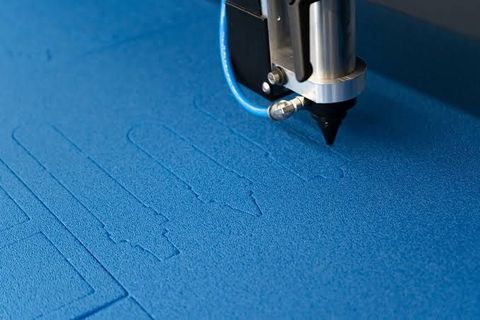
A laser foam cutting machine uses a focused laser beam to cut or engrave suitable foam materials into specified shapes and dimensions. The process is controlled by computer software, allowing manufacturers to create repeated designs, intricate outlines, and custom components.
Laser foam cutting is used in packaging, protective inserts, display products, model-making, interior components, and specialised fabrication. A suitable machine can produce detailed contours without applying mechanical pressure to the foam.
However, foam is not a single material. Different types contain different polymers, additives, coatings, adhesives, and cellular structures. These differences affect laser compatibility, cutting quality, smoke generation, and fire risk. Material identification and safety assessment are essential before processing.
Overview of Laser Foam Cutting Machines
A laser foam cutting machine generally includes a laser source, cutting head, CNC motion system, worktable, control software, and fume extraction equipment.
The machine follows a programmed cutting path and directs the laser beam onto the foam surface. Depending on the material and machine configuration, it can cut through the sheet, engrave surface details, or create shallow markings.
An industrial laser foam cutting machine may include:
Enclosed cutting chamber
CO₂ laser source
CNC motion-control system
Cutting head and focusing optics
Worktable or material support
Assist-air system
Fume extraction and filtration
Automatic material positioning
Software for nesting and cutting layouts
The machine’s suitability depends on the foam type, thickness, density, required edge quality, production volume, and safety provisions.
Basics of Laser Foam Cutting
How Does Laser Foam Cutting Work?
Laser cutting uses concentrated light energy to heat a small area of material. Depending on the foam composition, the laser may melt, decompose, or vaporise material along the programmed path.
The resulting kerf separates the foam into the required shapes. Some compatible foams may develop a slightly fused edge, while others may show melting, shrinkage, discolouration, or residue.
Laser cutting is a non-contact process. The cutting head does not need to press a blade against the foam, which can be useful when processing soft or compressible sheets.
CO₂ Foam Laser Cutting Machine
A CO₂ foam laser cutting machine uses a carbon dioxide laser source, commonly operating at a wavelength of approximately 10.6 micrometres.
CO₂ lasers are widely used for processing many non-metallic materials, including certain foam grades. They can be suitable for cutting and engraving verified EVA, polyester, and selected polyurethane or polyethylene foam products.
The actual compatibility of a foam depends on its complete formulation. A material that is suitable on one machine or under one facility’s safety policy may not be approved for another system.
CNC Foam Laser Cutting Machine
A CNC foam laser cutting machine uses computer numerical control to move the laser head along a programmed path.
The design may be created in CAD software and converted into machine instructions using CAM or laser-cutting software.
CNC control supports:
Repeatable cutting paths
Accurate shape positioning
Stored production programs
Complex contours
Repeated parts
Nesting of multiple shapes on one sheet
The machine’s achievable accuracy depends on its motion system, focus, material stability, kerf width, and calibration.
Types of Laser Foam Cutting Machines
Industrial Laser Foam Cutting Machine
An industrial laser foam cutting machine is designed for regular production and integration into manufacturing workflows.
It may include a larger work area, enclosed cutting chamber, automatic material handling, advanced software, and dedicated fume extraction.
Industrial systems are used for packaging inserts, protective foam components, display products, and custom foam parts.
EVA Foam Laser Cutting Machine
An EVA foam laser cutting machine is configured to process suitable ethylene-vinyl acetate foam grades.
EVA foam is used in protective padding, tool-case inserts, craft components, sports equipment, footwear-related components, and custom cushioning.
Some verified EVA products can produce well-defined contours with a CO₂ laser. However, additives, colourants, adhesives, and surface coatings may change the material’s behaviour.
The exact EVA product should be approved for the specific machine and processing environment before production.
Polyethylene Foam Laser Cutting
Polyethylene foam is used in packaging, cushioning, insulation, and protective inserts.
Some polyethylene foam products may be processed using specialised laser systems, but compatibility is not universal. Certain grades can melt, deform, ignite, or produce undesirable residue during laser processing.
High-density polyethylene and other PE formulations may be unsuitable for some laser cutters. Always verify the exact material and machine guidance. If the foam is not explicitly approved, use an appropriate mechanical cutting method instead.
Foam Sheet Laser Cutting Machine
A foam sheet laser cutting machine processes flat foam sheets or rolls.
The system may use a stationary table, conveyor arrangement, or automatic feeding mechanism. It is useful for producing repeated sheet components and custom outlines.
Sheet handling should prevent the foam from shifting, curling, or contacting unsafe areas of the machine.
Foam Board Laser Cutting Machine
A foam board laser cutting machine is used for selected lightweight board products, such as certain paper-faced boards or approved foam-core materials.
The term “foam board” can refer to different constructions. Some boards contain polystyrene or other materials that may melt or ignite during laser processing. PVC foam board must not be laser cut because it can release corrosive and hazardous chlorine-containing fumes.
Never assume that a board is laser-compatible based only on its appearance or trade name.
Main Components of a Laser Foam Cutting Machine
Laser Source
The laser source generates the beam used for cutting or engraving. CO₂ laser sources are commonly used for suitable non-metallic materials.
Laser power affects processing capability, but it does not independently determine safe cutting thickness or edge quality.
Cutting Head
The cutting head directs and focuses the beam onto the foam.
Its optical components, focal length, and nozzle arrangement affect the cutting spot and process consistency.
CNC Motion System
The motion system moves the cutting head along the programmed path.
It may use linear rails, motors, belts, or other mechanical arrangements depending on the machine design.
Worktable
The worktable supports the foam during processing.
Some machines use a honeycomb or slatted bed, while others use a specialised support surface. The table must be compatible with the foam and designed to reduce fire and material-contact risks.
Control Software
The software imports design files, sets cutting paths, and controls machine movement.
It may include functions for vector cutting, engraving, nesting, layer assignment, and production file management.
Fume Extraction System
Fume extraction removes smoke, vapours, and airborne contaminants generated during cutting.
The system must be appropriate for the material and machine. A general-purpose filter should not be assumed to make an otherwise hazardous material safe to process.
Working Process of a Laser Foam Cutting Machine
1. Material Identification
The operator identifies the foam’s polymer, additives, coatings, adhesives, and backing layers.
The safety data sheet and supplier information should be reviewed before the material is approved.
2. Design Preparation
The required shape is created in CAD or vector-design software.
The design may include outlines, holes, slots, engraving details, and repeated components.
3. File Setup
The design is imported into the laser software.
The operator assigns the appropriate cutting or engraving operation and checks the dimensions, path direction, and layout.
4. Material Positioning
The foam sheet is placed on the worktable and positioned according to the machine’s instructions.
The material should remain flat and stable without being exposed to unsafe clamping or support conditions.
5. Cutting or Engraving
The CNC system moves the laser head along the programmed path.
The laser processes the foam according to the approved material recipe and machine settings.
6. Inspection
The finished part is checked for dimensions, edge condition, unwanted melting, residue, deformation, and other defects.
The operator should also confirm that the material has cooled and that no smouldering or hidden ignition remains before removing it from the machine.
Technologies Used in Laser Foam Cutting
Computer-Aided Design
CAD software is used to create accurate shapes and layouts.
It allows designers to prepare custom foam inserts, packaging profiles, and repeated components.
Nesting Software
Nesting software arranges multiple parts within a sheet to reduce unused material.
The software may consider part dimensions, spacing, cutting sequence, and sheet boundaries.
Focus and Beam Control
Correct focusing helps produce a suitable cutting spot.
Focus position and beam quality influence the kerf, edge condition, and processing consistency.
Airflow and Extraction
Airflow may help manage smoke and debris, but its use must follow the machine and material instructions.
Fume extraction is essential for controlling airborne contaminants. Air assist should not be treated as a substitute for a properly designed extraction system.
Automated Material Handling
Some industrial systems use conveyors or automated loading arrangements to process sheets or repeated parts.
Automation can improve workflow consistency, but material compatibility and fire prevention remain necessary.
Applications of Laser Foam Cutting Machines
Protective Packaging
Laser-cut foam inserts are used to hold tools, instruments, electronics, and fragile components in protective cases.
Industrial Cushioning
Suitable foam materials can be shaped into protective pads, spacers, and cushioning components.
Display and Model Making
Laser cutting can produce lettering, decorative shapes, model components, and presentation pieces from approved foam materials.
Interior and Product Components
Certain foam parts used in furniture, display systems, and product interiors can be cut to custom dimensions.
Custom Fabrication
CNC laser systems can produce repeated foam shapes for prototypes and specialised fabrication, provided the material is approved for laser processing.
Quality Control and Best Practices
Consistent foam cutting requires attention to material, machine condition, and process settings.
Confirm the exact foam composition before processing.
Review the safety data sheet and supplier information.
Check all coatings, adhesives, facings, and backing layers.
Use only materials approved for the specific laser system.
Keep the worktable clean and suitable for the material.
Confirm the focus and cutting path before production.
Inspect the first sample for melting and edge quality.
Use appropriate fume extraction and machine enclosure.
Monitor the process continuously for smoke or ignition.
Inspect finished parts for dimensions and deformation.
Common quality issues include melted edges, shrinkage, discolouration, incomplete cuts, rough contours, and distortion.
Laser Foam Cutting Safety
Foam laser cutting can create significant fire and fume hazards. The exact risk depends on the material and its formulation.
Do not laser cut PVC or vinyl foam. These materials can release corrosive chlorine-containing gases and damage equipment.
Polystyrene, polypropylene foam, some polyethylene products, and other combustible materials may melt, ignite, or behave unpredictably. Certain polyurethane and composite foams may also generate hazardous decomposition products.
Important safety practices include:
Never process unidentified foam.
Check the complete material composition and safety data sheet.
Follow the machine manufacturer’s approved-material list.
Use an enclosed laser system with functioning interlocks.
Operate suitable fume extraction.
Keep the machine attended during cutting.
Maintain appropriate fire prevention and emergency procedures.
Stop the process if unexpected smoke, flame, or material behaviour occurs.
Do not rely on smell or a trial burn to identify an unknown material.
Some manufacturers and facilities prohibit foam processing entirely because of their equipment configuration or risk assessment. Always follow the stricter applicable policy.
How to Evaluate a Laser Foam Cutting Machine Manufacturer
When reviewing a laser foam cutting machine manufacturer, compare the machine’s specifications with the intended material and production requirements.
Important points include:
Laser source type and power
Working area dimensions
Supported foam materials
Maximum approved material thickness
Cutting and engraving capability
CNC software compatibility
Fume extraction requirements
Enclosure and interlock design
Fire prevention features
Maintenance instructions and technical support
A machine’s advertised cutting thickness should not be treated as a universal capability. Actual performance depends on the foam’s composition, density, thickness, and approved processing conditions.
Useful Resources
Readers can consult these resources for further information:
Laser machine manufacturer manuals and approved-material lists
Foam supplier safety data sheets
Industrial laser safety guidance
CAD and nesting software documentation
Material-specific technical guides for foam processing
Frequently Asked Questions
1. What is a laser foam cutting machine?
It is a CNC-controlled machine that uses a focused laser beam to cut or engrave suitable foam materials into specified shapes.
2. Can a CO₂ foam laser cutting machine process EVA foam?
Some verified EVA foam grades can be processed with CO₂ lasers. The exact material must be approved for the specific machine and safety setup.
3. Is polyethylene foam suitable for laser cutting?
Not all polyethylene foam is suitable. Some grades can melt, deform, or ignite. Confirm the exact formulation and machine approval before processing.
4. Can a foam board laser cutting machine cut every type of foam board?
No. Foam boards may contain different cores, facings, adhesives, or coatings. PVC foam board must not be laser cut, and other materials require specific compatibility checks.
5. What is the most important safety consideration?
Material identification is essential. Never laser cut unknown foam, PVC, vinyl, or any material that is not approved for the laser system.
Conclusion
Laser foam cutting machines combine CO₂ laser technology, CNC motion control, and design software to produce detailed shapes from suitable foam materials.
Industrial systems can support packaging, cushioning, display products, and custom fabrication. However, foam composition varies widely, so material selection is just as important as machine capability.
Proper material verification, approved operating settings, effective extraction, continuous supervision, and fire prevention are essential for safe and consistent foam processing.
Disclaimer: This article is intended for general informational purposes only. Machine configurations, material compatibility, operating parameters, and safety requirements may vary. Always consult the material safety data sheet, equipment manual, and qualified safety personnel before processing foam. This content is not intended to promote or sell any product, brand, or organisation.

Related Post...
Glass Tempering Machines: Explore Overview, Basics, Explanation, Knowledge, and Key Details
Updated: November 25, 2026
Read More
Aluminium Extrusion Machines: Explore Overview, Basics, Explanation, Knowledge, and Key Details
Updated: November 25, 2026
Read More