Paddy Thresher Machines: Discover Information, Facts, Tips, Resources, and Expert Advice
Paddy thresher machines are agricultural machines used to separate rice grains from harvested paddy stalks and panicles. They help reduce the physical effort and time involved in traditional manual threshing. These machines are commonly used by individual farmers, agricultural cooperatives, custom-hiring centres and rice-producing farms.
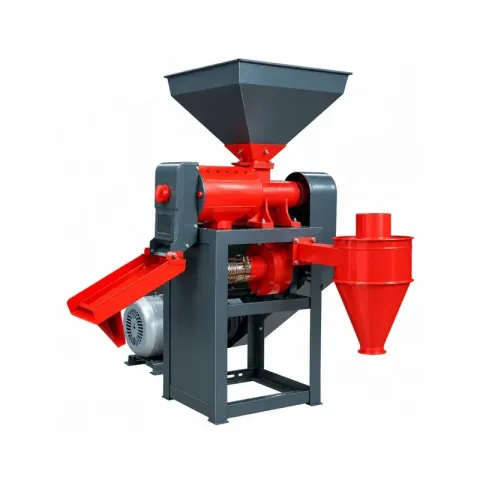
A paddy thresher generally uses a rotating drum or threshing cylinder to detach grains from the harvested crop. The separated material then passes through sieves, blowers or other cleaning arrangements that remove straw, chaff and lighter impurities.
Different machine designs are available for different farm sizes and operating conditions. These include manually fed drum threshers, motor-operated machines, tractor-operated paddy threshers and automatic systems with integrated cleaning units.
In India, where paddy is cultivated across states such as Punjab, Haryana, Uttar Pradesh, West Bengal, Odisha, Andhra Pradesh, Telangana, Chhattisgarh and Tamil Nadu, mechanical threshing is an important part of post-harvest operations.
What Is a Paddy Thresher Machine?
A paddy thresher machine is agricultural equipment designed to separate rice grains from harvested paddy plants. The process is called threshing.
After harvesting, paddy plants contain grain-bearing panicles attached to stems. Threshing removes the grains from these plant parts through mechanical impact, rubbing or a combination of both.
A rice thresher machine generally performs three related operations:
Threshing: Separating grains from panicles and stalks.
Separation: Dividing the grains from larger straw material.
Cleaning: Removing lighter materials such as chaff, dust and loose plant fragments.
Some machines perform only threshing, while others combine threshing and cleaning in one unit. The final grain quality depends on crop moisture, feeding rate, drum speed, machine settings and crop condition.
Basic Working Principle of a Paddy Thresher
Most paddy threshers use a rotating threshing drum fitted with beaters, teeth or rasp bars. The harvested crop is fed into the threshing chamber, where mechanical action separates the grains from the panicles.
The typical working process includes:
Crop feeding: Harvested paddy bundles or panicles are fed into the machine through an inlet.
Threshing action: A rotating drum creates impact and rubbing action to detach the grains.
Grain separation: The detached grains pass through openings in a concave or sieve arrangement.
Straw discharge: Larger stalk and straw material moves towards a separate outlet.
Air cleaning: A blower removes lighter materials from the grain stream.
Grain collection: The cleaned paddy is collected through an outlet or collection arrangement.
Inspection: The collected grains are checked for unthreshed panicles, impurities and visible damage.
The drum design, rotational speed, concave clearance and feeding rate influence threshing performance. Incorrect settings can increase grain breakage, leave grains attached to panicles or reduce the quality of cleaning.
Main Components of an Agricultural Paddy Thresher
An agricultural paddy thresher consists of mechanical, power-transmission and cleaning components.
Component | Main function |
|---|---|
Feeding hopper | Receives harvested paddy |
Threshing drum | Separates grains from panicles |
Beaters or threshing teeth | Create impact and rubbing action |
Concave | Supports the crop during threshing and allows grains to pass through |
Main frame | Supports the machine components |
Sieve arrangement | Separates grains from larger crop material |
Blower | Removes lighter impurities using airflow |
Straw outlet | Discharges separated straw |
Grain outlet | Collects threshed paddy |
Belt and pulley system | Transfers mechanical power |
Bearings and shafts | Support rotating components |
Safety guards | Cover selected moving parts |
The arrangement and size of these components vary according to the machine's design and capacity.
Types of Paddy Thresher Machines
Different types of paddy threshers are used according to farm size, available power, crop volume and cleaning requirements.
1. Paddy Drum Thresher Machine
A paddy drum thresher machine uses a rotating cylindrical drum fitted with threshing elements. Paddy panicles come into contact with the drum and concave, separating grains from the harvested material.
Common characteristics include:
Rotating threshing cylinder
Beaters or teeth for crop separation
Crop-feeding opening
Grain collection arrangement
Separate straw discharge
Drum threshers are used in small and medium agricultural operations. Their performance depends on drum dimensions, speed, crop feeding and the condition of the harvested paddy.
2. Automatic Paddy Thresher Machine
An automatic paddy thresher machine uses mechanical feeding and controlled threshing operations to reduce manual handling. Some models include automatic grain separation, cleaning and discharge arrangements.
Depending on the design, automatic systems may include:
Powered feeding conveyors
Controlled crop-feeding mechanisms
Integrated threshing drums
Mechanical or pneumatic grain-cleaning arrangements
Grain collection outlets
Safety switches and control panels
The term automatic can describe different levels of automation. It is important to check whether a particular model automates only threshing or also feeding, cleaning and grain collection.
3. Tractor-Operated Paddy Thresher
A tractor-operated paddy thresher uses power from a tractor to operate the threshing drum and related mechanisms. Power is commonly transferred through a power take-off (PTO) shaft or a belt-and-pulley arrangement, depending on the machine design.
Its main features may include:
Tractor-compatible power transmission
Heavy-duty supporting frame
Large crop-feeding arrangement
Threshing and separation mechanisms
Optional blower-based cleaning
This type is useful for farms that already have a suitable tractor. Correct PTO speed, shaft alignment and protective guarding are essential during operation.
4. Paddy Thresher Machine with Blower
A paddy thresher machine with blower combines mechanical threshing with air-based cleaning. After the grains are separated, the blower produces an airflow that carries away lighter materials such as chaff and small straw fragments.
The cleaning arrangement generally includes:
Air inlet and blower housing
Rotating fan or impeller
Airflow passage
Grain and chaff separation area
Adjustable air-control arrangement in selected models
The blower must be adjusted to suit the crop condition. Excessive airflow can carry good grains away with the lighter material, while insufficient airflow may leave impurities in the collected paddy.
5. Power-Operated Paddy Thresher
Power-operated machines use an electric motor or an engine to drive the threshing mechanism. They are commonly found in farms and processing locations where a suitable power source is available.
The power arrangement affects machine mobility, installation and operating requirements.
6. Multi-Crop Thresher
Some threshers are designed to process more than one crop, such as paddy, wheat, pulses or other grains. These machines may use interchangeable screens, adjustable clearances and different threshing settings.
A multi-crop machine should be configured according to the crop being processed. Settings suitable for one crop may not be appropriate for another.
Applications of Paddy Thresher Machines
Paddy threshers are used in different agricultural settings depending on crop volume, field conditions and available power.
Application | How the machine is used |
|---|---|
Small farms | Separates paddy grains from harvested bundles |
Large farms | Processes larger quantities of harvested crop |
Farmer cooperatives | Supports shared use of agricultural machinery |
Agricultural processing centres | Handles threshing before cleaning and storage |
Hilly farming regions | Compact motorised models support small-scale operations |
Multi-crop farms | Suitable machines can process paddy and selected other crops |
In areas where individual ownership is not practical, farmers may access equipment through shared machinery centres. Tractor-operated models can also be moved between fields when suitable transport and field access are available.
Factors to Consider When Selecting a Paddy Thresher
Choosing the right paddy thresher machine requires an assessment of farm size, crop characteristics, available power and grain-cleaning requirements.
Farm size and crop volume: Estimate the quantity of paddy that needs to be processed during the harvest period.
Machine capacity: Compare the rated throughput with the expected quantity of crop. Check whether the rating refers to harvested crop input or cleaned grain output.
Power source: Decide between manual, electric motor, engine-driven and tractor-operated arrangements.
Threshing drum design: Examine the drum diameter, width, threshing teeth and construction.
Blower arrangement: Check whether the blower provides sufficient airflow to remove chaff without carrying away good grains.
Grain quality: Review grain breakage, unthreshed grain levels and cleaning performance during a practical demonstration.
Portability: Consider wheels, frame dimensions and transport arrangements if the machine will be used across several fields.
Maintenance access: Check whether bearings, belts, sieves and other wearing parts can be inspected and replaced easily.
Operator requirements: Determine how many people are needed for feeding, monitoring and grain collection.
Testing documentation: Review applicable performance-test reports and technical specifications.
A demonstration using the local paddy variety is particularly useful. Different varieties, crop moisture levels and harvesting conditions can affect machine performance.
Recent Developments and Agricultural Mechanisation Trends
Paddy threshing technology continues to evolve through improvements in grain cleaning, power transmission and equipment accessibility.
Improved cleaning arrangements: Combined sieves and blowers help separate grains from straw, chaff and lighter impurities.
More compact machines: Lightweight motorised designs are useful in locations where larger tractor-operated machines are difficult to transport.
Greater mechanisation access: Government programmes encourage wider access to agricultural equipment, including for small and marginal farmers.
Performance testing: Agricultural machinery testing centres assess equipment performance and technical characteristics.
Shared machinery facilities: Community-level machinery arrangements can help farmers access equipment without maintaining an individual machine.
Multi-crop capability: Some machines are designed with adjustable settings and interchangeable components for processing different crops.
The Government of India's Sub-Mission on Agricultural Mechanization (SMAM) guidelines include machinery assistance, shared equipment facilities, training, demonstrations and performance testing.
Government Schemes and Regulations in India
Agricultural machinery programmes in India aim to improve access to suitable equipment and encourage safe, effective mechanisation.
Sub-Mission on Agricultural Mechanization (SMAM)
SMAM is implemented by the Department of Agriculture and Farmers Welfare under the Rashtriya Krishi Vikas Yojana framework. Its objectives include increasing mechanisation access, supporting small and marginal farmers, encouraging shared machinery facilities and promoting performance testing.
The Government's 11 August 2026 announcement described financial assistance of 40–50% for eligible machinery purchases and support for establishing shared agricultural machinery centres, subject to scheme conditions and applicable limits. Actual eligibility and assistance should be confirmed through the relevant state agriculture department.
Agricultural Machinery Testing
Performance testing helps assess machine design, operation and suitability for agricultural work. The Ministry of Agriculture and Farmers Welfare has designated Farm Machinery Training and Testing Institutes and other approved institutions for testing agricultural equipment.
The Southern Region Farm Machinery Training and Testing Institute publishes information about testing procedures and machinery categories, including threshers.
State Agriculture Department Guidelines
State governments may issue their own procedures for applications, demonstrations, machinery selection and financial assistance under central and state programmes. Farmers should check the latest instructions applicable to their state and district.
General Safety Requirements
Paddy thresher operators should follow the manufacturer's instructions and relevant workplace safety requirements. Important precautions include:
Keep belts, pulleys, gears and rotating drums properly guarded.
Do not put hands or tools into the feeding opening while the machine is running.
Switch off the power source before clearing blockages or carrying out maintenance.
Keep children and unauthorised people away from the operating area.
Use appropriate footwear, eye protection and other protective equipment.
Ensure tractor PTO shafts have suitable protective guards.
Keep the machine on stable ground and check its frame before operation.
Best Practices for Operating a Paddy Thresher
Correct machine operation helps reduce grain losses, improve cleaning and maintain equipment condition.
Before Starting
Inspect the threshing drum, teeth, concave and sieves.
Check belts, pulleys, bearings and fasteners.
Confirm that all protective guards are properly fitted.
Place the machine on firm, level ground.
Check the power connection or tractor PTO arrangement.
Prepare the harvested paddy according to the recommended moisture condition.
During Threshing
Feed harvested crop gradually and uniformly.
Avoid overloading the feeding chamber.
Maintain the recommended drum speed.
Adjust the blower to remove chaff without losing good grains.
Observe the grain outlet for broken or unthreshed material.
Keep people away from moving parts and discharge openings.
After Operation
Switch off the power source before cleaning the machine.
Remove accumulated straw, dust and crop residue.
Inspect the threshing teeth and sieves for damage.
Clean the blower and air passages.
Check belts and bearings for unusual wear.
Store the equipment in a dry, covered location.
Tools and Resources for Paddy Thresher Operations
Farmers and machinery operators can use the following resources to understand machine performance and improve threshing practices.
Tool or resource | Purpose |
|---|---|
Moisture meter | Checks harvested paddy moisture |
Grain sampling tray | Helps examine grain cleanliness and breakage |
Tachometer | Measures rotating drum speed |
Weighing scale | Measures harvested and threshed grain quantities |
Spanner and maintenance kit | Supports routine mechanical maintenance |
Tractor PTO safety equipment | Helps protect operators from rotating shafts |
Operator manual | Provides machine-specific operating instructions |
Performance-test report | Provides technical information about tested equipment |
Useful agricultural learning resources include:
Indian Council of Agricultural Research (ICAR) – agricultural research and technology information.
Agricultural Mechanization portal – information about agricultural machinery programmes.
Bharat Skills – educational material on agricultural machinery and threshing equipment.
Northern Eastern Region Farm Machinery Training and Testing Institute – agricultural machinery training and technical resources.
Frequently Asked Questions
1. What is a paddy thresher machine used for?
A paddy thresher machine separates rice grains from harvested paddy panicles and stalks. Some models also clean the separated grains by removing chaff, dust and lighter crop residue.
2. How does a paddy drum thresher machine work?
It uses a rotating drum fitted with threshing teeth or beaters. When harvested paddy comes into contact with the drum and concave, the mechanical action detaches grains from the panicles.
3. What is the advantage of a paddy thresher machine with blower?
The blower produces airflow that helps remove lighter impurities such as chaff, dust and small straw fragments from the separated grains. This improves the cleanliness of the collected paddy.
4. How does a tractor-operated paddy thresher receive power?
It generally receives mechanical power from the tractor through a power take-off (PTO) shaft or another specified transmission arrangement. The tractor must meet the machine's power and operating requirements.
5. Can an automatic paddy thresher machine process different crops?
Some automatic and multi-crop threshers can process paddy and selected crops such as wheat, pulses and other grains. Their screens, drum settings and feeding arrangements may need adjustment for each crop.
Conclusion
Paddy thresher machines are important agricultural implements that simplify grain separation after harvesting. They help farmers process harvested paddy through mechanical threshing, grain separation and, in some models, integrated blower cleaning.
Drum threshers, automatic systems, tractor-operated machines and blower-equipped models support different farm sizes and operating conditions. The choice of equipment should depend on crop volume, machine capacity, power availability, grain quality and field conditions.
Regular maintenance, correct drum-speed adjustment, uniform crop feeding and safe operating practices help improve machine performance. Government mechanisation programmes, agricultural training institutes and machinery testing centres also provide useful resources for farmers considering suitable threshing equipment.
Disclaimer: This article is intended for general educational and informational purposes only. Machine specifications, operating procedures and government scheme conditions may change or vary by location. Consult agricultural experts, equipment manufacturers and relevant authorities before selecting or operating machinery. This content does not provide guarantees and is not intended to sell or promote any product, brand or organisation.

Related Post...
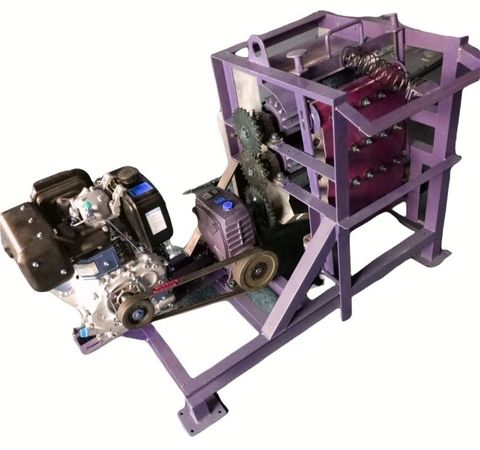
Coconut Dehusking Machines: Explore Overview, Basics, Explanation, Knowledge, and Key Details
Updated: November 20, 2026
Read More
Paddy Thresher Machines: Discover Information, Facts, Tips, Resources, and Expert Advice
Updated: November 20, 2026
Read More
Maize Sheller Machines: Explore Types, Features, Applications, and Useful Resources
Updated: November 20, 2026
Read More