Plastic Pipe Cutting Machines: Complete Guide to Basics, Techniques, Facts, Knowledge, and Best Practices
Plastic pipe cutting machines are industrial machines designed to cut plastic pipes and tubes into specified lengths. They are commonly used in pipe manufacturing, plumbing-product production, irrigation systems, construction materials, infrastructure projects, and plastic-processing facilities.
Plastic pipes can be manufactured from materials such as PVC, HDPE, PP, and other thermoplastics. Because these materials have different mechanical properties, the cutting method needs to match the pipe material, diameter, wall thickness, production speed, and required accuracy.
A basic plastic pipe cutting machine may use a rotating blade, circular saw, planetary cutter, or another mechanical cutting mechanism. More advanced systems can combine measurement, positioning, cutting, conveying, and automatic length control.
A typical production sequence can be represented as:
Pipe extrusion → Cooling → Length measurement → Positioning → Cutting → Inspection → Collection
The cutting stage therefore forms an important part of a larger pipe-manufacturing process.
Why Plastic Pipe Cutting Technology Matters
Consistent pipe lengths are important for transportation, installation, joining, packaging, and downstream manufacturing. Manual cutting can introduce differences in length and may require additional measurement and handling.
Automated cutting equipment can coordinate measurement and cutting more consistently when correctly configured.
The technology is relevant to:
PVC pipe manufacturing
HDPE pipe production
Irrigation pipe production
Electrical conduit manufacturing
Drainage systems
Plumbing products
Industrial tubing
Agricultural infrastructure
Construction-material production
A properly configured system can also reduce repetitive manual handling and improve synchronization between extrusion and cutting operations.
Main Types of Plastic Pipe Cutting Machines
Different machines are designed for different production requirements.
| Machine Type | Main Characteristic | Typical Application |
|---|---|---|
| Manual cutting machine | Operator-controlled cutting | Small-scale or occasional production |
| Semi-automatic cutter | Combines manual loading with automated cutting | Medium production |
| Automatic pipe cutter | Automated measurement and cutting | Continuous production |
| Planetary cutter | Cutting head travels around the pipe | Extrusion lines |
| Circular saw cutter | Rotating blade makes the cut | Rigid plastic pipes |
| Orbital cutter | Cutting mechanism moves around the tube | Tubes and specialized profiles |
| CNC pipe cutting machine | Programmable movement and cutting | Precision applications |
| Plastic tube cutting machine | Designed for smaller tube dimensions | Tubing and specialized products |
| Servo-controlled cutter | Uses electronically controlled positioning | High-repeatability production |
The appropriate machine depends on the pipe's material, diameter, wall thickness, cutting length, production speed, and required edge quality.
Automatic Plastic Pipe Cutting Machines
An automatic plastic pipe cutting machine can integrate several operations that would otherwise require separate manual steps.
Typical features may include:
Automatic length measurement
Encoder-based positioning
Servo-driven movement
Programmable cutting lengths
Pneumatic or servo clamping
Automatic pipe feeding
Digital control panels
Production counters
Sensor-based detection
Automated material discharge
In an extrusion line, the cutter must remain synchronized with the moving pipe. If synchronization is poor, the resulting cut can be inaccurate or the pipe can become damaged.
Modern control systems can use encoders and programmable controllers to calculate pipe movement and initiate cutting at a predetermined position.
CNC Pipe Cutting Machine Technology
A CNC pipe cutting machine uses computer-controlled instructions to manage movement and cutting operations.
CNC technology can be particularly useful when production involves:
Multiple cutting lengths
Repeated production programs
Complex cutting requirements
High dimensional consistency
Automated positioning
Integration with other production equipment
CNC systems generally require correct programming, calibration, tooling selection, and operator knowledge. Computer control does not automatically guarantee precision; machine condition, blade quality, pipe movement, measurement accuracy, and setup all influence the final result.
Plastic Tube Cutting Machine Applications
A plastic tube cutting machine is generally designed around smaller-diameter or thinner-wall products, although machine configurations vary.
Plastic tubes may be used for:
Medical and laboratory applications
Automotive components
Electrical products
Irrigation systems
Protective conduits
Packaging components
Industrial assemblies
Thin-wall tubing requires careful control because excessive clamping force or inappropriate cutting tools can deform the material.
For this reason, the cutting method should be selected according to both tube dimensions and material characteristics.
Plastic Pipe Cutting Equipment and Cutting Techniques
Plastic pipe cutting equipment can use several cutting techniques.
Saw cutting: A rotating blade makes a direct mechanical cut. It is commonly used for rigid plastic pipes and can provide clean results when the blade and feed parameters are appropriate.
Planetary cutting: The cutting head travels around the pipe while the pipe continues through the production line. This approach is useful in continuous extrusion environments.
Guillotine cutting: A blade moves across the pipe to make the cut. It can be appropriate for selected materials and dimensions.
Hot cutting: Heat can be used in specialized applications to cut certain plastic materials. However, temperature control is important because excessive heat can deform the pipe or alter the cut surface.
Knife cutting: Specialized knives can be suitable for flexible tubing and selected thin-wall materials.
The cutting method should always be matched with the material and manufacturer's technical requirements.
What Makes a High Precision Plastic Pipe Cutting Machine?
A high precision plastic pipe cutting machine depends on more than the cutting blade.
Important factors include:
Accurate length measurement
Stable pipe feeding
Correct clamping
Reliable sensors
Proper blade alignment
Controlled cutting speed
Machine rigidity
Calibration
Consistent material movement
Effective synchronization
The following simplified relationship illustrates the importance of measurement:
Required pipe length = Measured position at cutting point − Reference position
If the measurement system, encoder, or reference point is inaccurate, the final pipe length can deviate even when the cutting blade itself is sharp.
Comparing Machine Features
| Feature | Basic System | Advanced System |
|---|---|---|
| Length setting | Manual | Programmable |
| Measurement | Mechanical or manual | Encoder/sensor based |
| Cutting control | Operator controlled | Automated |
| Production counter | Limited | Digital |
| Changeover | Manual | Recipe-based |
| Position control | Basic | Servo controlled |
| Data monitoring | Limited | Integrated |
| Line integration | Basic | Extrusion-line compatible |
The more advanced configuration may be useful where production involves frequent length changes, continuous operation, or tighter dimensional requirements.
Recent Developments and 2026 Updates
Automation continues to influence plastic-processing equipment. Modern production systems increasingly use programmable controllers, servo drives, digital measurement, sensors, and integrated line controls.
One useful development for Indian manufacturers is the continued updating and review of relevant plastic-pipe standards.
BIS currently lists IS 4984:2016, covering polyethylene pipes for water supply, as reviewed and reaffirmed in 2026. The standard includes amendments from 2018 and 2022. BIS identifies it as a product specification for polyethylene pipes, including HDPE water-supply applications.
BIS also lists IS 4985:2021, covering unplasticized PVC pipes for potable water supplies, as reviewed in 2026, with its reaffirmation recorded in February 2026.
These updates are relevant to cutting operations because pipe manufacturers need to maintain dimensional and product-quality controls throughout production. Cutting equipment itself does not establish pipe compliance; the finished pipe must be evaluated against the applicable product specification.
Indian Standards Relevant to Plastic Pipes
Several Indian Standards can be relevant depending on the pipe application.
Examples include:
IS 4984 — Polyethylene pipes for water supply
IS 4985 — Unplasticized PVC pipes for potable water supplies
IS 13592 — PVC-U pipes for soil and waste discharge
IS 12818 — PVC-U screen and casing pipes for borewells and tubewells
IS 14885 — Polyethylene pipes for gaseous-fuel supply
BIS maintains a searchable standards system that provides access to standards, amendments, certification information, laboratories, and related documents.
The specific standard depends on the intended application, material, dimensions, and product category.
Laws, Policies, and Environmental Considerations
Plastic pipe manufacturing and processing can also intersect with India's environmental framework.
The Ministry of Environment, Forest and Climate Change maintains the Plastic Waste Management Rules and related amendments on its regulatory portal. The framework has been amended several times, including amendments issued in 2021, 2022, and 2023.
The Ministry's rules portal also lists the Solid Waste Management Rules, 2026, notified through S.O. 388(E) dated 27 January 2026.
For a pipe-manufacturing facility, this means plastic scrap generated during cutting, trimming, rejected production, or processing should be handled according to applicable waste-management requirements.
A production facility should consider:
Segregation of plastic scrap
Appropriate storage of production waste
Recycling or authorized processing routes
Dust and particulate control where applicable
Machine guarding
Electrical safety
Noise management
Worker training
Safe handling of cutting tools
Environmental and workplace obligations can vary according to the facility, state, production process, and applicable approvals.
Selecting Plastic Pipe Cutting Equipment
Before selecting a plastic pipe cutting system, technical requirements should be clearly documented.
Important questions include:
What plastic material will be cut?
What is the minimum and maximum pipe diameter?
What wall thicknesses are involved?
What cutting lengths are required?
Is the pipe moving continuously?
What level of dimensional consistency is needed?
How frequently will cutting lengths change?
Is automatic measurement required?
Does the machine need to integrate with an extrusion line?
What type of blade or cutting mechanism is appropriate?
How will pipe scrap be collected?
What safety systems are included?
A written specification sheet makes it easier to compare different equipment configurations objectively.
Tools and Useful Resources
Several tools can help with machine planning and production control.
Length-calculation spreadsheet: Useful for recording required pipe lengths, tolerances, production quantities, and cutting sequences.
Machine-capacity worksheet: Can compare pipe diameter, wall thickness, line speed, cutting frequency, and expected production requirements.
BIS Know Your Standard: BIS provides a searchable portal for Indian Standards, amendments, certification information, testing laboratories, and related documents. The portal was updated in May 2026.
BIS laboratory database: Useful for identifying laboratories associated with particular pipe standards and testing requirements. BIS's current database includes laboratories for IS 4984:2016.
Maintenance checklist: Track blade condition, lubrication, sensors, clamps, bearings, electrical connections, calibration, and safety guards.
Cutting-quality inspection sheet: Record pipe length, cut squareness, surface condition, burrs, deformation, and dimensional measurements.
Best Practices for Accurate Pipe Cutting
Good cutting performance depends on both equipment and operating procedures.
Recommended practices include:
Use tooling appropriate for the plastic material.
Keep blades sharp and properly aligned.
Verify length sensors regularly.
Calibrate measurement systems according to the equipment instructions.
Maintain stable pipe feeding.
Avoid excessive clamping force.
Inspect cut surfaces periodically.
Keep guards and safety devices functional.
Follow the machine manufacturer's operating instructions.
Record recurring cutting errors.
Investigate dimensional variation rather than simply increasing cutting speed.
Keep the cutting area clean and free from accumulated plastic scrap.
Perform preventive maintenance at scheduled intervals.
For continuous extrusion, synchronization between the extrusion line, haul-off system, measuring device, and cutter is especially important.
Frequently Asked Questions
What is a plastic pipe cutting machine?
A plastic pipe cutting machine is equipment designed to cut plastic pipes or tubes into predetermined lengths. It may use saws, planetary cutters, knives, or other mechanisms depending on the material and application.
What is an automatic plastic pipe cutting machine?
It is a cutting system that can automatically measure, position, clamp, and cut pipes according to programmed or predetermined dimensions. Advanced systems can also integrate with extrusion lines.
When is a CNC pipe cutting machine useful?
CNC equipment can be useful when production requires programmable dimensions, repeated cutting patterns, controlled positioning, or integration with automated manufacturing processes.
How can pipe-cutting accuracy be improved?
Accuracy can be improved through proper measurement, calibration, stable pipe feeding, appropriate tooling, correct clamping, reliable sensors, and regular maintenance.
Which Indian standards are relevant to plastic pipes?
The applicable standard depends on the pipe material and intended use. Examples include IS 4984 for polyethylene water-supply pipes, IS 4985 for PVC potable-water pipes, and IS 13592 for PVC-U soil and waste-discharge applications.
Conclusion
Plastic pipe cutting machines are an important part of modern pipe-processing and extrusion operations. They provide controlled methods for converting continuously produced or pre-manufactured pipes into specified lengths.
The available technology ranges from manually controlled cutters to automatic, servo-controlled, planetary, and CNC pipe cutting machine configurations. The appropriate system depends on material, diameter, wall thickness, production speed, cutting length, dimensional requirements, and line integration.
Indian manufacturers should also consider applicable BIS product standards. Current BIS records show 2026 reviews or reaffirmations for important standards including IS 4984 and IS 4985. Environmental requirements should also be considered, particularly for handling plastic production scrap under India's waste-management framework.
A reliable cutting process ultimately depends on the combination of suitable equipment, accurate measurement, appropriate tooling, calibration, maintenance, operator training, and quality inspection. Evaluating these factors together provides a practical foundation for understanding plastic pipe cutting technology.
Disclaimer
This article is provided for general informational and educational purposes only. It does not claim that any particular machine, manufacturer, specification, technology, standard, or process is suitable for a specific application. The information should not be treated as engineering, legal, regulatory, safety, or professional advice.
We are not selling, promoting, endorsing, or recommending any particular plastic pipe cutting machine, manufacturer, equipment, product, or provider. Readers should verify current technical specifications, applicable Indian Standards, safety requirements, environmental regulations, and other relevant rules through appropriate official sources and qualified professionals before making technical or operational decisions.

Related Post...
PCB Recycling Machines: Explore Overview, Basics, Explanation, Knowledge, and Key Details
Updated: October 28, 2026
Read More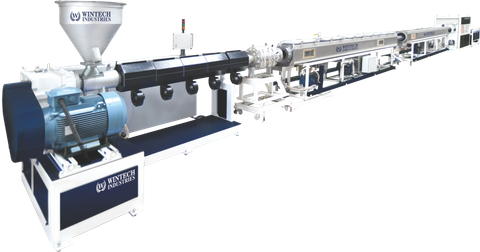
Plastic Pipe Welding Machines: Explore Overview, Basics, Explanation, Knowledge, and Key Details
Updated: October 29, 2026
Read More