E-Waste Sorting Machines: Explore Types, Processes, Insights, Suggestions, and Useful Resources
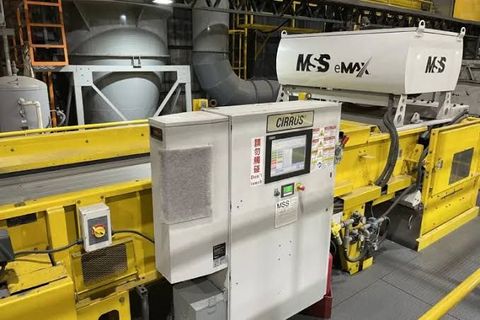
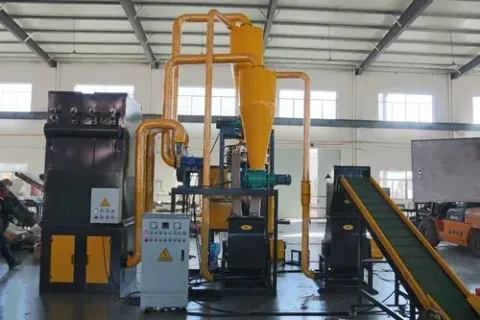
E-waste sorting machines are industrial systems designed to separate discarded electrical and electronic equipment and its processed materials into different categories. The sorting stage is important because electronic waste can contain recoverable metals, plastics, glass, circuit-board materials, and other components.
An e-waste sorting machine may be used after collection, dismantling, shredding, or other preliminary processing. Depending on the system, materials can be separated according to size, weight, magnetic properties, electrical conductivity, color, shape, or material composition.
The broader electronic waste sorting machine category includes mechanical separators, magnetic systems, eddy-current separators, optical sorting equipment, sensor-based systems, and combinations of these technologies.
A simplified recycling workflow is:
Collection → Inspection → Dismantling → Shredding → Screening → Sorting → Material Recovery → Further Processing
Sorting is therefore not necessarily the first step. Batteries, hazardous components, cables, circuit boards, and other items may need to be identified or removed before material enters automated sorting equipment.
Why E-Waste Sorting Matters Today
Electronic products are becoming more widespread, while product lifecycles can be relatively short. This creates a growing stream of discarded electrical and electronic equipment.
India's government reported that estimated e-waste generation increased from 1,254,286.55 metric tonnes in FY 2023–24 to 1,397,955.59 metric tonnes in FY 2024–25. The reported percentage collected, dismantled and recycled or disposed also increased from 61.94% to 70.71% over those financial years.
This growth makes efficient material identification and separation increasingly relevant.
Modern sorting systems can help address challenges such as:
Mixed material streams
Manual sorting requirements
Recovery of valuable metals
Separation of ferrous and non-ferrous materials
Plastic classification
Reduction of material contamination
Improved process consistency
Better preparation for downstream recycling
However, automated sorting is not a replacement for responsible collection, dismantling, safety controls, or regulated recycling practices.
Main Types of E-Waste Sorting Machines
Different materials require different separation technologies.
| Sorting Technology | Main Principle | Typical Application |
|---|---|---|
| Magnetic separator | Magnetic attraction | Ferrous metals |
| Eddy-current separator | Electromagnetic response | Non-ferrous metals |
| Optical sorter | Optical characteristics | Plastics and visually identifiable materials |
| Sensor-based sorter | Material-specific sensor signals | Mixed materials |
| Air separator | Density and airflow | Light and heavy fractions |
| Trommel/screen | Particle size | Size classification |
| Vibratory screen | Mechanical screening | Granular material separation |
| Metal separator | Electrical or magnetic properties | Metal recovery |
| Manual inspection station | Human identification | Components requiring visual assessment |
A mechanical sorting system may be suitable for initial size classification, while advanced systems can combine several technologies.
Electronic Scrap Sorting Machine
An electronic scrap sorting machine is generally designed for processed electronic waste rather than complete electronic products.
For example, a recycling line may first dismantle discarded equipment and then use shredding and screening to create relatively uniform material fractions.
The resulting stream could contain:
Ferrous metals
Copper
Aluminum
Plastics
Circuit-board fragments
Glass
Mixed residues
The sorting equipment then separates these fractions for further treatment.
Material preparation is important because oversized items, tangled cables, batteries, and complex assemblies can interfere with automated equipment.
Optical E-Waste Sorting Machines
An optical e-waste sorting machine uses cameras, optical sensors, or related detection technologies to identify differences between materials.
Depending on the system, detection can involve:
Visible color
Shape
Surface characteristics
Near-infrared response
Spectral characteristics
Position on a conveyor
After identification, an automated mechanism can direct selected items into different streams.
Optical systems are particularly useful when material appearance or spectral response provides a meaningful distinction. They are generally used as part of a broader sorting line rather than as a universal solution for every electronic waste category.
Sensor-Based E-Waste Sorting Machines
A sensor based e-waste sorting machine uses one or more sensors to identify material characteristics.
Possible technologies include:
Inductive sensors
X-ray-based detection
Near-infrared sensors
Electromagnetic sensors
Camera systems
Weight measurement
Conductivity-based detection
Different sensors provide different information. For example, electromagnetic systems can help distinguish metals, while optical systems can identify visible or spectral characteristics.
A multi-sensor line can therefore combine several detection methods to improve separation across a mixed material stream.
E-Waste Metal Sorting Machines
An e-waste metal sorting machine focuses on recovering metallic fractions from processed electronic waste.
Metals commonly encountered in electronic waste include:
Iron
Aluminum
Copper
Gold
Silver
Palladium and other precious metals in selected components
CPCB notes that electronic waste can contain valuable metals as well as hazardous substances such as lead, cadmium, mercury, and other materials requiring careful handling.
Magnetic separation is particularly useful for ferrous materials. Eddy-current technology can separate many non-ferrous metals from non-metallic fractions.
Precious-metal recovery, however, generally involves additional specialized processing and should not be confused with simple machine-based sorting.
How an E-Waste Sorting Line Works
A typical industrial line can contain multiple stages.
Pre-sorting: Workers or equipment identify large objects, batteries, hazardous components, and materials requiring special handling.
Dismantling: Selected components are removed from electronic products.
Size reduction: Appropriate materials may be shredded or otherwise processed into smaller fractions.
Screening: Screens classify material according to particle size.
Magnetic separation: Ferrous metals are separated from non-magnetic material.
Non-ferrous separation: Eddy-current systems can separate suitable non-ferrous metals.
Optical or sensor sorting: Additional systems identify plastics or other material categories.
Quality inspection: Sorted fractions are checked for contamination and consistency.
This sequence can vary substantially depending on the type of electronic waste.
Comparing Sorting Technologies
| Technology | Main Strength | Important Limitation |
|---|---|---|
| Magnetic | Effective for ferrous metals | Does not separate most non-ferrous materials |
| Eddy current | Useful for non-ferrous metals | Requires suitable material preparation |
| Optical | Fast identification of selected materials | Performance depends on material characteristics |
| Sensor-based | Can identify specific properties | More complex system design |
| Screening | Simple size classification | Does not identify material chemistry |
| Air separation | Separates light and heavy fractions | Material moisture and shape can affect performance |
| Manual sorting | Flexible identification | Labor-intensive and variable |
The appropriate combination depends on the incoming material, desired output fractions, particle size, contamination levels, and downstream processing requirements.
Recent E-Waste Developments in India
E-waste management has received increased attention in India during 2025 and 2026.
In July 2025, the Ministry of Environment, Forest and Climate Change reported that registered recyclers processed substantially more e-waste in FY 2024–25 than in FY 2023–24 in several states. Uttar Pradesh, Haryana, Telangana, Uttarakhand, Gujarat, Maharashtra, and other states were among those with significant reported processing quantities.
In October 2025, the Ministry of Mines launched a nationwide e-waste recycling drive under Special Campaign 5.0, emphasizing scientific disposal and resource recovery.
More recently, in September 2026, the Ministry of Mines announced Special Campaign 6.0 activities focused on responsible e-waste collection, resource recovery, and circular-economy principles.
The Ministry of Environment, Forest and Climate Change also began the implementation phase of Special Campaign 6.0 on 2 October 2026, with “Effective Collection, Segregation and Disposal of E-Waste” identified as a focus area.
Another significant development occurred in July 2026, when BIS held a stakeholder program focused on IS 17862:2026, E-Waste Management — Guidelines, covering storage, collection, refurbishing, dismantling, and recycling.
These developments show a growing emphasis on organized collection, segregation, resource recovery, and standardized e-waste management.
Laws and Policies Affecting E-Waste Sorting in India
India's primary regulatory framework is the E-Waste (Management) Rules, 2022, notified on 2 November 2022 and effective from 1 April 2023. The rules replaced the earlier 2016 framework.
The rules establish an Extended Producer Responsibility framework and apply to specified manufacturers, producers, refurbishers, dismantlers, and recyclers dealing with covered electrical and electronic equipment.
The CPCB's EPR framework uses an online portal through which relevant entities register and manage applicable obligations. Registered recyclers can generate EPR certificates based on eligible recycling activities.
The Ministry of Environment's current rules database lists the 2023 first, second, and third amendments along with the 2024 amendment to the E-Waste Management framework.
For machinery operators, this means that installing sorting equipment alone does not establish regulatory compliance. The overall facility, authorization, material handling, recordkeeping, environmental controls, and recycling processes need to meet applicable requirements.
Safety Considerations
Electronic waste can contain hazardous substances, so sorting facilities require appropriate occupational and environmental controls.
Important considerations include:
Dust control
Ventilation
Noise management
Electrical safety
Machine guarding
Emergency stops
Battery identification
Fire prevention
Personal protective equipment
Safe material storage
Controlled handling of hazardous components
CPCB specifically notes that e-waste can contain substances such as lead, cadmium, mercury, and other hazardous materials that can create health and environmental risks during handling and recovery.
Batteries should receive particular attention because they can present fire and chemical hazards when damaged or improperly processed.
Tools and Useful Resources
Several resources can help organizations and researchers understand e-waste sorting.
CPCB E-Waste Resources: Useful for regulations, guidelines, EPR information, registered stakeholders, and technical documents.
MoEFCC Rules Database: Provides notifications and amendments related to India's environmental rules, including the E-Waste Management Rules.
BIS Standards: The 2026 revision of IS 17862 provides guidelines covering storage, collection, refurbishing, dismantling, and recycling.
Material identification chart: A spreadsheet can record metals, plastics, circuit-board materials, glass, and other fractions.
Sorting-efficiency worksheet: Useful for recording input quantity, recovered fractions, contamination, and rejected material.
Equipment-maintenance log: Can track conveyor inspections, sensor calibration, separator checks, and safety-device testing.
Process-flow diagram: A simple diagram can show the movement from incoming e-waste through dismantling, screening, sorting, inspection, and downstream recycling.
Practical Checklist for E-Waste Sorting Equipment
Before evaluating e-waste sorting equipment, consider the complete material flow.
Identify the types of electronic waste entering the facility.
Determine the typical particle-size range.
Identify hazardous components that require separate handling.
Define the desired output fractions.
Check whether magnetic separation is required.
Evaluate the need for non-ferrous separation.
Determine whether optical or sensor detection is appropriate.
Review dust and noise controls.
Check machine guarding and emergency systems.
Consider conveyor and feeding arrangements.
Plan routine sensor inspection and calibration.
Maintain records of material throughput and recovered fractions.
Verify applicable environmental permissions and registration requirements.
The equipment should be evaluated as part of the entire recycling process rather than as an isolated machine.
Frequently Asked Questions
What are e-waste sorting machines?
They are machines used to separate processed electronic waste into different material categories. Depending on the technology, separation can be based on magnetic properties, size, density, optical characteristics, conductivity, or other material properties.
What is the difference between optical and sensor-based sorting?
Optical sorting primarily uses cameras or optical sensors to identify visual or spectral characteristics. Sensor-based sorting is a broader category that can include optical, electromagnetic, X-ray, inductive, and other detection technologies.
Can an e-waste metal sorting machine recover all metals?
No. Different metals have different physical and chemical properties. Magnetic and eddy-current systems can separate particular metal fractions, while recovery of precious metals generally requires additional specialized processing.
Are e-waste sorting machines enough for regulatory compliance?
No. Machinery is only one component of an e-waste management facility. Applicable registration, authorization, environmental controls, recordkeeping, safe handling, and recycling requirements must also be considered under the relevant rules.
Why is automated sorting useful for electronic waste?
Automated sorting can help process mixed material streams consistently and reduce some repetitive manual separation tasks. Its effectiveness depends on the incoming material, preparation, sensor technology, machine configuration, and desired output fractions.
Conclusion
E-waste sorting machines play an important role in modern electronic-waste processing by helping separate mixed material streams into more useful fractions. Magnetic separators, eddy-current systems, optical sorters, sensor-based equipment, screens, and air-separation technologies can be combined according to the characteristics of the incoming waste.
India's growing e-waste volumes make organized segregation and resource recovery increasingly important. Government data shows that estimated national e-waste generation reached nearly 1.4 million metric tonnes in FY 2024–25, while reported collection, dismantling, recycling, and disposal performance also improved.
Developments during 2025 and 2026—including national collection campaigns, increased attention to critical-mineral recovery, and the 2026 BIS e-waste management guideline—show continued movement toward more structured electronic-waste management.
For anyone researching an electronic waste sorting machine, electronic scrap sorting machine, or sensor based e-waste sorting machine, the most important factors are material characteristics, safety, sorting accuracy, process integration, maintenance, and compliance with applicable environmental requirements.
Disclaimer: This article is provided for general informational and educational purposes only. It does not make or imply any guarantee, certification, technical recommendation, regulatory determination, or performance claim regarding any machine, equipment, manufacturer, or recycling process. Regulations and technical requirements can change, so readers should verify current requirements with the relevant government authorities, CPCB, State Pollution Control Board, BIS, or qualified professionals before making operational or regulatory decisions. This article is intended only to provide information and does not sell, promote, or endorse any product, equipment, company, or organization.

Related Post...
Battery Recycling Machines: Discover Information, Facts, Tips, Resources, and Expert Advice
Updated: October 29, 2026
Read More
Copper Wire Recycling Machines: Discover Information, Facts, Tips, Resources, and Expert Advice
Updated: October 28, 2026
Read More