Cardboard Box Making Machines: Discover Information, Facts, Tips, Resources, and Expert Advice
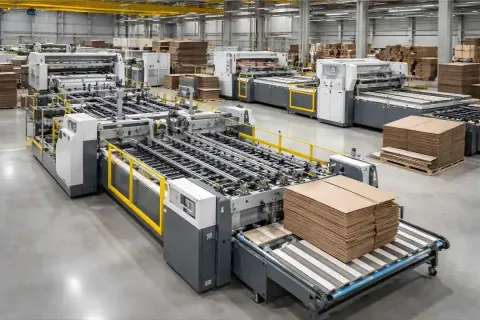
Cardboard box making machines are industrial machines used to convert paperboard, corrugated sheets, or similar materials into finished boxes and packaging structures. Depending on the configuration, the equipment can perform processes such as printing, slotting, cutting, creasing, folding, gluing, and bundling.
The technology exists because modern packaging requires consistent dimensions and repeatable production processes. Manual box production can become difficult when large quantities of standardized boxes are required.
An industrial cardboard box making machine may be configured as an individual machine or as part of an integrated production line.
A typical corrugated-box workflow can include:
Paperboard preparation → Corrugation → Sheet cutting → Printing → Slotting → Die cutting → Folding → Gluing → Bundling
Not every facility performs every step internally. Some operations purchase ready-made corrugated sheets and concentrate on converting them into specific box designs.
Why Cardboard Box Manufacturing Matters
Cardboard and corrugated packaging are widely used across food processing, e-commerce, agriculture, pharmaceuticals, electronics, consumer products, logistics, and industrial distribution.
India's packaging industry continues to expand. An IBEF report published in March 2026, citing an Avendus Capital report, projected India's overall packaging industry could reach approximately US$92 billion by FY2030, with growth supported by food and beverage, pharmaceuticals, agriculture, consumer products, and e-commerce.
The paper and packaging sector also has a substantial small and medium enterprise base. IBEF reports more than 22,000 packaging units in India, with approximately 85% classified as small and medium enterprises.
Box-making technology can help manufacturers address practical requirements such as:
Consistent box dimensions
Repeatable folding patterns
Accurate cutting and creasing
Faster production workflows
Reduced manual handling
Better material utilization
Multiple box designs
Integration with printing systems
Compatibility with different corrugated-board grades
Main Types of Box-Making Equipment
Different machines perform different stages of the manufacturing process.
| Equipment | Main Function | Typical Application |
|---|---|---|
| Corrugator | Produces corrugated board | Corrugated sheet production |
| Sheet cutter | Cuts board to required dimensions | Sheet preparation |
| Flexographic printer | Prints on corrugated board | Logos, text and graphics |
| Slotting machine | Creates slots and folds | Regular slotted cartons |
| Die cutting machine | Cuts complex shapes | Specialty packaging |
| Folder-gluer | Folds and joins panels | Finished cartons |
| Stitching machine | Joins selected box structures | Heavy-duty boxes |
| Box-making line | Combines multiple processes | Integrated production |
A cardboard die cutting machine is especially useful when boxes contain irregular outlines, handles, windows, locking tabs, or specialized structural features.
A cardboard box gluing machine applies adhesive to designated areas and helps create a finished folded structure.
Understanding Corrugated Box Manufacturing Equipment
A corrugated box manufacturing machine generally works with corrugated board consisting of liner sheets and a fluted middle layer.
The flute profile affects the board's thickness, cushioning characteristics, stacking behavior, and overall structural performance.
Common flute categories include:
A flute
B flute
C flute
E flute
F flute
Some boards combine two flute structures to create stronger multi-layer configurations.
The appropriate board depends on the package's intended use, dimensions, product weight, stacking conditions, transportation environment, and required protection.
Automatic Cardboard Box Making Machines
An automatic cardboard box making machine can integrate several conversion stages and reduce the amount of manual intervention required between processes.
Depending on the machine design, automated systems may include:
Automatic sheet feeding
Printing
Slotting
Creasing
Die cutting
Folding
Gluing
Counting
Stacking
Bundling
Automation does not mean that human involvement disappears. Operators are still needed for setup, material loading, quality inspection, maintenance, troubleshooting, and production monitoring.
Advanced systems can also use sensors, programmable controls, digital displays, servo drives, and automated adjustment mechanisms.
How Box Production Works
The production sequence depends on the type of box being manufactured.
A simplified process is:
1. Board selection: The appropriate paperboard or corrugated grade is selected.
2. Sheet preparation: Sheets are cut to the required dimensions.
3. Printing: Graphics, identification information, handling instructions, or other markings may be applied.
4. Creasing and slotting: Fold lines and slots are created.
5. Die cutting: Specialized shapes are cut where required.
6. Folding: Panels are folded along predetermined creases.
7. Joining: Adhesive or stitching may be used depending on box construction.
8. Quality inspection: Dimensions, printing, folding, adhesive application, and structural condition are checked.
9. Bundling: Finished boxes are counted and arranged for storage or subsequent packaging operations.
Important Machine Features
When studying a packaging box making machine, specifications should be evaluated according to the intended box design rather than one headline performance figure.
Important characteristics include:
Maximum and minimum sheet dimensions
Board thickness range
Flute compatibility
Production capacity
Printing configuration
Number of colors
Die-cutting capability
Folding range
Glue application system
Changeover method
Automation level
Control system
Safety features
Maintenance access
Power requirements
A machine designed for simple shipping cartons may not be appropriate for complex retail packaging.
Recent Developments in India's Packaging Industry
India's packaging sector has continued to adopt automation, digital production systems, and sustainability-focused materials.
IBEF's May 2026 paper and packaging report notes that India's paper packaging market had reached approximately ₹1.67 lakh crore as of August 2025 and identifies sustainability, recyclable materials, lightweight packaging, and digital technologies as important industry trends.
The same report notes that approximately 74–76% of India's paper production in 2024–25 came from recovered paper and recycled fibre, highlighting the significance of recovered materials within the domestic paper ecosystem.
Technology adoption is also becoming more prominent. Packaging operations are increasingly examining digital monitoring, connected production equipment, automated inspection, and data-driven manufacturing.
E-commerce is another important factor. Standardized shipping cartons are required throughout logistics networks, making reliable box dimensions and repeatable production increasingly relevant.
Sustainability and Material Efficiency
Cardboard and corrugated packaging are closely associated with recycling because paper fibre can generally be recovered and processed into new paper products when suitable collection and recycling systems are available.
However, recyclability depends on the actual packaging composition and contamination level.
Manufacturers can examine:
Recycled fibre content
Board weight
Material utilization
Cutting patterns
Adhesive selection
Printing materials
Coatings
Waste generated during die cutting
Recovery of production offcuts
Material optimization can reduce unnecessary board usage while maintaining the required structural characteristics.
Laws and Policies Affecting Cardboard Packaging in India
India's packaging regulatory environment is changing, particularly around extended producer responsibility and paper-based packaging waste.
The Ministry of Environment, Forest and Climate Change notified the Environment Protection (Extended Producer Responsibility for Packaging Made from Paper, Glass and Metal as well as Sanitary Products) Rules, 2025, with the rules coming into force on 1 April 2026. The rules cover specified producers, importers, brand owners, and waste processors dealing with paper and paperboard packaging, among other categories.
The rules establish responsibilities related to the collection and environmentally sound management of specified packaging waste. Certain micro and small enterprises are excluded from particular EPR obligations under the notified framework, subject to the stated conditions.
This development is important for the cardboard and corrugated-packaging ecosystem because paperboard packaging is specifically included within the regulatory framework.
The Ministry also lists the Solid Waste Management Rules, 2026, notified on 27 January 2026.
Businesses should therefore distinguish between:
Manufacturing cardboard boxes
Introducing packaged products into the market
Handling packaging waste
Recycling paperboard
Processing manufacturing waste
The regulatory obligations can differ depending on the activity and the entity involved.
Understanding Financial Planning for Machinery
Searches for machinery pricing can be misleading because equipment configurations vary considerably.
Instead of relying on one figure, manufacturers can compare the complete equipment specification.
Relevant factors include:
| Evaluation Factor | What to Examine |
|---|---|
| Machine type | Individual unit or integrated line |
| Board range | Thickness and flute compatibility |
| Sheet size | Minimum and maximum dimensions |
| Automation | Manual, semi-automatic or automatic |
| Printing | Number of colors and print method |
| Die cutting | Standard or complex shapes |
| Gluing | Number and arrangement of glue points |
| Production | Required output level |
| Energy | Electrical requirements |
| Maintenance | Access and routine maintenance needs |
| Integration | Compatibility with existing equipment |
This approach provides a more meaningful technical comparison than looking at a single advertised figure.
Tools and Useful Resources
Several resources can help when researching cardboard box manufacturing.
BIS standards database: Useful for checking Indian Standards relevant to packaging, paper products, testing, and related materials.
CPCB resources: Useful for environmental rules, waste-management information, and applicable compliance frameworks.
MoEFCC rules and notifications: Useful for monitoring current environmental regulations, including packaging-related EPR rules.
Box-design software: CAD and structural-packaging software can help create cutting patterns, dimensions, folds, and material layouts.
Production calculator: A spreadsheet can estimate sheets required from box dimensions, production quantity, waste percentage, and cutting layouts.
Material utilization calculator: Useful for comparing different sheet layouts and estimating the amount of board used per box.
Maintenance checklist: Record lubrication, cleaning, inspection, belt condition, rollers, blades, glue systems, sensors, and electrical components.
Practical Checklist Before Selecting Machinery
Before selecting a cardboard box making machine, examine the complete production requirement.
Identify the required box styles.
Determine board thickness and flute types.
Establish minimum and maximum sheet dimensions.
Calculate expected production volume.
Decide whether printing is required.
Determine whether die cutting is necessary.
Review folding and gluing requirements.
Check automation requirements.
Evaluate electrical requirements.
Consider factory floor space.
Review operator-safety systems.
Examine maintenance access.
Check compatibility with existing equipment.
Consider future box-design requirements.
A production line should be evaluated as a complete system rather than as a collection of unrelated machines.
Frequently Asked Questions
What is a cardboard box making machine?
It is equipment used to convert cardboard or corrugated board into finished boxes. Depending on its configuration, it may perform cutting, creasing, printing, folding, gluing, stitching, or other operations.
What is the difference between cardboard and corrugated box machinery?
Cardboard is a broad term for paperboard materials, while corrugated board contains fluted paper between liner sheets. Corrugated box machinery is specifically designed to process this multi-layer material.
What does a cardboard die cutting machine do?
A cardboard die cutting machine cuts predetermined shapes into board. It can create handles, windows, slots, locking features, and other specialized shapes.
What is the purpose of a cardboard box gluing machine?
It applies adhesive to selected areas and helps join folded panels to create a finished carton. The configuration depends on the box design and adhesive system.
Is an automatic cardboard box making machine completely unattended?
Generally, no. Automated equipment can reduce manual intervention, but operators are normally still required for setup, monitoring, quality checks, material handling, maintenance, and troubleshooting.
Conclusion
Cardboard box making machines are an important part of modern packaging infrastructure. They convert paperboard and corrugated sheets into standardized cartons used across e-commerce, agriculture, food processing, pharmaceuticals, consumer goods, logistics, and industrial distribution.
The technology ranges from individual cutting, creasing, printing, folding, and gluing machines to highly integrated automated production lines.
Recent developments in India show growing interest in packaging automation, material efficiency, digital manufacturing, and recyclable packaging. The country's packaging industry is projected to continue expanding, while the regulatory environment is placing greater attention on packaging-waste recovery and circularity.
The introduction of India's paper, paperboard, glass, and metal packaging EPR rules from 1 April 2026 is particularly relevant to businesses involved in packaging materials and their post-consumer management.
For anyone researching an industrial cardboard box making machine, corrugated box manufacturing equipment, or an automatic cardboard box making machine, the most useful approach is to compare machine capabilities with the actual box designs, board specifications, production workflow, quality requirements, and applicable regulations.
Disclaimer: This article is provided for general informational and educational purposes only. It does not claim that any particular machine, manufacturer, technology, specification, financial figure, or regulatory interpretation is suitable for a specific situation. Information can change, and readers should verify applicable standards, regulations, technical specifications, and requirements with relevant official authorities or qualified professionals before making decisions. This article is not intended to sell, promote, endorse, or recommend any product, manufacturer, equipment, or commercial activity.

Related Post...
Heavy Duty Forklifts: Complete Guide to Basics, Technologies, Facts, Knowledge, and Best Practices
Updated: October 23, 2026
Read More
Tire Recycling Machines: Explore Overview, Basics, Explanation, Knowledge, and Key Details
Updated: October 24, 2026
Read More
Laser Cutting Machines: Discover Information, Facts, Tips, Resources, and Expert Advice
Updated: October 23, 2026
Read More