Heavy Duty Forklifts: Complete Guide to Basics, Technologies, Facts, Knowledge, and Best Practices
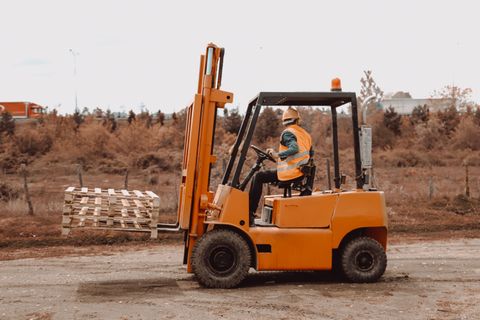
Heavy duty forklifts are powered industrial trucks designed to handle substantially heavier loads than conventional warehouse forklifts. They are used in environments where materials such as steel products, machinery, construction materials, containers, timber, industrial components, and other heavy loads must be moved over relatively short distances.
An industrial heavy duty forklift generally has a reinforced chassis, high-capacity lifting system, larger tires, stronger axles, and specialized counterweight arrangements. The exact configuration depends on the rated load, lift height, operating environment, and attachment being used.
A heavy duty forklift truck can be powered by diesel, LPG, electricity, or other drive technologies. Large industrial models may also use specialized attachments rather than conventional forks.
Capacity is normally expressed in tonnes or kilograms. Examples such as a 20 ton forklift or 40 ton forklift describe a very different class of equipment from the smaller trucks commonly seen in warehouses.
The rated capacity, however, should never be interpreted as permission to lift any load of that weight under all conditions. Capacity depends on factors such as load center, lift height, attachment, mast configuration, and operating conditions.
Why Heavy Capacity Forklifts Matter
Heavy materials handling is common across manufacturing, ports, steel plants, foundries, construction, logistics, shipyards, and other industrial environments.
Manual handling becomes impractical or unsafe when loads become extremely heavy. A high-capacity forklift can provide controlled lifting and movement when the equipment is correctly selected and operated.
Typical applications include:
Steel coils and plates
Heavy machinery
Industrial molds
Large castings
Construction components
Containers
Timber and packaged materials
Large industrial equipment
Manufacturing components
Yard and warehouse materials
A high capacity heavy duty forklift can therefore form part of a larger material-handling system.
However, forklift capacity is only one consideration. Floor strength, aisle width, turning radius, load stability, overhead clearance, visibility, traffic patterns, and operator competence can all affect safe operation.
Main Types of Heavy Duty Forklifts
Different power systems and configurations are suited to different environments.
| Forklift Type | Typical Characteristics | Common Environment |
|---|---|---|
| Heavy duty diesel forklift | High power and long operating capability | Outdoor industrial areas |
| Heavy duty LPG forklift | Internal-combustion power with LPG fuel | Mixed indoor/outdoor applications |
| Heavy duty electric forklift | Battery-powered operation | Indoor and controlled environments |
| Container handler | Designed for large containers | Ports and logistics yards |
| Reach stacker | Handles containers and heavy loads | Intermodal terminals |
| Rough-terrain forklift | Large tires and higher ground clearance | Construction and uneven surfaces |
| Specialized industrial truck | Configured for unusual loads | Steel and manufacturing facilities |
A heavy duty diesel forklift is commonly associated with demanding outdoor operations where high continuous power and long operating periods are required.
A heavy duty LPG forklift can be useful where an internal-combustion engine is required and operating conditions permit LPG use.
A heavy duty electric forklift uses battery power and can provide advantages in environments where local exhaust emissions and engine noise need to be minimized. Its suitability depends on battery capacity, charging infrastructure, duty cycle, load requirements, and environmental conditions.
Understanding 20-Ton and 40-Ton Forklifts
The terms 20 ton forklift and 40 ton forklift indicate extremely high-capacity equipment categories.
A 20-ton truck may be used for large industrial loads such as steel products, heavy machinery, castings, and manufacturing components.
A 40-ton forklift operates at an even higher capacity class and may be associated with specialized industrial yards, ports, heavy manufacturing, and large-load handling.
| Capacity Example | General Application | Important Considerations |
|---|---|---|
| 5–10 tonnes | Medium/heavy industrial loads | Load center and mast height |
| 10–20 tonnes | Heavy industrial materials | Floor capacity and stability |
| Around 20 tonnes | Very heavy components | Specialized tires and attachments |
| Around 40 tonnes | Exceptional industrial loads | Site engineering and specialized operation |
These ranges are illustrative rather than universal categories. Manufacturers use different specifications, and actual safe capacity must always be taken from the truck's identification plate and operating documentation.
Important Forklift Technologies
Modern high-capacity forklifts combine mechanical systems with electronic controls, sensors, and monitoring technologies.
Important technologies include:
Electronic engine management
Battery-management systems
Regenerative braking
Load-weight monitoring
Mast-height sensors
Stability monitoring
Operator-assistance systems
Fleet telematics
Collision-alert systems
Camera and visibility systems
LED work lighting
Electronic diagnostics
Telematics can collect information such as operating hours, battery condition, fault codes, movement patterns, and maintenance records.
Some modern systems can also support access control, allowing authorized operators to use specific equipment.
Automation is another developing area. Automated guided vehicles and autonomous industrial trucks can perform repetitive movement tasks in controlled environments, although high-capacity applications require careful site-specific engineering and risk assessment.
How Forklift Capacity Is Determined
The rated capacity of a forklift cannot be understood from the headline tonne figure alone.
One important variable is the load center, which describes the horizontal distance between the vertical face of the forks and the load's center of gravity.
For example, if a machine is rated for a particular capacity at a specified load center, moving the load farther forward can reduce the permissible capacity.
Other factors include:
Lift height
Mast configuration
Attachment type
Load dimensions
Load center
Tire configuration
Ground conditions
Operating surface
Side loading
Visibility
Dynamic movement
Operators should use the manufacturer's rated capacity information rather than estimating safe capacity from the nominal machine class.
Safety and Stability Principles
Forklift stability depends on the relationship between the truck's center of gravity, the load center, and the stability triangle or equivalent stability envelope used in the equipment design.
Safe operating practices include:
Never exceed the rated capacity.
Keep loads properly positioned on the forks.
Travel with the load at an appropriate low height.
Slow down before turning.
Avoid sudden acceleration and braking.
Keep pedestrians separated from vehicle routes.
Maintain clear visibility.
Use appropriate attachments.
Inspect tires and forks regularly.
Do not carry passengers unless the equipment is specifically designed for it.
Follow site-specific traffic rules.
Use seat belts or operator restraints where fitted and required.
Very large forklifts also require careful attention to ground bearing capacity. A machine and load combination can create substantial concentrated loads on industrial floors and yards.
Recent Technology and Industry Developments
The heavy-equipment sector is increasingly influenced by electrification, automation, digital monitoring, and energy efficiency.
Electric industrial trucks are receiving greater attention as battery technologies improve and industrial operators seek alternatives to conventional internal-combustion power in suitable environments.
Lithium-ion battery systems can provide high energy density and support opportunity charging in some applications. However, battery chemistry, thermal management, charging infrastructure, duty cycle, and environmental conditions must all be evaluated before selecting a power system.
Digital fleet management is also becoming more important. Modern systems can help organizations monitor utilization and maintenance information instead of relying entirely on paper records.
Automation is another important development. Sensors, cameras, positioning systems, and software can support controlled autonomous movement in repetitive material-handling environments.
These developments do not eliminate the need for risk assessment. High-capacity industrial vehicles still require appropriate site design, supervision, maintenance, and operating procedures.
Indian Standards and Regulations
Forklift safety in India is connected with workplace safety legislation, applicable state rules, equipment standards, and site-specific procedures.
The Ministry of Labour and Employment notes that the Factories Act, 1948 has historically been the principal central legislation addressing safety, health, and welfare in factories, with state and Union Territory authorities enforcing relevant provisions and rules.
The model factory rules contain provisions for lifting machines and lifting equipment. They require testing and thorough examination by a competent person before certain lifting equipment is first used and require records concerning testing and examination.
For forklift-related technical information, BIS maintains Indian Standards concerning powered industrial trucks and components. A BIS technical document referencing forklift standards identifies IS 7525 for fork arms and fork-arm carriages and IS 6876 for fork-arm technical characteristics and testing.
BIS also provides its Know Your Standard portal, which allows users to search standards by IS number or product keyword and access associated documents, amendments, testing information, and related data. The portal was updated in May 2026.
It is important to distinguish between an Indian Standard and a compulsory certification requirement. BIS states that certification is generally voluntary unless the government makes compliance mandatory through a Quality Control Order or another legal mechanism.
Therefore, organizations should verify the latest applicable requirements for their particular forklift, workplace, and equipment category.
Site Planning for Heavy Duty Forklifts
A high-capacity forklift requires more than adequate machine capacity. The workplace itself must be suitable.
Important site considerations include:
Floor load-bearing capacity
Ramp gradients
Turning radius
Aisle dimensions
Overhead clearance
Pedestrian routes
Emergency access
Lighting
Ventilation
Drainage
Loading and unloading zones
Fire-safety arrangements
For a 20-ton or 40-ton application, engineering review can be particularly important because the combined weight of the machine and load can be substantial.
Maintenance and Inspection Practices
Maintenance should follow the manufacturer's instructions and the operating environment.
A practical inspection checklist can include:
Fork arms
Mast and chains
Hydraulic hoses
Hydraulic cylinders
Tires and wheels
Braking system
Steering
Warning devices
Lights
Seat and restraint system
Battery or fuel system
Engine components
Safety devices
Attachment mechanisms
Daily or pre-shift inspections can help identify visible problems before operation.
Maintenance records should document inspection dates, defects identified, corrective actions, and relevant equipment information.
Useful Tools and Resources
Several resources can help organizations understand and manage heavy forklift operations.
BIS Know Your Standard: Search Indian Standards by keyword or IS number and review available technical documents and amendments.
BIS Standards Database: Useful for checking whether a particular equipment component or machinery category has a relevant Indian Standard.
Factory safety resources: Ministry of Labour and Employment publications provide background on factory safety legislation and enforcement.
Capacity calculator: A spreadsheet can record rated capacity, load center, lift height, attachment weight, and actual load characteristics.
Inspection checklist: A digital or printed form can track forks, tires, brakes, steering, hydraulic systems, warning devices, and safety equipment.
Maintenance log: Record operating hours, inspections, component replacements, faults, and scheduled maintenance.
Site traffic plan: A simple site map can identify forklift lanes, pedestrian crossings, loading zones, restricted areas, and emergency routes.
Best Practices for Heavy Duty Forklift Operation
A systematic approach is important when operating high-capacity equipment.
Match the forklift to the actual load.
Verify the load center.
Check the capacity plate before lifting.
Inspect the machine before operation.
Confirm that the floor can support the combined load.
Keep loads stable and centered.
Avoid excessive speed.
Maintain pedestrian separation.
Use appropriate attachments.
Follow manufacturer's instructions.
Record inspections and maintenance.
Train operators for the specific equipment and workplace.
Review operating procedures after major site or equipment changes.
Frequently Asked Questions
What is a heavy duty forklift?
A heavy duty forklift is a powered industrial truck designed for substantially heavier loads than conventional warehouse forklifts. It typically has reinforced structural components and a higher rated lifting capacity.
What is a 20 ton forklift used for?
A 20-ton forklift can be used for very heavy industrial materials such as steel products, machinery, castings, and large manufacturing components, subject to its specific rated capacity and configuration.
What is a 40 ton forklift?
A 40-ton forklift is a very high-capacity industrial truck designed for exceptional load-handling applications. Such equipment may be used in heavy manufacturing, ports, industrial yards, and specialized logistics environments.
Is a heavy duty electric forklift suitable for every application?
No. Electric models can be appropriate for certain indoor and controlled environments, but suitability depends on duty cycle, battery capacity, charging arrangements, load requirements, operating surface, and environmental conditions.
What should be checked before operating a heavy duty forklift?
Operators should verify the equipment's rated capacity, load center, condition, forks, tires, brakes, steering, hydraulic systems, warning devices, visibility, and the suitability of the operating area.
Conclusion
Heavy duty forklifts are specialized material-handling machines designed for demanding industrial applications. Equipment ranging from heavy industrial trucks to 20-ton and 40-ton models can move loads that would be impractical to handle manually.
The appropriate choice depends on the load, load center, operating environment, lift height, floor conditions, attachment, power system, and required operating cycle.
Technology is also changing the sector. Electric drivetrains, lithium-ion batteries, telematics, sensors, operator-assistance systems, and automation are becoming increasingly relevant to industrial material handling.
In India, organizations must also consider applicable workplace-safety requirements, state factory rules, relevant Indian Standards, equipment documentation, and inspection procedures. BIS provides tools for researching applicable standards, while government factory-safety frameworks provide important guidance for lifting equipment and workplace protection.
For any industrial heavy duty forklift, safe operation should remain the primary consideration. Capacity figures such as 20 tonnes or 40 tonnes should never be treated as universal operating limits without checking the machine's specific rating information and conditions.
Disclaimer: This article is provided for general informational and educational purposes only. It does not constitute engineering, legal, occupational-safety, or technical advice. No specific forklift, manufacturer, model, technology, product, or organization is being endorsed or promoted. The information is not a claim of performance, suitability, safety, regulatory compliance, or operational capability. Applicable laws, standards, manufacturer instructions, and workplace requirements should be independently verified before making decisions or operating heavy equipment. This article is not intended to sell, promote, or recommend any product or equipment.

Related Post...
Paper Recycling Machines: Explore Overview, Basics, Explanation, Knowledge, and Key Details
Updated: October 23, 2026
Read More
Electric Forklifts: Explore Types, Features, Insights, Suggestions, and Useful Resources
Updated: October 23, 2026
Read More
Cement Mixing Machines: Complete Guide to Basics, Techniques, Facts, Knowledge, and Best Practices
Updated: October 23, 2026
Read More