Electric Forklifts: Explore Types, Features, Insights, Suggestions, and Useful Resources
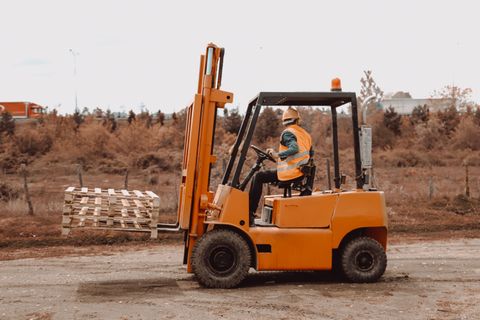
Electric forklifts are industrial material-handling vehicles powered by rechargeable batteries rather than conventional internal-combustion engines. They are commonly used to lift, transport, stack, and position materials in warehouses, manufacturing facilities, distribution centers, cold-storage environments, and other industrial workplaces.
An electric forklift generally consists of a battery pack, electric traction motor, lifting system, mast, forks, steering system, braking system, operator controls, and safety equipment.
The basic operating process is straightforward:
Battery power → Electric motor → Vehicle movement → Hydraulic lifting system → Load positioning
Electric forklifts are available in different configurations. Some are compact machines designed for narrow warehouse aisles, while others are larger models intended for substantial loads.
The choice depends on factors such as load weight, lifting height, aisle width, floor conditions, operating hours, indoor or outdoor use, and required maneuverability.
Why Electric Forklifts Matter Today
Material movement is an important part of manufacturing and warehousing. Forklifts can reduce the amount of manual effort required to move pallets, containers, raw materials, finished goods, and other heavy items.
Electric models are particularly relevant for indoor operations because they do not produce tailpipe exhaust during operation.
Potential advantages include:
No direct exhaust emissions during operation
Lower noise than many conventional engine-powered models
Precise low-speed control
Suitability for many indoor environments
Regenerative braking on some models
Integration with warehouse automation
Battery monitoring and digital diagnostics
Reduced exposure to engine exhaust indoors
These characteristics make electric forklifts useful in warehouses, food-processing areas, pharmaceutical facilities, retail distribution centers, and manufacturing environments where indoor air quality and noise levels are important considerations.
However, electric does not mean maintenance-free. Batteries, tires, brakes, hydraulic components, forks, steering systems, charging equipment, and safety systems all require appropriate inspection and maintenance.
Main Types of Electric Forklifts
Different forklift configurations address different material-handling requirements.
| Type | Main Characteristic | Typical Application |
|---|---|---|
| 3-wheel electric forklift | Compact turning radius | Narrow warehouse aisles |
| 4-wheel electric forklift | Greater stability | General warehouse operations |
| Industrial electric forklift | Designed for regular industrial use | Manufacturing and logistics |
| Heavy-duty electric forklift | Larger lifting capability | Heavy materials |
| High-capacity electric forklift | Designed for substantial loads | Industrial applications |
| Reach truck | Extended mast/reach capability | High-density storage |
| Automated electric forklift | Uses automated navigation | Smart warehouses |
| Pallet truck | Low-level pallet movement | Storage and distribution |
A 3 wheel electric forklift can be particularly useful where maneuverability is more important than maximum load capacity. Its compact turning radius can make it suitable for relatively narrow warehouse layouts.
A heavy duty electric forklift, by contrast, is designed around larger loads and requires careful attention to rated capacity, stability, battery capability, floor conditions, and operating environment.
Understanding Capacity and Stability
Forklift capacity should never be judged simply by the vehicle's physical size.
The rated lifting capacity depends on several factors, including:
Load weight
Load center
Lift height
Attachment type
Mast configuration
Load dimensions
Vehicle configuration
Surface conditions
The rated capacity shown on the manufacturer's data plate should be followed. Delhi's official forklift safety guidance states that loads must not exceed the manufacturer's rated lifting capacity and recommends pre-use inspections and appropriate safety equipment.
A simplified relationship can be understood as:
Higher load + greater load distance + greater lift height = greater stability consideration
Operators therefore need to understand the relationship between load center and rated capacity rather than assuming that a forklift can safely handle any load below its nominal maximum.
Electric Forklift Technology
Modern electric forklift technology is increasingly connected with digital monitoring, automation, battery management, and energy efficiency.
Current systems may incorporate:
Lithium-ion batteries
Battery-management systems
Regenerative braking
Electronic drive controls
Digital displays
Telematics
Operator-access controls
Collision-warning systems
Fleet monitoring
Camera systems
Automated navigation
Remote diagnostics
Lithium-ion technology is becoming increasingly relevant because it can support opportunity charging and reduce some of the operational limitations associated with traditional battery technologies.
However, battery selection should consider the duty cycle rather than technology alone.
For example, an operation with multiple shifts may have very different energy requirements from a warehouse operating for only a few hours each day.
Automated Electric Forklifts
An automated electric forklift can operate with reduced direct operator involvement by using technologies such as sensors, cameras, navigation systems, mapping, and warehouse-management-system integration.
Depending on the system, automated forklifts can:
Transport pallets between designated locations
Follow predefined routes
Detect obstacles
Navigate warehouse areas
Communicate with warehouse software
Record movement information
Coordinate repetitive transport tasks
Automation is most useful where workflows are predictable and warehouse layouts are well defined.
It also introduces new considerations, including cybersecurity, pedestrian separation, sensor reliability, emergency-stop systems, software configuration, and human-machine interaction.
Automation should therefore be treated as a complete workplace-safety and workflow project rather than simply replacing a manually operated vehicle.
Electric Forklifts for Warehouses
An electric forklift for warehouse applications needs to match the physical characteristics of the facility.
Important factors include:
| Warehouse Factor | What to Evaluate |
|---|---|
| Aisle width | Turning and maneuvering requirements |
| Rack height | Required lifting height |
| Floor condition | Smoothness, slopes, and load-bearing capability |
| Load weight | Required rated capacity |
| Operating hours | Battery capacity and charging strategy |
| Indoor air quality | Suitability of electric operation |
| Temperature | Especially important in cold storage |
| Pedestrian traffic | Warning and separation systems |
| Doorways | Vehicle dimensions and clearance |
| Charging area | Electrical supply and battery-management requirements |
A compact forklift may work well in a narrow warehouse but may not be appropriate for outdoor yards or uneven surfaces.
Similarly, a high-capacity machine can be unnecessary for light pallet movement and may reduce maneuverability in confined areas.
Electric Forklift Maintenance
Electric forklift maintenance is essential for safe and reliable operation.
A practical maintenance program can include:
Before each shift
Check tires and wheels.
Inspect forks for visible damage.
Check hydraulic components.
Test brakes.
Check steering.
Examine warning alarms.
Check battery condition.
Inspect cables and connectors.
Verify emergency controls.
Periodic inspection
Examine mast components.
Inspect chains and lifting mechanisms.
Check hydraulic hoses.
Inspect battery connections.
Review braking performance.
Examine safety devices.
Check electrical systems.
Review tires and steering components.
The exact maintenance schedule should follow the manufacturer's instructions and applicable workplace requirements.
A maintenance record should identify the inspection date, machine identification, observations, corrective action, and person responsible for the inspection.
Recent Developments in India
Electric mobility and industrial electrification have received increasing policy attention in India.
In August 2026, the Ministry of Power stated that the government is facilitating electrification and adoption of efficient electricity-based technologies across different end-use sectors. The same announcement highlighted broader energy-efficiency programs led by the Bureau of Energy Efficiency.
Although these programs are not specifically an electric-forklift subsidy, the broader policy direction is relevant to industrial electrification and energy-efficient equipment.
Another important regulatory development occurred in 2025–2026. The Ministry of Heavy Industries issued amendments to the Machinery and Electrical Equipment Safety framework in 2025. The Ministry's current page records the Withdrawal of the Machinery and Electrical Equipment Safety (Omnibus Technical Regulation) Order, 2024 dated 16 January 2026, along with other amendments and related documents.
This demonstrates why manufacturers and industrial users should verify the latest applicable machinery-safety requirements rather than relying on older regulatory information.
Laws, Standards, and Safety Requirements in India
Forklift operation is strongly connected with occupational safety.
India's workplace-safety framework has historically included the Factories Act and state-specific factory rules. The Ministry of Labour and Employment notes that factory safety provisions are enforced through state and Union Territory authorities and their respective rules.
India's Occupational Safety, Health and Working Conditions Code, 2020 also became part of the country's updated labour-law framework, with the government describing it as a consolidation of 13 Central labour laws.
For forklift users, practical safety requirements are particularly important.
Official Delhi guidance recommends:
Manufacturer-approved operation
Valid inspection identification
Pre-use inspections
Overhead protection
Seatbelts
Warning alarms
Stable operating surfaces
Loads within rated capacity
Secure loads
Safe fork height while travelling
Appropriate operation on inclines
BIS also maintains IS 10517:2019, titled "Acceptance criteria for fork-lift trucks." Its "Know Your Standard" system allows users to search standards by product name or Indian Standard number and access related documents and information.
Organizations should verify which standards and statutory requirements apply to their specific equipment, workplace, and operating conditions.
Safety Practices for Forklift Operators
Forklift accidents can involve collisions, falling loads, overturning, pedestrians, ramps, and inadequate visibility.
Basic safety practices include:
Only trained and authorized personnel should operate forklifts.
Wear the required restraint system.
Keep loads stable and centered.
Do not exceed rated capacity.
Maintain visibility while travelling.
Reduce speed near intersections and pedestrians.
Use designated travel routes.
Keep forks low while travelling.
Avoid sudden turns with elevated loads.
Never carry unauthorized passengers.
Do not use damaged equipment.
Complete pre-use inspections.
The Steel Ministry's safety guidance for the iron and steel sector specifically calls for authorized trained personnel, seatbelt use, stable loads, controlled speed, and attention to load positioning.
Tools and Useful Resources
Several tools can help organizations manage forklift operations.
Forklift inspection checklist: Record brakes, steering, tires, forks, mast, hydraulics, battery, alarms, and safety equipment.
Battery log: Track charging cycles, inspection dates, battery condition, and unusual performance.
Load-capacity chart: Keep manufacturer-approved capacity information accessible to operators.
Warehouse layout map: Mark pedestrian routes, forklift routes, loading areas, charging zones, emergency exits, and restricted areas.
Maintenance schedule: Record periodic inspections and maintenance activities.
BIS Know Your Standard: Search Indian Standards by keyword or standard number.
Government safety guidance: Delhi Labour Department's forklift guidance provides practical recommendations for inspection, operation, load handling, and workplace safety.
Practical Selection Checklist
When evaluating an electric forklift, consider the complete operating environment.
Determine the maximum regular load.
Check the load center.
Identify the required lifting height.
Measure warehouse aisle widths.
Examine floor conditions.
Determine operating hours and shifts.
Evaluate battery technology.
Identify charging requirements.
Consider indoor temperature conditions.
Assess pedestrian traffic.
Review visibility requirements.
Check attachment compatibility.
Examine maintenance requirements.
Verify applicable standards.
Consider whether automation is genuinely appropriate.
A detailed checklist can prevent the common mistake of selecting equipment based only on lifting capacity.
Frequently Asked Questions
What is an electric forklift?
An electric forklift is a battery-powered industrial vehicle designed to lift, transport, and position loads. It uses electric drive systems instead of a conventional internal-combustion engine.
What is a 3 wheel electric forklift used for?
A 3 wheel electric forklift is generally designed for maneuverability in confined spaces. Its compact turning characteristics can make it suitable for warehouses with relatively narrow aisles.
Are electric forklifts suitable for heavy loads?
Yes, electric forklifts are available in high-capacity and heavy-duty configurations. The appropriate machine depends on the required load, load center, lifting height, operating surface, and manufacturer's rated capacity.
How often should an electric forklift be maintained?
Maintenance frequency depends on the equipment, operating hours, environment, and manufacturer instructions. Pre-use inspections should be performed according to the applicable operating procedure, with periodic maintenance scheduled by the manufacturer and workplace requirements.
Can electric forklifts be automated?
Yes. Automated electric forklifts can use sensors, cameras, navigation technology, and software integration to perform repetitive material-handling tasks. Their suitability depends on warehouse layout, workflow, safety systems, and the level of automation required.
Conclusion
Electric forklifts are an important part of modern material-handling systems. They range from compact 3 wheel electric forklifts for narrow warehouse aisles to heavy duty electric forklifts designed for demanding industrial applications.
The technology is also moving toward lithium-ion batteries, digital monitoring, telematics, regenerative braking, automated navigation, and greater integration with warehouse-management systems.
At the same time, safe operation remains fundamental. Rated capacity, load stability, operator training, inspections, maintenance, pedestrian control, and workplace layout all influence forklift safety.
India's evolving machinery-safety and occupational-safety framework makes it particularly important for organizations to verify current requirements and applicable Indian Standards. BIS provides a dedicated standards-search platform, while government safety guidance provides practical recommendations for forklift operation.
For anyone researching electric forklift technology, industrial electric forklifts, electric forklifts for warehouses, or automated electric forklifts, the most useful approach is to evaluate the complete operating environment rather than focusing on a single specification.
Disclaimer: This article is provided for general informational and educational purposes only. It does not claim to provide engineering, legal, workplace-safety, or regulatory advice, and requirements can vary according to the equipment, workplace, state, and applicable laws. We are not selling, promoting, endorsing, or making claims about any particular forklift, manufacturer, supplier, technology, or product. Readers should consult the relevant manufacturer documentation, applicable Indian Standards, competent safety professionals, and government authorities before making operational or compliance decisions.

Related Post...
Cement Mixing Machines: Complete Guide to Basics, Techniques, Facts, Knowledge, and Best Practices
Updated: October 23, 2026
Read More
Laser Cutting Machines: Discover Information, Facts, Tips, Resources, and Expert Advice
Updated: October 23, 2026
Read More
CNC Milling Machines: Complete Guide to Basics, Techniques, Facts, Knowledge, and Best Practices
Updated: October 22, 2026
Read More