Concrete Paver Machines: Complete Guide to Basics, Technologies, Processes, Facts, and Best Practices
Concrete paver machines are specialised construction equipment used to place, spread, level and finish concrete for roads, highways, airport pavements and other large paved surfaces. They help create uniform pavement thickness, consistent surface levels and controlled concrete profiles across long construction stretches.
A concrete paver machine is construction equipment designed to distribute and shape freshly placed concrete into a required pavement profile. It is commonly used for constructing rigid pavements, where a concrete slab provides the main structural road surface.
The machine receives concrete from a supply vehicle or feeding arrangement, spreads it across the paving width and uses mechanical systems to achieve the specified thickness and surface finish.
A concrete pavement machine may perform several operations, including:
Distributing concrete across the paving area.
Maintaining the required pavement width and thickness.
Compacting concrete through vibration.
Shaping the surface to the specified profile.
Producing the required surface texture.
Supporting controlled paving along a planned alignment.
Concrete paver machines are different from asphalt pavers. Asphalt equipment places and levels bituminous mixtures, whereas concrete pavers are designed to handle fresh concrete and its specific compaction and finishing requirements.
Basic Working Principle of a Concrete Paver Machine
A concrete paver machine works by receiving freshly mixed concrete, distributing it across the paving section and shaping it into a uniform pavement layer.
The exact process depends on whether the machine uses fixed forms, slipform technology or another paving arrangement.
Surface preparation: The prepared sub-base or base is checked for line, level, thickness and stability.
Concrete delivery: Transit mixers or other approved supply arrangements bring fresh concrete to the paving location.
Concrete feeding: Concrete is delivered to the machine's receiving hopper or spreading system.
Distribution: Augers, spreaders or mechanical distribution systems move concrete across the required paving width.
Compaction: Internal or surface vibrators remove entrapped air and help concrete achieve the required density.
Profile formation: Moulds, screeds or slipform arrangements shape the pavement to its specified dimensions.
Surface finishing: Finishing components produce the required surface profile and texture.
Curing: The finished pavement is protected and cured according to the project specification.
Paving quality depends on concrete consistency, machine settings, vibration, paving speed, alignment and the coordination of concrete supply.
Main Components of a Concrete Paver Machine
The design and arrangement of components vary according to machine type and paving capacity.
Component | Main function |
|---|---|
Main frame | Supports the machine and its operating systems |
Engine or power unit | Supplies energy for machine operation |
Receiving hopper | Accepts concrete from the supply vehicle |
Spreader or auger | Distributes concrete across the paving width |
Vibrators | Compact concrete and help remove entrapped air |
Strike-off plate | Controls the initial concrete level |
Screed assembly | Shapes and levels the pavement surface |
Slipform mould | Forms the pavement edges and profile |
Track or wheel system | Moves the machine along the paving alignment |
Steering system | Controls the machine's direction |
Level and alignment sensors | Monitor elevation and paving alignment |
Control panel | Manages machine functions and operating settings |
Texturing equipment | Produces the specified surface texture |
Some advanced highway machines also include dowel-bar insertion systems, tie-bar insertion equipment and automatic finishing controls.
Types of Concrete Paver Machines
Concrete paving equipment is available in different configurations. The choice depends on pavement width, thickness, project size, surface requirements and site conditions.
1. Concrete Slipform Paver
A concrete slipform paver is a self-propelled machine that places, compacts and shapes fresh concrete continuously without requiring conventional fixed side forms along the full paving length.
It uses a mould or profile pan to form the pavement edges and surface. Internal vibrators consolidate the concrete before it passes through the mould.
Typical applications include:
National highways and expressways
Airport runways and taxiways
Large concrete road projects
Industrial pavements
Wide pavement sections
Slipform pavers are particularly useful for projects requiring continuous paving over long distances.
2. Fixed-Form Concrete Paver
A fixed-form concrete paver operates between steel side forms or rails installed along the pavement edges. The forms define the required pavement width and level.
The machine moves along the prepared forms while spreading, compacting and finishing concrete. This arrangement can be suitable for smaller projects, restricted work areas and locations where slipform paving is not practical.
3. Automatic Concrete Paver Machine
An automatic concrete paver machine uses electronic sensors and control systems to manage functions such as steering, elevation, cross slope and paving alignment.
Depending on the model, automatic controls may use guidewires, ultrasonic sensors, laser references or three-dimensional positioning systems.
Automation can improve consistency, but accurate results still depend on correct machine setup, calibration and concrete supply.
4. Highway Concrete Paver Machine
A highway concrete paver machine is designed for large road projects that require consistent pavement width, thickness, surface profile and productivity.
These machines may include:
Multiple track arrangements
High-frequency internal vibrators
Automatic grade and steering controls
Dowel-bar insertion systems
Tie-bar insertion equipment
Integrated or separate finishing and texturing units
5. Concrete Kerb and Channel Slipform Machine
This specialised paver forms concrete kerbs, gutters, drainage channels and roadside barriers. Its mould is designed to produce the required cross-sectional shape while the machine moves along the prepared alignment.
It is commonly used for road edges, drainage works and urban infrastructure.
6. Small and Compact Concrete Paver
Compact paving machines are used for narrower pavement sections, pathways, shoulders and smaller construction areas. They are designed for work where a large highway paver may be difficult to position or operate.
The required pavement width, concrete depth and surface tolerance should be checked before choosing a compact model.
Technologies Used in Modern Concrete Paving
Modern road paving equipment combines mechanical systems with electronic controls and specialised finishing attachments.
High-frequency vibration: Internal vibrators consolidate fresh concrete and help reduce air voids. Vibration frequency and energy must be adjusted to the concrete mix, pavement depth and paving speed.
Automatic grade control: Sensors monitor the machine's elevation against a guidewire or another reference system. The control system adjusts the machine to maintain the specified pavement level.
Automatic steering: Alignment sensors help keep the paver on the planned path. This is important for maintaining pavement width and straightness.
3D paving technology: Three-dimensional positioning systems can use digital project models and survey references to control alignment, elevation and cross slope. IRC:15-2017 discusses 3D paving systems as an alternative to conventional guidewire arrangements.
Dowel-bar insertion: Specialised equipment can place dowel bars into fresh concrete at planned transverse joint locations. These bars help transfer loads between adjoining pavement slabs.
Tie-bar insertion: Tie bars are positioned at longitudinal joints to help hold adjoining concrete pavement lanes together.
Automatic texturing and curing: Separate or integrated finishing units can create the specified surface texture and apply curing compound after finishing.
Electronic vibration monitoring: Some equipment uses monitoring systems to display vibrator performance and identify operating differences across the paving width.
These systems can support uniform construction, but they cannot compensate for unsuitable concrete, poor preparation or incorrect operation.
Applications of Concrete Paver Machines
Concrete paver machines are used in construction projects that require durable, accurately shaped concrete surfaces.
Highways and expressways: Constructing long stretches of rigid pavement.
Airport runways: Creating concrete pavement sections that must meet demanding surface and structural requirements.
Urban roads: Constructing concrete streets, junctions and selected road sections.
Industrial yards: Building heavy-duty pavement for factories, logistics facilities and storage areas.
Bus terminals: Creating concrete platforms and vehicle movement areas.
Parking facilities: Constructing large concrete parking surfaces.
Rural roads: Building concrete road sections where specified by the project design.
Kerbs and drainage channels: Forming roadside concrete elements with specialised slipform equipment.
The machine type should match the pavement design, project length, working width and required construction quality.
Factors to Consider When Selecting a Concrete Paver Machine
Choosing a suitable machine requires evaluating project specifications, site conditions and concrete supply arrangements.
Paving width: Check whether the machine can handle the specified road or pavement width.
Pavement thickness: Confirm that its mould, vibrator arrangement and compaction capacity are suitable for the required depth.
Paving speed: Compare the machine's operating range with the planned concrete production and delivery rate.
Vibration system: Review vibrator number, spacing, frequency adjustment and monitoring facilities.
Grade control: Determine whether guidewire-based or 3D automatic control is appropriate.
Steering arrangement: Check the number of tracks, steering controls and alignment accuracy.
Concrete distribution: Examine the spreader, auger and strike-off arrangements.
Joint construction: Check whether dowel-bar and tie-bar insertion equipment is required.
Surface finishing: Review screeds, finishing beams, texturing systems and curing attachments.
Transport and site access: Consider machine dimensions, turning space, ground conditions and movement between work locations.
Maintenance: Assess access to vibrators, hydraulic components, sensors, tracks and wear parts.
A project-specific trial or technical demonstration can help verify paving quality and machine suitability before full-scale operation.
Recent Developments and Industry Trends
Concrete paving technology is increasingly focused on automation, accurate positioning, construction consistency and improved process monitoring.
3D machine control: Digital terrain models and positioning systems help control pavement alignment, elevation and cross slope. This can reduce dependence on physical guidewires where the project setup supports model-based paving.
Automated dowel insertion: Modern paving trains can use automatic dowel-bar inserters to position reinforcement at specified joint locations. Correct alignment and depth remain important for joint performance.
Improved vibration monitoring: Electronic monitoring helps operators observe vibrator frequency and identify differences across the paving width. Consistent vibration is important for uniform concrete consolidation.
Integrated paving trains: Some projects use coordinated equipment for spreading, paving, finishing, texturing and curing. Coordinated operation can help maintain continuous production.
Digital quality records: Survey information, machine settings, concrete test results and pavement measurements can be recorded digitally for project quality documentation.
Improved machine efficiency: Manufacturers continue to develop machine designs with improved operator controls, adjustable paving systems and easier maintenance access.
Indian Standards, Guidelines and Construction Requirements
Concrete pavement construction in India follows project specifications, Indian Roads Congress guidance, applicable BIS standards and relevant Ministry of Road Transport and Highways requirements.
IRC:15 — Construction of Concrete Roads
IRC:15 provides specifications and guidance for concrete road construction. Its provisions cover equipment, fixed-form and slipform paving, concrete placement, compaction, finishing, texturing and curing.
IRC:15-2017 describes the use of self-propelled slipform pavers with spreading, internal vibration and automatic control of alignment and elevation. It also covers supporting equipment such as dowel-bar inserters, tie-bar arrangements, joint-cutting machines and texturing and curing equipment.
IRC:SP:97 — Compaction Equipment
IRC:SP:97 provides guidance on compaction equipment used in road works, including pavement quality concrete. It discusses slipform paver vibrators and the importance of uniform compaction across the concrete slab.
ISO 16039 — Slipform Pavers
ISO 16039:2004 covers definitions, terminology and commercial specifications for mobile, self-operating slipform pavers used to place and finish concrete. The ISO catalogue states that the standard was reviewed and confirmed in 2021 and remains current, with one amendment.
MoRTH project specifications
Road projects under the Ministry of Road Transport and Highways use applicable specifications for road and bridge works. Contractors should follow the edition and amendments specified in their project documents, including requirements for concrete materials, pavement construction, testing and quality control.
Requirements may differ according to the road category, project authority, pavement design and contract conditions.
Best Practices for Concrete Paver Machine Operation
Correct operating procedures help maintain pavement quality and reduce interruptions during construction.
Prepare the base: Check the sub-base for level, compaction, cleanliness and surface condition.
Verify machine alignment: Set guidewires or digital references according to the approved pavement design.
Inspect the equipment: Check tracks, hydraulic systems, vibrators, sensors, screeds and moulds.
Check concrete consistency: Verify the approved mix, workability and temperature before paving.
Maintain a steady supply: Coordinate batching, transportation and concrete feeding to avoid unnecessary paver stoppages.
Adjust vibration correctly: Set vibrator frequency and position according to pavement depth and concrete characteristics.
Monitor paving speed: Maintain a consistent speed suitable for the concrete supply and machine settings.
Check pavement dimensions: Monitor thickness, width, elevation and cross slope during construction.
Inspect the finished surface: Check for irregularities, edge slump, segregation and surface defects.
Complete texturing and curing: Apply the specified texture and curing treatment at the appropriate stage.
Maintain equipment cleanliness: Remove hardened concrete from moulds, vibrators and other working components using approved procedures.
Record construction information: Maintain records of machine settings, concrete batches, paving progress and quality tests.
Frequent machine stoppages can affect surface uniformity. Concrete production and delivery should therefore be coordinated with the planned paving speed.
Tools and Resources for Concrete Paving Projects
The following technical resources can help construction teams understand machinery requirements and paving procedures:
Indian Roads Congress (IRC): Provides technical publications and guidance for concrete road construction.
Ministry of Road Transport and Highways (MoRTH): Provides specifications for highway and road construction projects.
Bureau of Indian Standards (BIS): Provides applicable Indian Standards for concrete materials, testing and construction-related equipment.
International Organization for Standardization (ISO): Provides ISO 16039 information on slipform paver terminology and specifications.
Surveying equipment: Total stations, digital levels and positioning systems help verify pavement alignment and elevation.
Concrete testing equipment: Slump cones, temperature instruments and strength-testing equipment support quality control.
Pavement inspection tools: Straightedges and surface measurement equipment help assess finished pavement regularity.
Frequently Asked Questions
1. What is the main function of a concrete paver machine?
Its main function is to spread, compact, shape and finish freshly mixed concrete to construct roads, highways, airport pavements and other concrete surfaces.
2. What is a concrete slipform paver?
A concrete slipform paver is a self-propelled machine that continuously places and shapes concrete using internal vibrators and a mould. It generally does not require conventional fixed side forms along the entire paving length.
3. What is the difference between a fixed-form and slipform concrete paver?
A fixed-form paver operates between prepared side forms or rails. A slipform paver uses its own mould and shaping system to form the pavement while moving continuously along the alignment.
4. How does an automatic concrete paver machine maintain pavement accuracy?
It uses sensors and control systems to monitor elevation, alignment and cross slope. These systems adjust machine movement according to guidewire references or digital positioning information.
5. Where are concrete road paver machines commonly used?
They are commonly used on highways, expressways, airport runways, industrial pavements, urban roads, parking areas and other large concrete construction projects.
Conclusion
Concrete paver machines are important construction equipment for producing uniform concrete roads, highways and other paved surfaces. Available configurations include fixed-form pavers, slipform pavers, automatic systems, highway pavers and specialised kerb-forming machines.
Selecting suitable equipment requires attention to paving width, pavement thickness, vibration capacity, grade control, concrete supply and surface finishing requirements. Following IRC and project specifications, maintaining consistent concrete delivery and inspecting machine performance can help achieve reliable pavement construction.
Disclaimer: This article is intended for general informational and educational purposes only. Machinery specifications, operating procedures and regulatory requirements may vary by model, location and application. Consult qualified construction professionals and relevant authorities before making technical or operational decisions. No guarantees are made regarding machine performance or construction results. This content is not intended to sell or promote any product, brand or organisation.

Related Post...
Rice Milling Machines: Complete Guide to Basics, Technologies, Processes, Facts, and Best Practices
Updated: November 20, 2026
Read More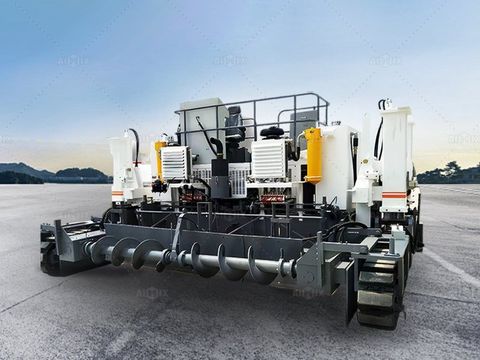
Concrete Paver Machines: Complete Guide to Basics, Technologies, Processes, Facts, and Best Practices
Updated: November 20, 2026
Read More
Concrete Vibrator Machines: Explore Overview, Basics, Explanation, Knowledge, and Key Details
Updated: November 20, 2026
Read More