Concrete Vibrator Machines: Explore Overview, Basics, Explanation, Knowledge, and Key Details
Concrete vibrator machines are used during concrete placement to remove trapped air and help fresh concrete settle around reinforcement, inside formwork and across structural sections. Proper vibration improves the compactness and uniformity of concrete when carried out with the right equipment and technique.
These machines are used in building construction, bridges, roads, foundations, precast units, columns, beams and industrial structures. Common options include the electric concrete vibrator, portable concrete vibrator, concrete poker vibrator, internal concrete vibrator, high frequency concrete vibrator and external concrete vibrator.
Choosing the right equipment depends on the concrete mix, reinforcement spacing, formwork arrangement, member dimensions and site conditions. This guide explains the basic working principles, machine types, components, applications, selection factors and important practices, with an India-focused overview.
1. What Is a Concrete Vibrator Machine?
A concrete vibrator machine is a construction tool that produces rapid mechanical vibrations to compact freshly placed concrete. When concrete is poured into a mould or formwork, small air pockets can remain trapped between cement paste, sand, coarse aggregates and reinforcement bars.
Vibration temporarily reduces the internal friction of the fresh mix, allowing the particles to rearrange and the concrete to settle more closely. Some of the entrapped air then rises towards the surface.
The main objectives are to:
Reduce unwanted air pockets and honeycombing.
Help concrete fill corners and narrow spaces.
Improve contact between concrete and reinforcement.
Support uniform compaction and surface quality.
Produce a denser concrete structure when used correctly.
Vibration does not correct a poorly designed mix or replace proper placement, curing and quality control. Excessive vibration can also cause segregation, in which coarse aggregates separate from the mortar.
2. Basic Working Principle
Most concrete vibrators use a motor or power unit to rotate an eccentric weight inside a vibrating head. Because the weight is off-centre, its rotation generates repeated centrifugal forces. These forces create vibrations that are transferred directly into the concrete or indirectly through the formwork.
The basic operating sequence is:
Power generation: An electric motor, petrol engine, pneumatic system or frequency converter provides power.
Vibration creation: An eccentric mechanism or vibrating assembly generates rapid oscillations.
Energy transfer: The vibration reaches the concrete through an immersed poker, vibrating formwork or surface screed.
Particle movement: The fresh mix temporarily becomes more mobile, allowing aggregate particles to settle.
Air release: Entrapped air moves upwards and escapes from the concrete.
Compaction: The operator stops vibration after the required consolidation has been achieved.
The vibrator should be selected according to the concrete mix, structural dimensions and reinforcement arrangement. A technical guide from EXEN describes internal and external vibrator arrangements for different formwork and production conditions.
3. Main Components of a Concrete Vibrator Machine
The exact design varies by model, but common components include:
Component | Function |
|---|---|
Electric motor or power unit | Supplies mechanical energy |
Vibrating head or poker | Transfers vibration into the concrete |
Flexible shaft | Connects the motor to the vibrating head in shaft-driven models |
Eccentric weight | Produces vibration through off-centre rotation |
Protective casing | Encloses and protects internal mechanisms |
Power cable | Supplies electricity to electric models |
Switch and control unit | Starts, stops and controls operation |
Handle or support frame | Helps the operator hold or position the equipment |
Frequency converter | Supplies suitable high-frequency power in compatible systems |
In motor-in-head models, the motor and vibrating mechanism are housed inside the poker assembly. In flexible-shaft models, the motor remains outside the concrete while a shaft transfers rotation to the head.
4. Types of Concrete Vibrator Machines
Concrete vibrators are commonly classified according to where they apply vibration.
A. Internal Concrete Vibrator
An internal concrete vibrator is inserted directly into freshly placed concrete. It is also known as an immersion, needle or poker vibrator.
The vibrating head transfers energy into the concrete from within the mix. This type is commonly used for beams, columns, foundations, walls and other structural elements where the poker can be inserted between reinforcement bars.
B. Concrete Poker Vibrator
A concrete poker vibrator has a long, narrow vibrating head connected to a flexible shaft or an integrated motor assembly. The operator inserts the head into the concrete at planned intervals and withdraws it gradually.
Poker vibrators are available with different head diameters and shaft lengths. A smaller head may be useful in congested reinforcement, while larger heads may suit more open sections. The appropriate size depends on the available space and the machine's effective radius of action.
C. Electric Concrete Vibrator
An electric concrete vibrator uses an electric motor as its power source. It may be connected to a flexible-shaft poker, an integrated vibrating head or an external vibration assembly.
Electric models are used on building sites and in precast production. Their operation depends on an appropriate electrical supply, suitable protection and safe cable management.
D. Portable Concrete Vibrator
A portable concrete vibrator is designed for movement between different work areas. It may have a compact motor, carrying handle, flexible shaft and replaceable poker head.
These machines are useful for smaller construction projects, repair work, foundations and locations where a large fixed installation would be impractical.
E. High Frequency Concrete Vibrator
A high frequency concrete vibrator operates with a rapid vibration cycle, often using a dedicated motor-in-head system or a converter-powered assembly.
These machines are used where the required compaction performance, concrete mix and structural geometry suit high-frequency operation. Frequency alone does not determine performance: head diameter, amplitude, power and the concrete's workability also matter.
F. External Concrete Vibrator
An external concrete vibrator is attached to the outside of formwork or moulds. It transfers vibration through the formwork into the concrete.
This arrangement is useful when reinforcement is too congested for a poker vibrator or when inserting a vibrating head is impractical. The formwork must be designed to withstand the applied forces and distribute vibration appropriately.
G. Screed and Surface Vibrators
Screed vibrators work from the exposed surface of concrete. A vibrating beam or board moves across the placed mix to support surface-level compaction and levelling.
They are commonly used for floor slabs, pavements and other relatively shallow concrete placements. BIS identifies screed-board concrete vibrators separately from immersion-type equipment.
5. Features and Technologies
Modern concrete vibrator machines include design features intended to improve handling, reliability and control.
Variable frequency control: Some systems allow vibration settings to be adjusted for different concrete mixes and applications.
Motor-in-head design: Places the motor close to the vibrating head and can reduce dependence on a long mechanical drive shaft.
Flexible-shaft construction: Allows the operator to position the poker in different parts of a structural section.
Interchangeable poker heads: Supports different head sizes for varying reinforcement spacing and concrete geometry.
Overload protection: Helps protect electrical equipment against excessive current.
Ergonomic handles: Improve handling during repeated insertion and withdrawal.
External mounting systems: Allow vibrators to be fixed to compatible formwork or moulds.
Frequency converters: Enable compatible high-frequency equipment to operate from an appropriate electrical supply.
These features should be assessed against the actual application rather than treated as a substitute for correct operating technique.
6. Applications in Construction and Manufacturing
Concrete vibrator machines are used across several construction and production activities.
Application | Typical equipment |
|---|---|
Building columns and beams | Internal poker vibrator |
Foundations and footings | Internal vibrator |
Reinforced concrete walls | Internal or external vibrator |
Precast concrete panels | External form vibrator |
Concrete pipes and moulded products | External or table vibrator |
Floor slabs | Screed or surface vibrator |
Road pavements | Screed and suitable internal vibrators |
Bridge structures | Internal vibrators and specialised systems |
Congested reinforcement zones | Small-head poker or external vibrator |
In precast production, external vibrators and vibrating tables can be integrated into moulds and production arrangements. The equipment type depends on the shape, size and mass of the component.
7. How to Select the Right Concrete Vibrator Machine
Selection should begin with the structural design and concrete-placement method. Consider these factors:
Concrete element dimensions: Deep columns and large foundations may need a different arrangement from thin slabs.
Reinforcement spacing: The poker head must pass between bars without damaging reinforcement or disturbing its position.
Head diameter: Choose a size that can reach the required areas and provide effective compaction.
Shaft length: Confirm that the shaft can reach the full working depth while remaining manageable.
Power source: Check the availability of electricity, generator capacity or compressed air where applicable.
Frequency and amplitude: Review both values along with the equipment's rated performance.
Operating environment: Consider water exposure, dust, site access and the duration of operation.
Formwork strength: External vibrators require suitable mounting points and formwork capable of handling vibration forces.
Maintenance requirements: Check access to bearings, shafts, cables, switches and replaceable components.
Applicable standards: Confirm the relevant Indian Standard and project specifications.
A machine that is too large may not fit between reinforcement bars. A machine that is too small may not provide adequate consolidation for a particular placement. Equipment selection should therefore be coordinated with the site engineer and concrete-placement plan.
8. Recent Developments and Industry Trends
Concrete vibration technology is developing around improved power control, more compact equipment and better integration with precast production.
Some notable directions include:
Motor-in-head equipment: Integrated motor and vibrating-head designs reduce the need for a separate flexible mechanical drive in certain models.
High-frequency systems: Converter-based equipment allows specialised vibration arrangements for suitable concrete mixes and production processes.
Improved operator handling: Lighter assemblies, improved grips and more manageable shafts support work across different structural locations.
Precast automation: External vibrators and vibrating tables can be incorporated into repeatable moulding and production systems.
Equipment standard updates: India has revised important standards for immersion vibrators, screed-board vibrators and vibrating tables in recent years.
The Bureau of Indian Standards lists IS 2505:2023 for immersion-type concrete vibrators, IS 2506:2022 for screed-board concrete vibrators and IS 2514:2023 for concrete vibrating tables. These revisions are important references when reviewing equipment specifications and conformity.
9. Indian Standards, Regulations and Safety Requirements
In India, concrete vibration equipment and its use are covered by equipment standards, construction specifications and workplace safety requirements.
Relevant Indian Standards
Standard | Subject |
|---|---|
IS 2505:2023 | General requirements for immersion-type concrete vibrators |
IS 2506:2022 | General requirements for screed-board concrete vibrators |
IS 2514:2023 | Specification for concrete vibrating tables |
IS 4656 | Specification for form vibrators for concrete |
IS 12468:2023 | General requirements for immersion vibrators for mass concreting |
The BIS catalogue identifies the revised standards for immersion vibrators and vibrating tables, while CPWD specifications list IS 4656 for form vibrators. Always verify the latest edition, amendments and applicability for a particular project.
Construction Safety Requirements
The Building and Other Construction Workers (Regulation of Employment and Conditions of Service) Central Rules, 1998 include provisions relating to vibrators used in concreting work. Rule 103 addresses operator fitness, reducing vibration transmitted to workers, earthing of electric vibrators, insulation of electrical leads and switching off the current when equipment is not in use.
Important site precautions include:
Inspect the power cable, plug, switch and equipment casing before operation.
Use suitable earthing and electrical protection.
Keep electrical connections away from standing water.
Do not use damaged or exposed cables.
Wear appropriate insulated footwear, gloves and eye protection.
Keep hands and clothing away from moving parts.
Switch off and isolate the power before maintenance.
Ensure that external vibrators are securely mounted to suitable formwork.
10. Best Practices for Operating Concrete Vibrators
Correct operating technique is essential for achieving consistent concrete compaction.
Before starting
Inspect the machine, shaft, poker head and electrical connections.
Check that the formwork and reinforcement are secure.
Confirm the concrete mix and placement sequence.
Select the appropriate head size and insertion arrangement.
During vibration
Insert an internal vibrator vertically or nearly vertically where practical.
Space insertion points so that their effective areas of action overlap.
Avoid using the poker to push concrete horizontally through the formwork.
Withdraw the poker slowly to help prevent voids from remaining in its path.
Avoid prolonged vibration at one location.
Do not strike reinforcement, embedded fixtures or formwork unnecessarily.
Use external vibrators according to the formwork design and the approved method.
After operation
Switch off and isolate the equipment.
Clean concrete residue from the head and other exposed parts.
Inspect the shaft, cable, casing and connections.
Store the machine in a dry, protected location.
Record faults and arrange inspection before the next use.
CPWD specifications describe proper compaction as a process in which mortar fills spaces between coarse aggregates and an even surface begins to form. They also emphasise slow withdrawal of needle vibrators and compliance with the equipment manufacturer's instructions.
11. Tools and Resources for Concrete Vibration Work
The following references can help engineers, contractors and construction teams understand equipment selection and concrete-compaction practices:
Bureau of Indian Standards (BIS): For current Indian Standards and revisions relating to concrete vibrators.
CPWD Specifications: For concrete placement, compaction and construction practices.
Indian Railways works specifications: For guidance on mechanical concrete compaction and different vibrator categories.
Concrete technology textbooks: For the principles of vibration, workability, compaction and concrete behaviour.
Equipment operation manuals: For machine-specific instructions covering power supply, insertion, operating limits and maintenance.
Site inspection checklists: For recording equipment condition, electrical safety, formwork readiness and compaction observations.
These references should be considered alongside the project's approved drawings, concrete mix requirements and instructions from the responsible engineer.
12. Frequently Asked Questions (FAQs)
1. What is the main purpose of a concrete vibrator machine?
Its main purpose is to compact freshly placed concrete by reducing trapped air pockets and helping the mix settle around reinforcement and inside formwork.
2. What is the difference between an internal and external concrete vibrator?
An internal vibrator is inserted directly into fresh concrete. An external vibrator is attached to formwork or a mould and transfers vibration through its surface.
3. What is a concrete poker vibrator used for?
A concrete poker vibrator is used to compact concrete in structural elements such as columns, beams, foundations and walls. Its vibrating head is inserted into the fresh mix.
4. When is a high frequency concrete vibrator useful?
It is useful in applications where the concrete mix, equipment design and structural requirements call for high-frequency vibration. Frequency should be considered along with amplitude, head size and power.
5. Can excessive vibration affect concrete quality?
Yes. Excessive vibration can cause segregation, where coarse aggregates separate from the cement mortar. The operator should follow the approved method and stop once adequate compaction is achieved.
Conclusion
Concrete vibrator machines play an important role in construction by helping fresh concrete achieve proper compaction and a more uniform structure. Internal concrete vibrators, electric concrete vibrators, portable concrete vibrators, poker vibrators, high frequency concrete vibrators and external concrete vibrators serve different construction and manufacturing requirements.
Selecting suitable equipment involves considering concrete consistency, reinforcement spacing, structural dimensions, power availability and applicable Indian Standards. Correct insertion, controlled vibration, equipment inspection and electrical safety are equally important. Following project specifications and manufacturer instructions helps construction teams achieve consistent concrete quality.
Disclaimer: This article is intended for general educational and informational purposes only. Equipment specifications, operating procedures and regulatory requirements may vary according to the machine, project and location. Consult qualified engineers, equipment manuals and relevant authorities before making technical or operational decisions. No guarantees are made regarding equipment performance or project outcomes. This content is not intended to sell or promote any product, brand or organisation.

Related Post...
Garment Pressing Machines: Explore Overview, Basics, Explanation, Knowledge, and Key Details
Updated: November 20, 2026
Read More
Maize Sheller Machines: Explore Types, Features, Applications, and Useful Resources
Updated: November 20, 2026
Read More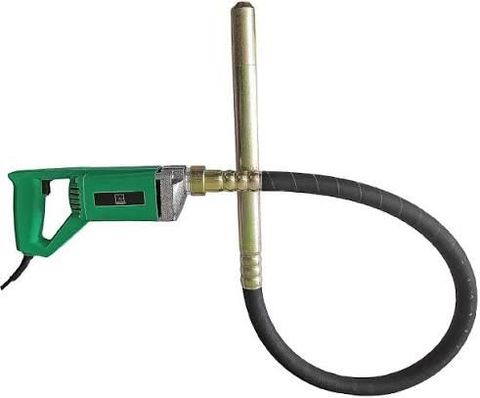
Concrete Vibrator Machines: Explore Overview, Basics, Explanation, Knowledge, and Key Details
Updated: November 20, 2026
Read More